Hubbry Logo
Ralph MalphRalph MalphMain
Open search
Ralph Malph
Community hub
Ralph Malph
logo
8 pages, 0 posts
0 subscribers
Be the first to start a discussion here.
Ralph Malph
Ralph Malph
from Wikipedia
Ralph Malph
Ralph Malph
First appearance"All the Way"
Last appearance"Welcome Home Part 2"
Created byGarry Marshall
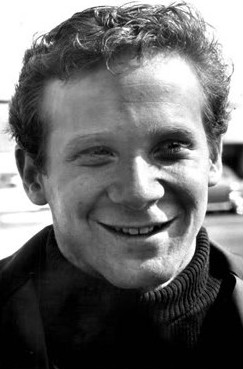
Portrayed byDonny Most
In-universe information
GenderMale
OccupationStudent
FamilyMickey Malph (father)
Minnie Malph (mother)
Mortimer Malph (uncle)

Ralph Hector Malph is a character on Happy Days played by Donny Most.[1][2]

Background of character

[edit]

He usually had two things on his mind, girls and jokes. His jokes usually got little or no reaction from any other character, yet he continued his catchphrase, "I still got it!" Ralph was a practical joker and often used novelty items such as whoopie cushions, Groucho glasses, spring-loaded eyeball glasses, and joy buzzers.

In the first season, Malph's girl-chasing was the primary focus of his character. He occasionally got dates but generally he was not very successful at it, although he was more successful than Richie Cunningham and Potsie Weber. As the seasons progressed, he was shown to be easily frightened and often panicked greatly at the least and greatest occurrences. Originally the series tended to focus on Richie and Potsie, often in schemes to attract women, with Ralph as a third wheel. In the early seasons, Ralph was considerably "cooler" than Richie and Potsie, being a member of the gang, The Gems, and having a hot rod car.

Ralph was – along with Richie and Potsie, and later Chachi – part of a band that, in some episodes, performed at Arnold's Drive-In (and later, Fonzie & Big Al's) and other venues. Although Anson Williams (as Potsie) did most of the lead vocals for the group, Most (as Ralph) did perform solo vocals on a couple of occasions, most notably in the episodes "They Shoot Fonzies, Don't They" and "Be My Valentine."

As the series shifted its focus to concentrate more on breakout character Fonzie and his friendship with Richie, Ralph was more often paired with Potsie. This was evident even more when the characters graduated from high school, when Ralph and Potsie rented and shared an apartment together, and they often argued. In the first episode of this arrangement, "The Apartment", Richie also moved in with them but, due to the pair's continual squabbling, Richie decided to move back home.

In one episode where they were feuding, "Ralph vs. Potsie", they divided the apartment with white tape and assigned each other one side of the room, but they eventually patched up their differences.

Ralph returns home after being honorably discharged from the U.S. Army in the episode entitled "Welcome Home" and he decides to become an optometrist just like his father. Ralph goes off to college and this serves as his last appearance in Happy Days.

One small continuity error remains with the character of Ralph's father. Originally, his father owned a woman's dress store in town and his name was Harry Malph (played by Mike Monahan in the first-season episode "Because She's There"), but when the show shifted to a studio audience format in the third season, Ralph's father was shown to be an optometrist, Mickey Malph, played first by Alan Oppenheimer and then subsequently and more famously by Jack Dodson. Additionally, in the same first-season episode, Ralph's mother was named Hazel and was played by Gracia Lee; from the third season onward, however, she was referred to as Minnie Malph, and her character was never shown on camera again.

In Phish's song "Clear Your Mind," the "Ralph" verse references Ralph Malph, likely in a nod to the practical jokes they are instigating means "they still got it."[citation needed]

References

[edit]
Revisions and contributorsEdit on WikipediaRead on Wikipedia
from Grokipedia
Ralph Malph is a fictional character in the American sitcom Happy Days, portrayed by actor from 1974 to 1981. He serves as one of the closest friends to protagonist , characterized by his hyper, extroverted, and boisterous nature, often providing through corny jokes and his distinctive habit of chewing gum while blowing bubbles. Introduced as a in the show's first season, Malph quickly became a series regular starting in season 2, forming part of the core group of friends that included Richie, , and the Fonz at Arnold's Drive-In in . His role emphasized themes of friendship and youthful antics, acting as a foil to Richie's more introverted demeanor and contributing to the ensemble's dynamic humor. Most, who originally auditioned for the role of Potsie, helped develop Malph's personality from an initially undefined "high school kid" into a likable figure with a strong sense of loyalty and heart, adding depth to the character's relationships. Malph's tenure on Happy Days spanned the first seven seasons, during which he featured in storylines involving pranks, romantic pursuits, and family challenges, such as dealing with his domineering father or navigating social awkwardness. The character departed before season 8 amid Most's concerns over and the show's evolving quality, though he made occasional guest appearances later. Overall, Malph remains an iconic sidekick in 1970s television, embodying the lighthearted spirit of the era's nostalgia-driven comedy.

Overview

Introduction

Ralph Malph, full name Raphael Hector Malph, is a fictional character and one of the central figures in the American television Happy Days, which aired on ABC from 1974 to 1984. As a member of the core group of teenagers in 1950s , Ralph serves primarily as comic relief among his friends , , and the Fonz, often contributing lighthearted moments to the show's nostalgic portrayal of post-war American youth culture. Portrayed by actor Donny Most, Ralph debuted in the series premiere episode "All the Way," which aired on January 15, 1974. Most appeared as a main cast member through seasons 1 to 7, from 1974 to 1980, embodying the character's awkward yet endearing role in the group's adventures. Ralph's regular tenure concluded with the season 7 finale in 1980, where he enlists in the alongside Richie, marking his departure from the series' everyday storylines. He returned briefly as a guest star in the season 11 episodes "Welcome Home," Parts 1 and 2, in 1984.

Personality and Traits

Ralph Malph is depicted as an affable yet somewhat bashful teenager whose humor revolves around one-liners, elaborate pranks, and novelty items to elicit laughs from his friends. He frequently employs practical jokes such as whoopee cushions, joy buzzers, and to lighten the mood in social settings, often targeting his close companions like and . This comedic style underscores his role as the group's resident jokester, blending lighthearted mischief with a desire for camaraderie. A hallmark of Malph's humor is his signature , "I still got it!", which he delivers with unwavering confidence after attempting a that typically falls flat, receiving little to no positive response from others. This line, inspired by a remark from the show's director , highlights Malph's persistent optimism and self-assuredness in the face of comedic failure, turning his misfires into endearing moments of vulnerability. His jokes are often stale or poorly timed, reflecting a wise-cracking that he develops through and collaboration with the writing team. Malph's romantic pursuits are portrayed as consistently awkward and unsuccessful, setting him apart as more inept in matters of the heart compared to characters like Richie or Potsie. Described as sweet but , he frequently chases dates with misguided enthusiasm, leading to humorous mishaps rather than genuine connections. Despite occasional successes in the early seasons, his efforts are generally marked by and rejection, emphasizing his boisterous yet insecure approach to relationships. Additionally, Malph is easily frightened, prone to panic over minor threats, which contrasts with his outward bravado. In later seasons, Malph is increasingly perceived as a "," particularly when paired with Potsie, shifting from his earlier "cooler" image as a enthusiast and jokester to a more awkward, comic-relief figure. This evolution amplifies his role in providing levity through failed attempts at coolness. His passion for is inherited from his father, an optometrist and fellow whose influence is evident in Malph's one-liners, though a family crisis temporarily strips him of his humorous edge.

Creation and Portrayal

Casting and Don Most

Don Most was born on August 8, 1953, in Brooklyn, New York, to an accountant father and homemaker mother. From a young age, he displayed a penchant for entertaining, often making people laugh, and by junior high school, he pursued professional studies in acting, singing, and dancing. At fifteen, Most secured his first professional gig performing in a teenage musical revue at a Catskills resort, marking the start of his early theater work. He later attended Lehigh University but dropped out in his senior year to focus on acting, relocating to Hollywood at age twenty where he landed a guest role on the series Emergency! just before auditioning for Happy Days. Most auditioned for Happy Days shortly after moving to , describing the process as a long and emotionally draining day that involved multiple callbacks. , the show's creator, selected him for the role of Ralph Malph, drawn to Most's inherent comedic abilities and fit for the character. At the time of the series debut in January 1974, Most was twenty years old, portraying a high school teenager alongside other young cast members. As a main cast member, Most appeared as Ralph Malph in 168 episodes of the series, primarily during the first seven seasons from 1974 to 1980. He departed as a regular after season seven amid contract negotiations but returned for a reduced role, guest-starring in two episodes during the eleventh and final season in 1983–1984. Following Happy Days, Most transitioned into voice acting, providing voices for animated series such as Family Guy and recurring as Rusty Pillsbury on Glee from 2011 to 2013. He also pursued music, developing a career as a jazz singer with performances featuring the Great American Songbook, including shows with the Metropolitan Jazz Orchestra at venues like Dazzle in Denver and Nissi's in Lafayette, Colorado, as recently as 2025. Additionally, Most has participated in Happy Days cast reunions, such as panels at MegaCon Orlando in 2025 with Ron Howard and Anson Williams, and events honoring Garry Marshall in 2019.

Development and Evolution

Ralph Malph was created by as one of the core members of the teenage ensemble in the sitcom Happy Days, which premiered in 1974, with the character emerging from Marshall's vision of nostalgic 1950s Midwestern youth dynamics. Initially conceptualized as an underdeveloped high school friend to and , the role lacked detailed backstory or defining traits at the outset, serving primarily as a supporting figure in the group's adventures. Don Most, cast in the role after auditioning for Potsie and impressing during his screen test, significantly contributed to fleshing out Malph from a peripheral side character into a fuller comic persona over the first five months of production. Drawing from personal experiences and observations, Most infused the character with quirky habits like and blowing bubbles to enhance likability, while emphasizing Malph's underlying heart and strong sense of with his peers, as he explained in a 2024 interview. He also incorporated elements of and pranks, transforming Malph into a self-deprecating jokester whose humor often stemmed from awkward attempts at coolness, which helped solidify the character's place in the ensemble. Additionally, Most leveraged his vocal talents to add musical dimensions, performing solo songs in key episodes to showcase Malph's performative side. However, Malph's screen time diminished in later seasons as the narrative increasingly centered on Fonzie's rising prominence and new characters like , reducing opportunities for the original trio's interactions and contributing to Most's sense of creative stagnation by seasons 6 and 7. Most's tenure concluded after season 7 in 1980, driven by his desire for greater creative freedom to pursue dramatic roles and avoid as the wisecracking Malph, a concern amplified by the show's perceived quality dip post its famous "jump the shark" shift. During contract negotiations for season 8, Most declined a significant pay raise, instead requesting flexibility to take on external projects like guest spots on procedural dramas, but Paramount Studios rejected the proposal, leading to his departure. He later returned briefly for two guest appearances in season 11. One notable musical highlight during Most's run was his solo vocal performance of "The Anniversary Song" in the season 4 episode "They Shoot Fonzies, Don't They?" (aired November 16, 1976), where Malph entertains during a .

Fictional Biography

Family Background

Raphael Hector Malph grew up in a middle-class family in , , as part of the wholesome suburban environment depicted in the series. His household provided a stable, if comically eccentric, backdrop that mirrored the show's nostalgic portrayal of American family life. The Malphs were never shown to have any siblings for , emphasizing his role as an in the narratives. The characters who would become Ralph's parents first appeared in the first-season episode "Because It's There," initially as Harry Malph (father, owner of a women's dress store, played by Mike Monahan) and an unnamed mother, chaperoning a costume party hosted by their son. Later episodes retconned the father as (played by ), an optometrist with an aspiring comedian's flair for one-liners, a trait directly influencing Ralph's own humorous personality and joke-telling style. This comedic dynamic extended to family interactions, as seen in season three's "A Sight for Sore Eyes," where 's profession and wit played a central role in the plot. The mother was established as . A notable storyline in season seven's "Ralph's Family Problem" explored tensions in the Malph , with and announcing their after 20 years together, leaving temporarily humorless and distraught. was ultimately resolved through 's intervention, underscoring the supportive yet lighthearted bond that defined their home life. 's stable career as an optometrist contributed to the family's middle-class , offering financial security amid the comedic upheavals. Early inconsistencies in the canon reflected the evolving nature of the character's backstory, starting with a dress store owner, then hinted as a , before settling on optometrist.

Career and Life Events

During his high school years at Jefferson High School in , Ralph Malph was a member of the local gang known as The Gems in the series' first . He graduated alongside his close friends and Warren "Potsie" Weber as part of the senior class in the show's fourth . Following , Malph, along with Cunningham and Weber, briefly shared a to experience , though the proved challenging due to their differing habits. Potsie and Malph continued living there after Cunningham returned home. Influenced by his father's profession as an optometrist, Malph later pursued higher education in optometry at the University of Wisconsin. In the series' timeline, Malph was drafted into the U.S. Army alongside his friends after receiving notices, as depicted in "The Physical," where his fearful nature was evident during the recruitment physical; his service, including basic training and rigors of military life, occurred off-screen. He was honorably discharged after completing his service and returned to in the eleventh season. Upon his return, Malph committed to his studies in , emulating his father, and departed the city for advanced education, marking the end of his appearances on the show. Throughout his post-high school arc, Malph's romantic pursuits were limited to brief dates and fleeting interests, with no enduring partnerships depicted, as he prioritized his professional development over settling down. By the series' conclusion, he had established himself as an optometrist, reflecting a stable career trajectory shaped by family legacy.

Role in Happy Days

Relationships

Ralph Malph forms the core of the friendship trio alongside and , often acting as the enthusiastic third wheel in their youthful escapades at Arnold's Drive-In and beyond. His bond with Richie highlights a loyal camaraderie, where Ralph's quick-witted one-liners and practical jokes provide to Richie's more level-headed nature. Similarly, his friendship with Potsie evolves into a primary partnership, especially after high school, as the three—Ralph, Potsie, and Richie—become roommates sharing an apartment and frequently embarking on ill-fated schemes together. Ralph's interactions with Arthur "Fonzie" Fonzarelli blend admiration with playful ribbing, positioning him as a peripheral yet endearing figure in the group. While Ralph looks up to the cool and confident Fonzie, he and Potsie are routinely labeled "nerds" by him due to their overeager and awkward tendencies, creating humorous contrasts that underscore Fonzie's big-brother mentorship role. Fonzie occasionally offers Ralph guidance on social confidence, helping him navigate the group's dynamics despite his outsider status. Romantically, Ralph harbors frequent crushes on various girls encountered through or social circles, but his pursuits invariably end in comedic failure, reinforcing his image as the perpetual without a steady . This pattern of unsuccessful flirtations adds to his awkward charm within the group, distinguishing him from the more romantically successful members like Richie or . As a loyal but secondary player in the ensemble, Ralph's awkward humor serves as a to Richie's wholesomeness and Potsie's wide-eyed innocence, ensuring the group's adventures remain lighthearted and balanced. His peripheral role allows him to amplify the comedic elements without dominating the narrative, solidifying his place as the reliable comic .

Key Episodes and Storylines

Ralph Malph's character development is highlighted through several pivotal episodes in Happy Days, where his comedic mishaps and personal vulnerabilities drive the plot. In the , "All the Way" (Season 1, Episode 1, aired January 15, 1974), Ralph is introduced as a wisecracking member of Richie's , establishing his as the group's aspiring cool guy with a penchant for one-liners during a double date scenario at Arnold's Drive-In. Early in Season 3, the episode "The Motorcycle" (Season 3, Episode 2, aired September 16, 1975) centers on Ralph's accidental destruction of Fonzie's prized while driving blindfolded on a dare, leading to panic and a desperate attempt as he considers fleeing town to avoid the Fonz's wrath; the Cunninghams intervene to prevent a , underscoring Ralph's fearful and impulsive nature. Later that season, "Football Frolics" (Season 3, Episode 18, aired January 20, 1976) features Ralph teaming up with Richie and Potsie for a chaotic mass gig to fund tickets to a big game, highlighting his awkward handling of responsibility amid the ensuing kid-induced mayhem. In "Because She's There" (Season 1, Episode 11, aired April 2, 1974), hosts a that exposes teen insecurities when parents chaperone the event, forcing to navigate the embarrassment of adult oversight while trying to impress dates, which amplifies the episode's focus on awkward adolescent dynamics. The storyline unfolds across seasons, beginning with draft notices in "The Physical" (Season 4, Episode 20, aired February 22, 1977), where , alongside Richie, Potsie, and , faces induction exams, setting up his off-screen service; this arc culminates in his honorable discharge in Season 11's "Welcome Home" (Parts 1 and 2, aired October 25 and November 1, 1983), where returns to , reunites with friends at Arnold's, and decides to pursue as a path, reflecting growth from his earlier aimless pursuits. A deeply personal arc appears in "Ralph's Family Problem" (Season 7, Episode 25, aired May 6, 1980), where grapples with his parents and Minnie's impending after 20 years of marriage, stepping in to mediate and reconcile them through heartfelt intervention, which temporarily strips away his humorous facade and reveals emotional depth.

Legacy

Cultural Impact

, portrayed by on Happy Days, exemplifies the archetype of the awkward prevalent in 1970s sitcoms, defined by his persistent delivery of corny jokes that often elicit groans from peers rather than laughter. This characterization, featuring thick glasses, social clumsiness, and enthusiastic but misguided humor, helped solidify the "" as a staple TV trope, with the series itself credited for popularizing the term "." Malph contributed to the of subsequent iterations of the character in TV nerd archetypes, such as on , who amplified the nerd's physical comedy and intellectual eccentricity while retaining the endearing ineptitude. The character's enduring presence in nostalgia culture is evident through revivals like the 1992 Happy Days Reunion Special, where Most reprised Malph alongside castmates including and to reflect on the show's legacy. Malph's signature , "I still got it!", delivered after failed punchlines, has been parodied in media to evoke 1970s sitcom humor, reinforcing the series' nostalgic appeal. He has also appeared in fan events, such as the 2025 MegaCon Orlando panel with Most, Anson Williams, and Howard, and the April 2025 Steel City Con reunion in featuring Most, Howard, Winkler, and Williams, highlighting ongoing celebrations of the show's wholesome vibe. Merchandise tied to Malph includes 1976 Mego action figures depicting him in his signature sweater and pants, capturing his nerdy persona for collectors. Additionally, ' 1979 Happy Days series featured Malph in stories emphasizing his comedic misadventures, extending the character's reach into print media. These items underscore his role in the broader commercialization of TV . As a fixture in Happy Days' idealized portrayal of American suburbia, Malph represents innocent teen humor amid sock hops and diner hangouts, contributing to the show's nostalgic recreation of post-war family life in . This depiction, blending lighthearted awkwardness with suburban normalcy, has influenced retro media's evocation of mid-century innocence. has sustained Malph's cultural relevance through his post-Happy Days career, performing swing standards in concerts and albums like Mostly Swingin', while interviews often revisit the character's impact on dynamics. In discussions, Most ties his musical pursuits to Malph's optimistic spirit, keeping the nerdy jokester alive in pop culture conversations as of 2025.

Reception and Influence

Ralph Malph has been praised in critical retrospectives for injecting levity into the ensemble dynamics of Happy Days, serving as the group's through his endless one-liners, pratfalls, and goofy expressions that balanced the show's more earnest storylines. Don Most's portrayal emphasized , drawing from personal quirks like chewing to make the character more endearing and relatable within the high school trio alongside and . Most's performance was particularly noted for its sharp comedic timing, which he attributed to director Garry Marshall's hands-on adjustments during rehearsals that refined scene pacing and amplified the humor in ensemble interactions. In a 2016 CNN opinion piece reflecting on Marshall's influence, Most highlighted how these tweaks elevated the cast's delivery, contributing to the show's enduring comedic appeal. Fans have long cherished Malph as the quintessential "," whose self-deprecating humor and optimistic failures resonated with audiences, fostering high nostalgia value in television rankings. The character's influence extends to subsequent comedic archetypes, where figures relying on physical humor and curly-haired, wide-eyed charm became staples in sitcoms, echoing Malph's blend of vulnerability and wit. Most has credited the role with anchoring his career trajectory, enabling decades of voice work, film appearances, and live performances while allowing him to evolve beyond through deliberate choices like leaving the series in 1980 to pursue diverse projects. Despite this, Malph remains underrepresented in broader analyses of Happy Days compared to more dominant figures like the Fonz, with critics occasionally calling for deeper studies of his contributions to the show's balanced humor and group chemistry.

References

Add your contribution
Related Hubs
User Avatar
No comments yet.