
Recent from talks
Ralt
Knowledge base stats:
Talk channels stats:
Members stats:
Ralt
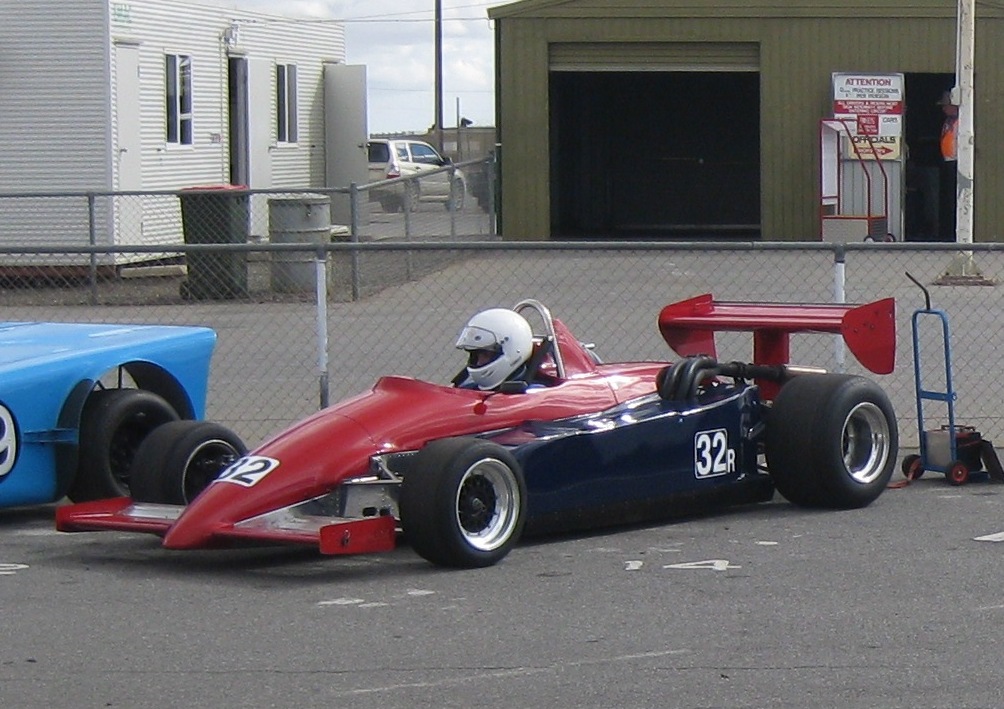
Ralt was a manufacturer of single-seater racing cars, founded by ex-Jack Brabham associate Ron Tauranac after he sold out his interest in Brabham to Bernie Ecclestone. Ron and his brother had built some specials in Australia in the 1950s under the Ralt name (standing for Ron and Austin Lewis Tauranac). Tauranac won the 1954 NSW Hillclimb Championship in the Ralt 500.
Built with the assistance of Tauranac's younger brother, Austin, in Australia. The Mk was powered by a 1,932cc pushrod Norton ES2. Tauranac made his own flywheel, connecting rods, and cylinders. The Mk2 was a sports car built by and for Austin, with a Ford 10 engine, Standard 10 gearbox, and Morris 8 rear axle. The Mk3 was purchased from the Hooper brothers when they retired. Tauranac designed a new chassis for it, and the car was primarily driven by Austin. The Mk4 began as a special, using a Vincent-HRD 1,000 cc (61 cu in) V-twin and a de Dion rear suspension. The car took two years to develop in Tauranac's spare time. After just two events, somebody insisted on buying it, so plans were made for a production run of five. The Mk5 was planned by Austin as a Peugeot-engined car, but abandoned so he could assist Tauranac with the production Mk 4s.
Tauranac founded Ralt in 1974 and the first product was the RT1, a simple and versatile car used in Formula Two, Formula Three and Formula Atlantic racing between 1975 and 1978.
In 1979, the RT2 was developed for Formula Two, with three cars being built for the Toleman team. Later, three more cars were built for private owners, including one exclusively for the revival of the Can-Am series. For 1980 Toleman built its own car, the TG280, which was based somewhat on the RT2 design; this was later built under licence by Lola as the T850 and further modified by Docking-Spitzley as the DS1. Two of the original Toleman RT2s were later raced in Can-Am, while the third ended up in South Africa, where copies called Lants were made. Related cars have appeared in hillclimb and sprint events in the UK as Romans and SPAs.
The RT2 also provided the basis for three cars in other categories: the RT3 in Formula Three, the RT4 in Formula Atlantic (which was also occasionally raced in Formula Two), and the RT5 in Formula Super Vee.
The RT4 was the car of choice in Australian Formula 1 and Formula Mondial during the early to mid-1980s. Roberto Moreno drove an RT4 to win the Australian Grand Prix in 1981, 1983, and the final AGP in 1984 before it became a round of the Formula One World Championship in 1985, while Alain Prost also drove one to victory in the 1982 Australian Grand Prix. Other F1 drivers to drive a Ralt RT4 in Australia during this period included Jacques Laffite and Andrea de Cesaris, as well as World Champions Alan Jones, Nelson Piquet, Keke Rosberg and Niki Lauda. The RT4, generally powered by a 1.6 litre, 4 cyl Ford BDA engine which produced around 220 bhp (164 kW; 223 PS), also saw John Bowe win the Australian Drivers' Championship in 1984 and 1985, while Australian Ralt importer Graham Watson used one to win the 1986 championship.
In 1980, Honda asked John Judd's Engine Developments to develop an engine for Formula Two, which would be used by the works Ralt team. Tauranac had previously been associated with Honda through Brabham's introduction of the Japanese marque to F2 in the 1960s, while Jack Brabham had co-founded Engine Developments with Judd. Between 1980 and 1984, Ralt's works F2 cars carried the RH6 designation: the RH6/80 and RH6/81 were developments of the RT2 theme, while the RH6/82, RH6/83 and RH6/84 were further developed around a new honeycomb tub. The cars proved very successful, winning 20 championship races and the 1981, 1983 and 1984 championships with Geoff Lees, Jonathan Palmer and Mike Thackwell respectively.
In 1985, Formula Two was replaced by the new Formula 3000 category. Ralt's first F3000 car was the RB20, essentially a further development of the RH6/84 but fitted with a Cosworth DFV engine. (The 'B' in the designation stood for Bridgestone, Ralt's tyre supplier and major sponsor at the time.) The car won four races of the inaugural International F3000 Championship with Thackwell and John Nielsen.
Hub AI
Ralt AI simulator
(@Ralt_simulator)
Ralt
Ralt was a manufacturer of single-seater racing cars, founded by ex-Jack Brabham associate Ron Tauranac after he sold out his interest in Brabham to Bernie Ecclestone. Ron and his brother had built some specials in Australia in the 1950s under the Ralt name (standing for Ron and Austin Lewis Tauranac). Tauranac won the 1954 NSW Hillclimb Championship in the Ralt 500.
Built with the assistance of Tauranac's younger brother, Austin, in Australia. The Mk was powered by a 1,932cc pushrod Norton ES2. Tauranac made his own flywheel, connecting rods, and cylinders. The Mk2 was a sports car built by and for Austin, with a Ford 10 engine, Standard 10 gearbox, and Morris 8 rear axle. The Mk3 was purchased from the Hooper brothers when they retired. Tauranac designed a new chassis for it, and the car was primarily driven by Austin. The Mk4 began as a special, using a Vincent-HRD 1,000 cc (61 cu in) V-twin and a de Dion rear suspension. The car took two years to develop in Tauranac's spare time. After just two events, somebody insisted on buying it, so plans were made for a production run of five. The Mk5 was planned by Austin as a Peugeot-engined car, but abandoned so he could assist Tauranac with the production Mk 4s.
Tauranac founded Ralt in 1974 and the first product was the RT1, a simple and versatile car used in Formula Two, Formula Three and Formula Atlantic racing between 1975 and 1978.
In 1979, the RT2 was developed for Formula Two, with three cars being built for the Toleman team. Later, three more cars were built for private owners, including one exclusively for the revival of the Can-Am series. For 1980 Toleman built its own car, the TG280, which was based somewhat on the RT2 design; this was later built under licence by Lola as the T850 and further modified by Docking-Spitzley as the DS1. Two of the original Toleman RT2s were later raced in Can-Am, while the third ended up in South Africa, where copies called Lants were made. Related cars have appeared in hillclimb and sprint events in the UK as Romans and SPAs.
The RT2 also provided the basis for three cars in other categories: the RT3 in Formula Three, the RT4 in Formula Atlantic (which was also occasionally raced in Formula Two), and the RT5 in Formula Super Vee.
The RT4 was the car of choice in Australian Formula 1 and Formula Mondial during the early to mid-1980s. Roberto Moreno drove an RT4 to win the Australian Grand Prix in 1981, 1983, and the final AGP in 1984 before it became a round of the Formula One World Championship in 1985, while Alain Prost also drove one to victory in the 1982 Australian Grand Prix. Other F1 drivers to drive a Ralt RT4 in Australia during this period included Jacques Laffite and Andrea de Cesaris, as well as World Champions Alan Jones, Nelson Piquet, Keke Rosberg and Niki Lauda. The RT4, generally powered by a 1.6 litre, 4 cyl Ford BDA engine which produced around 220 bhp (164 kW; 223 PS), also saw John Bowe win the Australian Drivers' Championship in 1984 and 1985, while Australian Ralt importer Graham Watson used one to win the 1986 championship.
In 1980, Honda asked John Judd's Engine Developments to develop an engine for Formula Two, which would be used by the works Ralt team. Tauranac had previously been associated with Honda through Brabham's introduction of the Japanese marque to F2 in the 1960s, while Jack Brabham had co-founded Engine Developments with Judd. Between 1980 and 1984, Ralt's works F2 cars carried the RH6 designation: the RH6/80 and RH6/81 were developments of the RT2 theme, while the RH6/82, RH6/83 and RH6/84 were further developed around a new honeycomb tub. The cars proved very successful, winning 20 championship races and the 1981, 1983 and 1984 championships with Geoff Lees, Jonathan Palmer and Mike Thackwell respectively.
In 1985, Formula Two was replaced by the new Formula 3000 category. Ralt's first F3000 car was the RB20, essentially a further development of the RH6/84 but fitted with a Cosworth DFV engine. (The 'B' in the designation stood for Bridgestone, Ralt's tyre supplier and major sponsor at the time.) The car won four races of the inaugural International F3000 Championship with Thackwell and John Nielsen.
Recent media