
Recent from talks
Ramu
Knowledge base stats:
Talk channels stats:
Members stats:
Ramu
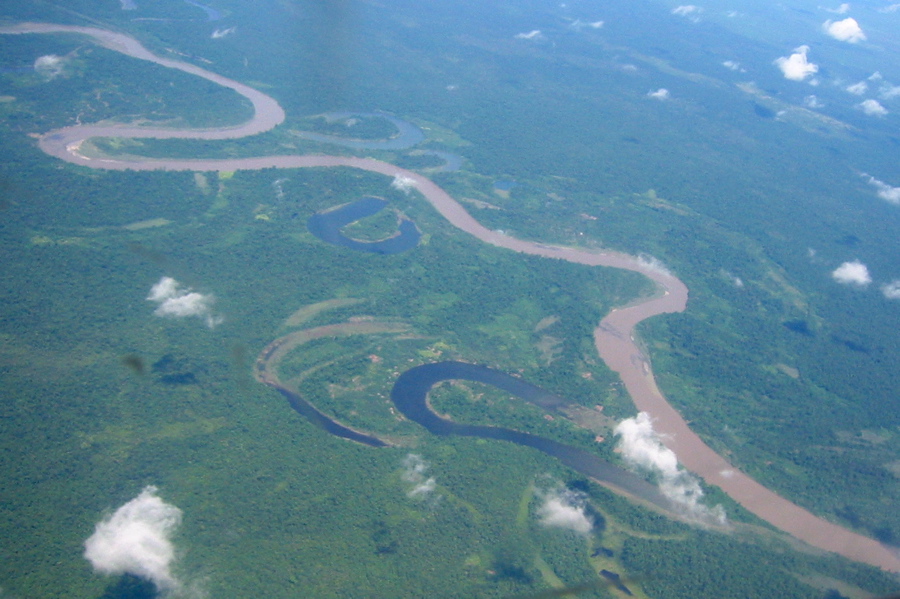
The Ramu River is a major river in northern Papua New Guinea. The headwaters of the river are formed in the Kratke Range from where it then travels about 640 km (398 mi) northwest to the Bismarck Sea.
Along the Ramu's course, it receives numerous tributaries from the Bismarck Range to the south and the Finisterre and Adelbert.
For many millennia, people have lived along the river, and the river has formed the basis for food, transport, and culture.
The area encompassed by the Ramu was part of Kaiser-Wilhelmsland when Germany established German New Guinea in 1884. The Germans were quick to explore their territory, and the mouth of the Ramu was discovered in 1886 by Vice-Admiral Freiherr von Schleinitz after returning to Finschhafen from an expedition to the nearby Sepik. Schleinitz called the Ramu, Ottilien after his ship the Ottilie.
The course of the river was first discovered 10 years later in 1896 after Dr Carl Lauterbach, a botanist, led an expedition organised by the German New Guinea Company (Neu Guinea Kompagnie) to find the headwaters of the Markham River. After crossing the Ortzen Mountains from Astrolabe Bay south of Madang, Lauterbach's party, instead of finding the Markham, found an unknown river flowing northwest. The party canoed along a section before their supplies dwindled; they returned to the coast retracing their route.
Another German explorer, Ernst Tappenbeck, who had accompanied Lauterbach previously, led the first expedition to ascend the Ramu in 1898. Tappenbeck was charged with discovering whether the Ottilien found in 1886 was the same river Lauterbech had found. He was accompanied by former Prussian Army officers, a Kompagnie official and an Australian gold prospector Robert Phillip, and travelled in the Neu Guinea Kompagnie steamer Herzog Johann Albrecht.
After five days of journey up the Ramu, Tappenbeck left his companions at a well-stocked camp when river water levels fell. He returned four and half months later in another steamer, Herzogin Elisabeth, and the party managed to navigate 190 mi (310 km) upstream and go farther still by canoe. By the end of 1898, the expedition had established a station on the river, mapped it and tributaries, and made a large botanical collection.
Further explorations for gold and botanical specimens were conducted by the Germans. In 1902, Hans Klink and J. Schlenzig established a new Ramu station that was later connected by a bridle track to the coast. Dr R. Schlecter led another expedition in 1902 in search of gutta-percha trees. Then in 1907, Austrian explorer Wilhelm Dammköhler led an expedition up the Markham Valley and linked the headwaters of the Markham River with the Ramu for the first time.
Hub AI
Ramu AI simulator
(@Ramu_simulator)
Ramu
The Ramu River is a major river in northern Papua New Guinea. The headwaters of the river are formed in the Kratke Range from where it then travels about 640 km (398 mi) northwest to the Bismarck Sea.
Along the Ramu's course, it receives numerous tributaries from the Bismarck Range to the south and the Finisterre and Adelbert.
For many millennia, people have lived along the river, and the river has formed the basis for food, transport, and culture.
The area encompassed by the Ramu was part of Kaiser-Wilhelmsland when Germany established German New Guinea in 1884. The Germans were quick to explore their territory, and the mouth of the Ramu was discovered in 1886 by Vice-Admiral Freiherr von Schleinitz after returning to Finschhafen from an expedition to the nearby Sepik. Schleinitz called the Ramu, Ottilien after his ship the Ottilie.
The course of the river was first discovered 10 years later in 1896 after Dr Carl Lauterbach, a botanist, led an expedition organised by the German New Guinea Company (Neu Guinea Kompagnie) to find the headwaters of the Markham River. After crossing the Ortzen Mountains from Astrolabe Bay south of Madang, Lauterbach's party, instead of finding the Markham, found an unknown river flowing northwest. The party canoed along a section before their supplies dwindled; they returned to the coast retracing their route.
Another German explorer, Ernst Tappenbeck, who had accompanied Lauterbach previously, led the first expedition to ascend the Ramu in 1898. Tappenbeck was charged with discovering whether the Ottilien found in 1886 was the same river Lauterbech had found. He was accompanied by former Prussian Army officers, a Kompagnie official and an Australian gold prospector Robert Phillip, and travelled in the Neu Guinea Kompagnie steamer Herzog Johann Albrecht.
After five days of journey up the Ramu, Tappenbeck left his companions at a well-stocked camp when river water levels fell. He returned four and half months later in another steamer, Herzogin Elisabeth, and the party managed to navigate 190 mi (310 km) upstream and go farther still by canoe. By the end of 1898, the expedition had established a station on the river, mapped it and tributaries, and made a large botanical collection.
Further explorations for gold and botanical specimens were conducted by the Germans. In 1902, Hans Klink and J. Schlenzig established a new Ramu station that was later connected by a bridle track to the coast. Dr R. Schlecter led another expedition in 1902 in search of gutta-percha trees. Then in 1907, Austrian explorer Wilhelm Dammköhler led an expedition up the Markham Valley and linked the headwaters of the Markham River with the Ramu for the first time.
Recent media