Hubbry Logo
MadangMadangMain
Open search
Madang
Community hub
Madang
logo
8 pages, 0 posts
0 subscribers
Be the first to start a discussion here.
Madang
Madang
from Wikipedia

Madang (old German name: Friedrich-Wilhelmshafen)[1] is the capital of Madang Province and is a town with a population of 27,420 (in 2005) on the north coast of Papua New Guinea. The city is also one of the major towns in Papua New Guinea.

Key Information

History

[edit]

Nicholai Miklukho-Maklai was probably the first European to visit the area. In 1871 he stayed at Astrolabe Bay south of present-day Madang for 15 months. He had a good relationship with the local communities before leaving, suffering from malaria.

In April 1884 an expedition by the German New Guinea Company led by Otto Finsch and Eduard Dallmann arrived and named the landing point "Friedrich Wilhelmshafen"; however, they felt that the area was unsuitable for a settlement. A subsequent survey in 1888 mentioned good soil conditions that would make a coffee plantation possible. In the summer of 1891 a station was built and by September 1892 was the seat of the provincial administration; however, the Imperial Government Commissioner remained at Stephansort, some 23 kilometers away due to concerns about malaria. The name of "Madang" was used by Papuan natives who had accompanied the German administrators after their home island and only became the official name of the settlement towards the end of the German administration. Although the settlement was expanded from 1893–1894 with warehouses, a sawmill, hospital and other facilities, (including an ox-drawn railway to Stephansort) various ventures, such as the coffee plantations and atap palm processing proved economically ruinous, due to malaria and inclement climate. From 1895 and 1896 several German warships were stationed here for a survey of surrounding waters, during which time a total of 295 men came down with malaria. In 1899 the capital of the New Guinea Company was transferred to Herbertshöhe on the island of New Pomerania (now New Britain).

Following World War I, the area was turned over to Australia as part of the League of Nations mandated Territory of New Guinea.

The Imperial Japanese Army captured Madang without a fight during World War II in 1942. In September 1943, Australian forces launched a sustained campaign to retake the Finisterre Range and Madang. The town was captured on April 24, 1944, but during the fighting and occupation it was virtually destroyed and had to be rebuilt afterwards.

NGO presence in Madang

[edit]

Madang is viewed by many in the country as being safer and more pleasant for expatriates than the larger cities of Lae and Port Moresby. Because of this, some NGOs have chosen Madang as the location of their main offices in country.

CUSO (a Canadian NGO) and VSO (a British NGO) both have their headquarters in Madang.

Save the Children, WWF, and World Vision are also present with branch offices in Madang.

As a consequence Madang has a larger number of expatriates working and living in the town than its small population would suggest.

Transport

[edit]

Climate

[edit]

Like other parts of Papua New Guinea, Madang has a tropical rainforest climate (Köppen climate classification Af), with significant rainfall throughout the year and the temperature being hot year-round. The average annual high temperature is 30.6 °C (87.1 °F), while the average annual low temperature is 23.8 °C (74.8 °F). Temperatures remain consistent throughout the year, but there is variation between the month. February has the highest average high at 31.2 °C (88.2 °F). Multiple months have the highest average low at 23.9 °C (75.0 °F). July and August has the lowest average high at 30.2 °C (86.4 °F). July has the lowest average low at 23.4 °C (74.1 °F).

Madang receives 3,106.8 millimetres (122.31 in) of rain over 224 precipitation days, with abundant rainfall throughout the year but a wetter and drier season. April, the wettest month, receives 389.4 millimetres (15.33 in) of rainfall over 23 precipitation days on average. September receives the least rainfall of any month, receiving 82.6 millimetres (3.25 in) of rainfall over 11 precipitation days. Madang receives 2184 hours of sunshine annually on average, with the sunshine being distributed fairly evenly across the year, with a noticeable dip in the wetter months. September receives the most sunshine, while March receives the least.

Climate data for Madang
Month Jan Feb Mar Apr May Jun Jul Aug Sep Oct Nov Dec Year
Record high °C (°F) 33.2
(91.8)
33.3
(91.9)
33.3
(91.9)
33.7
(92.7)
32.2
(90.0)
32.2
(90.0)
31.5
(88.7)
31.7
(89.1)
33.4
(92.1)
31.7
(89.1)
32.5
(90.5)
33.6
(92.5)
33.7
(92.7)
Mean daily maximum °C (°F) 30.8
(87.4)
30.6
(87.1)
30.6
(87.1)
30.6
(87.1)
30.7
(87.3)
30.4
(86.7)
30.2
(86.4)
30.2
(86.4)
30.5
(86.9)
30.9
(87.6)
31.2
(88.2)
30.9
(87.6)
30.6
(87.1)
Mean daily minimum °C (°F) 23.9
(75.0)
23.8
(74.8)
23.9
(75.0)
23.8
(74.8)
23.9
(75.0)
23.7
(74.7)
23.4
(74.1)
23.7
(74.7)
23.6
(74.5)
23.8
(74.8)
23.9
(75.0)
23.9
(75.0)
23.8
(74.8)
Record low °C (°F) 21.0
(69.8)
20.7
(69.3)
20.8
(69.4)
21.1
(70.0)
20.1
(68.2)
19.9
(67.8)
20.0
(68.0)
18.9
(66.0)
20.8
(69.4)
20.3
(68.5)
20.0
(68.0)
19.4
(66.9)
18.9
(66.0)
Average rainfall mm (inches) 343.8
(13.54)
292.0
(11.50)
329.8
(12.98)
389.4
(15.33)
343.4
(13.52)
186.4
(7.34)
144.2
(5.68)
93.8
(3.69)
82.6
(3.25)
239.2
(9.42)
280.2
(11.03)
382.0
(15.04)
3,106.8
(122.31)
Average rainy days 23 21 23 23 21 18 15 12 11 15 19 23 224
Average relative humidity (%) 85 85 85 85 85 84 84 82 83 83 84 84 84
Mean monthly sunshine hours 160 140 144 162 193 195 198 210 227 210 185 160 2,184
Source 1: World Meteorological Organisation[2]
Source 2: Deutscher Wetterdienst (extremes, humidity and sun)[3][4][a]

Education

[edit]

Madang is the home of Divine Word University.[citation needed] Madang Museum is a small museum that features natural science and ethnographic objects from the local area and East Sepik Province more widely.[5] It shares a building with Madang Visitors and Cultural Bureau.[6]

Products

[edit]

Industry and farming are growing constantly in importance, especially for export. There are the widespread coconut palm plantations on the coast and cardamum is grown in Madang.

The Kulili plantation is the second largest of Kar Kar Island's twelve plantations with its more than a thousand coconut palms and cocoa trees. 70% of the cocoa and 50% of the copra produced in Madang province comes from Kar Kar.

In Madang province 173 regional languages are spoken, some of them being extremely different from the others.

Images

[edit]

Notable people

[edit]

Sister cities

[edit]

Madang's sister cities are:

See also

[edit]

References

[edit]
[edit]

Notes

[edit]
Revisions and contributorsEdit on WikipediaRead on Wikipedia
from Grokipedia
Madang is a coastal town and the capital of in , situated on the northeastern coast along Astrolabe Bay in the . It serves as a key regional hub with a major airport and port facilities, supporting and transportation in the area. According to the 2011 national census conducted by the National Statistical Office, the population of Madang Urban Local-Level Government area was 35,971. Renowned for its picturesque setting, Madang is often called the "prettiest town in the South Pacific," featuring lush parks, waterways, tropical islands, and vibrant local markets. The town is a premier destination for , with world-class reefs, wreck sites from , and opportunities for game fishing near volcanic islands like Manam and Karkar. Its cultural significance is highlighted by events such as the annual Mabarosa Festival, which celebrates local traditions and arts. Economically, Madang functions as a center for , processing, and within , which produces significant amounts of cocoa, , , and other cash crops. The town's port handles exports of these goods, while light industries and fisheries contribute to local employment; , driven by diving and eco-adventures, supports hotels, resorts, and related services. Historically, Madang played a notable role during , with numerous Japanese shipwrecks in nearby Hansa Bay serving as underwater memorials and attractions today. The town also hosts institutions like Divine Word University, enhancing its role as an educational and administrative center.

Geography and environment

Location and physical features

Madang is situated on the northern coast of , serving as the capital of . Its geographic coordinates are approximately 5°13′S 145°48′E, placing it at the head of Astrolabe Bay along the . The town lies at a low elevation of about 5 meters above , contributing to its coastal vulnerability and accessibility by sea. Inland from Madang, the rugged Adelbert Range rises sharply, forming a mountainous backdrop that reaches elevations over 1,700 meters and supports dense rainforests. Offshore, the province features numerous volcanic islands, including the prominent Manam, Karkar, and , which are part of the Bismarck Volcanic Arc and add to the region's dramatic seascape. These islands, some active volcanically, lie within a vast expanse of ocean dotted with reefs and cays. The town occupies a coastal peninsula characterized by a mix of urban development and natural features, including parks, waterways, and luxuriant such as shade trees and mangroves. This layout creates a compact urban core that blends seamlessly into surrounding rural fringes, encompassing a relatively small area with reef-fringed lowlands. The fosters this lush environment, highlighting Madang's rich in coral reefs and rainforests that extend from the coast to the interior highlands.

Climate

Madang experiences a tropical rainforest climate classified as Af under the Köppen-Geiger system, marked by persistently high humidity levels often exceeding 80% and uniformly warm conditions year-round. The region's coastal position along Astrolabe Bay contributes to temperature moderation, maintaining stable warmth without extreme fluctuations. Average daily maximum temperatures hover around 30.6°C, while minimums average 23.8°C across all months, reflecting the equatorial proximity and oceanic influence. Annual sunshine duration totals approximately 2,184 hours, providing consistent daylight for the lush surrounding vegetation. Precipitation in Madang is abundant and evenly distributed, with an annual average of 3,106.8 mm based on long-term records from 1973 to 2006. The occurs from to , driven by the northwest , when monthly rainfall peaks at 389.4 mm in and rain days average 23 per month during , , and . In contrast, the drier period from to sees reduced totals, with recording the lowest at 82.6 mm and only 11 rain days, though no true exists due to the tropical nature. This bimodal pattern results from interactions between and the . The climate significantly influences local agriculture, supporting year-round cultivation of tropical staples like , bananas, and cash crops such as cocoa, thanks to the reliable warmth and moisture. However, intense rainfall during the often leads to riverine flooding along waterways like the Ramu River, causing , crop damage, and infrastructure strain. While Madang lies outside the primary cyclone belt, tropical storms and associated heavy rains pose occasional risks, contributing to landslides in hilly areas. Post-2020 trends show increasing rainfall variability and a projected temperature rise of about 0.6°C by the late 2030s in the Momase region, heightening flood and erosion vulnerabilities for farming communities.

History

Pre-colonial and early contact

The Madang region, part of the northern coast of , has evidence of extending back approximately 50,000 years, aligning with the initial of the continent during the Pleistocene era. Archaeological investigations in , such as those in the Simbai-Kaironk Valleys, indicate possible human presence as early as 31,000 years ago, with more definitive landscape use from 17,000 to 15,000 years ago, reflecting early Papuan peoples' adaptation to diverse environments including coastal and inland areas. These ancient inhabitants, precursors to modern Papuan groups, engaged in practices suited to the tropical rainforests and river systems. Subsequent migrations introduced Austronesian-speaking peoples around 3,500 years ago, who settled primarily along the coasts and influenced local through and maritime technologies. Traditional societies in pre-colonial Madang comprised coastal communities focused on , sago processing, and reef resource management, often organized in village clusters with matrilineal systems, while inland highland groups emphasized , husbandry, and networks across valleys. The province's linguistic diversity, with over 170 indigenous languages from both Papuan and Austronesian families, underscores this , where oral traditions and exchange systems sustained social cohesion. The first documented European contact occurred in 1871 when Russian ethnographer and explorer Nicholai Miklukho-Maklai arrived at Astrolabe Bay, south of present-day Madang, establishing a 15-month residency among local Huon Peninsula communities. Miklukho-Maklai meticulously recorded indigenous customs, including tattooing practices, canoe construction, and social hierarchies, while fostering relatively peaceful interactions that contrasted with later colonial encounters; his observations, detailed in personal diaries, provided early ethnographic insights into Papuan life without immediate exploitation. This visit marked the onset of sustained external documentation, though it did not lead to immediate territorial claims.

Colonial era

In 1884, the (Deutsche Neuguinea-Kompagnie) founded Friedrich-Wilhelmshafen—now known as Madang—on the northern coast of as a primary base for colonial expansion in . The settlement was established on 20 November 1884 by Captain Schering during an expedition led by Otto Finsch and Eduard Dallmann, who had arrived earlier that year to survey suitable sites for trading and administration. This marked the formal beginning of European colonial control in the region, with the site selected for its deep natural harbor and proximity to resource-rich areas. The company quickly set up the first , focusing on exchanges of European goods like mirrors and beads for local products such as , yams, and coconuts to foster initial peaceful relations with indigenous communities. Key economic developments centered on production, which became the colony's mainstay export. Initial coconut planting occurred around Bay by 1891, with the number of palms reaching 15,500 by 1900 and expanding to over 20,000 by 1901 through intensified efforts starting in 1896. By the late 1890s, after unsuccessful trials with crops like cacao, , and , the company shifted resources to copra plantations, establishing facilities on nearby islands such as Seleo and establishing a network of 44 plantations across by 1914, producing 2,647 tons annually. Friedrich-Wilhelmshafen served as the company's headquarters from September 1892, replacing , and grew into a central hub for administration and trade, supported by infrastructure like piers, warehouses, and operations. However, in , following the imperial government's takeover of administration from the financially strained company on 1 April, the capital was relocated to Herbertshöhe (now Kokopo) on due to its healthier climate and better conditions for . Madang's status diminished administratively but it retained importance as a major port for copra exports and regional commerce. Following Germany's defeat in , Australia assumed control of the former German territories under a in 1921, administering Madang as part of the until the 1940s. The period saw gradual infrastructure improvements, including limited road networks and bridges, often constructed using indigenous labor and accelerated by wartime needs in the early 1940s, though maintenance remained challenging due to resource constraints and reliance on patrol tracks. Christian missions, particularly the Lutheran Church, played a pivotal role in social and economic development, providing education, health services, and agricultural training since the late while collaborating with Australian agricultural officers (Didiman) to promote sustainable farming practices. Economic exploitation emphasized cash crop introduction to integrate locals into the , with cocoa emerging as a key focus through trials at stations like Keravat in the 1920s–1930s and distribution of planting materials by extension officers from the onward. was also experimentally introduced during this era as a potential high-value , though it saw limited adoption compared to cocoa and . These efforts, supported by the , Stock, and Fisheries, aimed to diversify exports but were hampered by poor and the ongoing emphasis on economies until the post-war period.

World War II

During , Madang held strategic importance in the due to its location on the northeastern coast, serving as a key port and airfield site. The Japanese bombed the town on 21 January 1942 as part of preparations for their invasion of nearby , but they did not occupy it until 1 January 1943, when forces established control without significant resistance. Madang quickly became a major Japanese base for operations in the Southwest Pacific, with the completion of an airfield in February 1943 and the initiation of a supply road to in April 1943 to support forward troops amid growing Allied air superiority. The base hosted units such as the 248th flying Ki-43 Oscar fighters, facilitating air operations until Allied bombings rendered it increasingly ineffective. Allied counteroffensives intensified in 1943, beginning with the Battle of the Bismarck Sea from 2 to 4 March, where U.S. Fifth Air Force and Royal Australian Air Force aircraft destroyed a Japanese convoy en route to Lae, severely disrupting reinforcements and supplies to Japanese positions in the Huon Peninsula, including Madang. This victory isolated Japanese forces and paved the way for further advances. In early 1944, U.S. troops of the 32nd Infantry Division landed at Saidor on 2 January, bypassing and encircling enemy strongholds to the north. Australian forces from the 7th Division then pursued the retreating Japanese along the coast as part of the Huon Peninsula campaign, reaching Madang on 24 April 1944; the town was found abandoned, marking the effective end of organized Japanese resistance in the area. The war caused extensive destruction in Madang, with Allied aerial bombardments from onward cratering the airfield and devastating buildings, leaving the town virtually destroyed by the time of liberation. The local population endured severe hardships, including displacement, famine, and forced labor under Japanese occupation, where indigenous people were conscripted as for construction projects like roads and defenses, contributing to high civilian suffering across . Postwar reconstruction began immediately under Australian military administration, with the airfield repaired by late April 1944 for continued Allied use and later expanded into Madang Airport; the port and town infrastructure were rehabilitated during the trusteeship period (formalized in 1947 under oversight), restoring essential facilities by the late 1940s.

Post-independence development

Following Papua New Guinea's independence from on September 16, 1975, Madang was designated the capital of the newly established as part of the country's of power to provincial governments. This status positioned Madang as an administrative hub for the northern coastal region, facilitating local governance and service delivery amid the post-colonial transition. The town's population, which stood at approximately 12,000–15,000 in the early , experienced steady growth driven by administrative expansion and economic opportunities, reaching around 27,000 by the mid-2000s and contributing to provincial figures that rose from about 200,000 in 1980 to 761,154 as per the 2024 National Population Census (released October 2025). Education emerged as a key pillar of development in Madang during the post-independence era, with significant investments in higher learning institutions to address skill gaps in the young nation. The establishment of Divine Word University in 1996, evolving from the Divine Word Institute founded in 1980, marked a milestone in expanding access to , particularly for underserved groups including women and rural youth from all 20 provinces. The university's focus on research, teaching, and community service in a Christian context supported , enrolling over 1,600 students by the early 2000s and fostering programs in , and health sciences. Concurrently, an influx of non-governmental organizations (NGOs) in the 1980s and 1990s bolstered social and environmental initiatives, with international conservation groups like the Foundation for People and Community Development promoting eco-forestry and protection as alternatives to large-scale . These NGOs provided resources and awareness programs, though tensions arose as donor-driven priorities sometimes diverged from local expectations for sustained economic support. Infrastructure upgrades gained momentum after 2000, aligning with national efforts to connect remote areas and stimulate growth. Projects under the Connect PNG initiative included road sealing and expansion, such as the Baiyer-Madang Highway and upgrades to the Madang Airport-to-Town four-lane route, funded by over K30 million in government commitments by 2024 to improve transport links and trade access. These developments built on earlier reconstruction, enhancing connectivity for and while addressing isolation in the province. However, Madang has faced persistent challenges, including rapid urban migration from rural areas seeking jobs and services, which has strained , , and public order in the town. Environmental pressures from activities have exacerbated , with losing significant forest cover—equivalent to hundreds of thousands of hectares since the —leading to , , and community displacement. The region was further impacted by seismic events in the southern highlands, notably the 7.5-magnitude earthquake in February 2018 centered in , which caused widespread damage there and in nearby provinces. In , Madang hosted key events for Papua New Guinea's 50th Anniversary, including a four-day program and the unveiling of an Independence Monument in September.

Demographics

Population statistics

The of , as recorded in the 2024 National , stands at 761,154, marking a significant increase from the 492,360 inhabitants counted in the 2011 . This growth reflects an average annual rate of approximately 3.4% over the 13-year period, driven primarily by rural-to-urban migration within the . Historical data indicates steady expansion, with the provincial rising from 365,106 in 2000 to 492,360 in 2011, and further to 761,154 in 2024. Projections based on this trend suggest the provincial could approach 787,000 by 2025, continuing the pattern of sustained increase influenced by from rural areas. The urban population of Madang town proper, encompassing the Madang Urban Local-Level Government (LLG) area of 17.85 km², was 35,971 according to the 2011 , yielding a of 2,016 people per km². This figure represents growth from 28,547 in 2000, at an annual rate of 2.1%, though more recent urban-specific details remain pending release from the 2024 enumeration. The urban composition includes a central town area, surrounding suburbs, and adjacent villages, forming a compact hub within the predominantly rural province where over 95% of residents live outside urban boundaries. In the 2024 , exhibits a imbalance with 401,885 males (52.8%) and 359,269 females (47.2%), corresponding to a of 112 males per 100 females. For the urban area in 2011, the breakdown was similarly skewed, with 18,705 males (52%) and 17,266 females (48%). Age-specific data at the provincial level aligns with national trends of a youthful demographic, though detailed breakdowns for are not yet disaggregated from the latest .

Ethnic groups and languages

Madang Province is home to a rich tapestry of indigenous ethnic groups, primarily comprising Papuan and who have inhabited the region for millennia, with pre-colonial settlement patterns reflecting migrations from both inland highlands and coastal areas. Papuan groups, such as the Amele and Kobon, predominantly occupy the inland and highland areas, maintaining distinct cultural identities tied to their environments. In contrast, Austronesian groups, including speakers of languages like Gedaged and Takia, are more common along the coast and offshore islands, where their seafaring heritage has shaped community structures. These ethnic divisions often align with linguistic affiliations, fostering a of over 100 small-scale societies that emphasize and territorial ties. A small community, mainly from and , resides in urban areas like Madang town, contributing to sectors such as , fisheries, and development aid. The linguistic landscape of Madang exemplifies Papua New Guinea's extreme diversity, with 171 indigenous languages spoken across the province, representing about one-fifth of the national total. These languages fall into two major phyla: non-Austronesian (Papuan) languages, such as Amele, Kalam, and Usan, which are prevalent in the interior and number around 100 varieties; and Austronesian languages, including Arop-Lokep, Gedaged, and Manam, concentrated in coastal and island communities. Tok Pisin, an English-based creole, serves as the primary lingua franca, facilitating inter-group communication in markets, schools, and administration throughout the province and nation. English and Hiri Motu are also official languages but see limited daily use among indigenous populations. This multilingualism underscores the province's role as a hotspot for linguistic endangerment, with many smaller languages shifting toward Tok Pisin under modernization pressures. The ethnic and linguistic diversity of Madang profoundly influences cultural practices, where traditions like sing-sings—vibrant intertribal gatherings featuring dances, music, and feathered headdresses—serve to reinforce social bonds and celebrate heritage. Clan systems remain central to , governing land rights, marriages, and among both Papuan and Austronesian groups, even as they adapt to contemporary challenges like and resource development. These enduring customs highlight the resilience of Madang's communities in preserving identity amid external influences.

Government and administration

Local governance

Madang serves as the provincial capital of in , functioning as the administrative and economic hub of the region. The town is primarily governed by the Madang Urban Local Level Government (ULLG), which operates under the broader framework of 's provincial government system established by the on Provincial Governments and Local-level Governments (1997). This law decentralizes authority from the national government to provinces and local-level governments, enabling them to manage local services such as , and infrastructure . At the provincial level, leadership is provided by the , currently Hon. Ramsey Pariwa (as of November 2025), who was elected during the 2022 national general elections and represents the province in the National Parliament. The Madang Urban LLG is headed by the Town Mayor, Peter Yalsy Masia (as of August 2024), who oversees urban-specific affairs including and public order; following the 2025 LLG elections, the position may have changed with results pending as of November 2025. Electoral processes for LLG positions, including mayors and councilors, are held every five years through direct voting in wards; the most recent elections commenced polling in October 2025, marking the first full cycle since the delayed 2013 polls. The province is divided into six districts—Madang, Bogia, Middle Ramu, Rai Coast, Sumkar, and Usino Bundi—each encompassing multiple local-level governments, with a total of 19 LLGs across the province. Madang Urban LLG specifically administers the town's 10 wards, integrating with district and provincial structures to implement national policies that promote local decision-making and for .

NGO activities

Madang hosts offices of several major international non-governmental organizations (NGOs), including the World Wildlife Fund (WWF) and World Vision, which operate dedicated offices there. These organizations established a presence in Madang starting from the onward, drawn by the town's relative safety, coastal accessibility via air and sea ports, and its role as a stable hub in Papua New Guinea's northern region. World Vision has been active in the country for more than 40 years, leveraging Madang's infrastructure for regional outreach. NGO programs in Madang emphasize and initiatives, alongside efforts. World Vision runs projects for ren, child grant programs, and agricultural training in to enhance and resilience. WWF focuses on programs from its Madang base, working since 1995 to protect coastal ecosystems through community partnerships. These efforts often receive brief coordination from provincial administration to align with local needs. In disaster response, NGOs have played key roles following seismic events affecting Madang, such as the 7.6 magnitude in September 2022 that damaged homes and in the . World Vision and other groups provided immediate aid, including shelter materials and health support, to affected communities. Similarly, in the 2023 in , international NGOs like the (in partnership with USAID) distributed relief items to rebuild resilience. A significant expatriate community, primarily composed of NGO staff and volunteers, resides in Madang, supporting these operations through expertise in program implementation and . This group contributes to the local via , services, and without engaging in formal roles.

Economy

Agricultural production

Madang Province's agricultural sector is dominated by smallholder farming and plantation production, with cash crops playing a central role in the local alongside subsistence activities. Key cash crops include and cocoa, primarily produced on plantations such as Kulili Estates on Karkar Island, which cultivates both commodities under the island's high-rainfall conditions of 3000–4000 mm annually. Coconut palms are widespread, supporting production, while serves as a minor but notable cash crop in certain highland areas such as the Upper Ramu. These crops contribute significantly to provincial exports, facilitated by coastal transport links to Madang town for processing and shipment. Subsistence farming remains the backbone for most rural households, centered on small-scale gardens that produce staple foods such as yams (Dioscorea esculenta and D. alata), (Colocasia esculenta), and bananas, often intercropped with and for dietary diversity. These gardens, typically managed under systems with fallow periods, meet the majority of local food needs, with yams and planted in the (September–December) and harvested mid-year. Coastal fisheries complement this by providing a vital protein source, with consumption averaging high levels in island and lagoon communities, where marine resources account for a substantial portion of dietary animal protein. Agricultural productivity in Madang faces challenges from climate variability, including shifting rainfall patterns and rising temperatures, which exacerbate pests like the taro beetle and diseases such as black pod in cocoa, leading to reduced yields in low-lying coastal zones. Land tenure issues, rooted in customary ownership, limit investment in long-term and contribute to shortening periods, degrading over time. In response, post-2010 initiatives have promoted sustainable practices, such as integration in cocoa systems and adoption of climate-resilient varieties through like the Productive Partnerships in Project, enhancing smallholder resilience without fertilizers. Recent efforts as of 2025 include the PNG Commercialization and Diversification (PACD) project, which has distributed over 600 cocoa seedlings to schools and established partnerships (e.g., with Kulili Estate supporting 500 farmers) to boost smallholder production.

Industry and trade

Madang's industrial landscape includes a historical timber sector, with past significant operations in the Gogol Valley, located inland from the town. The Gogol timber project, initiated in the late , primarily involved clear-felling for pulp and chip production, yielding wood chips that were processed and exported through local mills until operations ceased around 2010. Alongside limited production of sawn timber from regional harvesting, other sectors contribute to the . Complementing these, small-scale manufacturing includes copra processing, drawing on agricultural inputs like dried coconut kernels from local plantations. The WR Carpenter Group's facility in stands as Papua New Guinea's largest coconut processing plant, producing and copra meal primarily for export markets. Plans announced in 2025 aim to establish a new major coconut processing factory in Madang to produce high-end products. Madang serves as a vital hub for provincial goods, with its facilitating the shipment of copra, cocoa, , and timber products to international destinations. The Coffee Industry Corporation launched robusta coffee projects in Madang in July 2025 to support local producers. The fisheries processing sector has emerged as a key area for economic diversification, particularly since government reforms in the late aimed at encouraging domestic value addition. The RD Tuna Canners facility in Madang, operational since 2012, processes approximately 150 metric tons of daily into canned products, supporting export growth and local amid efforts to reduce reliance on raw commodity shipments. Negotiations as of early 2025 are underway for a new joint-venture cannery in Madang with a planned capacity of 300 metric tons per day. Despite these advances, the faces challenges from heavy dependence on primary exports like logs and agricultural goods, with ongoing initiatives focused on enhancing processing capacities to build resilience against global market fluctuations.

Infrastructure

Transportation networks

Madang's road network primarily revolves around the Ramu Highway, a vital approximately 175-kilometer sealed route that connects the provincial capital to Watarais Junction on the Highlands Highway, providing access to in (additional ~160 km) and extending linkages to the Highlands provinces, facilitating the transport of goods and passengers along one of Papua New Guinea's key economic corridors. Local public motor vehicles (PMVs), operating as minibuses, provide essential intra-provincial services, such as routes from Madang town to surrounding areas like Umi and Raikos, though operators frequently face disruptions including strikes over security concerns and fare disputes. Road maintenance remains a persistent challenge, particularly during the rainy season when heavy downpours exacerbate potholes and erosion, often rendering sections impassable and hindering connectivity to rural communities. Air transport in Madang centers on Madang Airport (AYMD), a domestic hub established during the era with a crushed runway that has since been upgraded to asphalt. The airport features a single measuring approximately 1,570 meters in length, supporting operations for smaller aircraft on routes primarily to , with additional domestic connections to and Wewak operated by and Airlines PNG. This infrastructure handles around three daily domestic flights, emphasizing Madang's role as a regional node despite limitations in accommodating larger jets without further extensions. Sea transport operates through the Port of Madang, situated in Astrolabe Bay on the northern coast, serving as a multipurpose facility for inter-island ferries, vessels, and fishing boats with approximately 18,000 square meters of storage areas, including hardstand and covered sheds, equipped for conventional handling. The port manages a mix of (about 42% of traffic) and services (around 12%), including ferries connecting to nearby islands and coastal routes, but lacks dedicated international deep-water berths or terminals, relying instead on geared multipurpose vessels for regional . This setup supports the movement of bulk goods like agricultural products, underscoring the port's integral yet constrained contribution to Madang's logistics.

Utilities and services

Water PNG Limited, a responsible for urban water supply under the National Water Supply and Sewerage Act of 2016, manages the provision of treated water to Madang's urban population. The company sources water primarily from the Gum River and treats it at the Panim Plant, delivering over 10 million liters daily through a reticulated pipe network to serve the town's residents, covering a significant portion of the in line with national urban access rates of approximately 77% for improved sources. Sanitation services are integrated into this system, but challenges persist, including high losses averaging 52% due to aging and leaks. In rural fringes surrounding Madang, faces risks of from human settlements, agricultural runoff, and improper disposal, exacerbating access issues beyond urban piped supplies. Madang's electricity is primarily supplied through the Ramu grid , powered by the Ramu 1 Hydroelectric with an installed capacity of around 77 MW, though operational capacity has been upgraded and rehabilitated to approximately 60 MW in recent years. This hydroelectric source supports the town's distribution network managed by Power Limited, but frequent outages remain a significant issue due to transmission challenges and maintenance needs, with the broader power sector experiencing over 40 blackouts per month on average in periods like 2015. To address reliability, solar initiatives have been introduced post-2015, including hybrid mini-grid projects and large-scale rollouts such as the Pawa Bilong Kirapim Raikos program in , which, completed in September 2025, installed over 12,000 household solar systems and 22 facilities, powering 781 streetlights across 140 villages and benefiting approximately 60,000 . Telecommunications in Madang are dominated by and Telikom , both providing mobile network coverage including , , , and emerging services across the urban and surrounding districts. holds the majority market share of mobile usage in , with extensive tower infrastructure supporting data services. has grown steadily, with national penetration reaching 24.1% by early 2025, driven by mobile expansion. coverage nationwide has doubled to 80% by 2025, facilitating improved connectivity in provincial centers like Madang through and enhancements.

Education and culture

Educational institutions

Madang's higher education sector is led by Divine Word University, a national Catholic institution located in the town. Established as a university by an in 1996 (having evolved from the Divine Word Institute founded in 1980), it enrolls approximately 3,185 students across its campuses, with the Madang site serving as the main hub. The university offers undergraduate and postgraduate programs in key areas including theology, , and , and social sciences, and sciences, focusing on developing skilled professionals for Papua New Guinea's needs. At the primary and secondary levels, Madang Province features an extensive network of government, church-run, and community schools. As of 2019, assessments indicate 531 elementary and 255 primary schools operating in the province, supplemented by 18 secondary schools, collectively serving tens of thousands of students from early grades through to grade 12. Enrollment challenges persist in rural areas, but urban schools in Madang town, such as Madang Christian Academy with over 1,050 students, provide essential access to . Supported by national initiatives to boost attendance and foundational skills, Papua New Guinea's overall literacy rate stands at approximately 64% as of 2020. Vocational training opportunities in Madang emphasize practical skills for local industries, particularly through the PNG Maritime College and Madang Technical College. The Maritime College, based in Madang, delivers certificate and diploma programs in navigation, engineering, and seamanship, preparing graduates for the shipping sector. Madang Technical College offers training in , mechanics, , and skills, aligning with provincial economic priorities. These institutions benefit from Australian aid via the Partnership, which funds equipment upgrades and curriculum development to enhance .

Cultural heritage and museums

The Madang Provincial Museum, also known as Haus Tumbuna, serves as a key repository for the region's , housing extensive collections of ethnographic artifacts such as traditional masks, carvings, and costumes that represent the diverse indigenous groups of . These items, alongside natural history specimens including shells and , illustrate the province's rich and cultural practices tied to over 170 local languages. The museum's displays also include tools and from historical periods, emphasizing the continuity of local traditions. Beyond the museum, Madang's coastal areas preserve pre-colonial artifacts that provide insights into ancient settlement patterns and trade networks along the northeast coast. Archaeological sites in the region have yielded Madang-style red-slipped pottery, obsidian tools, and shell ornaments dating back over 2,500 years, reflecting early maritime interactions and resource use. These artifacts, often found in deposits near villages like Bilbil, highlight the enduring significance of coastal economies in the area's . Annual cultural festivals in Madang further showcase preserved heritage through displays of bilas, the traditional dress adorned with feathers, shells, and natural pigments, drawing from the province's multifaceted ethnic identities. The Madang Festival, held yearly, features performances and exhibitions that highlight these elements, fostering with ancestral . Preservation efforts in Madang have been bolstered by provincial initiatives since 2010, including the adoption of environmental and conservation laws aimed at safeguarding cultural sites from threats such as in surrounding forests. These policies, integrated into broader plans, emphasize community involvement in protecting archaeological and ethnographic resources amid ongoing land use pressures.

Tourism and attractions

Natural sites and activities

Madang's natural attractions are centered around its volcanic offshore islands and vibrant marine ecosystems, offering opportunities for , , and . Astrolabe Bay, a sheltered inlet along the province's northern coast, features extensive fringing coral reefs that support high marine biodiversity, including over 1,300 documented species across the Madang District. These reefs, characterized by dense cover and diverse habitats from shallow lagoons to deeper drop-offs, attract snorkelers and divers seeking encounters with colorful schools, sea turtles, and endemic species such as the and . The offshore islands provide striking volcanic landscapes and biodiversity hotspots accessible by boat from Madang town. Karkar Island, located about 74 kilometers northeast, is an oval-shaped volcanic landmass with a prominent central that rises to 1,839 meters, offering challenging hikes through lush rainforests to viewpoints overlooking black sand beaches and the . Manam Island, 13 kilometers off the northern coast near Bogia, is dominated by an active that frequently erupts, producing ash plumes and lava flows; while access is restricted during heightened activity for safety, it remains a dramatic natural feature visible from the mainland. Long Island, situated in the Vitiaz Strait east of Madang, serves as a with rapid ecological recolonization following its cataclysmic eruption around 1645 CE, now supporting diverse fig species, pollinators, and endemic that draw eco-explorers. Outdoor activities emphasize low-impact engagement with Madang's ecosystems, including amid Astrolabe Bay's gardens and for like the in nearby lowland forests. Guided tours promote sustainable practices, such as avoiding reef contact during dives to protect fragile habitats. Protected areas like Balek Wildlife Sanctuary, 10 kilometers south of Madang, encompass coastal grasslands, , and sulfur caves that support eels, birds, and small mammals, with short walking trails providing access to these features. Surrounding rainforests and coastal paths in the province facilitate eco-treks, where visitors can observe tropical flora and fauna while adhering to post-2020 guidelines from the Tourism Promotion Authority, which emphasize minimal environmental disturbance, community involvement, and to sustain these sites.

Historical and cultural tourism

Madang serves as a poignant destination for those interested in history, particularly its role as a key site during the Pacific campaign. The Memorial , located at Kalibobo Point overlooking Madang Harbour, stands as a prominent relic dedicated to the Allied coastwatchers—primarily Australian and British personnel alongside local Papua New Guinean volunteers—who operated as intelligence spies behind Japanese lines from 1942 onward. Constructed in 1959 through public subscription and official funding, the working commemorates the 28 coastwatchers who perished during their perilous missions relaying vital information on Japanese naval movements, which significantly aided Allied victories in the region. Nearby, the waters of Madang Bay hold several Japanese shipwrecks from the era, including three large vessels run aground around Biliau Island; these remnants of intense Allied bombing campaigns provide tangible links to the battles that shaped the area's wartime narrative. Annual remembrance events, such as the National observed on July 23, feature dawn services at the , where locals and visitors honor the sacrifices of soldiers and civilians involved in the conflict. Cultural tourism in Madang emphasizes immersive experiences with the province's diverse indigenous traditions, drawing enthusiasts to authentic village interactions and performative . Visitors often participate in guided tours to nearby coastal and highland villages, where they witness traditional sing-sings—vibrant performances featuring rhythmic drumming on kundu instruments, elaborate dances, and that preserve oral histories and social customs. These events allow direct engagement with communities, including demonstrations of craft-making such as bilum bags from fibers and carving wooden artifacts, highlighting the artistic heritage of over ten ethnic groups in the region. Local bilas festivals and cultural shows further amplify these experiences by showcasing traditional adornments through parades and displays of body paint, feathers, and , fostering cultural exchange and pride among participants. Complementing these are occasional NGO-supported community initiatives, which promote sustainable village stays to support local economies while educating on customs like ceremonial feasts. Supporting this niche tourism, Madang's infrastructure caters to history and culture seekers with a range of accommodations, including waterfront resorts like Madang Resort and Kalibobo Village Resort, which offer en-suite rooms, pools, and proximity to key sites for convenient access. In 2024, Madang Province recorded 3,111 international visitor arrivals.

Society

Daily life and traditions

In Madang, daily life revolves around structures, where clans form the core social units responsible for subsistence activities such as , , and small-scale cash cropping. Family members typically share meals prepared from locally grown produce like , bananas, and leafy greens, with cooking done through boiling or roasting over open fires. A significant portion of the , particularly women, engages in market trading as a primary income source, selling fresh , betel nut, , and seasonal fruits at roadside stalls or the central Madang Market, often attending 2-3 days per week and earning over three times the national . These markets serve not only economic functions but also as social hubs for exchanging news and building ties. Weekends often feature communal church services, where Christian hymns blend with local rhythms, followed by events like soccer matches that foster intergenerational participation and physical well-being. Traditional practices in Madang communities emphasize rites of passage and oral histories, preserving amid ethnic diversity. Initiation ceremonies for young men, such as those held in Riwo village, last up to six weeks and involve isolation in men's houses, fasting, and lessons in discipline and respect from elders, culminating in feasts and gift exchanges. remains a vital , with elders recounting ancestral tales (tumbuna stories) in or local languages during evening gatherings, transmitting knowledge of history, , and , as documented among the Gildipasi speakers. adapt to urban influences through modernized festivals, where traditional body adornments (bilas) incorporate contemporary fabrics and designs while honoring motifs. Social dynamics in Madang reflect evolving gender roles and challenges from modernization since 2000, including migration to urban centers. Women predominantly handle informal market economies and household provisioning, yet face patriarchal constraints limiting decision-making in clans, with high rates of gender-based violence reported across coastal regions. and rural-to-urban migration exacerbate law-and-order issues, as young people seek opportunities in towns like Madang, leading to squatter settlements and intergenerational tensions over land rights. Communities respond through church-led programs promoting and cultural to mitigate these effects, fostering resilience against economic shifts.

Notable residents

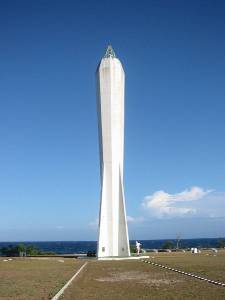
Yali Singina (c. 1912–1975), born in Sor village in Madang District, was a influential political and religious leader known for his role in the post-World War II movement and advocacy for Papua New Guinean autonomy. As a coastwatcher during the war and later a local government councillor and , Yali mobilized communities across for social and political reforms, emphasizing education and . His visions and organizational efforts left a lasting impact on regional identity and resistance to colonial structures. Sir Arnold Amet (born 1940), originating from Karkar Island in , served as Papua New Guinea's from 1982 to 2003 and later as of Madang from 2007 to 2012. A prominent and , Amet contributed to the nation's legal framework, including roles as , and was appointed PNG's Ambassador to the in 2025. His career reflects a commitment to justice and provincial development, drawing from his upbringing in Madang's coastal communities. Sir Peter Barter (1931–2022), a long-time resident of Madang since the early 1960s, was a key figure in tourism and as the province's from 1997 to 2002 and Minister for Health. Originally an aviator who flew for missionaries and airlines in the region, Barter developed Madang's infrastructure, including acquiring and expanding the , and was posthumously awarded the 2025 National Tourism Lifetime Achievement Award for his contributions to and . Andrew McIntosh (born 1980), a cricketer born in Madang, played for in international matches, including the 2011 ICC World Cricket League Division Two, as a right-handed batsman and leg-break bowler. His debut for the national team highlighted Madang's emerging talent in the sport. Demas Saul, a celebrated musician hailing from Madang, has been a staple in PNG's music scene since the 1980s, producing hits like "Madang" and "Pullim Pis" that blend island , traditional rhythms, and local languages. Known for his ukulele-driven style influenced by his Madang upbringing, Saul has performed at national events and contributed to cultural preservation through music.

References

Add your contribution
Related Hubs
User Avatar
No comments yet.