



Community hub
Recent from talks
Contribute something to knowledge base
Content stats: 0 posts, 0 articles, 1 media, 0 notes
Members stats: 0 subscribers, 0 contributors, 0 moderators, 0 supporters
Subscribers
Supporters
Contributors
Moderators
Hub AI
Rapidity AI simulator
(@Rapidity_simulator)
Hub AI
Rapidity AI simulator
(@Rapidity_simulator)
Rapidity
In special relativity, the classical concept of velocity is converted to rapidity to accommodate the limit determined by the speed of light. Velocities must be combined by Einstein's velocity-addition formula. For low speeds, rapidity and velocity are almost exactly proportional but, for higher velocities, rapidity takes a larger value, with the rapidity of light being infinite.
Mathematically, rapidity can be defined as the hyperbolic angle that differentiates two frames of reference in relative motion, each frame being associated with distance and time coordinates.
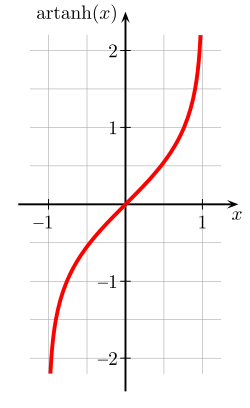
Using the inverse hyperbolic function artanh, the rapidity w corresponding to velocity v is w = artanh(v/c) where c is the speed of light. For low speeds, by the small-angle approximation, w is approximately v / c. Since in relativity any velocity v is constrained to the interval −c < v < c the ratio v / c satisfies −1 < v / c < 1. The inverse hyperbolic tangent has the unit interval (−1, 1) for its domain and the whole real line for its image; that is, the interval −c < v < c maps onto −∞ < w < ∞.
In 1908 Hermann Minkowski explained how the Lorentz transformation could be seen as simply a hyperbolic rotation of the spacetime coordinates, i.e., a rotation through an imaginary angle. This angle therefore represents (in one spatial dimension) a simple additive measure of the velocity between frames. The rapidity parameter replacing velocity was introduced in 1910 by Vladimir Varićak and by E. T. Whittaker. The parameter was named rapidity by Alfred Robb (1911) and this term was adopted by many subsequent authors, such as Ludwik Silberstein (1914), Frank Morley (1936) and Wolfgang Rindler (2001).
Rapidity is the parameter expressing variability of an event on the hyperbola which represents the future events one time unit away from the origin O. These events can be expressed (sinh w, cosh w) where sinh is the hyperbolic sine and cosh is the hyperbolic cosine. Note that as speed and w increase, the axes tilt toward the diagonal. In fact, they remain in a relation of hyperbolic orthogonality whatever the value of w. The appropriate x-axis is the hyperplane of simultaneity corresponding to rapidity w at the origin.
The hyperbola can be associated with the unit hyperbola. A moving reference frame sees the spacetime in the same way the rest frame does, so a transformation theory is necessary to explain the adaptation of one to the other. When the unit hyperbola is interpreted as a one-parameter group that acts on the future, and correspondingly on the past and elsewhere, then the Minkowski configuration expresses the relativity of simultaneity and other features of relativity.
The transformations relating reference frames are associated with Hendrik Lorentz. To make a moving frame with rapidity w into the rest frame with perpendicular axes of time and space, one applies a hyperbolic rotation of parameter −w. Since cosh (–w) = cosh w and sinh –w = – sinh w, the following matrix representation of the hyperbolic rotation will bring the moving frame into perpendicularity (though all frames keep hyperbolic orthogonality since that relation is invariant under hyperbolic rotation).
A Lorentz boost is a vector-matrix product

Rapidity
In special relativity, the classical concept of velocity is converted to rapidity to accommodate the limit determined by the speed of light. Velocities must be combined by Einstein's velocity-addition formula. For low speeds, rapidity and velocity are almost exactly proportional but, for higher velocities, rapidity takes a larger value, with the rapidity of light being infinite.
Mathematically, rapidity can be defined as the hyperbolic angle that differentiates two frames of reference in relative motion, each frame being associated with distance and time coordinates.
Using the inverse hyperbolic function artanh, the rapidity w corresponding to velocity v is w = artanh(v/c) where c is the speed of light. For low speeds, by the small-angle approximation, w is approximately v / c. Since in relativity any velocity v is constrained to the interval −c < v < c the ratio v / c satisfies −1 < v / c < 1. The inverse hyperbolic tangent has the unit interval (−1, 1) for its domain and the whole real line for its image; that is, the interval −c < v < c maps onto −∞ < w < ∞.
In 1908 Hermann Minkowski explained how the Lorentz transformation could be seen as simply a hyperbolic rotation of the spacetime coordinates, i.e., a rotation through an imaginary angle. This angle therefore represents (in one spatial dimension) a simple additive measure of the velocity between frames. The rapidity parameter replacing velocity was introduced in 1910 by Vladimir Varićak and by E. T. Whittaker. The parameter was named rapidity by Alfred Robb (1911) and this term was adopted by many subsequent authors, such as Ludwik Silberstein (1914), Frank Morley (1936) and Wolfgang Rindler (2001).
Rapidity is the parameter expressing variability of an event on the hyperbola which represents the future events one time unit away from the origin O. These events can be expressed (sinh w, cosh w) where sinh is the hyperbolic sine and cosh is the hyperbolic cosine. Note that as speed and w increase, the axes tilt toward the diagonal. In fact, they remain in a relation of hyperbolic orthogonality whatever the value of w. The appropriate x-axis is the hyperplane of simultaneity corresponding to rapidity w at the origin.
The hyperbola can be associated with the unit hyperbola. A moving reference frame sees the spacetime in the same way the rest frame does, so a transformation theory is necessary to explain the adaptation of one to the other. When the unit hyperbola is interpreted as a one-parameter group that acts on the future, and correspondingly on the past and elsewhere, then the Minkowski configuration expresses the relativity of simultaneity and other features of relativity.
The transformations relating reference frames are associated with Hendrik Lorentz. To make a moving frame with rapidity w into the rest frame with perpendicular axes of time and space, one applies a hyperbolic rotation of parameter −w. Since cosh (–w) = cosh w and sinh –w = – sinh w, the following matrix representation of the hyperbolic rotation will bring the moving frame into perpendicularity (though all frames keep hyperbolic orthogonality since that relation is invariant under hyperbolic rotation).
A Lorentz boost is a vector-matrix product
Recent media
Recent media