Recent from talks
Nothing was collected or created yet.
Ray Fenwick
View on WikipediaThis article needs additional citations for verification. (April 2023) |
Key Information
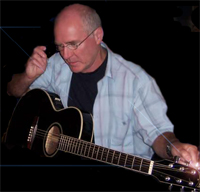
Raymond John Fenwick (18 July 1946 – 30 April 2022) was an English guitarist and session musician, best known for his work in The Syndicats and in The Spencer Davis Group in the 1960s, and as the lead guitarist of Ian Gillan's post-Deep Purple solo project, the Ian Gillan Band.
Career
[edit]Fenwick's first professional group was a ska and bluebeat group called Ray and the Red Devils. In 1964, he joined The Syndicats, replacing Steve Howe, and in turn being replaced by Peter Banks. In 1965, he joined the Dutch group Tee-Set, from which developed another group After Tea.
He was with The Spencer Davis Group from 1967 to 1969. He also co-wrote the theme music to the 1970s television series Magpie, which was credited to "The Murgatroyd Band", which was basically The Spencer Davis Group at the time. Fenwick wrote all songs on the group's 1969 album Funky (briefly released in the US in 1970; full release only in 1997) and recorded his own album Keep America Beautiful, Get a Haircut in 1971 with a similar line-up, albeit minus Davis.
In July 1972, he played guitar on a number of the tracks for Bo Diddley's Chess Records album The London Bo Diddley Sessions. During the 1970s, he was part of the Ian Gillan Band. He participated in Jon Lord's live album Windows (1974). He was also in the group Fancy, who had the hits "Touch Me" and a cover of Chip Taylor's "Wild Thing".
He also was a member of the studio project Forcefield (1987–1989) along with Tony Martin (Black Sabbath), Cozy Powell (Rainbow, Black Sabbath, Emerson, Lake and Powell), Jan Akkerman and Neil Murray (Whitesnake, Black Sabbath).
He returned to sessions and then featured on former Rainbow vocalist Graham Bonnet's album Here Comes the Night (1991).
In 2003, Fenwick toured with Yes guitarist Steve Howe as part of his band Steve Howe's Remedy, appearing on the live concert DVD of Steve Howe's Remedy Live released in 2005. He appears on Steve Howe's compilation Anthology 2: Groups and Collaborations, released 2016. The two guitarists play together on the track "Slim Pickings", recorded 2002, which closes the album.
Fenwick produced Jo Jo Laine's girl group single "When the Boy's Happy" on Mercury Records under the name Jo Jo Laine & The Firm.
Personal life
[edit]Fenwick taught guitar and jazz grades at various colleges and schools in Britain, including Boston College, Lincolnshire. He died at home on 30 April 2022.[1]
Discography
[edit]- Solo
- 1971 Keep America Beautiful, Get a Haircut
- 1979 Queen of the Night / Between the Devil and Me (SP)
- 1997 Groups and Sessions 1962–1978 (anthology)
- with Ian Gillan Band
- 1976 Child in Time
- 1977 Clear Air Turbulence
- 1977 Scarabus
- 1977 Live at the Budokan (1983, European release)
- Other projects
- 1967 National Disaster (After Tea)
- 1968 With Their New Face On (Spencer Davis Group)
- 1969 Funky (Spencer Davis Group)
- 1971 Magpie (Theme From Thames Television Programme) (The Murgatroyd Band)
- 1972 Hector and other Peccadillos (Mike Absalom)
- 1973 Gluggo (Spencer Davis Group)
- 1973 The London Bo Diddley Sessions (Bo Diddley)
- 1973 Living in a Back Street (Spencer Davis Group)
- 1974 The Butterfly Ball and the Grasshopper's Feast (Roger Glover)
- 1974 Windows (Jon Lord)
- 1974 Wild Thing (Fancy)
- 1976 Turns You On (Fancy)
- 1976 Wizard's Convention (Eddie Hardin)
- 1982 Circumstantial Evidence (Eddie Hardin)
- 1981 Finardi (Eugenio Finardi)
- 1982 Secret Streets (Eugenio Finardi)
- 1984 Life on Mars (Johnny Mars)
- 1985 Wind in the Willows (Eddie Hardin)
- 1987 Long Hot Night (Minute By Minute)
- 1989 Timewatch (Minute By Minute)
- 1991 Wind in the Willows – A Rock Concert (Eddie Hardin)
- 1993 First of the Big Band – BBC1 Live in Concert '74 (Ashton & Lord)
- 1995 Wizard's Convention 2 (Eddie Hardin)
- 1995 Still a Few Pages Left (Hardin & York)
- 1997 Musicians Union Band (recorded in 1971)
- 1997 24 Carat (Tee Set)
- 1997 Guitar Orchestra (recorded in 1971)
- 2003 The Fabulous Summer Wine (Summer Wine) (recorded in 1972)
- 2005 Live (Steve Howe's Remedy) - DVD
- 2016 Anthology 2: Groups and Collaborations (Steve Howe) - Fenwick and Howe play together on "Slim Pickings"
References
[edit]- ^ "Ray Fenwick". Ray Fenwick Official Website. Retrieved 4 May 2022.
External links
[edit]- website
- Fancy
- Ray Fenwick discography at Discogs
- Ray Fenwick at IMDb
Ray Fenwick
View on GrokipediaEarly life
Birth and upbringing
Raymond John Fenwick was born on 18 July 1946 in Romford, Essex, England.[2][1] He grew up in the Chase Cross and Collier Row areas of Romford, living with his family in this suburban neighborhood during the post-World War II recovery period.[5] Romford, originally a rural market town, underwent significant transformation in the 1940s and 1950s, marked by wartime bombing damage—particularly in 1940–41 and 1944–45—that affected most local housing, followed by reconstruction and rapid suburban expansion to accommodate population growth from 76,580 in 1951 to 114,584 by 1961.[6][7] The socioeconomic context of post-war Romford reflected broader British trends of economic rebuilding, with rationing persisting until 1954, emerging full employment, and a shift toward light industry and retail amid housing shortages and urban development.[6][8] In his early years, Fenwick attended a local school and spent much of his free time engaging in outdoor play, such as riding pedal bikes around Raphael's Park with childhood friends during weekends and school holidays.[5]Musical beginnings
Ray Fenwick developed an early interest in music during his teenage years, acquiring his first guitar at the age of 10 while growing up in Romford, Essex.[9] This initial exposure came amid the vibrant local music scene of 1950s Essex and the emerging London area, where he was surrounded by the sounds of skiffle, jazz, and early rock 'n' roll.[10]Career
Early bands
Fenwick's entry into professional music came in 1962 at age 15, when he joined Rupert and the Red Devils, a West London-based ska and bluebeat ensemble that stood out for its brass-heavy sound amid the emerging British beat scene.[11] As the band's guitarist, Fenwick contributed to their repertoire of covers and originals, performing at local venues and embarking on tours of the German club circuit, where he first encountered international audiences and connected with figures like Dutch musician Gerry Romeyn.[11] These early gigs honed his rhythmic playing style, though the group disbanded after a short run, with bassist Nathaniel Fredericks later joining Jimmy James and the Vagabonds.[11] In 1964, Fenwick replaced Steve Howe in The Syndicats, a North London beat group known for its raw R&B influences and produced by the eccentric Joe Meek.[11] His tenure included recording the B-side "Crawdaddy Simone" for their single "From Me to You," where he introduced innovative wah-wah guitar effects that added a distinctive edge to the track's driving rhythm.[11] The band's performances in British clubs emphasized high-energy sets, but Fenwick departed after about a year, later replaced by Peter Banks, as the group navigated the competitive mid-1960s scene.[12] By late 1965, Fenwick relocated to the Netherlands to join Tee-Set, a Delft-based pop-rock outfit led by vocalist Peter Tetteroo, which blended R&B with emerging psychedelic elements and quickly gained a cult following.[11] The group evolved into After Tea in 1966, formed with keyboardist Hans van Eijck and bassist Robbie Eduard after tensions led to their exit from Tee-Set; this new quartet scored hits in Holland, such as the title track "After Tea," through a mix of original songs and covers.[11] Fenwick's role involved extensive European touring, including club dates across Britain and the Continent, which exposed him to diverse audiences but also brought the rigors of constant travel, equipment issues, and modest pay in an era of packed vans and grueling schedules typical for emerging acts.[13] Amid these commitments, he supplemented income with session work in London studios, recording uncredited guitar parts for various singles during the mid-1960s beat boom.[14]The Spencer Davis Group
Ray Fenwick joined The Spencer Davis Group in early 1967 as lead guitarist, replacing Phil Sawyer shortly after the departure of Steve Winwood, following an impromptu audition in a London hotel lobby arranged by bandleader Spencer Davis during a tour in the Netherlands.[10] He served in this role until 1969, providing guitar work, backing vocals, and occasional lead vocals amid the band's transition to a heavier, more psychedelic sound in the late 1960s British rock landscape.[15] During this period, the group—now featuring Davis on guitar and vocals, Eddie Hardin on keyboards and vocals, Pete York on drums, and various bassists including Dee Murray—struggled with lineup instability and commercial pressures but toured extensively across the UK and Europe, performing at venues like the Marquee Club and supporting acts in the burgeoning progressive rock scene.[16] Fenwick's debut recording with the band was the single "Mr. Second-Class" backed with "Sanity Inspector" in March 1968, where he dubbed guitar parts over existing tracks, marking the start of his integral contributions.[15] He fully participated in the June 1968 album With Their New Face On, delivering prominent guitar riffs on tracks like "Don't Want You No More" and "Time Seller," which showcased the band's shift toward jazz-inflected rock.[17] In 1969, Fenwick co-led sessions for the unreleased Letters from Edith (later compiled on Taking Out Time: Complete Recordings 1967-1969), and he wrote all original material for Funky, recorded that year but released only in the US in 1970, including songs like "Poor Misguided Woman" and "And the Gods Came Down," where his songwriting emphasized bluesy, funk-driven arrangements.[14] Key hits from this era included the 1968 single "After Tea," a cover Fenwick brought from his prior Dutch band, but had limited UK success, reflecting the group's experimental dynamics amid the competitive late-1960s scene.[16] Stemming from his collaborations with Davis and Hardin during this time, Fenwick co-wrote the theme tune for the British children's TV show Magpie in 1971, performed under the pseudonym The Murgatroyd Band—essentially the core Spencer Davis Group lineup—and adapting a traditional nursery rhyme into a rock-infused instrumental that became a cult classic.[10][18]Solo career and sessions
Fenwick launched his solo career with the release of Keep America Beautiful, Get a Haircut in 1971 on Decca Records.[19] The album's title drew inspiration from a billboard the guitarist encountered during travels.[18] Self-produced by Fenwick, who also performed guitar, vocals, and arrangements while writing all material, the record showcased his rock sensibilities through a blend of straightforward songs and multi-part suites.[19] Supporting players included Dee Murray on bass and vocals, Nigel Olsson on drums and vocals, Eddie Hardin on organ and piano, Peter York on percussion, and Roger Pope on drums.[19] Key tracks encompassed the opening suite "Stateside" (subdivided into "Mr. Straight," "The American Way," and "$ Jesus Saves"), "Anniversary," "I Wanna Stay Here," "City Ride," the extended "The Dream" suite (featuring "The Exotic Escape," "The Working Man's Dream," "Nightmare," and "Reality"), "Back USA," and "The New Jersey Turnpike."[19] Throughout the early 1970s, Fenwick established himself as a versatile session guitarist, contributing to notable projects that highlighted his adaptability across genres. In 1972, he played guitar on tracks 1, 2, 4, 5, 7, and 9 of Bo Diddley's The London Bo Diddley Sessions, recorded at Phonogram Studios in London with Roy Wood on bass and Eddie Hardin on organ.[20] The following year, he provided arrangements for select tracks on Evensong's self-titled folk-pop album, released by Philips.[21] In 1974, Fenwick delivered guitar performances on Jon Lord's ambitious orchestral work Windows, a live recording from the Herkulessaal in Munich on June 1, conducted by Eberhard Schoener and featuring soloists like David Coverdale and Glenn Hughes.[22] That same year, he contributed guitar to Roger Glover's concept album The Butterfly Ball and the Grasshopper's Feast, produced at Kingsway Recorders in London.[23] Fenwick's songwriting extended to instrumental compositions and television themes during this period, demonstrating his range beyond vocal rock. His solo album included intricate instrumental sections within its suites, such as the exploratory passages in "The Dream."[19] Additionally, he composed the theme music for the CBS television pilot Family Brood.[24] These efforts underscored his growing reputation as a multifaceted studio artist capable of blending rock, orchestral, and media-oriented work.Ian Gillan Band
Ray Fenwick joined the Ian Gillan Band in autumn 1975, shortly after contributing to session work on Roger Glover's The Butterfly Ball and the Grasshopper's Feast project, which facilitated his initial contact with vocalist Ian Gillan. The lineup at formation included Gillan on vocals, Fenwick on guitars and vocals, John Gustafson on bass and vocals, Mike Moran on keyboards, and Mark Nauseef on drums and percussion. This ensemble marked a departure from Gillan's Deep Purple era, emphasizing a more experimental sound blending soul, jazz, and rock elements.[25][26] The band's debut album, Child in Time (1976), showcased Fenwick's versatile guitar playing, including slide guitar on tracks like "You Make Me Feel So Good," and his co-writing contributions to songs such as "Lay Me Down." Produced by Glover and recorded at Rockfield Studios, the record highlighted a soulful, mid-tempo style with jazz influences, diverging from hard rock conventions, and Fenwick's parts added textural depth to the arrangements. In 1977, following the replacement of Moran by keyboardist Colin Towns—who introduced flute and further jazz-rock textures—the band released Clear Air Turbulence, an album driven by Fenwick's intricate guitar work in extended compositions like the title track, solidifying their fusion-oriented evolution. The record's complex structures and improvisational feel reflected the group's stylistic shift toward progressive jazz-rock.[27][28][29] Fenwick's guitar contributions were central to the band's live performances, including the May 1977 UK tour culminating in a headline show at London's Rainbow Theatre on May 14, where his solos featured prominently in renditions of "Child in Time" and "Clear Air Turbulence." This concert was later released as Live at the Rainbow 1977, capturing the band's dynamic energy. A subsequent September 1977 Japan tour, including a performance at Yubin Chokin Hall in Hiroshima, yielded material for the live album Live at the Budokan (1978). The band's final studio effort, Scarabus (1978), returned to shorter, more straightforward rock songs, with Fenwick providing rhythmic drive and harmonies. After wrapping up tours in the US, Australia, and UK through mid-1978, the Ian Gillan Band disbanded, paving the way for its evolution into the harder-edged Gillan project; Fenwick later oversaw reissues like the 2001 Angel Air edition of the Hiroshima recording, adding mastering and liner notes.[30][25]Fancy and Forcefield
In the early 1970s, following his tenure with the Spencer Davis Group, Ray Fenwick co-formed the glam rock band Fancy alongside session bassist Mo Foster, drummer Les Binks, and vocalist Annie Kavanagh, under producer Mike Hurst.[31] The group originated from studio sessions, initially featuring vocalist Helen Caunt on their debut single, a cover of The Troggs' "Wild Thing," which became a surprise hit peaking at number 14 on the Billboard Hot 100 in 1974.[31] Their follow-up single, "Touch Me," also charted in the US that year, establishing Fancy's commercial appeal through polished, radio-friendly pop-rock arrangements that contrasted Fenwick's prior jazz-rock explorations.[31] Fancy released two albums during their brief run: Wild Thing in 1974 on the Antic label and Turns You On (retitled Something to Remember in the US) on Arista in 1975, the latter promoted by singles like "She's Ridin' the Rock Machine."[31] The band toured extensively to capitalize on their success, including a US trek after "Wild Thing" and opening slots for acts such as Kiss, Wishbone Ash, Steppenwolf, and 10cc at London's Hammersmith Odeon in early 1975.[31] These performances highlighted Fenwick's versatile guitar work in a live setting geared toward mainstream audiences, though the group disbanded by late 1975 amid shifting musical trends.[31] By the late 1980s, Fenwick shifted further into commercial rock formats with Forcefield, a studio supergroup he co-founded in 1987 with drummer Cozy Powell, enlisting bassist Neil Murray and various guest vocalists to create melodic hard rock with an AOR sensibility.[32][33] The project released four albums between 1987 and 1991—Forcefield (1987, featuring vocalist Peter Prescott), The Talisman (1988, with Tony Martin), Discovery (1989, spotlighting Graham Bonnet and guest guitarist Jan Akkerman), and Between the Devil (1991, again with Bonnet)—emphasizing covers and original tracks tailored for international markets, particularly Japan.[32][34] Forcefield's recording process reflected the MTV era's emphasis on polished production and visual appeal, with Fenwick handling guitar, keyboards, and production duties in a collaborative, guest-driven format that minimized logistical challenges.[32] Touring was limited due to participants' scheduling conflicts, focusing instead on studio output that blended hard rock energy with accessible hooks, marking Fenwick's continued adaptation from 1970s fusion influences toward broader commercial viability.[32]Later collaborations
In the 1990s, Fenwick continued his prolific session work, notably producing, arranging, and performing guitar and keyboards on Graham Bonnet's album Here Comes the Night, which drew on Bonnet's R&B roots with a pop twist.[35][36] He also contributed guitar to multiple tracks on Eddie Hardin's Wizard’s Convention 2 (1995), a star-studded project featuring artists like John Entwistle, Chris Farlowe, and Zak Starkey, where Fenwick played on all but three songs, including an instrumental alongside Snowy White.[37] Entering the 2000s, Fenwick joined Steve Howe's band Remedy for a European tour in 2003–2004, showcasing his guitar skills in a lineup that highlighted Howe's solo material and Yes influences.[38] This collaboration culminated in the live DVD Steve Howe's Remedy Live (2005), filmed during the tour and featuring Fenwick prominently in performances with 5.1 surround sound mixes.[39] Their partnership extended to the 2017 compilation Anthology 2: Groups & Collaborations by Howe (released under the 2016 catalog in some listings), where Fenwick co-wrote and performed the previously unreleased track "Slim Pickings."[40] Fenwick's session contributions persisted into the 2010s and beyond, encompassing lesser-known projects and media soundtracks. In November 2020, he provided lead guitar for the track "We Persuade Ourselves We Are Immortal" by The Amorphous Androgynous, featuring Peter Hammill, Paul Weller, and Brian Hopper.[41] His ongoing involvement in film and television music reached a milestone in 2021 with the release of the five-track instrumental EP Going Large via Singsong Music, comprising his final recordings tailored for screen use and marking 60 years in the industry.[41][42] Throughout these decades, Fenwick's career exemplified remarkable longevity, spanning rock, R&B, progressive, and instrumental genres as a versatile session guitarist and producer, earning sustained respect for his adaptability and technical prowess across over six decades of contributions.[18][14]Personal life
Teaching career
In the mid-1990s, Ray Fenwick transitioned into music education, taking up a teaching position at Boston College in Lincolnshire, where he served from 1995 to 2008.[5] His role there centered on Media Studies with a strong focus on the music industry, where he instructed students in both theoretical aspects and hands-on musical practice.[5] Fenwick contributed to curriculum development by incorporating practical instruction in guitar playing, drumming, and related techniques tailored to rock, jazz, and session work, leveraging his extensive background as a professional guitarist to create engaging, industry-relevant lessons.[5] He often integrated real-world examples from his career, such as jamming sessions with students to demonstrate improvisational skills in jazz and efficient session recording approaches honed through decades of studio collaborations.[5] Students benefited significantly from Fenwick's patient and passionate approach, which inspired many to pursue music seriously; tributes highlight his role as a mentor whose enthusiasm "rubbed off on others" and served as a genuine role model in the classroom.[5] This integration of professional experience not only enhanced technical proficiency but also provided conceptual insights into the demands of live performance and studio environments. Following his formal retirement from Boston College in 2008, Fenwick continued teaching guitar at various schools and colleges throughout Britain into the 2010s, maintaining his commitment to accessible music education.[43]Relationships and death
Fenwick maintained a private personal life centered in Spalding, Lincolnshire, where he resided with his wife, Ruth Adams, in the later years of his life. He enjoyed hobbies such as walking in nature, cycling, and collecting guitars, vinyl records, and rock memorabilia.[5] He was survived by Ruth, his children Laura, Chris, Michelle, and Charlie, as well as grandchildren Ella and George, with whom he shared close family bonds away from the public eye.[5] Fenwick's death occurred suddenly and unexpectedly on 30 April 2022 at his home in Spalding, at the age of 75, due to natural causes.[5][44] His funeral was held privately on 6 June 2022 at South Lincolnshire Crematorium, with donations directed to Macmillan Cancer Support in his memory.[5] Following his passing, tributes from fellow musicians and friends highlighted Fenwick's warm personal impact and enduring legacy as a kind-hearted individual. David Randall, a longtime collaborator and friend, reflected, "Ray’s light may have extinguished but his musical legacy... remains undimmed," emphasizing his adaptability and generosity in personal interactions.[5] Jim McCarthy, a musician and friend from Bexhill, described him as "a real pro but also a really good laugh," recalling fond shared moments that underscored Fenwick's approachable nature.[5] Paul Tomlinson, a former student, noted Fenwick's egalitarian demeanor, stating, "Ray always spoke to me as an equal... a real gentleman," which spoke to his influential role in nurturing personal connections through teaching.[5] These reflections, along with messages from figures like Mike Hurst and Clem Cattini, portrayed Fenwick as a beloved family man and friend whose private life left a profound, positive imprint on those close to him.[5][45]Discography
Solo releases
Ray Fenwick's debut solo album, Keep America Beautiful, Get a Haircut, was released in 1971 on Decca Records (catalogue SKL 5090). Recorded with contributions from Elton John's rhythm section—bassist Dee Murray and drummer Nigel Olsson—as well as keyboardist Eddie Hardin and others, the album features Fenwick on guitar, backing vocals, and production duties, with most material self-written or co-written by him. The record blends rock, folk-rock, and blues elements, inspired by Fenwick's experiences in the United States, and includes extended suites alongside shorter tracks.[19][46][47] The full tracklist is as follows:| Side | Track | Title | Duration |
|---|---|---|---|
| A | A1 | Stateside (Suite: Part 1 - Mr. Straight; Part 2 - The American Way; Part 3 - $ Jesus Saves) | - |
| A | A2 | Anniversary | - |
| A | A3 | I Wanna Stay Here | - |
| A | A4 | City Ride | - |
| B | B1 | The Exotic Escape (Suite: Part 1 - The Exotic Escape; Part 2 - The Working Man's Dream; Part 3 - Nightmare; Part 4 - Reality) | - |
| B | B2 | Back USA | - |
| B | B3 | The New Jersey Turnpike | - |
-
- Going Large (4:04)
-
- Tam Tam (5:03)
-
- Firepower 44 (4:08)
-
- Trade Winds (4:41)
-
- Blue Jays (2:25)

