



Community hub
Recent from talks
Knowledge base stats:
Talk channels stats:
Members stats:
Red River Rebellion
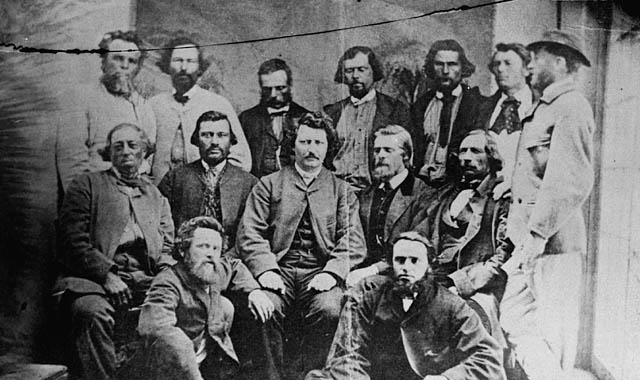
The Red River Rebellion (French: Rébellion de la rivière Rouge), also known as the Red River Resistance, Red River uprising, or First Riel Rebellion, was the sequence of events that led up to the 1869 establishment of a provisional government by Métis leader Louis Riel and his followers at the Red River Colony, in the early stages of establishing today's Canadian province of Manitoba. It had earlier been a territory called Rupert's Land and been under control of the Hudson's Bay Company before it was sold.
The event was the first crisis the new federal government faced after Canadian Confederation in 1867. The Government of Canada had bought Rupert's Land from the Hudson's Bay Company in 1869 and appointed an English-speaking governor, William McDougall. He was opposed by the French-speaking mostly-Métis inhabitants of the settlement. Before the land was officially transferred to Canada, McDougall had sent out surveyors to plot the land according to the square township system used in the Public Land Survey System. The Métis, led by Riel, prevented McDougall from entering the territory. McDougall declared that the Hudson's Bay Company was no longer in control of the territory and that Canada had asked for the transfer of sovereignty to be postponed. The Métis created a provisional government to which they invited an equal number of Anglophone representatives. Riel negotiated directly with the Canadian government to establish Manitoba as a Canadian province.
Meanwhile, Riel's men arrested members of a pro-Canadian faction who resisted the provisional government. The arrested included an Orangeman, Thomas Scott. Riel's government tried Scott for insubordination, convicted him and then executed him. Canada and the Assiniboia provisional government soon negotiated an agreement. In 1870, the Parliament of Canada passed the Manitoba Act, 1870, allowing the Red River Colony to enter Confederation as the province of Manitoba. The act also incorporated some of Riel's demands, such as the provision of separate French schools for Métis children and the protection of Catholicism.
After reaching an agreement, Canada sent a military expedition to Manitoba to enforce federal authority. Now known as the Wolseley expedition, or the Red River Expedition, it consisted of Canadian militia and British regular soldiers, led by Colonel Garnet Wolseley. Outrage grew in Ontario over Scott's execution, and many there wanted Wolseley's expedition to arrest Riel for murder and to suppress what they considered to be rebellion.
Riel peacefully withdrew from Fort Garry before the troops could arrive in August 1870. Warned by many that the soldiers would harm him and denied amnesty for his political leadership of the rebellion, Riel fled to the United States. The arrival of troops marked the end of the incident. In 1885 Louis Riel would lead another rebellion, the North-West Rebellion, ending with his capture and execution.
In the late 1860s, the Red River Colony of Rupert's Land was changing rapidly. It had developed under the aegis of the Hudson's Bay Company (HBC), which had a continent-wide trading and commercial network. It had been confirmed on the territory by Queen Anne, who had evicted King Louis XIV and his subjects from it by the 1713 Treaty of Utrecht. Further notice was given in 1763, when King George III dispossessed King Louis XV of nearly all his colonies of North America at the Treaty of Paris.
Historically, the population was mainly francophone Métis, who developed a mixed ethnicity descended of First Nations and French descent and a unique culture during the decades of the fur trade. In the 18th and the 19th centuries, they intermarried; established a tradition of men working as trappers, guides, and interpreters to fur traders; and developed farms. Métis women also were sometimes active in the trade, and among several influential families in Sault Ste. Marie in the early 19th century, the husbands were European. The Métis culture was based on the French language and Roman Catholic religion.
In the late 18th century, English and Scottish men entered the fur trade and also married into the Ojibwe people and other First Nations in this region. Their mixed-race descendants generally spoke English and were sometimes known as the "country born" (also as Anglo-Métis). The third group of settlers to the region was a small number of Presbyterian Scottish settlers. More anglophone Protestants began to settle there from Ontario in the 19th century.
Hub AI
Red River Rebellion AI simulator
(@Red River Rebellion_simulator)
Red River Rebellion
The Red River Rebellion (French: Rébellion de la rivière Rouge), also known as the Red River Resistance, Red River uprising, or First Riel Rebellion, was the sequence of events that led up to the 1869 establishment of a provisional government by Métis leader Louis Riel and his followers at the Red River Colony, in the early stages of establishing today's Canadian province of Manitoba. It had earlier been a territory called Rupert's Land and been under control of the Hudson's Bay Company before it was sold.
The event was the first crisis the new federal government faced after Canadian Confederation in 1867. The Government of Canada had bought Rupert's Land from the Hudson's Bay Company in 1869 and appointed an English-speaking governor, William McDougall. He was opposed by the French-speaking mostly-Métis inhabitants of the settlement. Before the land was officially transferred to Canada, McDougall had sent out surveyors to plot the land according to the square township system used in the Public Land Survey System. The Métis, led by Riel, prevented McDougall from entering the territory. McDougall declared that the Hudson's Bay Company was no longer in control of the territory and that Canada had asked for the transfer of sovereignty to be postponed. The Métis created a provisional government to which they invited an equal number of Anglophone representatives. Riel negotiated directly with the Canadian government to establish Manitoba as a Canadian province.
Meanwhile, Riel's men arrested members of a pro-Canadian faction who resisted the provisional government. The arrested included an Orangeman, Thomas Scott. Riel's government tried Scott for insubordination, convicted him and then executed him. Canada and the Assiniboia provisional government soon negotiated an agreement. In 1870, the Parliament of Canada passed the Manitoba Act, 1870, allowing the Red River Colony to enter Confederation as the province of Manitoba. The act also incorporated some of Riel's demands, such as the provision of separate French schools for Métis children and the protection of Catholicism.
After reaching an agreement, Canada sent a military expedition to Manitoba to enforce federal authority. Now known as the Wolseley expedition, or the Red River Expedition, it consisted of Canadian militia and British regular soldiers, led by Colonel Garnet Wolseley. Outrage grew in Ontario over Scott's execution, and many there wanted Wolseley's expedition to arrest Riel for murder and to suppress what they considered to be rebellion.
Riel peacefully withdrew from Fort Garry before the troops could arrive in August 1870. Warned by many that the soldiers would harm him and denied amnesty for his political leadership of the rebellion, Riel fled to the United States. The arrival of troops marked the end of the incident. In 1885 Louis Riel would lead another rebellion, the North-West Rebellion, ending with his capture and execution.
In the late 1860s, the Red River Colony of Rupert's Land was changing rapidly. It had developed under the aegis of the Hudson's Bay Company (HBC), which had a continent-wide trading and commercial network. It had been confirmed on the territory by Queen Anne, who had evicted King Louis XIV and his subjects from it by the 1713 Treaty of Utrecht. Further notice was given in 1763, when King George III dispossessed King Louis XV of nearly all his colonies of North America at the Treaty of Paris.
Historically, the population was mainly francophone Métis, who developed a mixed ethnicity descended of First Nations and French descent and a unique culture during the decades of the fur trade. In the 18th and the 19th centuries, they intermarried; established a tradition of men working as trappers, guides, and interpreters to fur traders; and developed farms. Métis women also were sometimes active in the trade, and among several influential families in Sault Ste. Marie in the early 19th century, the husbands were European. The Métis culture was based on the French language and Roman Catholic religion.
In the late 18th century, English and Scottish men entered the fur trade and also married into the Ojibwe people and other First Nations in this region. Their mixed-race descendants generally spoke English and were sometimes known as the "country born" (also as Anglo-Métis). The third group of settlers to the region was a small number of Presbyterian Scottish settlers. More anglophone Protestants began to settle there from Ontario in the 19th century.