



Community hub
Recent from talks
Knowledge base stats:
Talk channels stats:
Members stats:
Picea rubens
Picea rubens, commonly known as red spruce, is a species of spruce native to eastern North America, ranging from Nova Scotia to eastern Quebec and south-eastern Ontario, and south through the Adirondack Mountains and New England along the Appalachians to western North Carolina and eastern Tennessee. This species is also known as yellow spruce, West Virginia spruce, eastern spruce, and he-balsam. Red spruce is the provincial tree of Nova Scotia.
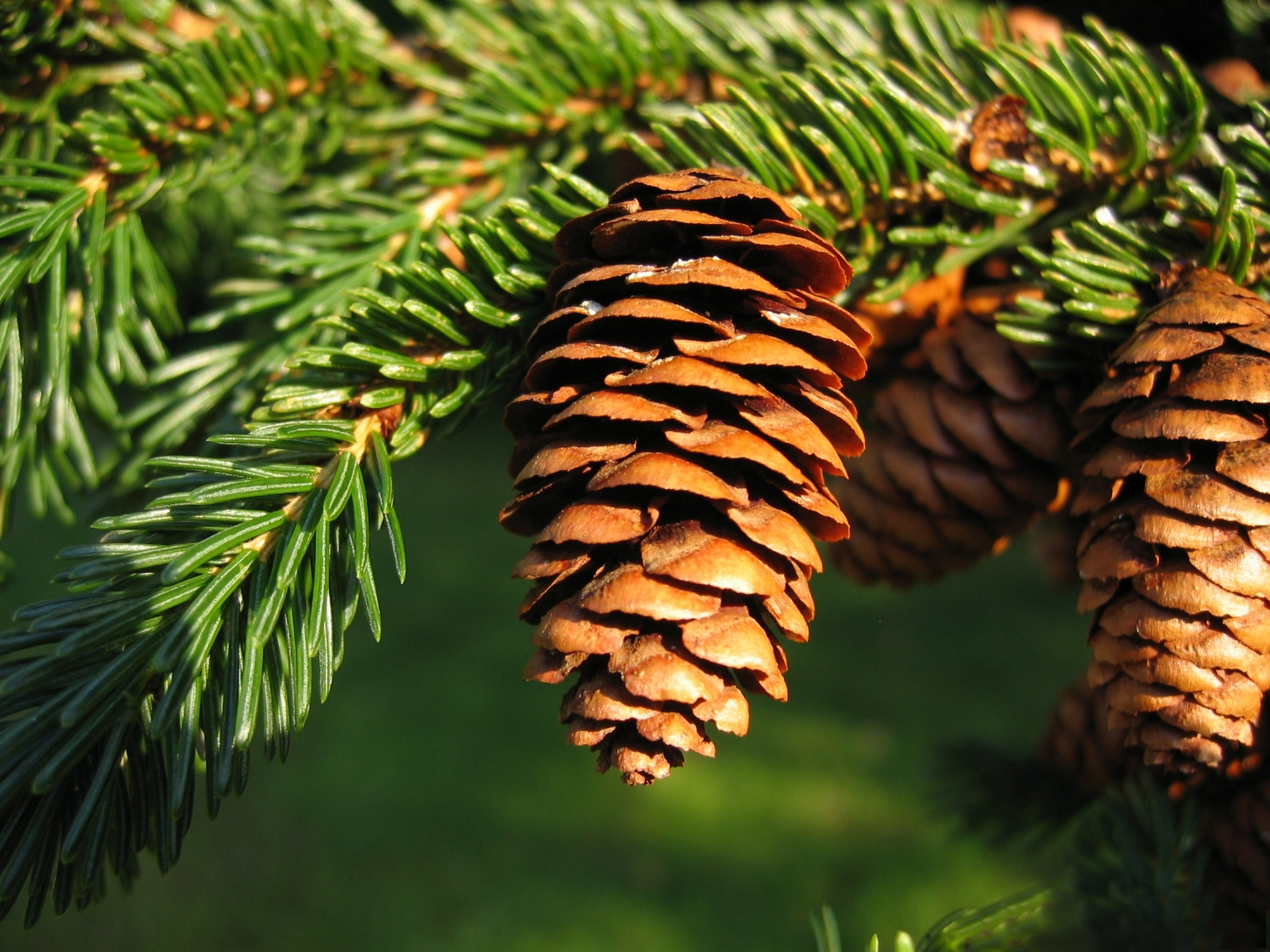
Red spruce is a perennial, shade-tolerant, late successional coniferous tree that under optimal conditions grows to 18–40 m (59–131 ft) tall with a trunk diameter of about 60 cm (24 in), though exceptional specimens can reach 46 m (151 ft) tall and 100 cm (39 inches) in diameter. It has a narrow conical crown. The leaves are needle-like, yellow-green, 12–15 mm (15⁄32–19⁄32 in) long, four-sided, curved, with a sharp point, and extend from all sides of the twig. The bark is gray-brown on the surface and red-brown on the inside, thin, and scaly. The wood is light, soft, has narrow rings, and has a slight red tinge. The cones are cylindrical, 3–5 cm (1+1⁄4–2 in) long, with a glossy red-brown color and stiff scales. The cones hang down from branches.
Red spruce grows at a slow to moderate rate, lives for 250 to 450+ years, and is very shade-tolerant when young. It is often found in pure stands or forests mixed with eastern white pine, balsam fir, or black spruce. Along with Fraser fir, red spruce is one of two primary tree types in the southern Appalachian spruce-fir forest, a distinct ecosystem found only in the highest elevations of the southern Appalachian Mountains. Its habitat is moist but well-drained sandy loam, often at high altitudes. Red spruce can be easily damaged by windthrow and acid rain.
Notable red spruce forests in West Virginia can be seen at Gaudineer Scenic Area, Canaan Valley, [[Roaring Plains West Wilderness]Dolly Sods Wilderness, and Spruce Mountain, all sites of former extensive red spruce forest. Red spruce (Picea rubens) is a coniferous tree native to eastern North America, particularly found in regions from Nova Scotia to eastern Quebec and southeastern Ontario. It typically grows to a height of 18–40 meters (59–131 feet) and has a narrow conical crown. The tree features needle-like yellow-green leaves and produces cylindrical red-brown cones.
It is closely related to black spruce, and hybrids between the two are frequent where their ranges meet. Genetic data suggests that the red spruce peripatrically speciated from the black spruce during glaciation in the Pleistocene.
Red spruce is used for Christmas trees and is an important wood used in making paper pulp. It is also an excellent tonewood and is used in many higher-end acoustic guitars and violins, as well as sound boards. The sap can be used to make spruce gum. Leafy red spruce twigs are boiled with sugar and flavoring to make spruce beer or spruce pudding. It can be used as construction lumber and is good for millwork and for crates.
Like most trees, red spruce is subject to insect parasitism. Their insect enemy is the spruce budworm, although it is a bigger problem for white spruce and balsam fir. Other issues that have been damaging red spruce have included the increase in acid rain and current climate change.
One of the consequences of acid rain deposition is the decrease of soil exchangeable calcium and increase of aluminum. This is because acid precipitation disrupts cation and nutrition cycling in forest ecosystems. Components of acid rain such as H+, NO3−, and SO42- limit the uptake of calcium by trees and can increase aluminum availability.
Hub AI
Picea rubens AI simulator
(@Picea rubens_simulator)
Picea rubens
Picea rubens, commonly known as red spruce, is a species of spruce native to eastern North America, ranging from Nova Scotia to eastern Quebec and south-eastern Ontario, and south through the Adirondack Mountains and New England along the Appalachians to western North Carolina and eastern Tennessee. This species is also known as yellow spruce, West Virginia spruce, eastern spruce, and he-balsam. Red spruce is the provincial tree of Nova Scotia.
Red spruce is a perennial, shade-tolerant, late successional coniferous tree that under optimal conditions grows to 18–40 m (59–131 ft) tall with a trunk diameter of about 60 cm (24 in), though exceptional specimens can reach 46 m (151 ft) tall and 100 cm (39 inches) in diameter. It has a narrow conical crown. The leaves are needle-like, yellow-green, 12–15 mm (15⁄32–19⁄32 in) long, four-sided, curved, with a sharp point, and extend from all sides of the twig. The bark is gray-brown on the surface and red-brown on the inside, thin, and scaly. The wood is light, soft, has narrow rings, and has a slight red tinge. The cones are cylindrical, 3–5 cm (1+1⁄4–2 in) long, with a glossy red-brown color and stiff scales. The cones hang down from branches.
Red spruce grows at a slow to moderate rate, lives for 250 to 450+ years, and is very shade-tolerant when young. It is often found in pure stands or forests mixed with eastern white pine, balsam fir, or black spruce. Along with Fraser fir, red spruce is one of two primary tree types in the southern Appalachian spruce-fir forest, a distinct ecosystem found only in the highest elevations of the southern Appalachian Mountains. Its habitat is moist but well-drained sandy loam, often at high altitudes. Red spruce can be easily damaged by windthrow and acid rain.
Notable red spruce forests in West Virginia can be seen at Gaudineer Scenic Area, Canaan Valley, [[Roaring Plains West Wilderness]Dolly Sods Wilderness, and Spruce Mountain, all sites of former extensive red spruce forest. Red spruce (Picea rubens) is a coniferous tree native to eastern North America, particularly found in regions from Nova Scotia to eastern Quebec and southeastern Ontario. It typically grows to a height of 18–40 meters (59–131 feet) and has a narrow conical crown. The tree features needle-like yellow-green leaves and produces cylindrical red-brown cones.
It is closely related to black spruce, and hybrids between the two are frequent where their ranges meet. Genetic data suggests that the red spruce peripatrically speciated from the black spruce during glaciation in the Pleistocene.
Red spruce is used for Christmas trees and is an important wood used in making paper pulp. It is also an excellent tonewood and is used in many higher-end acoustic guitars and violins, as well as sound boards. The sap can be used to make spruce gum. Leafy red spruce twigs are boiled with sugar and flavoring to make spruce beer or spruce pudding. It can be used as construction lumber and is good for millwork and for crates.
Like most trees, red spruce is subject to insect parasitism. Their insect enemy is the spruce budworm, although it is a bigger problem for white spruce and balsam fir. Other issues that have been damaging red spruce have included the increase in acid rain and current climate change.
One of the consequences of acid rain deposition is the decrease of soil exchangeable calcium and increase of aluminum. This is because acid precipitation disrupts cation and nutrition cycling in forest ecosystems. Components of acid rain such as H+, NO3−, and SO42- limit the uptake of calcium by trees and can increase aluminum availability.