Hubbry Logo
Refik SaydamRefik SaydamMain
Open search
Refik Saydam
Community hub
Refik Saydam
logo
8 pages, 0 posts
0 subscribers
Be the first to start a discussion here.
Refik Saydam
Refik Saydam
from Wikipedia

İbrahim Refik Saydam (8 September 1881 – 8 July 1942) was a Turkish physician, politician and the fourth Prime Minister of Turkey, serving from 25 January 1939 until his death on 8 July 1942.[1]

Key Information

Biography

[edit]

Saydam was born in Istanbul in 1881 as the son of Hacı Ahmet Efendi of Çankırı. After completing primary and secondary education in Fatih Military Junior High School, he entered to Military School of Medicine in 1899. He went on a training course at Gülhane as of graduating with the rank of doctor captain on 4 November 1905. He was assigned as a doctor at Maltepe Military Hospital and Feshane Factory between the years 1907-1910 and improved his expertise in military camps and hospitals by being sent to Germany in 1910. He was then sent to Berlin from 1910 to 1912 to train and study as part of an Ottoman initiative to reform the army through the selection of officers via competition. Saydam stayed in this program until he was ordered back to the Ottoman Empire.

He was a medic in the Ottoman Army during the dissolution of the empire. He created a medicine to cure typhus, which was used largely by the Central Powers.

Saydam was one of the key people of the Independence War. He landed at Samsun with Mustafa Kemal (later named: Atatürk) in 1919 to start the resistance in Anatolia. He was known as a reformist while he was the Prime Minister. Just three years after his death, the one-party period came to an end in Turkey.

Political life

[edit]
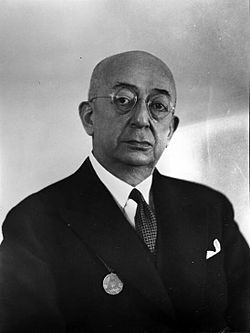
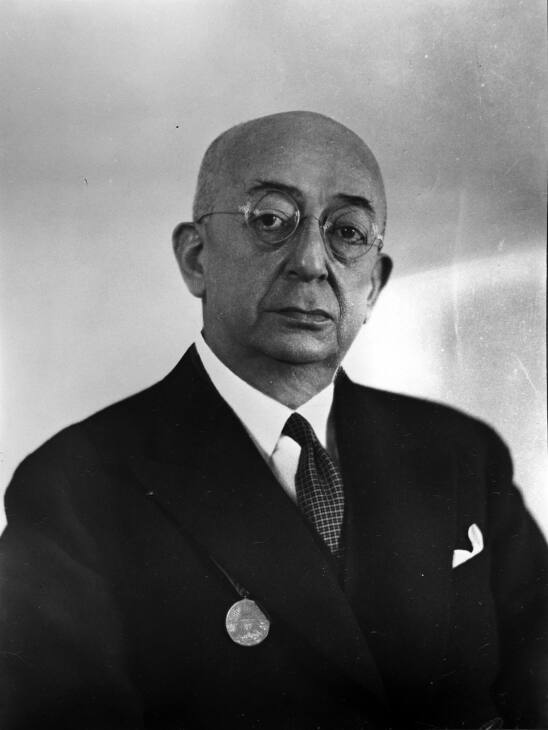
Refik Saydam in the 1920s

Saydam became the vice-president of the Department of Health of the Ministry of War on 1 December 1913 and was promoted to the rank of major on 1 June 1915. Meanwhile, he established the Institute of Bacteriology and his vaccines against epidemics and especially typhus had been effective. After the truce, he assigned to the order of 9th Army Inspectorship and passed to Anatolia along with Mustafa Kemal as the health inspector of the army, soon named as the 3rd Army Inspectorship, on 15 May 1919. He attended to Erzurum and Sivas Congresses, came to Ankara with the delegation committee and joined to the opening ceremony of the Grand National Assembly of Turkey with the elections held for the first term as the deputy of Bayazıt on 23 April 1920. He was elected as the Minister of Health in the Council of Ministers under the presidency of Fevzi Pasha, as the Minister of Health and Social Relief upon the resignation of Adnan, and resigned from ministry suggesting his sickness on 14 December 1921.

Being elected as Istanbul deputy, he officiated as the Minister of Health under the cabinet of Ismet Pasha in 2nd, 3rd, 4th, and 5th sessions.

After the death of Atatürk, at the Second Bayar Government formed on 11 November 1938, Saydam performed as the Minister of Interior and was assigned as the general secretary of the Republican People's Party. He was appointed to Prime Ministry of the 11th and 12th government of Turkey by President İsmet İnönü as Istanbul Deputy at the 6th session elections on 25 January 1939.

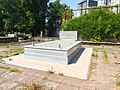
During this duty, he died in Istanbul on 8 July 1942 and was buried in Ankara.

Endeavoring to extend the health services and establishing health facilities, especially the Hıfzıssıha Foundation which is today known with his name, at the period of his health ministry, he also tried to protect the nation from the negative impacts of World War II during the period of prime ministry. He was never married.

See also

[edit]

References

[edit]

Sources

[edit]
  • Ministry of Culture and Tourism, the General Directorate of Cultural Heritages and Museums
[edit]
Revisions and contributorsEdit on WikipediaRead on Wikipedia
from Grokipedia
İbrahim Refik Saydam (8 September 1881 – 8 July 1942) was a Turkish physician and politician who served as the fourth Prime Minister of the Republic of Turkey from 25 January 1939 until his death. As the inaugural Minister of Health, he held the position for multiple terms totaling approximately 15 years, during which he laid the foundational structures for modern public health services in Turkey. Saydam pioneered preventive medicine initiatives, including nationwide campaigns to combat infectious diseases like typhus, cholera, and typhoid, alongside efforts to localize vaccine production and train healthcare professionals. His tenure as health minister emphasized organizational reforms, such as establishing public health institutes and implementing policies that advanced healthcare accessibility and disease control in the early Republican era. These contributions marked significant progress in Turkey's transition to a structured medical system, focusing on epidemiology and sanitation to reduce mortality from epidemics. Beyond administration, Saydam's medical background informed his advocacy for evidence-based interventions, influencing long-term national health strategies.

Early life and education

Birth and family

İbrahim Refik Saydam was born on 8 September 1881 in Istanbul to Hacı Mehmet Efendi, a merchant engaged in the oil trade at Balkapanı in the city, whose roots traced back to Uzunömeroğlu Abdurrahman Ağa of Dolap Village in Çankırı Province. His father's profession placed the family within the middle strata of Ottoman society, connected to commercial networks in the empire's capital amid its diverse ethnic and cultural landscape.

Medical training

İbrahim Refik Saydam pursued his medical education within the Ottoman military system, entering the Çengelköy Military Medical Preparatory School in 1896 following secondary education in Istanbul. He continued at the Military School of Medicine (Askerî Tıbbiye), graduating in 1905 as a physician captain after completing clinical training. Following a compulsory internship at Gülhane Clinic Hospital, Saydam advanced his expertise through studies at the Berlin Military Academy of Medicine in Germany, specializing in bacteriology and hygiene amid rising European emphasis on microbiology and public sanitation. This training equipped him with foundational knowledge in preventive approaches, marking his transition toward civilian-oriented medical practice.

Military and early medical career

Service in wars

During the Balkan Wars of 1912–1913, Saydam deployed as a military physician, conducting studies to prevent cholera outbreaks at fronts including and Çatalca, while managing triage and infectious disease control among troops. In World War I, he served as Assistant General Inspector of Field Sanitary for the Ottoman Army, where he addressed typhus epidemics by developing a vaccine and treatment protocols that supplied medical needs and mitigated disease spread in military units. Saydam continued his frontline medical service in the Turkish War of Independence from 1919 to 1923, organizing field hospitals and sanitation efforts to combat infectious diseases amid ongoing combat operations.

Initial public health efforts

Following his military service, Saydam applied wartime experiences to civilian public health, emphasizing preventive strategies against infectious diseases. In the early 1920s, Saydam contributed to national vaccination drives, particularly promoting smallpox immunization as a key preventive measure requiring public cooperation beyond medical administration alone. He also supported the development of quarantine systems to control contagious outbreaks, framing adherence as a civic duty akin to military obligation during health crises. Saydam collaborated with emerging Republican health organizations, including the initiation of National Turkish Medical Congresses in 1925, to coordinate efforts on disease prevention and professional training. These partnerships prioritized rural disease surveillance through improved statistics collection and geographical mapping of outbreaks, addressing the challenges of sparse medical personnel in countryside districts. His early reports highlighted lessons from wartime epidemics, advocating systematic preventive medicine to build national health resilience post-independence.

Tenure as Minister of Health

Key reforms and policies

As Minister of Health, Refik Saydam shifted Turkish health policy toward preventive medicine, prioritizing disease prevention over curative treatments through legislative measures like the Public Health Law and the Law on Practice of Medicine and Medical Sciences. This approach emphasized sanitation improvements and epidemic control, establishing a framework for nationwide interventions against infectious diseases. Saydam implemented extensive campaigns against malaria and typhus from 1925 to 1937, deploying provincial organizations, mobile teams for on-site treatment, and free drug distribution programs to curb outbreaks. These efforts included educational components via national medical congresses starting in 1925, which informed policy and trained local health workers on hygiene and vector control. The campaigns achieved notable reductions in disease incidence through coordinated public health actions. To address physician shortages, Saydam expanded training programs, including sanitary courses and student hostels, while opening model hospitals in key locations to serve as training hubs and demonstrate modern standards. These initiatives aimed to build a skilled workforce capable of supporting preventive strategies across rural and urban areas.

Institutional developments

During his tenure as Minister of Health, Refik Saydam oversaw the establishment of the Refik Saydam Hygiene Center in 1928, enacted through specific legislation to conduct research, vaccine production, and laboratory services for public health control, diagnosis, and education. The center initially comprised branches in chemistry, bacteriology, immunobiology, and pharmacodynamics, laying foundational infrastructure for national health research and biological manufacturing. Saydam also facilitated the creation of public health directorates alongside specialized laboratories dedicated to serum production, enhancing centralized oversight of medical material manufacturing such as serums and vaccines. These developments supported systematic auditing and production processes within the health administration framework. The integration of international standards was advanced through collaborations, including support from the Rockefeller Foundation for the Hygiene Center's construction, aligning Turkish facilities with global hygiene and laboratory protocols. This helped standardize administrative practices in public health institutions.

Prime Ministership

Appointment and government formation

Following the death of Mustafa Kemal Atatürk in November 1938, İsmet İnönü assumed the presidency, prompting a leadership transition within the Republican People's Party (CHP) and the government. Celâl Bayar, who had briefly served as prime minister after İnönü, was succeeded by Refik Saydam, a longtime CHP figure and deputy from Istanbul, amid efforts to consolidate party unity and executive stability. On 25 January 1939, President İnönü appointed Saydam as prime minister, leveraging his experience in public administration and party loyalty to navigate the post-Atatürk era's political challenges. Saydam promptly formed the 11th government of Turkey, a short-lived cabinet that transitioned into the 12th government by April 1939, with compositions emphasizing continuity from prior CHP-led administrations to ensure governance cohesion.

Major initiatives and challenges

As Prime Minister, Saydam prioritized foreign policy maneuvers to preserve Turkey's neutrality at the onset of World War II, including the successful annexation of the Hatay region from French mandate Syria in July 1939, which bolstered national territory without entangling the country in broader conflicts. He balanced relations with emerging alliances by affirming Turkey's non-belligerent stance in Assembly speeches, navigating pressures from Axis and Allied powers while avoiding commitments that could jeopardize sovereignty. Economically, Saydam's government shifted toward precautionary measures amid wartime uncertainties, enacting the National Protection Law in 1940 to mobilize resources and lay groundwork for fiscal tools like the later Varlık Vergisi wealth tax, which addressed procurement strains and defense needs in neutral Turkey. These efforts contrasted with prior etatist expansions, focusing on immediate stabilization to counter inflation and supply disruptions highlighted in his 1941 Assembly address. Internally, Saydam faced challenges in upholding one-party dominance, suppressing emerging dissent against etatist policies and ensuring regime stability during global tensions. Drawing from his health ministry experience, he extended preventive measures into wartime preparations, emphasizing public hygiene and disease control to safeguard civilian resilience without derailing broader governance.

Death and legacy

Circumstances of death

Refik Saydam died suddenly on 8 July 1942 at the age of 60 from a heart attack while on an official study trip to Istanbul, where he was staying at the Pera Palas Hotel. He suffered the attack at midnight, succumbing despite his background as a physician. Following his death, President İsmet İnönü appointed Foreign Minister Şükrü Saraçoğlu as the new Prime Minister on 9 July 1942 to ensure continuity of government. Saydam received a state funeral befitting his stature as a long-serving statesman and health pioneer.

Long-term contributions

Saydam's establishment of the Refik Saydam Hygiene Institute in 1928 laid the groundwork for sustained advancements in vaccine production and professional training within Turkey's public health infrastructure, with the facility—renamed in his honor after his death—continuing to develop vaccines such as BCG and tetanus antitoxins through experimental and laboratory processes into later decades. This institution centralized vaccine manufacturing, enabling domestic production of critical immunizations like smallpox and diphtheria vaccines, which supported national immunization efforts long after his tenure. Its training programs further professionalized health personnel, fostering expertise in preventive measures that persisted in Turkey's health system. His emphasis on preventive medicine formed a foundational model for Turkey's public health framework, prioritizing centralized planning, infectious disease control, and institutional organization that influenced subsequent national standards. This approach, marked by policies incentivizing preventive services, aligned with early republican goals of health centralization and contributed to the evolution of Turkey's health policies amid international developments in public health. However, while his initiatives reduced disease burdens, comprehensive quantified statistics from his era remain underexplored in contemporary analyses, highlighting gaps in archival documentation. Saydam exemplified technocratic leadership by integrating medical expertise into governance, serving as a model for physician-politicians who prioritized evidence-based health reforms over partisan agendas. This style influenced Turkey's early republican administration, where technical proficiency guided policy execution in health and beyond, though modern recognition of his contributions often overlooks the full scope of these systemic impacts. His untimely death curtailed potential extensions of this leadership model.

References

Add your contribution
Related Hubs
User Avatar
No comments yet.