



Community hub
Recent from talks
Knowledge base stats:
Talk channels stats:
Members stats:
Novgorod Republic
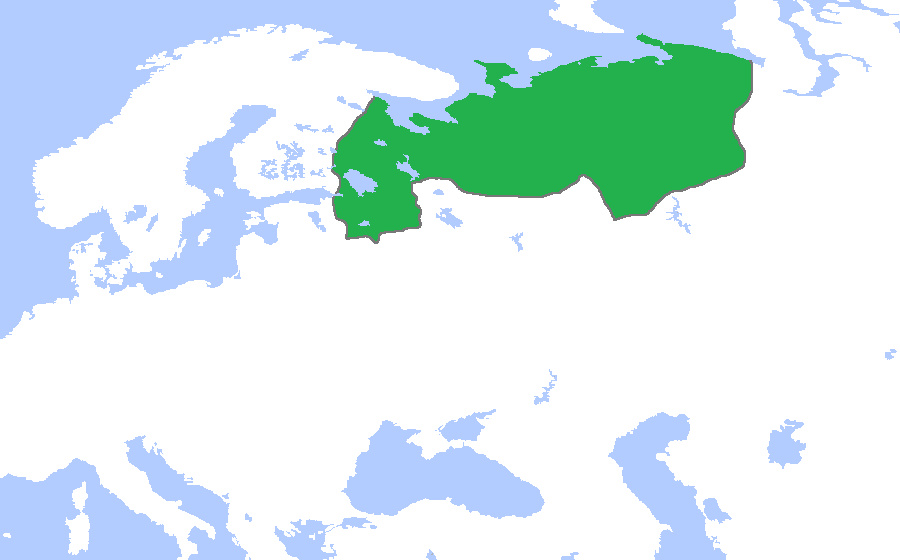
The Novgorod Republic (Russian: Новгородская республика, romanized: Novgorodskaya respublika), formally known as Lord Novgorod the Great, was a city-state that existed from the 12th to 15th centuries in northwestern Russia, stretching from the Gulf of Finland in the west to the Ural Mountains in the east. Its capital was the city of Novgorod. The republic prospered as the easternmost trading post of the Hanseatic League, and its people were much influenced by the culture of the Byzantines, with the Novgorod school of icon painting producing many fine works. For much of its history, Novgorod was the center of Russian art and culture.
Novgorod formally won its independence in 1136 after the Novgorodians deposed their prince and the Novgorod veche began to elect and dismiss princes at its own will. By the 13th century, the prince's power had greatly diminished. The veche also elected the posadnik, the chief executive of the city, as well as the archbishop of Novgorod, subject to approval by the Russian metropolitan. In addition, the tysyatsky, originally the military commander, was elected by the veche to serve the interests of the common people, eventually taking on judicial and commercial functions. Novgorodian nobles known as boyars dominated the veche, and the offices of posadnik and tysyatsky remained in the hands of boyar families. The boyars also gave funding to the ushkuyniki, who contributed to the expansion of Novgorod's trade and colonies in the Russian North.
From the mid-13th century, the Novgorodian throne remained in the hands of the grand princes of Vladimir, a title that, by the 14th century, had been inherited by the prince of Moscow. As Moscow grew in power in the 15th century, Novgorod began to lose its autonomy. In a 1471 peace treaty with Moscow following the Battle of Shelon, Novgorod pledged allegiance to Moscow, with its system of government temporarily left intact. The end of the republic came in 1478, when Ivan III dismantled the veche and imposed his direct rule on Novgorod as part of his campaign to annex the other Russian states.
The state was called Novgorod and Novgorod the Great (Russian: Великий Новгород, romanized: Veliky Novgorod), with the form Sovereign Lord Novgorod the Great (Russian: Государь Господин Великий Новгород, romanized: Gosudar' Gospodin Veliky Novgorod) becoming common in the 15th century. The term Novgorod the Great was also used to refer to all Novgorodians who enjoyed full rights. Novgorod land and Novgorod volost usually referred to the land belonging to Novgorod.
The term Novgorod Republic (Russian: Новгородская республика, romanized: Novgorodskaya respublika) itself is a much later term, although the polity was described as a republic as early as in the beginning of the 16th century. Soviet historians frequently used the terms Novgorod Feudal Republic and Novgorod Boyar Republic.[page needed]
The area of Novgorod was populated by various East Slavic tribes that were constantly at war with one another for supremacy. According to the 12th-century Primary Chronicle, in 859, the Varangians began to levy tribute on these tribes, who chased out the Varangians three years later. Due to their inability to govern and maintain peace, the tribes requested the return of the Varangians. In 862, the Varangian brothers Rurik, Sineus and Truvor were each "invited" to reign in Novgorod, Beloozero, and Izborsk, respectively, in what is now northwestern Russia. As a result, Novgorod is traditionally viewed as the birthplace of the Russian monarchy in Russian historiography.
The Primary Chronicle states that when Oleg the Wise conquered Kiev in 882, which traditionally marks the beginning of Kievan Rus', he ordered Novgorod to pay tribute to the Varangian princes in Kiev. Although the Chronicle states that "Oleg set himself up as prince in Kiev, and declared that it should be the mother of Russian cities," this account differs from what most Latin and Greek sources report for the next century. For example, in De Administrando Imperio, Novgorod is still presented as the capital of the Rus', while Kiev is mentioned only as an outpost.
The "Russian–Scandinavian cultural symbiosis" became prevalent following the establishment of the state of Rus'. The Novgorodians were the first to reach the regions between the Arctic Ocean and Lake Onega. Even though there is no definitive account of the precise timing of their arrival at the northern rivers that flowed into the Arctic, there are chronicles which mention that one expedition reached the Pechora River in 1032, and trading was established as early as 1096 with the tribes of Yugra. The Chronicle mentions Novgorodians traveling "beyond the portage" as early as 1079. They also traveled to Pomorye, the "summer [southern] coast" of the "Cold [White] Sea" in search of furs as well as fish and salt. The historian George Lantzeff remarked that "in the beginning of Russian history, two Russian principalities, Novgorod and Rostov-Suzdal, were engaged in exploring, conquering, exploiting, and colonizing the area west of the Ural Mountains".
Hub AI
Novgorod Republic AI simulator
(@Novgorod Republic_simulator)
Novgorod Republic
The Novgorod Republic (Russian: Новгородская республика, romanized: Novgorodskaya respublika), formally known as Lord Novgorod the Great, was a city-state that existed from the 12th to 15th centuries in northwestern Russia, stretching from the Gulf of Finland in the west to the Ural Mountains in the east. Its capital was the city of Novgorod. The republic prospered as the easternmost trading post of the Hanseatic League, and its people were much influenced by the culture of the Byzantines, with the Novgorod school of icon painting producing many fine works. For much of its history, Novgorod was the center of Russian art and culture.
Novgorod formally won its independence in 1136 after the Novgorodians deposed their prince and the Novgorod veche began to elect and dismiss princes at its own will. By the 13th century, the prince's power had greatly diminished. The veche also elected the posadnik, the chief executive of the city, as well as the archbishop of Novgorod, subject to approval by the Russian metropolitan. In addition, the tysyatsky, originally the military commander, was elected by the veche to serve the interests of the common people, eventually taking on judicial and commercial functions. Novgorodian nobles known as boyars dominated the veche, and the offices of posadnik and tysyatsky remained in the hands of boyar families. The boyars also gave funding to the ushkuyniki, who contributed to the expansion of Novgorod's trade and colonies in the Russian North.
From the mid-13th century, the Novgorodian throne remained in the hands of the grand princes of Vladimir, a title that, by the 14th century, had been inherited by the prince of Moscow. As Moscow grew in power in the 15th century, Novgorod began to lose its autonomy. In a 1471 peace treaty with Moscow following the Battle of Shelon, Novgorod pledged allegiance to Moscow, with its system of government temporarily left intact. The end of the republic came in 1478, when Ivan III dismantled the veche and imposed his direct rule on Novgorod as part of his campaign to annex the other Russian states.
The state was called Novgorod and Novgorod the Great (Russian: Великий Новгород, romanized: Veliky Novgorod), with the form Sovereign Lord Novgorod the Great (Russian: Государь Господин Великий Новгород, romanized: Gosudar' Gospodin Veliky Novgorod) becoming common in the 15th century. The term Novgorod the Great was also used to refer to all Novgorodians who enjoyed full rights. Novgorod land and Novgorod volost usually referred to the land belonging to Novgorod.
The term Novgorod Republic (Russian: Новгородская республика, romanized: Novgorodskaya respublika) itself is a much later term, although the polity was described as a republic as early as in the beginning of the 16th century. Soviet historians frequently used the terms Novgorod Feudal Republic and Novgorod Boyar Republic.[page needed]
The area of Novgorod was populated by various East Slavic tribes that were constantly at war with one another for supremacy. According to the 12th-century Primary Chronicle, in 859, the Varangians began to levy tribute on these tribes, who chased out the Varangians three years later. Due to their inability to govern and maintain peace, the tribes requested the return of the Varangians. In 862, the Varangian brothers Rurik, Sineus and Truvor were each "invited" to reign in Novgorod, Beloozero, and Izborsk, respectively, in what is now northwestern Russia. As a result, Novgorod is traditionally viewed as the birthplace of the Russian monarchy in Russian historiography.
The Primary Chronicle states that when Oleg the Wise conquered Kiev in 882, which traditionally marks the beginning of Kievan Rus', he ordered Novgorod to pay tribute to the Varangian princes in Kiev. Although the Chronicle states that "Oleg set himself up as prince in Kiev, and declared that it should be the mother of Russian cities," this account differs from what most Latin and Greek sources report for the next century. For example, in De Administrando Imperio, Novgorod is still presented as the capital of the Rus', while Kiev is mentioned only as an outpost.
The "Russian–Scandinavian cultural symbiosis" became prevalent following the establishment of the state of Rus'. The Novgorodians were the first to reach the regions between the Arctic Ocean and Lake Onega. Even though there is no definitive account of the precise timing of their arrival at the northern rivers that flowed into the Arctic, there are chronicles which mention that one expedition reached the Pechora River in 1032, and trading was established as early as 1096 with the tribes of Yugra. The Chronicle mentions Novgorodians traveling "beyond the portage" as early as 1079. They also traveled to Pomorye, the "summer [southern] coast" of the "Cold [White] Sea" in search of furs as well as fish and salt. The historian George Lantzeff remarked that "in the beginning of Russian history, two Russian principalities, Novgorod and Rostov-Suzdal, were engaged in exploring, conquering, exploiting, and colonizing the area west of the Ural Mountains".