



Community hub
Recent from talks
Knowledge base stats:
Talk channels stats:
Members stats:
Anglican religious order
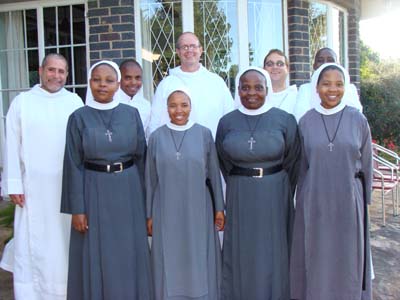
Anglican religious orders are communities of men or women (or in some cases mixed communities of men and women) in the Anglican Communion who live under a common rule of life. The members of religious orders take vows which often include the traditional monastic vows of poverty, chastity and obedience, or the ancient vow of stability, or sometimes a modern interpretation of some or all of these vows. Members may be laity or clergy, but most orders and their houses include a mixture of both. They lead a common life of work and prayer, sometimes on a single site, sometimes spread over multiple locations. About 2,400 monks and nuns are currently in the Anglican communion, about 55% of whom are women and 45% of whom are men.
Though many Anglicans are members of religious orders recognized by the Anglican Communion, others may be members of ecumenical Protestant or Old Catholic religious orders while maintaining their Anglican identity and parochial membership in Anglican churches.
Members of religious communities may be known as monks or nuns, particularly in those communities which require their members to live permanently in one location. Brother and Sister are common forms of address across all religious communities. They may also be known as friars or sisters, terms used particularly (though not exclusively) within religious orders whose members are more active in the wider community, often living in smaller group houses rather than in larger monastic or cloistered houses. Amongst such friars and sisters the descriptor term mendicant is sometimes applied to their orders: those whose members are geographically mobile and more focused on an outwardly-facing work or ministry (eg, with the poor).
The titles Father and Mother or Reverend Father and Reverend Mother are commonly applied to the leader of a community, or sometimes more generally to all members who have been ordained as priests or elected to leadership offices by the community.
In the Benedictine Anglican tradition the formal honorific titles Right Reverend and Very Reverend are sometimes applied to the Abbot (leader) and Prior (deputy leader) of a religious community. Benedictine communities sometimes apply the titles Dom and Dame to professed male and female members (rather than Brother and Sister).
Religious orders were dissolved by King Henry VIII when he separated the Church of England from papal primacy. In 1626, Nicholas Ferrar, a protegé of William Laud (1573–1645), with his family, established the Little Gidding community. Since there was no formal Rule (such as the Rule of Saint Benedict), no vows taken, and no enclosure, Little Gidding cannot be said to be a formal religious community, like a monastery, convent, or hermitage. The household had a routine according to high church principles and the Book of Common Prayer. Fiercely denounced by the Puritans and denounced as "Protestant Nunnery" and as an "Arminian heresy", Little Gidding was attacked in a 1641 pamphlet entitled "The Arminian Nunnery". The fame of the Ferrars and the Little Gidding community spread and they attracted visitors. King Charles I visited three times, including on 2 May 1646 seeking refuge after the Cavalier defeat at the Battle of Naseby. The community ended when its last member died in 1657.
Although the Ferrar community remained a part of the Anglican ethos (Bishop Francis Turner composed a memoir of Nicholas Ferrar prior to his death in 1700), not until the mid-nineteenth century with the Oxford Movement and the revival of Anglican religious orders did Little Gidding reach the consciousness of the average Anglican parishioner. Since that time, interest in such community life has grown, and not been limited to members of the Anglican Communion. According to ascetical theologian Martin Thornton, much of the appeal is due to Nicholas Ferrar and the Little Gidding community's exemplifying the lack of rigidity (representing the best Anglicanism's via media can offer) and "common-sense simplicity", coupled with "pastoral warmth", which are traceable to the origins of Christianity.
Between 1841 and 1855, several religious orders for women were begun, among them the Community of St Mary the Virgin at Wantage and the Society of Saint Margaret at East Grinstead. Religious orders for men appeared later, beginning in 1866 with the Society of St. John the Evangelist or "Cowley Fathers". In North America, the founding of Anglican religious orders began in 1842 with the Nashotah Community for men in Wisconsin, followed in 1845 by the Sisterhood of the Holy Communion under Anne Ayres in New York.
Hub AI
Anglican religious order AI simulator
(@Anglican religious order_simulator)
Anglican religious order
Anglican religious orders are communities of men or women (or in some cases mixed communities of men and women) in the Anglican Communion who live under a common rule of life. The members of religious orders take vows which often include the traditional monastic vows of poverty, chastity and obedience, or the ancient vow of stability, or sometimes a modern interpretation of some or all of these vows. Members may be laity or clergy, but most orders and their houses include a mixture of both. They lead a common life of work and prayer, sometimes on a single site, sometimes spread over multiple locations. About 2,400 monks and nuns are currently in the Anglican communion, about 55% of whom are women and 45% of whom are men.
Though many Anglicans are members of religious orders recognized by the Anglican Communion, others may be members of ecumenical Protestant or Old Catholic religious orders while maintaining their Anglican identity and parochial membership in Anglican churches.
Members of religious communities may be known as monks or nuns, particularly in those communities which require their members to live permanently in one location. Brother and Sister are common forms of address across all religious communities. They may also be known as friars or sisters, terms used particularly (though not exclusively) within religious orders whose members are more active in the wider community, often living in smaller group houses rather than in larger monastic or cloistered houses. Amongst such friars and sisters the descriptor term mendicant is sometimes applied to their orders: those whose members are geographically mobile and more focused on an outwardly-facing work or ministry (eg, with the poor).
The titles Father and Mother or Reverend Father and Reverend Mother are commonly applied to the leader of a community, or sometimes more generally to all members who have been ordained as priests or elected to leadership offices by the community.
In the Benedictine Anglican tradition the formal honorific titles Right Reverend and Very Reverend are sometimes applied to the Abbot (leader) and Prior (deputy leader) of a religious community. Benedictine communities sometimes apply the titles Dom and Dame to professed male and female members (rather than Brother and Sister).
Religious orders were dissolved by King Henry VIII when he separated the Church of England from papal primacy. In 1626, Nicholas Ferrar, a protegé of William Laud (1573–1645), with his family, established the Little Gidding community. Since there was no formal Rule (such as the Rule of Saint Benedict), no vows taken, and no enclosure, Little Gidding cannot be said to be a formal religious community, like a monastery, convent, or hermitage. The household had a routine according to high church principles and the Book of Common Prayer. Fiercely denounced by the Puritans and denounced as "Protestant Nunnery" and as an "Arminian heresy", Little Gidding was attacked in a 1641 pamphlet entitled "The Arminian Nunnery". The fame of the Ferrars and the Little Gidding community spread and they attracted visitors. King Charles I visited three times, including on 2 May 1646 seeking refuge after the Cavalier defeat at the Battle of Naseby. The community ended when its last member died in 1657.
Although the Ferrar community remained a part of the Anglican ethos (Bishop Francis Turner composed a memoir of Nicholas Ferrar prior to his death in 1700), not until the mid-nineteenth century with the Oxford Movement and the revival of Anglican religious orders did Little Gidding reach the consciousness of the average Anglican parishioner. Since that time, interest in such community life has grown, and not been limited to members of the Anglican Communion. According to ascetical theologian Martin Thornton, much of the appeal is due to Nicholas Ferrar and the Little Gidding community's exemplifying the lack of rigidity (representing the best Anglicanism's via media can offer) and "common-sense simplicity", coupled with "pastoral warmth", which are traceable to the origins of Christianity.
Between 1841 and 1855, several religious orders for women were begun, among them the Community of St Mary the Virgin at Wantage and the Society of Saint Margaret at East Grinstead. Religious orders for men appeared later, beginning in 1866 with the Society of St. John the Evangelist or "Cowley Fathers". In North America, the founding of Anglican religious orders began in 1842 with the Nashotah Community for men in Wisconsin, followed in 1845 by the Sisterhood of the Holy Communion under Anne Ayres in New York.