
Recent from talks
William Laud
Knowledge base stats:
Talk channels stats:
Members stats:
William Laud
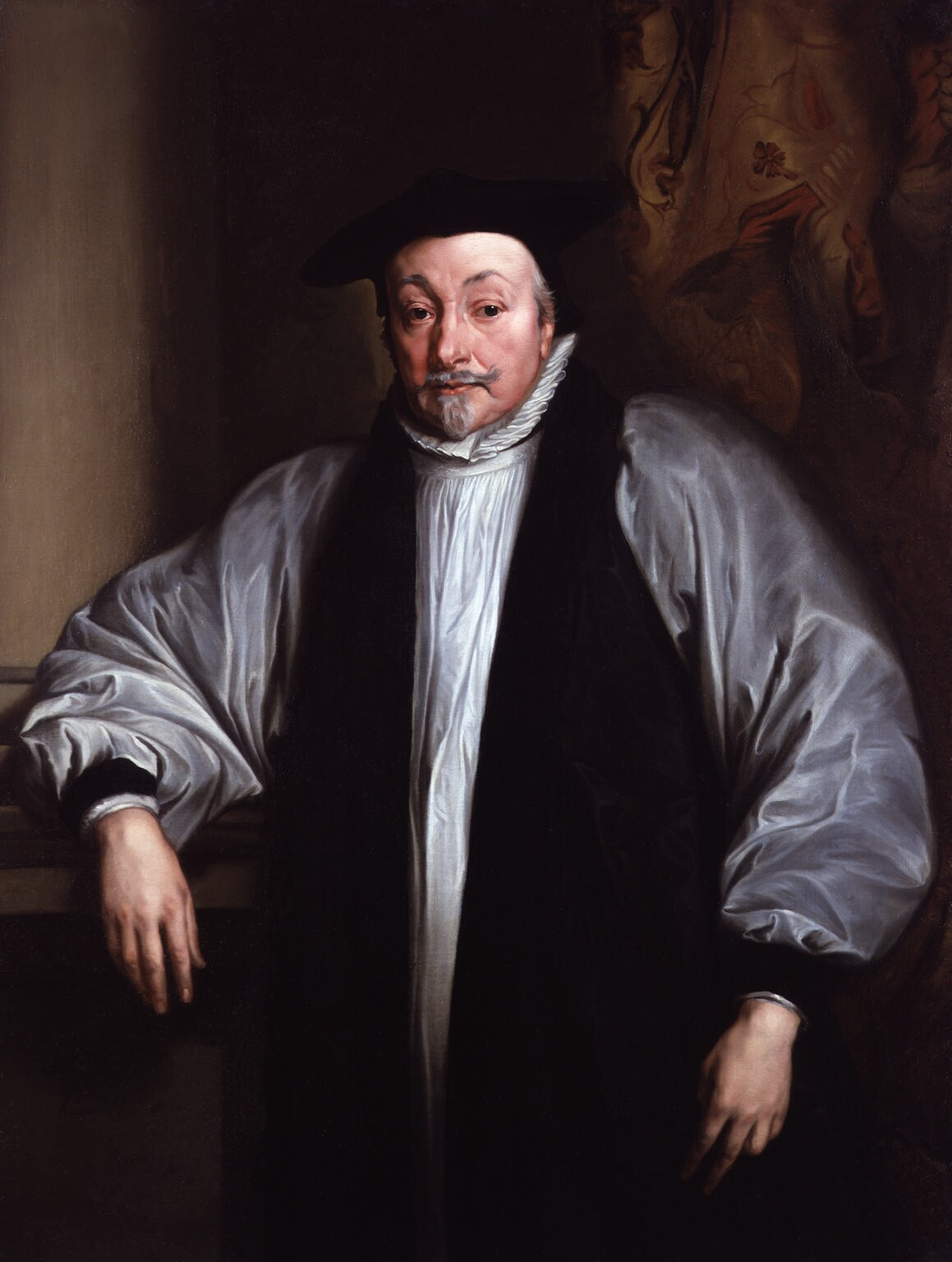
William Laud (7 October 1573 – 10 January 1645) was a bishop in the Church of England. Appointed Archbishop of Canterbury by Charles I in 1633, Laud was a key advocate of Charles I's religious reforms; he was arrested by Parliament in 1640 and executed towards the end of the First English Civil War in January 1645.
Laud believed in episcopalianism, or rule by bishops. "Laudianism" was a reform movement that emphasised liturgical ceremony and clerical hierarchy, enforcing uniformity within the Church of England, as outlined by Charles. Its often highly ritualistic aspects prefigure what are now known as high church views.
In theology, Laud was accused of Arminianism, favouring doctrines of the historic church prior to the Reformation and defending the continuity of the English Church with the primitive and medieval church, and opposing Calvinism. On all three grounds, he was regarded by Puritan clerics and laymen as a formidable and dangerous opponent. His use of the Star Chamber to persecute opponents such as William Prynne made him deeply unpopular.
Laud was born at Reading, Berkshire, on 7 October 1573, the only son of William Laud, a clothier, and Lucy, born Webbe, widow of John Robinson, another clothier of the town, and sister of Sir William Webbe, Lord Mayor of London. He was educated at Reading School and on 17 October 1589 matriculated to St John's College, Oxford, where he was taught by Thomas Holland. In 1593 he became a fellow of the college. He graduated Bachelor of Arts in 1594, Master of Arts in 1598 and Doctor of Divinity in 1608. When Laud was going through his exercises as a candidate for the degree of Bachelor in Divinity, in 1604, he contended "that there could be no true churches without diocesan episcopacy". For this the young aspirant was sharply and publicly rebuked by Holland, who presided on the occasion; and who severely reprehended the future Primate of All England as "one who sought to sow discord among brethren, and between the Church of England and the Reformed Churches abroad". While he was an undergraduate, Laud's tutor was John Buckeridge, who became president of St John's College in 1605.
Laud was ordained deacon on 4 January 1601 and priest on 5 April the same year. On 4 May 1603, he was one of the university proctors for the year.
When Buckeridge left St John's in 1611, Laud succeeded him as president, but only after a hard patronage struggle reaching high circles at court. The rival candidate, John Rawlinson, was chaplain to Lord Ellesmere, who was both chancellor of the university and Lord Chancellor of England. Laud was chaplain to Richard Neile, who was Clerk of the Closet. Eventually, King James brushed aside irregularities in the election, settling matters in Laud's favour.
Laud became Dean of Gloucester in 1616. At Gloucester Cathedral he began ceremonial innovations with the communion table. By local custom, the table stood in the middle of the choir, as was then usual in a parish church, rather than at the east end as was typical of cathedrals. Laud believed he had the king's blessing to renovate and improve the run-down building, but he offended his bishop, Miles Smith.
Neile was Laud's consistent patron. Neile sought, but could not obtain, Laud's appointment as Dean of Westminster, a post that John Williams retained. But at the end of 1621, and despite the king's view of Laud as a troublemaker, Laud received the relatively unimportant see of St Davids.
Hub AI
William Laud AI simulator
(@William Laud_simulator)
William Laud
William Laud (7 October 1573 – 10 January 1645) was a bishop in the Church of England. Appointed Archbishop of Canterbury by Charles I in 1633, Laud was a key advocate of Charles I's religious reforms; he was arrested by Parliament in 1640 and executed towards the end of the First English Civil War in January 1645.
Laud believed in episcopalianism, or rule by bishops. "Laudianism" was a reform movement that emphasised liturgical ceremony and clerical hierarchy, enforcing uniformity within the Church of England, as outlined by Charles. Its often highly ritualistic aspects prefigure what are now known as high church views.
In theology, Laud was accused of Arminianism, favouring doctrines of the historic church prior to the Reformation and defending the continuity of the English Church with the primitive and medieval church, and opposing Calvinism. On all three grounds, he was regarded by Puritan clerics and laymen as a formidable and dangerous opponent. His use of the Star Chamber to persecute opponents such as William Prynne made him deeply unpopular.
Laud was born at Reading, Berkshire, on 7 October 1573, the only son of William Laud, a clothier, and Lucy, born Webbe, widow of John Robinson, another clothier of the town, and sister of Sir William Webbe, Lord Mayor of London. He was educated at Reading School and on 17 October 1589 matriculated to St John's College, Oxford, where he was taught by Thomas Holland. In 1593 he became a fellow of the college. He graduated Bachelor of Arts in 1594, Master of Arts in 1598 and Doctor of Divinity in 1608. When Laud was going through his exercises as a candidate for the degree of Bachelor in Divinity, in 1604, he contended "that there could be no true churches without diocesan episcopacy". For this the young aspirant was sharply and publicly rebuked by Holland, who presided on the occasion; and who severely reprehended the future Primate of All England as "one who sought to sow discord among brethren, and between the Church of England and the Reformed Churches abroad". While he was an undergraduate, Laud's tutor was John Buckeridge, who became president of St John's College in 1605.
Laud was ordained deacon on 4 January 1601 and priest on 5 April the same year. On 4 May 1603, he was one of the university proctors for the year.
When Buckeridge left St John's in 1611, Laud succeeded him as president, but only after a hard patronage struggle reaching high circles at court. The rival candidate, John Rawlinson, was chaplain to Lord Ellesmere, who was both chancellor of the university and Lord Chancellor of England. Laud was chaplain to Richard Neile, who was Clerk of the Closet. Eventually, King James brushed aside irregularities in the election, settling matters in Laud's favour.
Laud became Dean of Gloucester in 1616. At Gloucester Cathedral he began ceremonial innovations with the communion table. By local custom, the table stood in the middle of the choir, as was then usual in a parish church, rather than at the east end as was typical of cathedrals. Laud believed he had the king's blessing to renovate and improve the run-down building, but he offended his bishop, Miles Smith.
Neile was Laud's consistent patron. Neile sought, but could not obtain, Laud's appointment as Dean of Westminster, a post that John Williams retained. But at the end of 1621, and despite the king's view of Laud as a troublemaker, Laud received the relatively unimportant see of St Davids.
Recent media