


Community hub
Recent from talks
Contribute something
Nothing was collected or created yet.
Richard Harrison (actor)
View on Wikipedia | This article has multiple issues. Please help improve it or discuss these issues on the talk page. (Learn how and when to remove these messages)
|

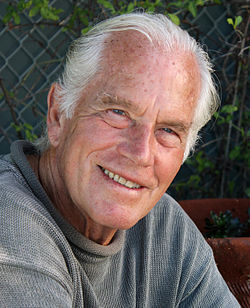
Richard Harrison (born May 26, 1936) is an American actor, writer, director and producer known for his work in European B-movies during the 1960s and 1970s, and exploitation films of the early 1970s.
Key Information


He has worked with directors such as Antonio Margheriti and Marino Girolami and Z-movie directors like Paolo Solvay, Godfrey Ho, and Alfonso Brescia. Harrison has also worked with a variety of co-stars ranging from Anita Ekberg, Michèle Mercier, Klaus Kinski, Fernando Sanco, and Helmut Berger to popular actors such as Mike Monty and Romano Kristoff.
Early life
[edit]Born in Salt Lake City, Utah, Harrison moved to Los Angeles at 17, where he was first employed at the Vic Tanny and Bert Goodrich gyms. Certain people working in the film industry trained at the gym and these encounters led Harrison to study acting. In 1961 he married Loretta Nicholson, the daughter of American International Pictures co-chief James H. Nicholson.
American film appearances
[edit]He appeared in a Santa Monica stage production, TV, and small parts in feature films. Next, Harrison worked at Twentieth Century Fox under acting coach Sandy Meisner, where he made an appearance at the beginning of South Pacific along with Tom Laughlin and Ron Ely. He eventually signed a three-film deal with American International Pictures, which led him to Italy, where he remained for almost three decades, appearing in sword and sandal films, then Eurospy films and Spaghetti Westerns. Formal acting studies differentiated Harrison from other muscular American actors working in Italy in the early 1960s, such as Brad Harris and Steve Reeves, with whom he is often grouped.
1960s European movies
[edit]Harrison relocated to Italy in the early 1960s with his first wife Loretta, initially in a three-picture contract with producer Italo Zingarelli. He remained in Italy and became a lead in sword and sandal films, Eurospy films, and later Spaghetti Westerns. His first Italian film and first starring role were in The Invincible Gladiator (1962), directed by Alberto De Martino and Antonio Momplet. Harrison's most well-known film from his early career is the western Gunfight at Red Sands (Duello Nel Texas), directed by Ricardo Blasco in 1963. Harrison turned down Sergio Leone's A Fistful of Dollars and recommended Clint Eastwood for the role.[1] Harrison joked that this was his greatest contribution to cinema.[2]
Harrison also acted in the 1968 film Joko - Invoca Dio... e muori a.k.a. Vengeance, directed by Antonio Margheriti. Luciano Martino's 1965 movie Secret Agent Fireball, Harrison's first Eurospy film, is also often cited as his best film in the genre and one of his better earlier films. He again played the role of CIA Agent Fleming in a sequel, Killers Are Challenged, in 1966.
The Italian actor Bruno Piergentili who made European features during this period was given the name "Dan Harrison," perhaps to evoke Richard's name.
1970s exploitation films
[edit]Harrison's career declined gradually in the 1970s, coinciding with the decline of Spaghetti Westerns. He began appearing in lower-budget movies shot all over the world: In Egypt (You Can Do a Lot with 7 Women, 1971), with the Shaw Brothers in Hong Kong starring in the title role of Marco Polo (1975) and playing the German commander von Waldersee in The Boxer Rebellion (1976). Harrison worked in Turkey (The Godfather's Friend, 1972), directed by Farouk "Frank" Agrama, and as Sgt. Taylor in a Yugoslavian war film, the 1979 effort Pakleni otok, led by Vladimir Tadej.
He directed several notable films in the first half of the 1970s, including the comedic Spaghetti Western Due Fratelli, also known as Two Brothers in Trinity (1972). His co-star in Due Fratelli was the Irish American actor Donald O'Brien. Harrison and O'Brien played two estranged brothers who rejoined after receiving an inheritance, Harrison a "lovable rogue" and O'Brien a pious Mormon. Harrison wants to spend his money on building a bordello, and comic adventures in the spirit of the Terence Hill/Bud Spencer hit My Name is Trinity (1971) follow.
Other notable early 1970s films were Churchill's Leopards (1970), directed by Maurizio Pradeaux and also starring Giacomo Rossi Stuart and Klaus Kinski, in which Harrison played a double role; Acquasanta Joe (1971), directed by Mario Gariazzo and starring Ty Hardin and Lincoln Tate; and Dig Your Grave, Friend...Sabata's Coming (1971), directed by Juan Bosch, is a western livened up by the presence of Spanish actor Fernando Sancho. Harrison acted in several films with Sancho, the archetypal Mexican bandit of paella and Spaghetti Westerns, most of which were produced and/or directed by Ignacio F. Aquino.
One of the more successful Harrison films from the latter half of the 1970s was the Italian crime thriller La Belva Col Mitra (1977), a.k.a. Beast With a Gun, directed by Sergio Grieco, also starring Helmut Berger and Marisa Mell. Harrison played the part of Police Commissioner Giulio Santini, with top-billed Berger as psychotic criminal Nanni Vitali, out to kill Santini and everyone else who testified against him in court. La Belva Col Mitra had some controversy, apparently, Harrison's scenes were cut down in the film at Berger's request.
A notable curio in Harrison's 1970s filmography is the 1971 film L'Explosion, directed by Marc Simenon (the son of Georges Simenon) and co-starring Mylène Demongeot. The 1978 martial arts/spy film Challenge of the Tiger is also of curio interest, if only for the presence of Bruce Lee imitator Bruce Le (who also directed the film, with noncredit help from Paolo Solvay), European softcore star Nadiuska and Harrison's son Sebastian.
Z-movies in Asia
[edit]
During the 1980s, Harrison primarily appeared in B-movie action films produced in the Philippines and Hong Kong. While these films are often regarded as a low point in his career, some of his works from that era have developed a cult following.
In the Philippines, Harrison acted in five ultralow-budget actioners, best classified as Z-movies, produced by K.Y. Lim for Silver Star Film Company (called Kinavesa in the Philippines). Three, Fireback, Hunter's Crossing and Blood Debts (1985), were directed by Teddy Page, and two, Intrusion Cambodia (1984) and Rescue Team by John Gale. In the books Gods in Polyester and Gods in Spandex, Harrison states that he wrote some of the screenplays for Filipino films practically overnight, using a pseudonym. For example, Harrison's "Fireback" screenplay Harrison wrote is credited to "Timothy Jorge," a pseudonym usually used by Don Gordon Bell, one of the expatriate American actors working for Silver Star. Harrison also mentions that the Silver Star films he acted in didn't have complete shooting scripts, and many scenes were improvised on the spot, contributing to their disjointed narrative.
Silver Star reused the same group of American and European expatriate actors from film to film, all appearing in the Harrison vehicles. Mike Monty, an old acquaintance of Harrison from the Italian days who had migrated to the archipelago, James Gaines, Romano Kristoff, Bruce Baron, Ann Milhench, and others. Harrison struck a friendship with Kristoff, one of the leading Silver Star actors, and later invited him to Italy to act in a film he produced and directed, Three Men on Fire (1986).
When they were made, the poor quality of Filipino films hurt Harrison's reputation. However, they have attracted cult interest in some movie fandoms over the years. Although he fondly remembers Teddy Page, Harrison doesn't have kind words for Lim and working for the Silver Star.
In Hong Kong, Harrison starred in what was supposed to be a small number of low-budget martial arts "ninja" films directed by Chinese filmmaker Godfrey Ho, with whom he was already familiar from working for the Shaw Brothers in the 1970s. However, Ho later re-edited his scenes into many more films in a cut-and-paste style of filmmaking. As a result, Harrison found himself the unwilling star of at least twenty-four different movies, with titles like Ninja Terminator, Cobra Vs. Ninja, Golden Ninja Warrior, and Diamond Ninja Force. Like the Silver Star productions, the "ninja" films have become cult films. Disgusted with that outcome, Harrison returned to the United States.
In 1991, Harrison played Jack Roth in the drama film Lies of the Twins opposite Aidan Quinn, Isabella Rossellini, and Iman. Directed by Tim Hunter,[3] much of the movie was shot at Harrison's beach-front home in Malibu.[4] The film was generally well-received by critics upon release.[5]
Harrison subsequently slowed down his film work over the next few years. His last movies were the 1993 erotic thriller Angel Eyes and the 2000 film Jerks. Angel Eyes was directed by the cinematographer/director Gary Graver and starred Erik Estrada, John Phillip Law, and Monique Gabrielle.
Some of the more noteworthy movies in Harrison's later career were the Moroccan film Amok (1982) and Dark Mission (1987), by controversial Spanish director Jesús Franco. It had a cast featuring Christopher Lee, Christopher Mitchum, and French adult film star Brigitte Lahaie (also known for appearing in the horror films of Jean Rollin).
One of the few serious roles that Harrison portrayed in the 1980s was that of American President Andrew Johnson in Ali Hatami's Iranian production Hajji Washington. The film was completed in 1982 but was not screened in Iran until 1998.
He has since founded a now defunct, multisystem electronics company named Gladiator Electronics with his son Sebastian.
Partial filmography
[edit]- Kronos (1957), as Pilot
- Jeanne Eagels (1957), as Cpl. Hodgson (uncredited)
- South Pacific (1958), as Co-Pilot
- Too Much, Too Soon (1958), as Swimming Companion (uncredited)
- Battle Flame (1959), as 2nd Lt. Wechsler
- Tall Story (1960), as Student (uncredited)
- Master of the World (1961), as Alistair
- The Invincible Gladiator (1961), as Rezius
- Avenger of the Seven Seas a.k.a. Il giustiziere dei mari (1962), as Lieutenant David Robinson
- Gladiators 7 (1962), as Darius
- Medusa Against the Son of Hercules a.k.a. Perseo l'invincibile (1963), as Perseo
- The Saracens a.k.a. Il pirata del diavolo (1963), as Marco Trevisan
- Gunfight at Red Sands a.k.a. Duello nel Texas a.k.a. Gringo (1963), as Ricardo 'Gringo' Martinez
- Sons of Vengeance (1964), as Jeff Walker
- Messalina vs. the Son of Hercules a.k.a. L'ultimo gladiatore (1964), as Glaucus
- The Two Gladiators a.k.a. Fight or Die (1964), as Lucius Crassus
- Revolt of the Praetorians (1964), as Velerio Rufo
- Giants of Rome (1964), as Claudius Marcellus
- Adventures of the Bengal Lancers (1964), as Sgt. Frankie Ross
- Jungle Adventurer a.k.a. Temple of a Thousand Lights (1965), as Alan Foster
- Secret Agent Fireball (1965), as Bob Fleming
- 100.000 dollari per Ringo a.k.a. $100,000 for Ringo (1965), as Lee 'Ringo' Barton
- Bob Fleming... Mission Casablanca a.k.a. Killers Are Challenged (1966), as Bob Fleming
- El Rojo (1966), as Donald 'El Rojo' Sorensen
- Ring Around the World a.k.a. Duello nel mondo (1966), as Fred Lester
- Master Stroke a.k.a. Colpo maestro al servizio di Sua Maestà britannica (1967), as Arthur Lang / Owen
- 28 minuti per 3 milioni di dollari a.k.a. 28 Minutes for 3 Million Dollars (1967), as Jacques
- L'uomo del colpo perfetto a.k.a. Hot Diamonds in Cold Blood (1967), as Steve Norton
- Fantabulous Inc. (1967), as Richard Werner aka Karl Meyer
- Vengeance a.k.a. Joko - Invoca Dio... e muori (1968), as Joko / Rocco Barrett
- Day After Tomorrow a.k.a. Uno dopo l'altro (1968), as Stan Ross
- Between God, the Devil and a Winchester (1968), as Father Pat Jordan
- C'era una volta un gangster (1969), as Larry Alfieri
- 36 Hours to Hell (1969), as Captain Stern
- Pussycat, Pussycat, I Love You (1970), as Hero
- Stagecoach of the Condemned (1970), as Robert Walton
- Churchill's Leopards (1970), as Lt. Richard Benson / Lt. Hans Müller
- Reverend's Colt (1970), as Sheriff Donovan
- L'Explosion (1971), as Max
- Dig Your Grave Friend... Sabata's Coming (1971), as Steve McGowan
- His Name Was King (1971), as John 'King' Marley
- Holy Water Joe (1971), as Charlie Bennett
- Lo sceriffo di Rockspring a.k.a. Sheriff of Rock Springs (1971), as The Sheriff
- You Can Do a Lot with 7 Women a.k.a. Si può fare molto con 7 donne (1972), as Mike Spencer
- Two Brothers in Trinity (1972), as Jesse Smith
- Deadly Trackers (1972), as Jeff Carter / James Luke / Django
- Los fabulosos de Trinidad (1972), as Scott
- The Godfather's Friend a.k.a. The Way of the Godfather (1972), as Richard Maddock
- Joe Dakota (1972), as Joe Dakota
- Pugni, pirati e karatè (1973), as Gargantua / 'Garga'
- Dört Hergele (1974)
- Anasinin Gozu (1974)
- Story of a Poor Young Man (1974)
- Una donna per 7 bastardi (1974), as Cripple
- Un viaje de locos (1974)
- Yankesici (1975)
- Marco Polo a.k.a. The Four Assassins (1975), as Marco Polo
- The Boxer Rebellion a.k.a. The Bloody Avengers (1976), as General von Waldersee, the German Commander
- Achtung! The Desert Tigers (1977), as Maj. Lexman
- Natascha - Todesgrüße aus Moskau (1977), as Bukow
- La belva col mitra a.k.a. Beast with a Gun (1977), as Santini
- Clouzot & C. contro Borsalino & C. (1977), as Borsalino
- Chubby Chiro's Big Con (1978)
- Sahit (1978)
- Provincia violenta (1978), as Augusto
- Napoli... i 5 della squadra speciale (1978), as Areangeli
- Black Gold Dossier (1979), as Richard Benson
- Pakleni otok (1979), as Americki narednik Taylor
- Napoli storia d'amore e di vendetta (1979), as Frank
- Don't Trust the Mafia (1979), as Questore Ferrari
- Challenge of the Tiger a.k.a. Gymkata Killer (1980), as Richard Cannon
- Orgasmo nero a.k.a. Voodoo Baby (1980), as Paul
- La mondana nuda (1980)
- Hajji Washington (1982), as President Andrew Johnson / Grover Cleveland
- Corri come il vento, Kiko (1982), as Guido
- Rescue Team (1983)
- Hunter's Crossing (1983), as Burns Jr.
- Fireback (1983), as Jack Kaplan
- Intrusion Cambodia (1983)
- Amok (1983), as Elton Horn
- Zhi zun shen tou (1984)
- Blood Debts a.k.a. Eliminator (1985), as Mark Collins
- È arrivato mio fratello a.k.a. Here's My Brother (1985), as Spinetti
- Ninja Terminator (1985), as Ninja master Harry
- Ninja Holocaust (1985)
- Lei ting chu chuan (1985), as Richard
- Three Men on Fire (1986), as Mathews - CIA agent
- Ninja the Protector (1986), as Ninja Master Gordon Anderson
- Ninja Champion (1986), as Richard
- Ninja Thunderbolt (1986), as Richard
- The Ninja Squad (1986), as Ninja master Gordon
- Ninja Hunt (1986)
- Ninja Dragon (1986), as Ninja Master Gordon
- Golden Ninja Warrior (1986)
- Ninja Kill (1987), as Ninja master Gordon
- Ninja Operation: Licensed to Terminate (1987)
- Evil Spawn (1987), as Max Adrian
- Hitman the Cobra (1987), as Phillip
- Ninja: Silent Assassin (1987), as Ninja Master Gordon
- Operação Ninja III (1987), as Ninja Master Gordon
- Ninja Commandments (1987), as Ninja Master Gordon
- Ninja Avengers (1987), as Master Gordon
- Cobra vs. Ninja (1987), as Ninja master Gordon
- The Ninja Showdown (1988), as Ninja Master Gordon
- Ninja Powerforce (1988), as Ninja Master Gordon
- Ninja: The Bootlace Philosophy (1988)
- Diamond Ninja Force (1988), as Ninja Master Gordon
- Hands of Death (1988)
- Dark Mission (1988), as Lt. Sparks
- The Power of Ninjitsu (1988), as Gordon
- Scorpion Thunderbolt (1988)
- Ninja Strike Force (1988), as Ninja Master Gordon
- Gemini, the Twin Stars (1988), as Senator Buffington
- Above the War (1989), as General O'Connor
- Terminal Force (1989), as Nick Tyree
- Operation Las Vegas (1990), as Jefferson
- Highway to Hell (1990)
- Empire of the Dark (1991), as Arkham
- The Channeler (1991), as Jack
- Lies of the Twins (1991), as Jack Roth
- Paid to Kill (1991), as James Burton
- Angel Eyes (1993), as Vince
- Un affare trasversale (1998)
- Jerks (2000)
Bibliography
[edit]Harrison contributed pieces on his 1970s and 1980s films to two compilations:
- Gods In Polyester, or, A Survivors' Account of 70's Cinema Obscura (2004)
- Gods In Spandex, or, A Survivors' Account of 80's Cinema Obscura (2007)
References
[edit]- ^ Frayling, Christopher Spaghetti Western: Cowboys and Europeans from Karl May to Sergio Leone, Routledge, 1981, p. 145
- ^ "Interview". Nanarland.com. Archived from the original on 2014-02-02. Retrieved 2008-12-12.
- ^ Jerry Roberts, Encyclopedia of Television Film Directors, Volume 1, (Scarecrow Press: 2009), p. 267.
- ^ Video Watchdog, Issues 9–14, (Tim & Donna Lucas: 1992), p. 64.
- ^ Jim Hillier, The New Hollywood, (Continuum: 1992), p. 64.
External links
[edit]In-depth interview on video
Richard Harrison and his movies:
- Richard Harrison at IMDb
- semi-official Richard Harrison site Archived 2005-09-20 at the Wayback Machine by John. P. Dulaney
- Interview Archived 2005-04-06 at the Wayback Machine Nanarland.com interviews Richard Harrison about his career
- Brian's Drive-In Theater A B-movie website with a section on Richard Harrison
- Richard Harrison's biography on (re)Search my Trash
Miscellaneous:
- An interview of Kent Wills at www.dighkmovies.com featuring a lot of information on Godfrey Ho and the seedier side of the Hong Kong film industry
- The Spaghetti Western Database
- An article on spaghetti western at www.wildeast.net
- The Spaghetti Western web board Archived 2005-12-17 at the Wayback Machineis a discussion forum for all things Spaghetti Western-related.
- A Fistful of Westerns Archived 2005-11-04 at the Wayback Machine, a Spaghetti Western site with basic profiles on some actors, general information, and an interesting image gallery featuring vintage poster art
- A gallery of cover scans from vintage sword and sandal videos
| International | |
|---|---|
| National | |
| People | |
| Other | |

Richard Harrison (actor)
View on GrokipediaBiography
Early life
Richard Harrison was born on May 26, 1935, in Salt Lake City, Utah, into a modest family marked by a tense home environment.[4] Seeking to escape these family challenges, he left home at age 17 and relocated to Los Angeles, California, in 1953.[4][2][5] Upon arriving in Southern California, Harrison took an initial job at a local gym, where he worked as a fitness trainer while beginning to train rigorously to enhance his physique.[2][3][5] Standing at 6 feet tall, he developed a muscular build weighing around 190 pounds through dedicated bodybuilding efforts, which not only improved his fitness but also opened doors to physique modeling in the 1950s, including appearances on magazine covers.[1][2][3] This period of physical training and modeling work in California ignited his aspirations for a career in Hollywood.[2][3]Personal life
Harrison's first marriage was to Loretta Nicholson in 1961; she was the daughter of American International Pictures co-founder James H. Nicholson.[2] The couple had at least two sons, Robert and Sebastian Harrison, both of whom pursued careers in film acting.[1] Following his divorce from Loretta, Harrison married Italian actress Maria Francesca in 1978, with whom he had one additional child.[1] Throughout his career, Harrison frequently relocated to align with international film opportunities, spending much of the 1960s and 1970s in Europe, particularly Italy and Rome, where he based his professional life.[2] In the late 1970s and 1980s, he worked on productions in Asia, including the Philippines and Hong Kong, which influenced his decision to scale back acting.[6] By 1988, he returned to the United States, settling in California, and in the early 1990s, he and Francesca moved to Palm Springs.[2][3] Harrison retired from acting in the 1990s, transitioning to a quieter life in Palm Springs, where he ran unsuccessfully for mayor in 1995 and 1999. He co-founded the now-defunct Gladiator Electronics company with his son Sebastian. In his later years, he maintained an interest in fitness from his bodybuilding background and enjoyed reading as a leisure activity, along with a fondness for animals.[6] As of 2025, Harrison, now 90, resides in Palm Springs and remains active in occasional public appearances.[3]Film career
Early American roles
Richard Harrison began his acting career in Hollywood with a series of minor, uncredited roles in the late 1950s, leveraging his muscular physique from bodybuilding to secure bit parts often suited to physically imposing characters.[7] His debut appearances included uncredited work in the biographical drama Jeanne Eagels (1957), directed by George Sidney, where he had a small non-speaking role, and the science fiction film Kronos (1957), playing the credited role of a pilot in a story of alien invasion. These early gigs positioned him as a background presence in B-movies, reflecting the era's demand for athletic extras but offering little opportunity for dialogue or development.[1] Throughout 1958 and 1959, Harrison continued in similar capacities, appearing as a co-pilot in the musical South Pacific (1958) and in bit roles in the biopic Too Much, Too Soon (1958), which chronicled the life of actress Diana Barrymore, as well as the war drama Battle Flame (1959), where he was credited as 2nd Lt. Wechsler. His total American film credits from this period numbered fewer than ten, all confined to supporting or extra work without advancing to leading or even substantial secondary parts.[1] This pattern exemplified the challenges faced by actors of his build, who were frequently typecast for their physical attributes rather than dramatic range, limiting breakthroughs in mainstream Hollywood productions.[7] Harrison had several minor credited American roles in this era, including in Master of the World (1961), an adaptation of Jules Verne's novel directed by William Witney, where he portrayed Turner in the steampunk adventure alongside Vincent Price. Despite these steps forward, the persistent typecasting and scarcity of meaningful opportunities fostered frustration with the Hollywood system, where musclebound performers like him were often relegated to stand-in duties or fleeting appearances.[5] By 1961–1962, seeking more substantial leading roles unavailable in the U.S., Harrison decided to pursue work abroad, marking the end of his nascent American phase.[5]1960s European films
After minor roles in American films during the late 1950s, Richard Harrison relocated to Italy in the early 1960s, seeking greater opportunities in the burgeoning European film industry. His arrival marked a pivotal shift, beginning with the peplum film The Invincible Gladiator (1961), directed by Alberto De Martino and Antonio Momplet, where he starred as the heroic Rezius, a role that capitalized on his muscular build and launched his international career.[2][8] Harrison quickly became a staple in the sword-and-sandal genre, appearing in several adventure films that emphasized physical prowess and mythological themes, such as Gladiators 7 (1962) and Medusa Against the Son of Hercules (1963). By the mid-1960s, he transitioned to spaghetti westerns, one of the earliest examples being Gunfight at Red Sands (1963), directed by Alberto De Martino. His prominence grew with lead roles in films like The Ugly Ones (1967, credited as Richard Wyler), a gritty tale of vengeance, and star turns in Vengeance (1968, directed by Antonio Margheriti) and Between God, the Devil and a Winchester (1968, directed by Sergio Martino), where he portrayed rugged, morally complex gunslingers. Over the decade, Harrison featured in approximately 17 westerns, establishing himself as a reliable American import in Italy's low-budget productions.[3][9] The working conditions in Italy's Cinecittà studios were demanding, with Harrison often on set for extended periods amid a factory-like pace of production, where multiple films were shot concurrently and actors like him read scripts or books during downtime between takes. Films were typically shot without synchronized sound, relying on post-production dubbing into multiple languages, which frequently resulted in lip-sync mismatches and altered performances in English versions, a common challenge for foreign actors in the genre.[6][10] Harrison collaborated with various Italian directors, including Margheriti and Martino, contributing to the stylistic evolution of spaghetti westerns through his athletic action sequences and stoic characterizations.[11]1970s exploitation films
In the 1970s, Richard Harrison transitioned from the fading spaghetti western genre to low-budget exploitation films, particularly in Italy, where he starred in crime thrillers and poliziotteschi that emphasized sensational violence and adult themes.[3] This shift reflected the broader decline of the European western market amid rising popularity of gritty urban action films, leading Harrison to take on roles in approximately 20 productions during the decade, often produced rapidly with multinational casts including Italian and American actors.[12] Harrison's early 1970s work included Holy Water Joe (1971), a hybrid western-crime film directed by Mario Gariazzo, where he portrayed the bandit Charlie Bennett in a story of bank robbers using a cannon for heists, highlighting gritty outlaw dynamics and bounty hunting.[13] He followed with The Godfather's Friend (1972), a mafia-themed exploitation thriller co-directed by Frank Agrama, in which Harrison played a mob hitman navigating loyalty and betrayal, incorporating sensational elements like gang violence and moral ambiguity. These films showcased his move toward more adult-oriented narratives, blending crime drama with exploitative sensationalism to appeal to international audiences. By mid-decade, Harrison delved deeper into violent thrillers, such as The Sewer Rats (1974), directed by Roberto Bianchi Montero and based on a story by Harrison himself, where he starred as a crippled loner confronting killers in an isolated town, emphasizing themes of isolation and brutal confrontation in a low-budget crime-western hybrid. Later entries like Beast with a Gun (1977), a poliziotteschi directed by Sergio Grieco, featured Harrison as Police Commissioner Giulio Santini pursuing escaped criminals led by Helmut Berger, noted for its intense shootouts, rape, and revenge motifs that epitomized the genre's raw exploitation style.[14] Throughout this period, Harrison faced typecasting as a tough, violent protagonist in these quick-turnaround productions, which often recycled sets and tropes from earlier genres, while the shrinking market for B-movies in Europe contributed to increasingly formulaic roles and limited career advancement.[3]1980s and later international productions
In the 1980s, Richard Harrison shifted his career focus to low-budget international productions, particularly in Asia, where he starred in numerous Z-grade action films that continued the exploitation style of his earlier work. He frequently worked in the Philippines and Hong Kong, appearing in over 20 such films that emphasized vigilante themes, ninjas, and martial arts.[15] These projects often featured Harrison in lead roles as tough, no-nonsense protagonists, capitalizing on his established screen presence in genre cinema.[1] A notable example from this period is Blood Debts (1985), a Filipino action film directed by Teddy Page, in which Harrison portrayed Mark Collins, an ex-Vietnam veteran turned vigilante seeking revenge after his daughter's murder.[16] Similarly, in the Hong Kong production Ninja Terminator (1985), directed by Godfrey Ho, he played Ninja Master Gordon (also known as Harry McQueen), leading a team of martial artists on a quest to recover a stolen diamond amid ninja battles.[17] Harrison's relocation to the Philippines for these shoots marked a practical adaptation to the region's booming low-budget film industry, allowing him to sustain steady work amid declining opportunities in Europe.[18] Harrison also maintained ties to European cinema during the decade, with roles in films like the Moroccan drama Amok (1983), directed by Souheil Ben-Barka, where he appeared as Elton Horn in a story addressing anti-racism and apartheid-era tensions.[19] Another highlight was Dark Mission: Evil Flowers (1988), a Spanish action-thriller by Jesús Franco, in which he co-starred as Lt. Sparks alongside Christopher Lee and Christopher Mitchum, tackling themes of drug trafficking and international intrigue.[20] By the 1990s, Harrison's output declined significantly, reflecting the wind-down of his acting career with sparse appearances in supporting or featured roles. Films such as Operation Las Vegas (1990), where he played Jefferson in a no-budget actioner involving mobsters and ninjas, and Highway to Hell (1990), a rural thriller directed by Bret McCormick in which he portrayed Earl Dent as a lawman hunting an escaped killer, exemplified this phase.[21][22] His final on-screen role came in the experimental drama Jerks (2000), directed by Ted Grouya, after which he retired, concluding a career spanning over 100 films across multiple genres and continents.[23][15]Other contributions
Directing and producing
Richard Harrison transitioned into directing and producing during the 1970s as opportunities in acting roles diminished in the European film industry. His directorial debut came with the 1972 spaghetti Western comedy Two Brothers in Trinity (also known as Jesse & Lester), where he co-directed alongside Renzo Genta under the pseudonym James London, though Harrison effectively took over direction after the first three days due to production issues.[24][25] He contributed to the screenplay.[6] The low-budget project starred Harrison alongside Donald O'Brien and emphasized comedic elements in a Western setting, reflecting his desire for greater involvement behind the camera. In the 1980s, Harrison continued exploring producing and directing amid a shift toward international exploitation cinema, often collaborating on small-scale ventures. He acted as assistant director on Challenge of the Tiger (1980), a martial arts film featuring Bruce Le, which provided entry into Asian-influenced productions without full directorial credit.[18] His most notable later effort was Three Men on Fire (1986, also released as Terror Force Commando), an Italian action-thriller that he fully directed and wrote, and produced as a personal endeavor.[26] The film involved family and longtime collaborators like Gordon Mitchell and his son Sebastian, underscoring Harrison's motivation to create independently when acting prospects waned.[6] These roles, totaling around five credits across directing and producing, highlighted his preference for creative oversight in low-budget exploitation projects over performing.[3]Writing and bibliography
Harrison contributed credited screenplays to films including Two Brothers in Trinity (1972, under the pseudonym James London) and co-wrote Scalps (1987). He also provided uncredited screenplays to several Filipino action films during the 1980s, often completing them overnight to accommodate tight production schedules in the low-budget industry.[27] These efforts, detailed in his interviews, highlight the improvisational nature of filmmaking in Asia, where scripts were adapted quickly from basic outlines or existing concepts. Specific titles from the uncredited Filipino works do not appear in major film databases, reflecting the informal credit practices common in exploitation cinema.[6] In addition to his screenplay work, Harrison provided extensive contributions to two key anthologies on obscure cinema: Gods in Polyester: A Survivor's Account of 70's Cinema Obscura (2004) and Gods in Spandex: A Survivor's Account of 80's Cinema Obscura (2007), edited by Suzanne Donahue and Mikael Sovijärvi.[27][28] Through personal anecdotes and interviews in these volumes, he reflected on his experiences in 1970s European peplum and spaghetti westerns, as well as 1980s superhero and exploitation productions, including his time in the Philippines.[29] His sections emphasize practical survival strategies in the B-movie world, such as navigating language barriers, budget constraints, and opportunistic casting on international sets in Europe and Asia.[27] Harrison has not authored any full-length books independently, but his quoted chapters and detailed recollections in Gods in Polyester and Gods in Spandex stand as significant bibliographic entries, offering firsthand perspectives on the challenges and camaraderie of cult film production.[28] These contributions underscore themes of resilience and improvisation, drawing from his decades-long career without delving into full narrative authorship.Selected filmography
| Year | Title | Role | Notes |
|---|---|---|---|
| 1957 | Kronos | Supporting role[1] | |
| 1958 | South Pacific | Co-pilot | Uncredited[1] |
| 1961 | The Invincible Gladiator | Horatius | Starring as gladiator hero[1] |
| 1962 | Gladiators 7 | Darius | Starring[1] |
| 1962 | Medusa Against the Son of Hercules | Perseus | Starring[1] |
| 1965 | Secret Agent Fireball | Bob Fleming | Starring in Eurospy thriller[1] |
| 1968 | Vengeance | Hutch Bessy | Starring in spaghetti western[1] |
| 1968 | Between God, the Devil and a Winchester | Charlie MacDonald | Starring in spaghetti western[1] |
| 1972 | Two Brothers in Trinity | James | Starring; also directed under pseudonym James London[1] |
| 1985 | Ninja Terminator | The American Ninja | Starring in martial arts exploitation[1] |
| 1986 | Ninja Dragon | Ninja Master Gordon | Starring[1] |
| 2000 | Jerks | Final credited role[1] |