
Recent from talks
Robert and Thomas Wintour
Knowledge base stats:
Talk channels stats:
Members stats:
Robert and Thomas Wintour
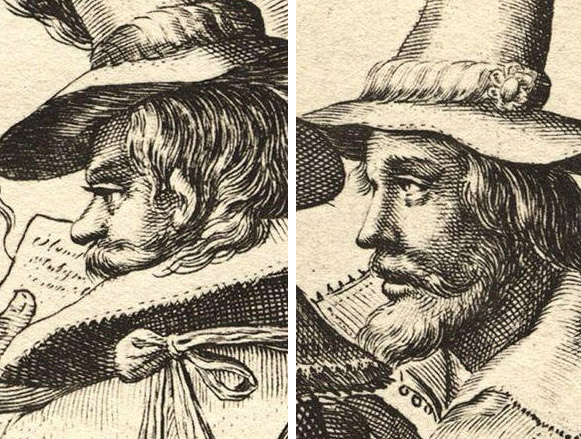
Robert Wintour (1568 – 30 January 1606) and Thomas Wintour (1571 or 1572 – 31 January 1606), also spelt Winter, were members of the Gunpowder Plot, a failed conspiracy to assassinate King James I. They were brothers, and related to other conspirators, such as their cousin, Robert Catesby; a half-brother, John Wintour, also joined them following the plot's failure. Thomas was an intelligent and educated man, fluent in several languages and trained as a lawyer, but chose instead to become a soldier, fighting for England in the Low Countries, France, and possibly in Central Europe. By 1600, however, he changed his mind and became a fervent Catholic. On several occasions he travelled to the continent and entreated Spain on behalf of England's oppressed Catholics, and suggested that with Spanish support a Catholic rebellion was likely.
As momentum was building behind a peace settlement between the two countries, Thomas's pleas fell on deaf ears. Instead, in 1604 he decided to join with Catesby, who planned to restore England to Catholicism by killing the king and inciting a popular revolt in the Midlands, during which James's daughter, Princess Elizabeth, would be installed as titular queen. Thomas returned to the continent and again failed to elicit Spanish support, but instead met Guy Fawkes, with whom he returned to England. Robert, a devout Catholic who inherited Huddington Court near Worcester, joined the conspiracy the following year.
The plot began to unravel following the delivery of an anonymous letter to William Parker, 4th Baron Monteagle, warning him to stay away from Parliament. Thomas and Catesby confronted Monteagle's brother-in-law, the recently recruited Francis Tresham, threatening to kill him, but Tresham managed to convince them of his innocence. At that stage Thomas reportedly asked Catesby to abandon the scheme, to no avail. When Fawkes was captured at about midnight on 4 November 1605, Thomas fled to Robert's house at Huddington in Worcestershire. Catesby and most of the others spent two days travelling across the Midlands attempting to incite a rebellion, but with an ever-diminishing group of supporters they eventually settled at Holbeche House in Staffordshire, and waited for government forces to arrive. Thomas, by then reintegrated into the group, chose to remain with them, and in the ensuing firefight was shot in the shoulder, and captured. Robert, who had left before the battle, evaded capture until January 1606.
Much of what is written about the plot is based on Thomas's confessions, given in the Tower of London in November 1605. The brothers were tried on 27 January 1606, and hanged, drawn and quartered several days later in London.
Robert (b. 1568) and Thomas Wintour (b. 1571–72) were sons of George Wintour of Huddington Court in Worcestershire, and his wife Jane (née Ingleby), daughter of Sir William Ingleby of Ripley Castle near Knaresborough. A sister, Dorothy, married another conspirator, John Grant. Two agnate half-siblings, John and Elizabeth, resulted from their father's marriage to Elizabeth Bourn, following Jane's death. Their paternal grandparents were Robert Wintour of Cavewell in Gloucestershire, and his wife Catherine, daughter of Sir George Throckmorton of Coughton in Warwickshire. As scions of the Throckmortons, they could therefore claim a kinship with plotters like Robert Catesby and Francis Tresham. Their maternal uncle Francis Ingleby, a Catholic priest, was hanged, drawn and quartered at York in 1586, a fact which, in the opinion of historian and author Antonia Fraser, "could hardly have failed to leave a stark impression upon the Wintour family". The Wintours took their name from the Welsh Gwyn Tour (White Tower). 'Wyntour' was sometimes used in signatures, but not 'Winter' (as the brothers are commonly named).
Robert, a faithful Catholic, was married to Gertrude Talbot, daughter of the recusant John Talbot of Grafton. He inherited the Tudor Huddington Court near Worcester, along with a significant fortune with which he was known to be generous. Under Robert, Huddington Court became a known refuge for priests. The proclamation for his capture, issued following the plot's failure, described him as "a man of mean stature, and rather low than otherwise; square made, somewhat stooping; near 40 years of age; his hair and beard brown; his beard not much, and his hair short". The Jesuit John Gerard wrote that he was "esteemed in his life to be one of the wisest and most resolute and sufficient gentlemen in Worcestershire". Gerard's appraisal of Thomas was just as complimentary. He was apparently an intelligent, witty and educated man, who could speak Latin, Italian, Spanish and French. "He was of mean stature, but strong and comely and very valiant, about 33 years old or somewhat more." Thomas worked as a servant to William Parker, 4th Baron Monteagle. He was educated as a lawyer, but following several years of dissipation travelled to Flanders and enrolled in the English army. He fought against Catholic Spain in the Low Countries, France, and possibly against the Turks in Central Europe. However, by 1600 his views had changed; citing his belief in the injustice of fighting against the power of Catholic Spain, like his elder brother he became a passionate Catholic. Travelling as 'Mr Winter of Worcestershire', from 24 February 1601 he spent 13 days in Rome for the jubilee, and later that year and into 1602 travelled to Spain, to petition the Council on behalf of the Catholic rebels left leaderless by the execution of Robert Devereux, 2nd Earl of Essex. Father Henry Garnet, perhaps thinking that the purpose behind Thomas's visit was to gain financial support for impoverished English Catholics, sent him to Superior Father Joseph Creswell, who made the introductions to the Spanish. This trip to Spain later became the first of two visits to be dubbed by the English government as the Spanish Treason, but Thomas's timing was unfortunate, coming as it did so soon after Spain's failed attack in Ireland, and he received only vague assurances of their support. In England he met with the Spanish embassy Don Juan de Tassis, who in August 1603 landed at Dover to help negotiate an Anglo-Spanish treaty. Tassis quickly realised that any chance of a successful Catholic rebellion was unlikely, and discounted Thomas's claim that, with funding, "3,000 Catholics" would be available for the cause. After meeting with King James, he wrote to Spain emphasising the need to prioritise peace with England over the freedom of her Catholics.
I remained with my brother in the country for Allhollantide, in the year of our Lord 1603, the first of the King's reign, about which time, Mr. Catesby sent thither, entreating me to come to London, where he and other friends would be glad to see me. I desired him to excuse me, for I found not myself very well disposed, and (which had happened never to me before) returned the messenger without my company. Shortly I received another letter, in any wise to come. At the second summons I presently came up and found him with Mr. John Wright at Lambeth, where he brake with me how necessary it was not to forsake my country (for he knew I had then a resolution to go over), but to deliver her from the servitude in which she remained, or at least to assist her with our uttermost endeavours.
According to contemporary accounts late in February 1604 Thomas's cousin, Robert Catesby, invited him to his house in Lambeth, but Thomas was indisposed and could not attend. Catesby sent a second letter that Thomas did respond to, and when he arrived he found his cousin with John Wright, a devout Roman Catholic and a renowned swordsman. Catesby planned to re-establish Roman Catholicism in England by blowing up the House of Lords during the State Opening of Parliament, killing the King. Thomas did not immediately recoil from the idea. As a former soldier he was a practical man, and he agreed with Catesby that should the plot succeed, it would "breed a confusion fit to beget new alterations". He also offered a warning of the price of failure: "the scandal would be so great which the Catholic religion might hereby sustain, as not only our enemies, but our friends also would with good reason condemn us." He nevertheless agreed to join the conspiracy, and as Catesby had not entirely given up hope of foreign support—"because we will leave no peaceable and quiet way untried"—Thomas returned to the continent.
Hub AI
Robert and Thomas Wintour AI simulator
(@Robert and Thomas Wintour_simulator)
Robert and Thomas Wintour
Robert Wintour (1568 – 30 January 1606) and Thomas Wintour (1571 or 1572 – 31 January 1606), also spelt Winter, were members of the Gunpowder Plot, a failed conspiracy to assassinate King James I. They were brothers, and related to other conspirators, such as their cousin, Robert Catesby; a half-brother, John Wintour, also joined them following the plot's failure. Thomas was an intelligent and educated man, fluent in several languages and trained as a lawyer, but chose instead to become a soldier, fighting for England in the Low Countries, France, and possibly in Central Europe. By 1600, however, he changed his mind and became a fervent Catholic. On several occasions he travelled to the continent and entreated Spain on behalf of England's oppressed Catholics, and suggested that with Spanish support a Catholic rebellion was likely.
As momentum was building behind a peace settlement between the two countries, Thomas's pleas fell on deaf ears. Instead, in 1604 he decided to join with Catesby, who planned to restore England to Catholicism by killing the king and inciting a popular revolt in the Midlands, during which James's daughter, Princess Elizabeth, would be installed as titular queen. Thomas returned to the continent and again failed to elicit Spanish support, but instead met Guy Fawkes, with whom he returned to England. Robert, a devout Catholic who inherited Huddington Court near Worcester, joined the conspiracy the following year.
The plot began to unravel following the delivery of an anonymous letter to William Parker, 4th Baron Monteagle, warning him to stay away from Parliament. Thomas and Catesby confronted Monteagle's brother-in-law, the recently recruited Francis Tresham, threatening to kill him, but Tresham managed to convince them of his innocence. At that stage Thomas reportedly asked Catesby to abandon the scheme, to no avail. When Fawkes was captured at about midnight on 4 November 1605, Thomas fled to Robert's house at Huddington in Worcestershire. Catesby and most of the others spent two days travelling across the Midlands attempting to incite a rebellion, but with an ever-diminishing group of supporters they eventually settled at Holbeche House in Staffordshire, and waited for government forces to arrive. Thomas, by then reintegrated into the group, chose to remain with them, and in the ensuing firefight was shot in the shoulder, and captured. Robert, who had left before the battle, evaded capture until January 1606.
Much of what is written about the plot is based on Thomas's confessions, given in the Tower of London in November 1605. The brothers were tried on 27 January 1606, and hanged, drawn and quartered several days later in London.
Robert (b. 1568) and Thomas Wintour (b. 1571–72) were sons of George Wintour of Huddington Court in Worcestershire, and his wife Jane (née Ingleby), daughter of Sir William Ingleby of Ripley Castle near Knaresborough. A sister, Dorothy, married another conspirator, John Grant. Two agnate half-siblings, John and Elizabeth, resulted from their father's marriage to Elizabeth Bourn, following Jane's death. Their paternal grandparents were Robert Wintour of Cavewell in Gloucestershire, and his wife Catherine, daughter of Sir George Throckmorton of Coughton in Warwickshire. As scions of the Throckmortons, they could therefore claim a kinship with plotters like Robert Catesby and Francis Tresham. Their maternal uncle Francis Ingleby, a Catholic priest, was hanged, drawn and quartered at York in 1586, a fact which, in the opinion of historian and author Antonia Fraser, "could hardly have failed to leave a stark impression upon the Wintour family". The Wintours took their name from the Welsh Gwyn Tour (White Tower). 'Wyntour' was sometimes used in signatures, but not 'Winter' (as the brothers are commonly named).
Robert, a faithful Catholic, was married to Gertrude Talbot, daughter of the recusant John Talbot of Grafton. He inherited the Tudor Huddington Court near Worcester, along with a significant fortune with which he was known to be generous. Under Robert, Huddington Court became a known refuge for priests. The proclamation for his capture, issued following the plot's failure, described him as "a man of mean stature, and rather low than otherwise; square made, somewhat stooping; near 40 years of age; his hair and beard brown; his beard not much, and his hair short". The Jesuit John Gerard wrote that he was "esteemed in his life to be one of the wisest and most resolute and sufficient gentlemen in Worcestershire". Gerard's appraisal of Thomas was just as complimentary. He was apparently an intelligent, witty and educated man, who could speak Latin, Italian, Spanish and French. "He was of mean stature, but strong and comely and very valiant, about 33 years old or somewhat more." Thomas worked as a servant to William Parker, 4th Baron Monteagle. He was educated as a lawyer, but following several years of dissipation travelled to Flanders and enrolled in the English army. He fought against Catholic Spain in the Low Countries, France, and possibly against the Turks in Central Europe. However, by 1600 his views had changed; citing his belief in the injustice of fighting against the power of Catholic Spain, like his elder brother he became a passionate Catholic. Travelling as 'Mr Winter of Worcestershire', from 24 February 1601 he spent 13 days in Rome for the jubilee, and later that year and into 1602 travelled to Spain, to petition the Council on behalf of the Catholic rebels left leaderless by the execution of Robert Devereux, 2nd Earl of Essex. Father Henry Garnet, perhaps thinking that the purpose behind Thomas's visit was to gain financial support for impoverished English Catholics, sent him to Superior Father Joseph Creswell, who made the introductions to the Spanish. This trip to Spain later became the first of two visits to be dubbed by the English government as the Spanish Treason, but Thomas's timing was unfortunate, coming as it did so soon after Spain's failed attack in Ireland, and he received only vague assurances of their support. In England he met with the Spanish embassy Don Juan de Tassis, who in August 1603 landed at Dover to help negotiate an Anglo-Spanish treaty. Tassis quickly realised that any chance of a successful Catholic rebellion was unlikely, and discounted Thomas's claim that, with funding, "3,000 Catholics" would be available for the cause. After meeting with King James, he wrote to Spain emphasising the need to prioritise peace with England over the freedom of her Catholics.
I remained with my brother in the country for Allhollantide, in the year of our Lord 1603, the first of the King's reign, about which time, Mr. Catesby sent thither, entreating me to come to London, where he and other friends would be glad to see me. I desired him to excuse me, for I found not myself very well disposed, and (which had happened never to me before) returned the messenger without my company. Shortly I received another letter, in any wise to come. At the second summons I presently came up and found him with Mr. John Wright at Lambeth, where he brake with me how necessary it was not to forsake my country (for he knew I had then a resolution to go over), but to deliver her from the servitude in which she remained, or at least to assist her with our uttermost endeavours.
According to contemporary accounts late in February 1604 Thomas's cousin, Robert Catesby, invited him to his house in Lambeth, but Thomas was indisposed and could not attend. Catesby sent a second letter that Thomas did respond to, and when he arrived he found his cousin with John Wright, a devout Roman Catholic and a renowned swordsman. Catesby planned to re-establish Roman Catholicism in England by blowing up the House of Lords during the State Opening of Parliament, killing the King. Thomas did not immediately recoil from the idea. As a former soldier he was a practical man, and he agreed with Catesby that should the plot succeed, it would "breed a confusion fit to beget new alterations". He also offered a warning of the price of failure: "the scandal would be so great which the Catholic religion might hereby sustain, as not only our enemies, but our friends also would with good reason condemn us." He nevertheless agreed to join the conspiracy, and as Catesby had not entirely given up hope of foreign support—"because we will leave no peaceable and quiet way untried"—Thomas returned to the continent.
Recent media