
Recent from talks
Roger McGuinn
Knowledge base stats:
Talk channels stats:
Members stats:
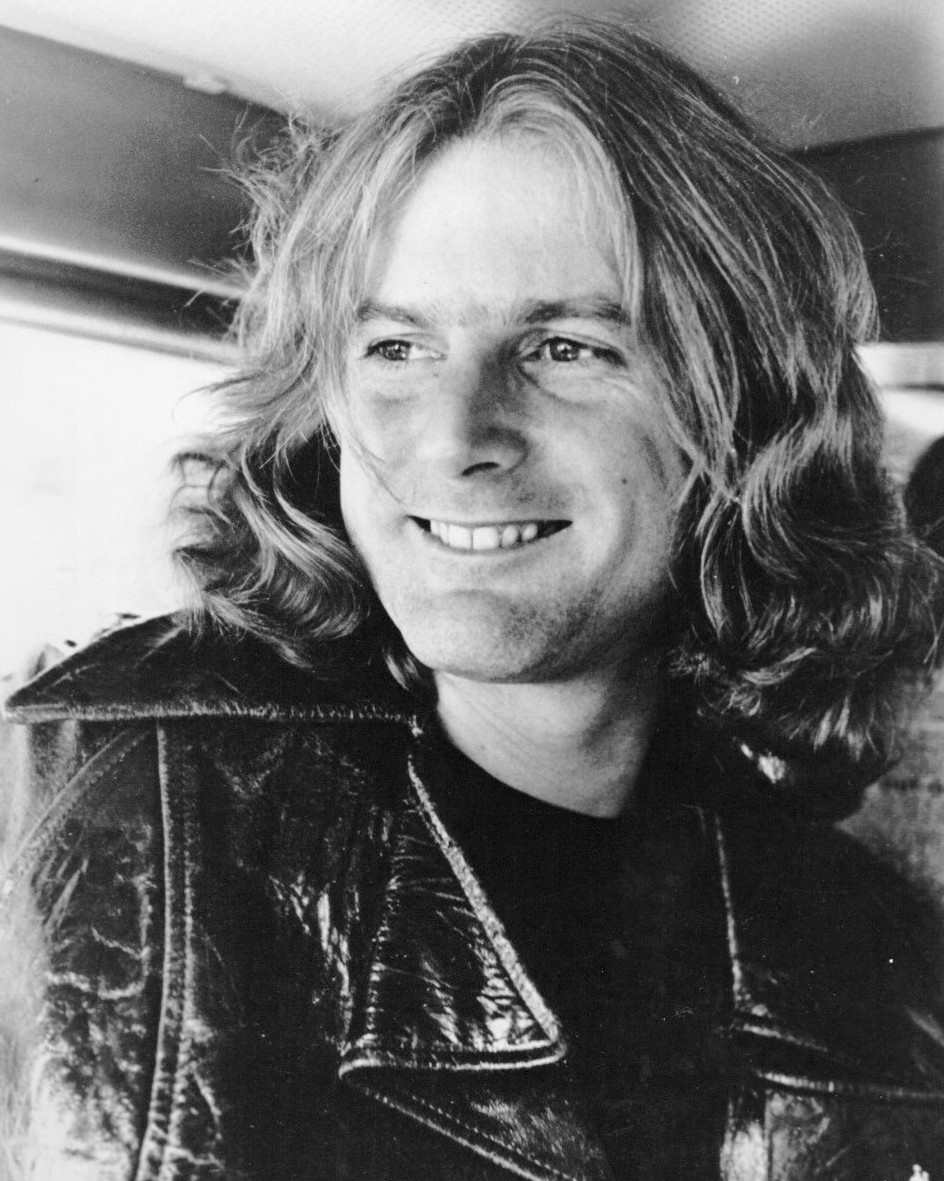
Roger McGuinn
James Roger McGuinn (/məˈɡwɪn/; born James Joseph McGuinn III; July 13, 1942) is an American musician, best known for being the frontman and leader of the Byrds. He was inducted into the Rock and Roll Hall of Fame in 1991 as a member of the band. As a solo artist, he has released 10 albums and collaborated with, among others, Bob Dylan, Tom Petty and Chris Hillman. The Rickenbacker 12-string guitar is his signature instrument.
McGuinn was born and raised in Chicago, Illinois, son of James Joseph McGuinn Jr (b. 1909) and Dorothy Irene (b. 1911), daughter of engineer Louis Heyn. His parents worked in journalism and public relations, and during his childhood, they had written a bestseller titled Parents Can't Win. He attended the Latin School of Chicago. He became interested in music after hearing Elvis Presley's "Heartbreak Hotel" (a song that he frequently covers as a part of his autobiographical live shows), and asked his parents to buy a guitar for him. Around the same time, he was also influenced by artists and/or groups such as Johnny Cash, Carl Perkins, Gene Vincent and the Everly Brothers.
In 1957, he enrolled as a student at Chicago's Old Town School of Folk Music, where he learned the five-string banjo and 12-string guitar. After graduation, McGuinn performed solo at various coffeehouses on the folk music circuit where he was hired as a sideman by the Limeliters, the Chad Mitchell Trio, and Judy Collins and other folk music artists in the same vein. In 1962, after he ended his association with the Chad Mitchell Trio, McGuinn was hired by Bobby Darin as a backup guitarist and harmony singer. Darin wanted to add a folk roots element to his repertoire because it was a burgeoning musical field. Darin opened T.M. Music in New York City's Brill Building, hiring McGuinn as a songwriter for $35 a week. About a year and a half later, Darin became ill and retired from singing.
During 1963, just one year before he co-founded the Byrds in Los Angeles, McGuinn was working as a studio musician in New York, recording with Judy Collins and Simon & Garfunkel. At the same time, he was hearing about the Beatles (whose first American appearances would come in February 1964) and wondering how Beatlemania might affect folk music. When McGuinn saw George Harrison play a 12-string Rickenbacker in the film A Hard Days Night, it inspired him to buy the same instrument.
By the time Doug Weston gave him a job at The Troubadour nightclub in Los Angeles, McGuinn had begun to include Beatles' songs in his act. He gave rock style treatments to traditional folk tunes and thereby caught the attention of another folkie Beatles fan, Gene Clark, who joined forces with McGuinn in July 1964. Together they formed the beginning of what was to become the Byrds.
During his time with the Byrds, McGuinn developed two innovative and very influential styles of electric guitar playing. The first was "jingle-jangle", ringing arpeggios based on banjo finger picking styles he learned while at the Old Town School of Folk Music, which was influential in the folk rock genre. The second style was a merging of saxophonist John Coltrane's free-jazz atonalities, which hinted at the droning of the sitar, a style of playing first heard on the Byrds' 1966 single "Eight Miles High" and influential in psychedelic rock.
While "tracking" the Byrds' first single, "Mr. Tambourine Man", at Columbia studios, McGuinn discovered an important component of his style. "The 'Ric' [12-string Rickenbacker guitar] by itself is kind of thuddy," he noted. "It doesn't ring. But if you add a compressor, you get that long sustain. To be honest, I found this by accident. The engineer, Ray Gerhardt, would run compressors on everything to protect his precious equipment from loud rock and roll. He compressed the heck out of my 12-string, and it sounded so great we decided to use two tube compressors (likely Teletronix LA-2As) in series, and then go directly into the board. That's how I got my 'jingle-jangle' tone. It's really squashed down, but it jumps out from the radio. With compression, I found I could hold a note for three or four seconds, and sound more like a wind instrument. Later, this led me to emulate John Coltrane's saxophone on "Eight Miles High". Without compression, I couldn't have sustained the riff's first note."
"I practiced eight hours a day on that 'Ric,'" he continues, "I really worked it. In those days, acoustic 12s had wide necks and thick strings that were spaced pretty far apart, so they were hard to play. But the Rick's slim neck and low action let me explore jazz and blues scales up and down the fretboard, and incorporate more hammer-ons and pull-offs into my solos. I also translated some of my banjo picking techniques to the 12-string. By combining a flat pick with metal finger picks on my middle and ring fingers, I discovered I could instantly switch from fast single-note runs to banjo rolls and get the best of both worlds."
Hub AI
Roger McGuinn AI simulator
(@Roger McGuinn_simulator)
Roger McGuinn
James Roger McGuinn (/məˈɡwɪn/; born James Joseph McGuinn III; July 13, 1942) is an American musician, best known for being the frontman and leader of the Byrds. He was inducted into the Rock and Roll Hall of Fame in 1991 as a member of the band. As a solo artist, he has released 10 albums and collaborated with, among others, Bob Dylan, Tom Petty and Chris Hillman. The Rickenbacker 12-string guitar is his signature instrument.
McGuinn was born and raised in Chicago, Illinois, son of James Joseph McGuinn Jr (b. 1909) and Dorothy Irene (b. 1911), daughter of engineer Louis Heyn. His parents worked in journalism and public relations, and during his childhood, they had written a bestseller titled Parents Can't Win. He attended the Latin School of Chicago. He became interested in music after hearing Elvis Presley's "Heartbreak Hotel" (a song that he frequently covers as a part of his autobiographical live shows), and asked his parents to buy a guitar for him. Around the same time, he was also influenced by artists and/or groups such as Johnny Cash, Carl Perkins, Gene Vincent and the Everly Brothers.
In 1957, he enrolled as a student at Chicago's Old Town School of Folk Music, where he learned the five-string banjo and 12-string guitar. After graduation, McGuinn performed solo at various coffeehouses on the folk music circuit where he was hired as a sideman by the Limeliters, the Chad Mitchell Trio, and Judy Collins and other folk music artists in the same vein. In 1962, after he ended his association with the Chad Mitchell Trio, McGuinn was hired by Bobby Darin as a backup guitarist and harmony singer. Darin wanted to add a folk roots element to his repertoire because it was a burgeoning musical field. Darin opened T.M. Music in New York City's Brill Building, hiring McGuinn as a songwriter for $35 a week. About a year and a half later, Darin became ill and retired from singing.
During 1963, just one year before he co-founded the Byrds in Los Angeles, McGuinn was working as a studio musician in New York, recording with Judy Collins and Simon & Garfunkel. At the same time, he was hearing about the Beatles (whose first American appearances would come in February 1964) and wondering how Beatlemania might affect folk music. When McGuinn saw George Harrison play a 12-string Rickenbacker in the film A Hard Days Night, it inspired him to buy the same instrument.
By the time Doug Weston gave him a job at The Troubadour nightclub in Los Angeles, McGuinn had begun to include Beatles' songs in his act. He gave rock style treatments to traditional folk tunes and thereby caught the attention of another folkie Beatles fan, Gene Clark, who joined forces with McGuinn in July 1964. Together they formed the beginning of what was to become the Byrds.
During his time with the Byrds, McGuinn developed two innovative and very influential styles of electric guitar playing. The first was "jingle-jangle", ringing arpeggios based on banjo finger picking styles he learned while at the Old Town School of Folk Music, which was influential in the folk rock genre. The second style was a merging of saxophonist John Coltrane's free-jazz atonalities, which hinted at the droning of the sitar, a style of playing first heard on the Byrds' 1966 single "Eight Miles High" and influential in psychedelic rock.
While "tracking" the Byrds' first single, "Mr. Tambourine Man", at Columbia studios, McGuinn discovered an important component of his style. "The 'Ric' [12-string Rickenbacker guitar] by itself is kind of thuddy," he noted. "It doesn't ring. But if you add a compressor, you get that long sustain. To be honest, I found this by accident. The engineer, Ray Gerhardt, would run compressors on everything to protect his precious equipment from loud rock and roll. He compressed the heck out of my 12-string, and it sounded so great we decided to use two tube compressors (likely Teletronix LA-2As) in series, and then go directly into the board. That's how I got my 'jingle-jangle' tone. It's really squashed down, but it jumps out from the radio. With compression, I found I could hold a note for three or four seconds, and sound more like a wind instrument. Later, this led me to emulate John Coltrane's saxophone on "Eight Miles High". Without compression, I couldn't have sustained the riff's first note."
"I practiced eight hours a day on that 'Ric,'" he continues, "I really worked it. In those days, acoustic 12s had wide necks and thick strings that were spaced pretty far apart, so they were hard to play. But the Rick's slim neck and low action let me explore jazz and blues scales up and down the fretboard, and incorporate more hammer-ons and pull-offs into my solos. I also translated some of my banjo picking techniques to the 12-string. By combining a flat pick with metal finger picks on my middle and ring fingers, I discovered I could instantly switch from fast single-note runs to banjo rolls and get the best of both worlds."
Recent media