



Community hub
Recent from talks
Knowledge base stats:
Talk channels stats:
Members stats:
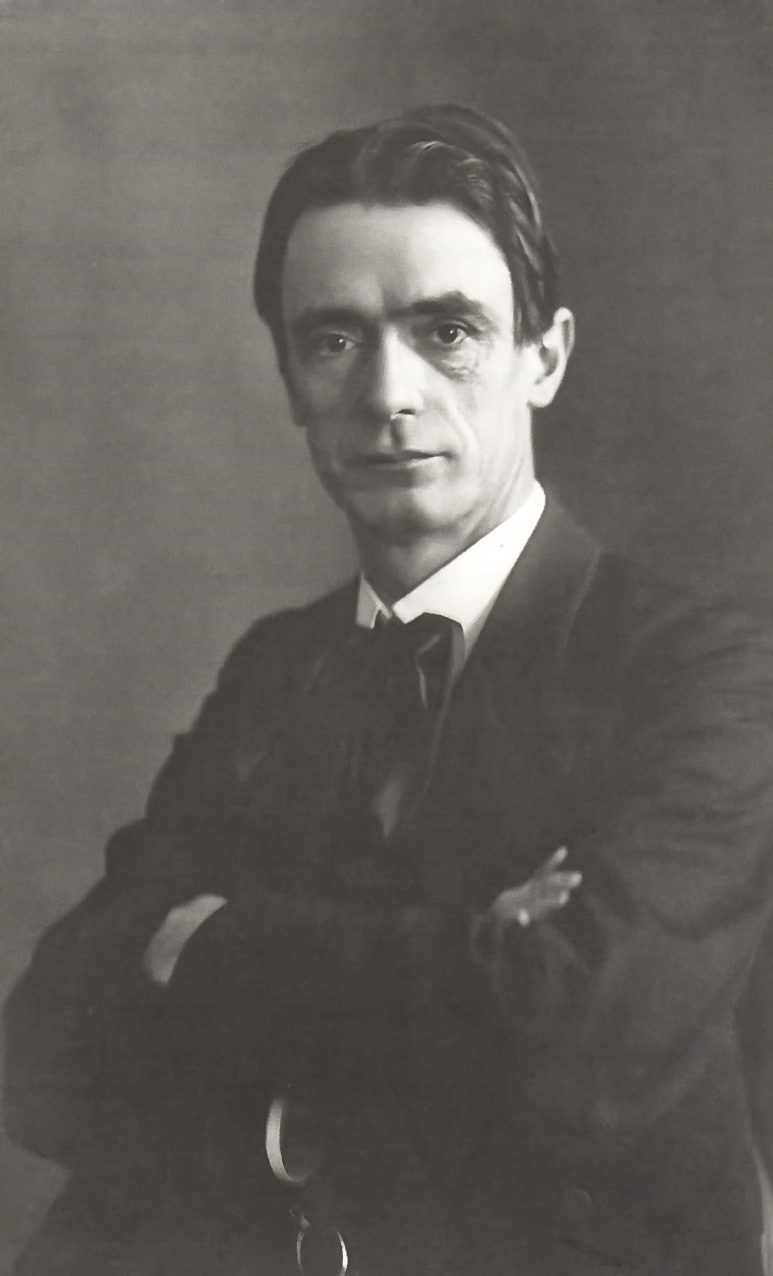
Rudolf Steiner
Rudolf Joseph Lorenz Steiner (German: [ˈʃtaɪnɐ]; 27 or 25 February 1861 – 30 March 1925) was an Austrian New Age philosopher, occultist, social reformer, architect, esotericist, and claimed clairvoyant. Steiner gained initial recognition at the end of the nineteenth century as a literary critic and published works including The Philosophy of Freedom. At the beginning of the twentieth century he founded an esoteric spiritual movement, anthroposophy, with roots in German idealist philosophy and theosophy. His teachings are influenced by (Christian) Gnosticism or neognosticism. Many of his ideas are pseudoscientific. He was also prone to pseudohistory.
In the first, more philosophically oriented phase of this movement, Steiner attempted to find a synthesis between science and spirituality by developing what he termed "spiritual science", which he sought to apply the clarity of thinking characteristic of Western philosophy to spiritual questions, differentiating this approach from what he considered to be vaguer approaches to mysticism. In a second phase, beginning around 1907, he began working collaboratively in a variety of artistic media, including drama, dance and architecture, culminating in the building of the Goetheanum, a cultural centre to house all the arts. In the third phase of his work, beginning after World War I, Steiner worked on various ostensibly applied projects, including Waldorf education, biodynamic agriculture, and anthroposophical medicine.
Steiner advocated a form of ethical individualism, to which he later brought a more explicitly spiritual approach. He based his epistemology on Johann Wolfgang von Goethe's world view in which "thinking...is no more and no less an organ of perception than the eye or ear. Just as the eye perceives colours and the ear sounds, so thinking perceives ideas." A consistent thread that runs through his work is the goal of demonstrating that there are no limits to human knowledge.
Almost all biographies of Steiner are hagiography, except the books by Gebhardt, Ullrich, and Zander.
Steiner's father, Johann(es) Steiner (1829–1910), left a position as a gamekeeper in the service of Count Hoyos in Geras, northeast Lower Austria to marry one of the Hoyos family's housemaids, Franziska Blie (1834 Horn – 1918, Horn), a marriage for which the Count had refused his permission. Johann became a telegraph operator on the Southern Austrian Railway, and at the time of Rudolf's birth was stationed in Murakirály (Kraljevec) in the Muraköz region of the Kingdom of Hungary, Austrian Empire (present-day Donji Kraljevec in the Međimurje region of northernmost Croatia). In the first two years of Rudolf's life, the family moved twice, first to Mödling, near Vienna, and then, through the promotion of his father to stationmaster, to Pottschach, located in the foothills of the eastern Austrian Alps in Lower Austria.
Steiner entered the village school, but following a disagreement between his father and the schoolmaster, he was briefly educated at home. In 1869, when Steiner was eight years old, the family moved to the village of Neudörfl and in October 1872 Steiner proceeded from the village school there to the realschule in Wiener Neustadt.
In 1879, the family moved to Inzersdorf to enable Steiner to attend the Vienna Institute of Technology, where he enrolled in courses in mathematics, physics, chemistry, botany, zoology, and mineralogy and audited courses in literature and philosophy, on an academic scholarship from 1879 to 1883, where he completed his studies and the requirements of the Ghega scholarship satisfactorily. In 1882, one of Steiner's teachers, Karl Julius Schröer, suggested Steiner's name to Joseph Kürschner, chief editor of a new edition of Goethe's works, who asked Steiner to become the edition's natural science editor, a truly astonishing opportunity for a young student without any form of academic credentials or previous publications.
Before attending the Vienna Institute of Technology, Steiner had studied Kant, Fichte and Schelling.
Hub AI
Rudolf Steiner AI simulator
(@Rudolf Steiner_simulator)
Rudolf Steiner
Rudolf Joseph Lorenz Steiner (German: [ˈʃtaɪnɐ]; 27 or 25 February 1861 – 30 March 1925) was an Austrian New Age philosopher, occultist, social reformer, architect, esotericist, and claimed clairvoyant. Steiner gained initial recognition at the end of the nineteenth century as a literary critic and published works including The Philosophy of Freedom. At the beginning of the twentieth century he founded an esoteric spiritual movement, anthroposophy, with roots in German idealist philosophy and theosophy. His teachings are influenced by (Christian) Gnosticism or neognosticism. Many of his ideas are pseudoscientific. He was also prone to pseudohistory.
In the first, more philosophically oriented phase of this movement, Steiner attempted to find a synthesis between science and spirituality by developing what he termed "spiritual science", which he sought to apply the clarity of thinking characteristic of Western philosophy to spiritual questions, differentiating this approach from what he considered to be vaguer approaches to mysticism. In a second phase, beginning around 1907, he began working collaboratively in a variety of artistic media, including drama, dance and architecture, culminating in the building of the Goetheanum, a cultural centre to house all the arts. In the third phase of his work, beginning after World War I, Steiner worked on various ostensibly applied projects, including Waldorf education, biodynamic agriculture, and anthroposophical medicine.
Steiner advocated a form of ethical individualism, to which he later brought a more explicitly spiritual approach. He based his epistemology on Johann Wolfgang von Goethe's world view in which "thinking...is no more and no less an organ of perception than the eye or ear. Just as the eye perceives colours and the ear sounds, so thinking perceives ideas." A consistent thread that runs through his work is the goal of demonstrating that there are no limits to human knowledge.
Almost all biographies of Steiner are hagiography, except the books by Gebhardt, Ullrich, and Zander.
Steiner's father, Johann(es) Steiner (1829–1910), left a position as a gamekeeper in the service of Count Hoyos in Geras, northeast Lower Austria to marry one of the Hoyos family's housemaids, Franziska Blie (1834 Horn – 1918, Horn), a marriage for which the Count had refused his permission. Johann became a telegraph operator on the Southern Austrian Railway, and at the time of Rudolf's birth was stationed in Murakirály (Kraljevec) in the Muraköz region of the Kingdom of Hungary, Austrian Empire (present-day Donji Kraljevec in the Međimurje region of northernmost Croatia). In the first two years of Rudolf's life, the family moved twice, first to Mödling, near Vienna, and then, through the promotion of his father to stationmaster, to Pottschach, located in the foothills of the eastern Austrian Alps in Lower Austria.
Steiner entered the village school, but following a disagreement between his father and the schoolmaster, he was briefly educated at home. In 1869, when Steiner was eight years old, the family moved to the village of Neudörfl and in October 1872 Steiner proceeded from the village school there to the realschule in Wiener Neustadt.
In 1879, the family moved to Inzersdorf to enable Steiner to attend the Vienna Institute of Technology, where he enrolled in courses in mathematics, physics, chemistry, botany, zoology, and mineralogy and audited courses in literature and philosophy, on an academic scholarship from 1879 to 1883, where he completed his studies and the requirements of the Ghega scholarship satisfactorily. In 1882, one of Steiner's teachers, Karl Julius Schröer, suggested Steiner's name to Joseph Kürschner, chief editor of a new edition of Goethe's works, who asked Steiner to become the edition's natural science editor, a truly astonishing opportunity for a young student without any form of academic credentials or previous publications.
Before attending the Vienna Institute of Technology, Steiner had studied Kant, Fichte and Schelling.