Hubbry Logo
Russ ThomasRuss ThomasMain
Open search
Russ Thomas
Community hub
Russ Thomas
logo
8 pages, 0 posts
0 subscribers
Be the first to start a discussion here.
Contribute something
Russ Thomas
Russ Thomas
from Wikipedia

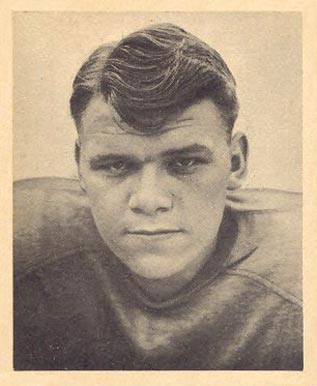
John Russell Thomas (July 24, 1924 – March 19, 1991) was an American professional football tackle who played four seasons with the Detroit Lions of the National Football League (NFL). He was selected by the Lions in the third round of the 1946 NFL draft after playing college football at Ohio State University. Thomas was the general manager of the Lions from 1967 to 1989.

Key Information

Early life and college

[edit]

John Russell Thomas was born on July 24, 1924, in Griffithsville, West Virginia.[1] He attended Charleston High School in Charleston, West Virginia.[1]

Thomas was a three-year letterman for the Ohio State Buckeyes of Ohio State University from 1943 to 1945.[1] He was named first-team All-Big Ten by both the Associated Press and United Press in 1945.[2][3]

Professional career

[edit]

Thomas was selected by the Detroit Lions in the third round, with the 22nd overall pick, of the 1946 NFL draft.[4] He signed a one-year contract with the Lions.[5] He played in all 11 games, starting one, for the Lions during his rookie year in 1946 as the team went 1–10.[4] The Saginaw News reported that Thomas would also be required to enter the 1947 NFL draft since his college class did not graduate until June 1947.[5] He was selected by the Lions in the second round, with the 12th overall pick, of the 1947 draft.[1] He started all 12 games in 1947 as the Lions finished 3–9.[4] Thomas was named a second-team All-Pro by Pro Football Illustrated for his performance during the 1947 season.[4] He appeared in 12 games, starting five, in 1948 and recovered one fumble.[4] He played in nine games, starting one, during the 1949 season.[4] His playing career ended in 1949 after he suffered a knee injury.[6]

Post-playing career

[edit]

Thomas was an assistant coach on the Detroit Lions' 1952 and 1953 NFL Championship teams. After a stint as a broadcaster, Thomas became the team's director of player personnel.[7] He served as the general manager of the Lions from 1967 until his retirement in 1989. He was unpopular with Lions fans for his tough stance at the negotiating table and the scapegoat for the team's mediocrity during his tenure.[8] He died in his sleep on March 19, 1991. The Lions players wore a silver football shaped patch on the left chest of their jerseys with the initials 'JRT' in his memory during the 1991 season.[9][10]

References

[edit]
Revisions and contributorsEdit on WikipediaRead on Wikipedia
from Grokipedia
John Russell Thomas (July 24, 1924 – March 19, 1991), known as Russ Thomas, was an American football player and executive whose nearly 42-year career was primarily devoted to the Detroit Lions of the National Football League (NFL). Born in Griffithsville, West Virginia, Thomas attended Ohio State University before being selected by the Lions in the third round of the 1946 NFL Draft. He played as a tackle on both offense and defense for four seasons from 1946 to 1949, appearing in 44 games with 27 starts, earning Second-Team All-Pro honors in 1947, and recording one interception and two fumble recoveries before retiring due to a knee injury. After retiring, he coached at St. Bonaventure University for two years before transitioning to front-office and coaching roles with the Lions, where he served as a scout, broadcaster, and assistant coach, contributing to the Lions' NFL championship teams in 1952 and 1953 under head coach Buddy Parker. In 1967, Thomas ascended to the position of , a role he held until his retirement in 1989, overseeing personnel decisions and contract negotiations during a period marked by the league's expansion and the introduction of the era. Under his leadership, the Lions compiled a 138-176-9 regular-season record across 22 seasons, with notable highlights including a 10-win campaign in 1970, and three playoff appearances: a Divisional Round loss to the in 1970, a Wild Card defeat to the Washington Redskins in 1982, and another Divisional Round exit against the in 1983. Known for his frugal approach to player salaries and hands-on involvement in team operations, Thomas earned a reputation as a tough negotiator but faced criticism for meddling in coaching decisions and contributing to the franchise's prolonged struggles for sustained success. He passed away in his sleep in , at age 66, survived by his wife Dorothy and sons John and James.

Early life and education

Childhood and high school

John Russell Thomas was born on July 24, 1924, in . Growing up in this rural area during the , Thomas developed an early interest in sports, particularly football, amid the economic hardships of the era. His family's working-class background in the resource-rich region of southern , known for its oil, gas, and coal industries, instilled a sense of resilience that shaped his formative years. Thomas attended Charleston High School in , where he was recruited specifically for his potential as a football lineman. At the school, he excelled on the gridiron, earning recognition as an outstanding prospect and becoming one of the most sought-after high school athletes in the state. His physical prowess extended to , where he won state championships in the discus and while setting records in those events. These achievements honed his athletic skills and led to his recruitment for . Thomas's high school success paved the way for his transition to Ohio State University, where he continued his development as a tackle.

College career at Ohio State

Thomas enrolled at Ohio State University in 1943 and played for the Buckeyes football team through 1945, earning varsity letters each year as a tackle despite the disruptions to college athletics caused by World War II, including player shortages and shortened seasons. During this era, many programs, including Ohio State's, operated with reduced rosters as students and athletes were called to military service, yet Thomas contributed steadily to a program navigating these challenges under coaches Paul Brown (1943) and Carroll Widdoes (1944–1945). Standing at 6 feet 3 inches and weighing 237 pounds, Thomas was a versatile lineman who played both offensive and , providing stability to the Buckeyes' front during a transitional period marked by roster flux and competitive Big Ten play. His physical presence helped anchor the line in key games, supporting a 1945 team that finished 7-2 overall with a 5-2 Big Ten record, tying for second in the conference amid postwar recovery efforts in . In his senior year of 1945, Thomas earned first-team All-Big Ten honors from both the and , recognizing his standout performances as one of the conference's top tackles and highlighting his development into a dominant force on the line. In addition to All-Big Ten honors, Thomas was named to the team in 1945. These accolades capped his college career, where he played a role in the Buckeyes' efforts to rebuild strength following wartime interruptions. This unusual circumstance reflected the broader impacts of the on athletes' timelines, resulting in dual eligibility for the NFL drafts of 1946 and 1947 based on his academic status, enabling Thomas to transition to professional football while completing his degree.

NFL playing career

Draft and entry into the league

Thomas was selected by the in the third round (22nd overall) of the 1946 NFL Draft out of . Due to a delayed from , he was also chosen by the Lions in the second round (12th overall) of the 1947 NFL Draft. Following his selection, Thomas signed a one-year contract with the Lions and reported to training camp at in , where the team prepared amid the logistical constraints of the post-World War II era, including limited resources and rail-based travel for practices and exhibitions. Rookie negotiations like his were typically brief and modest, reflecting the NFL's recovering financial landscape after the war, with salaries often starting around $4,000 for draftees in mid-rounds. In his 1946 rookie season, Thomas adapted to professional football as a two-way tackle, contributing on both offense and defense during the Lions' rebuilding efforts under new Gus Dorais. The team's roster blended returning veterans from with fresh draftees, aiming to stabilize the line in a division featuring established powers like the and , as the league expanded amid competition from the rival .

Professional performance and honors

Russ Thomas played as a tackle for the from 1946 to 1949, appearing in 44 games and making 27 starts during his career. Primarily positioned on the offensive line, he contributed as a early in his tenure, including one in 1946, but recorded no touchdowns throughout his professional play. His role focused on blocking for the Lions' rushing attack, helping anchor an offensive line that supported the team's ground game in the late . Thomas reached his peak performance in the 1947 season, starting all 12 games and earning second-team honors from Pro Football Illustrated for his efforts on the line. That year, he solidified his reputation as a reliable blocker, contributing to the Lions' competitive standing in the Western Conference. Over his career, he recovered two fumbles—one in 1946 and one in 1948—demonstrating his defensive awareness despite his primary offensive duties. The 1948 and 1949 seasons saw Thomas's participation decline, with only five starts in 1948 and one in 1949, as emerging knee problems began to affect his mobility. His career ended prematurely at age 25 following a severe knee injury sustained during the 1949 season, forcing his retirement from playing.

Executive career with the Detroit Lions

Coaching and early administrative roles

After retiring from professional football due to a , Russ Thomas spent two years on the football staff at , serving as line coach in 1950. He returned to the in 1952 as an assistant coach under head coach , contributing to the team's success in winning championships in both 1952 and 1953. From 1954 to 1963, Thomas held multiple roles with the Lions, including scout—where he evaluated college talent to support roster building—and controller, managing the team's finances and operations. During this period, he also worked as a broadcaster, providing local radio and television analysis for Lions games. His efforts helped identify undervalued linemen and other players, contributing to the team's mid-1950s success, including division titles in 1954 and 1957. In the early 1960s, Thomas transitioned to director of pro scouting, focusing on evaluating and acquiring professional players through trades and free agency. He was promoted to director of player personnel from 1964 to 1966, where he oversaw the NFL draft, trades, and overall talent acquisition strategies.

General manager tenure

Russ Thomas was appointed as the vice president and of the prior to the 1967 season, succeeding Edwin K. Anderson in the role. He held the position for 22 years through the 1988 season, marking the longest tenure of any in franchise history at the time. During his leadership, Thomas oversaw personnel decisions, including drafts, trades, and contract negotiations, while drawing on his prior experience as director of player personnel from 1964 to 1966. Notable draft selections included cornerback in the first round of 1967, a Hall of Famer who earned multiple honors, and running back first overall in 1980, who became a three-time Pro Bowler and the team's offensive centerpiece. Thomas's management style emphasized frugality and stringent contract negotiations, often leading to player holdouts and tensions within the organization. He was known for his tough stance in dealings with players and coaches. This approach, while aimed at controlling costs in the pre-salary cap era, drew criticism for fostering mediocrity and limiting the team's competitiveness. Earlier picks highlighted his scouting acumen, though specific trades were limited in the era's structure; he navigated early forms of roster management without a formal , focusing on cost-effective acquisitions to build around core talent. The Lions achieved playoff appearances in 1970 (10-4 record), 1982 (4-5 amid the strike-shortened season), and 1983 (9-7), but failed to advance beyond the divisional round and never reached an during his oversight. Over his 22 seasons, the Lions compiled a regular-season record of 138-175-9 under Thomas's direction, yielding a .443 with only six seasons above .500. Despite acquiring talent like Sims and Barney, the team faced ongoing criticism for inconsistent performance and failure to contend for titles, culminating in Thomas's retirement after the 1988 campaign.

Personal life and legacy

Family and death

Thomas was married to Dorothy Thomas. The couple had two sons, John and James, though public details on their involvement in Thomas's professional life remain limited. During his long tenure with the Detroit Lions, Thomas and his family resided in Birmingham, a suburb north of Detroit. Following his retirement from the organization in 1989, the family relocated to Naples, Florida. Thomas died in his sleep on March 19, 1991, at age 66, at his winter home in Naples, Florida; the cause of death was not publicly disclosed. In tribute, the Detroit Lions wore "JRT" memorial patches on the left chest of their uniforms for the entire 1991 season.

Reputation and impact

Russ Thomas is credited with providing operational stability to the Detroit Lions during a period of ownership transition following William Clay Ford's acquisition of the team in 1963, serving in various roles that culminated in his 22-year tenure as general manager from 1967 to 1989. His emphasis on cost control laid elements for the Lions' playoff appearances in the 1980s despite the era's financial constraints. However, Thomas's reputation among fans and players was marred by perceptions of excessive , particularly in negotiations, where he was known for offering below-market deals that alienated talent and fueled annual disputes. This stinginess extended to interference in coaching decisions, exemplified by public clashes with head coach after his 1984 dismissal and tensions with during the late , which exacerbated team instability and contributed to a narrative of prolonged mediocrity, including missed opportunities to acquire star players through trades. Fans and media often blamed him for the Lions' inability to escape consistent underperformance, viewing his approach as a barrier to sustained success. In historical retrospect, Thomas is regarded as emblematic of the pre-free agency era's cost-conscious in the , where fiscal restraint prioritized organizational longevity over aggressive spending. He draws comparisons to later general managers like for engendering fan disdain, yet he earned praise from owner Ford for his unwavering loyalty and 42 years of service, which Ford described as leaving an indelible mark on the franchise. Upon his death in 1991, the Lions honored him as a key figure in their institutional history, underscoring his role as a stabilizing force amid the team's challenges. In 1992, the Russ Thomas Scholarship Fund was established in his memory, providing awards to graduates of high schools in .

References

Add your contribution
Related Hubs
Contribute something
User Avatar
No comments yet.