


Community hub
Recent from talks
Contribute something
Nothing was collected or created yet.
Ryan Miller
View on Wikipedia
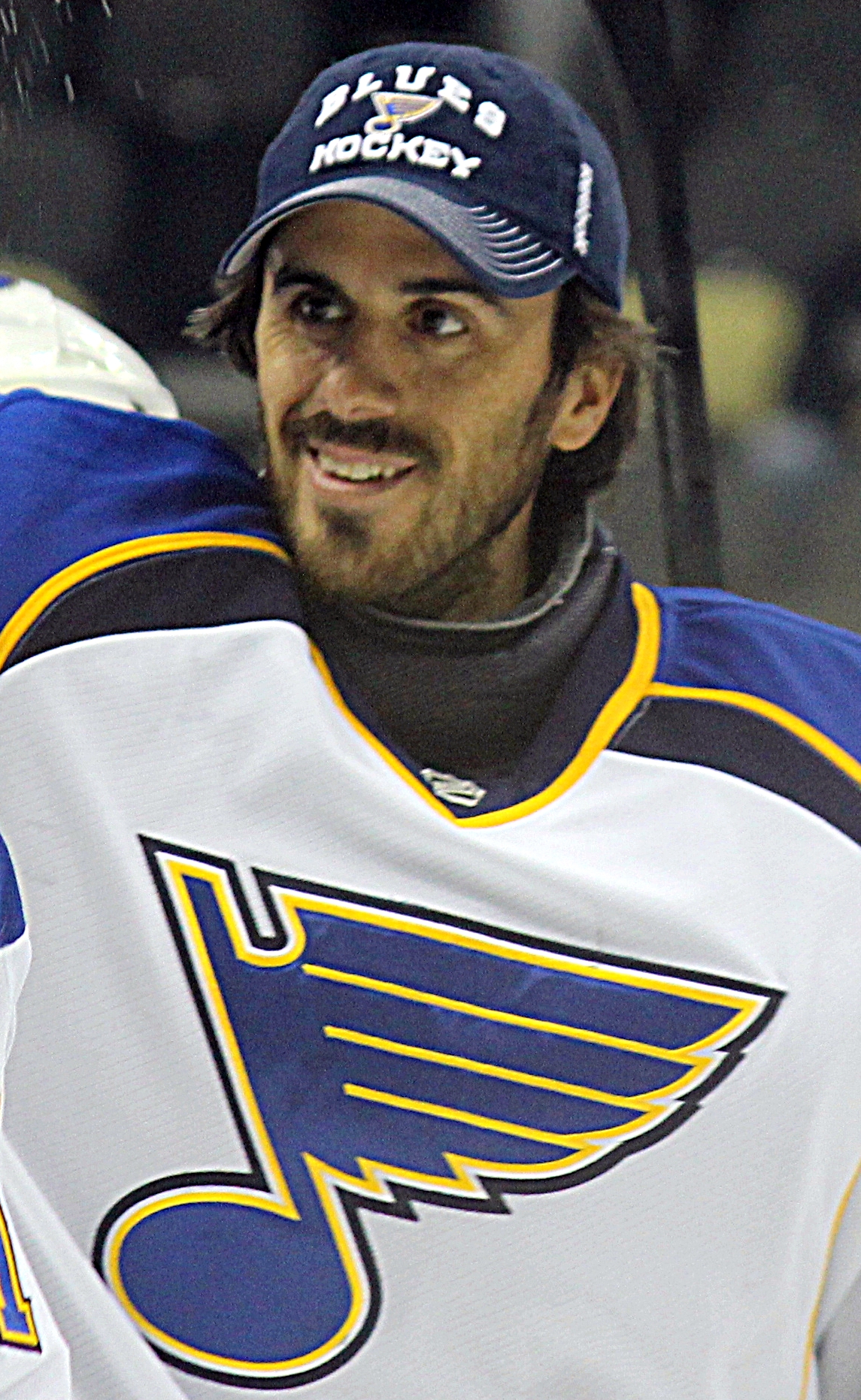
Ryan Dean Miller (born July 17, 1980) is an American former ice hockey goaltender who played 18 seasons in the National Hockey League (NHL) mostly for the Buffalo Sabres. Miller was drafted 138th overall by the Buffalo Sabres in the 1999 NHL Entry Draft. In 2010, he won the Vezina Trophy as the league's best goaltender. Miller was the winningest American-born goaltender in NHL history from February 2019 until March 2024, when he was passed by Jonathan Quick.[1] In January 2023, Miller was inducted into the Buffalo Sabres Hall Of Fame, and his #30 was retired. In April 2025, Miller was also inducted into the Rochester Americans Hall of Fame.[2]
Key Information


He was selected to play for the United States in the 2010 Winter Olympics in Vancouver as the team's starting goaltender.[3] He won a silver medal with the team and was named most valuable player of the tournament. Four years later, he was selected for the 2014 Winter Olympics. Miller is one of 39 goaltenders in NHL history to win 300 games in his career.
Miller is known for his hybrid style of goaltending. He is the older brother of former NHL forward Drew Miller.
Early life
[edit]Miller grew up in East Lansing, Michigan. He started playing youth hockey in California. In youth hockey, Miller originally played as a forward, however, Miller became frustrated with the poor play of his team's goaltender, so he begged his coach as well as his father, Dean Miller, to let him try it out. His father told him that if he could get two goals and three assists the next game he would buy Ryan a catching glove. Miller finished the game with two goals and three assists in the win.[4] His brother Drew and cousins Kelly, Kevin and Kip all played in the NHL. All five attended Michigan State University, where Ryan Miller played goaltender for three years.[5]
Playing career
[edit].jpg)
Buffalo Sabres (2002–2014)
[edit]After three seasons with Michigan State, Miller moved to the American Hockey League (AHL), where he played for the Buffalo Sabres' affiliate, the Rochester Americans, from the 2002–03 season until the 2004–05 season. During the 2002–03 season, he played 15 regular season games for Buffalo. In the 2004–05 season, with the NHL not playing due to a lockout, he won 41 games for the Americans, tying Gerry Cheevers' record. He finished the season with a 2.45 GAA.
In 2004–05, the Americans were the North Division and Regular Season champions in the AHL. They lost in the division finals, however, to the Manitoba Moose.
Miller finished the 2005–06 season by establishing himself as the starting goaltender for the Sabres. He ranked 11th among NHL goaltenders with a 2.60 GAA and ninth in a save percentage, with .914. Miller led the Sabres to a surprise season, winning 30 games and advancing to the conference finals.
After the 2005–06 season, Miller became a restricted free agent and waived his right to arbitration. Mike Liut, Miller's agent, continued to negotiate with the Sabres through the summer. On September 8, 2006, the Sabres announced that they had re-signed Miller to a three-year contract.

The 2006–07 season would prove a successful one. In his first season starting with the number one job, Miller and his team won the first 10 games in a row. Miller was voted the starting goaltender for the Eastern Conference of the 2007 NHL All-Star Game. In a 12–9 loss, Miller played the first period and allowed three goals. Miller also gained a reputation of a shootout specialist with his technique of challenging the shooter outside the crease. That season he was 10–4 in shootouts, with Martin Brodeur of the New Jersey Devils being his closest rival at 10 wins and 6 losses. In 63 games played that season, Miller posted a .911 save percentage and a 2.72 GAA backing a more offensively-oriented team.
In the post-season of that year, the Sabres advanced to their second conference finals in as many years, losing to the Ottawa Senators in five games. Miller posted a .922 save percentage and 2.22 GAA in the playoffs.
On October 11, the Sabres won their second home game of the 2007–08 season with a 6–0 win over the Atlanta Thrashers. Miller earned a shutout, stopping 20 shots in a game following the death of his 18-year-old cousin, Matt, who had died the Monday before of a complication with a bone-marrow transplant. At the close of the game, Miller raised his stick to the home crowd in tribute and received star honors for his effort in net.

On January 1, 2008, Miller played with the Sabres in the AMP Energy NHL Winter Classic, which was the first outdoor NHL game to be held in the United States. The game was played at Ralph Wilson Stadium, home to National Football League's Buffalo Bills, in Orchard Park, New York. The Sabres lost in a shoot-out to the Pittsburgh Penguins, but Miller only allowed one goal (out of 25 shots) in regulation. On March 28, Miller played in his 73rd game of the season, breaking the Sabres franchise record for most games played in a season, passing Grant Fuhr, Dominik Hašek and Martin Biron. Miller finished the season with 76 games played, recording a 2.64 GAA and a .906 save percentage.
On July 18, 2008, Miller signed a five-year contract extension worth $31.25 million[6] with the Sabres. The contract took effect at the start of the 2009–10 season. Miller suffered a high-end ankle sprain on February 22, 2009, in a game against the New York Rangers, which kept him out of action until late March. Despite Miller's strong 34–18–6 record during the 2008–09 season, the Sabres narrowly missed out on qualifying for a playoff berth.

Miller's popularity in both Buffalo and for American hockey has spawned several nicknames, including "Miller Time" (after the Miller brewing company's advertising slogan), while the Toronto media has nicknamed him the "Leaf Killer: Ryan Miller" for his excellent success against one of the Sabres top rivals, the Toronto Maple Leafs.
In the 2009–10 season, Miller played exceptionally, with a GAA of under 2.00 before the Olympic break. He finished the season with a 2.22 GAA and a .929 save percentage. He led the Buffalo Sabres to a Northeast Division title and posted 41 wins, breaking his former record of 40 wins posted in 2006–07. His play became even more popular around the U.S after being nominated for the Vezina Trophy for the league's best goaltender. On June 23, 2010, in Las Vegas, Nevada, at the 2010 NHL Award Ceremony, Miller was announced as the winner of the 2010 Vezina Trophy, beating New Jersey Devils goaltender Martin Brodeur and Phoenix Coyotes goaltender Ilya Bryzgalov. That same night, Miller also became the first American player to win the NHL Foundation Player Award.
Late in the 2010–11 season, on March 29, 2011, during a game against the Toronto Maple Leafs, despite finishing the game in a 4–3 losing cause,[7] Miller suffered what was later reported to be an "upper body injury."[8] Initial speculation on the specifics of Miller's injury ranged from a concussion resulting from a Brian Rolston shot that rang off his mask, to a bruised collarbone from a Dion Phaneuf shot.[9] On February 4, 2012, Miller surpassed Dominik Hašek as the franchise leader in career wins with 235 in a 4–3 shootout win against the New York Islanders at Nassau Coliseum. Miller accomplished this feat in six-and-a-half years as the starting goaltender for Buffalo, while it took Hašek nine years.[10]
The 2012–13 NHL season did not go well for the Sabres, as they finished 12th in the Eastern Conference and failed to qualify for the playoffs for the second consecutive year.[11] Miller finished the season with a 2.81 GAA and a .915 save percentage.

St. Louis Blues (2014)
[edit]On February 28, 2014, Miller and forward Steve Ott were traded from the Sabres to the St. Louis Blues in exchange for Jaroslav Halák, Chris Stewart, William Carrier and two future draft picks.[12] He would make his Blues debut along with Ott on March 3, stopping 23 shots in a 4–2 victory over the Phoenix Coyotes. Miller and the Blues lost in the first round of the 2014 Stanley Cup playoffs to the defending 2013 Stanley Cup champions, the Chicago Blackhawks.
On May 19, the Blues signed Brian Elliott to a three-year contract and Blues General Manager Doug Armstrong announced that Elliott would join Jake Allen to form their goaltending tandem. Miller was not re-signed.
Vancouver Canucks (2014–2017)
[edit]Miller became an unrestricted free agent on July 1, 2014, and signed a three-year, $18 million contract to become the starting goaltender with the Vancouver Canucks.[13] On October 28, Miller became the 30th goaltender in NHL history to reach 300 career wins. He made 29 saves as the Canucks beat the Carolina Hurricanes 4–1. On January 30, 2015, after beating his former team, the Buffalo Sabres, 5–2, Miller has beaten every team in the NHL at least once. However, on February 22, Miller was injured after Jannik Hansen crashed into him, ending his night as he and Eddie Lack combined for a shutout over the New York Islanders. He would miss the next 21 games. After 22 games of not being on ice, Miller returned to start the last game of the regular season as the Canucks beat the Edmonton Oilers, 6–5.
Anaheim Ducks and retirement (2017–2021)
[edit]After concluding his three-year contract with the Canucks, Miller left as a free agent and signed a two-year, $4 million contract with the Anaheim Ducks on July 1, 2017.[14] He began the 2017–18 season on the injured-reserve list due to a lingering wrist injury.[15] In his return to health, Miller was able to make his debut with the Ducks in a 4–3 shootout victory over the Carolina Hurricanes on October 29, 2017.[16] On February 17, 2019, Miller became the winningest American-born goaltender in NHL history, surpassing John Vanbiesbrouck.[17][18]
On June 20, 2019, Miller was re-signed by the Ducks to return for a third season with the club,[19] agreeing to a one-year $2.235 million contract extension.[20] On December 23, 2020, Miller was re-signed to a one-year contract by the Ducks.[21]
On April 29, 2021, Miller announced he would retire from the NHL at the end of the 2020–21 season.[22] Miller played his final NHL game, a 4–3 overtime loss to the Minnesota Wild in which Victor Rask scored the game winning goal 2:46 into the overtime period on May 8, 2021.[23] The Buffalo Sabres retired Miller's number 30 on January 19, 2023.[24] On September 8, 2022, it was announced that Miller would be inducted into the United States Hockey Hall of Fame.[25]
International play
[edit] Miller at the 2010 Winter Olympics | ||
| Medal record | ||
|---|---|---|
| Men's ice hockey | ||
Representing the  United States United States
| ||
| Olympic Games | ||
 |
2010 Vancouver | |
Miller was made a reserve for the United States at the 2006 Winter Olympics in Turin, but he did not play.
Miller was selected as starting goaltender for the US in the 2010 Winter Olympics in Vancouver. He led the team to a perfect 5–0 start, including a 5–3 win over gold-medal favorite Canada in the preliminary round, stopping 42 of 45 shots. The five wins, including victories over Switzerland and Finland in the quarter-finals and semi-finals, respectively, brought the US to the gold medal game, where they faced Canada for the second time. In the gold medal game, the U.S. lost 3–2 in overtime despite Miller's 36 saves, as Sidney Crosby scored the game-winner in his second scoring attempt, after his first was saved by Miller. The US, however, won the silver medal in large part due to Miller's 5–0–1 record, and Miller was named the most valuable player of the tournament. Miller finished with a save percentage of .946 and a GAA of 1.35, both American Olympic records.[26] Miller also won International Ice Hockey Federation (IIHF) best goaltender honors and was named to the All-Star team.[27]
After his selection to the US roster for the 2014 Winter Olympics in Sochi, head coach Dan Bylsma named Jonathan Quick the team's starting goaltender over Miller and fellow Olympic teammate Jimmy Howard. Miller would go on to start and play in one of the US's six games. (Quick played in the other five.) In his one and only game, Miller made 17 saves in a 5–1 win against Slovenia. The US, however, did not medal in Sochi, and Miller finished the tournament with a 1–0 record, a 1.00 GAA, and a .944 save percentage.
Records
[edit]NHL
[edit]- Least saves required in a win: (Anaheim Jan. 25, 2018) 11:40 min: 0
- Most shootout wins by a goaltender in a season: 10
Buffalo Sabres
[edit]- Franchise leader in goaltender games (540)
- Franchise leader in goaltender minutes (31,661)
- Franchise leader in career wins (284)
- Franchise record for most wins in a season (41 in 2009–10)
USA Hockey Olympics
[edit]- Best career goals against average (1.30)
- Goaltender assists all-time (1)
Michigan State Spartans
[edit]- Goals against average all-time (1.54)
- Save percentage career (.941)
- Shutouts career (26)
Personal life
[edit]Miller married actress Noureen DeWulf on September 3, 2011.[28] On September 11, 2014, it was announced that the couple were expecting their first child.[29] Their son was born in March 2015, in Vancouver, British Columbia.[30] Their daughter was born in April 2022 in Los Angeles, California.[31]
In 2006, Miller, along with his father Dean, started the Steadfast Foundation which supports cancer patients and their families. Miller began the foundation after his cousin was diagnosed with leukaemia.[32]
Career statistics
[edit]Regular season and playoffs
[edit]| Regular season | Playoffs | |||||||||||||||||||||
|---|---|---|---|---|---|---|---|---|---|---|---|---|---|---|---|---|---|---|---|---|---|---|
| Season | Team | League | GP | W | L | T | OT | MIN | GA | SO | GAA | SV% | GP | W | L | MIN | GA | SO | GAA | SV% | ||
| 1997–98 | Soo Indians | NAHL | 37 | 21 | 14 | 0 | — | 2113 | 82 | 3 | 2.33 | — | 2 | 0 | 2 | 158 | 7 | 0 | 2.66 | — | ||
| 1998–99 | Soo Indians | NAHL | 47 | 31 | 14 | 1 | — | 2711 | 104 | 8 | 2.30 | — | 4 | 2 | 2 | 218 | 10 | 1 | 2.75 | — | ||
| 1999–00 | Michigan State University | CCHA | 25 | 16 | 5 | 3 | — | 1525 | 39 | 8 | 1.54 | .932 | — | — | — | — | — | — | — | — | ||
| 2000–01 | Michigan State University | CCHA | 40 | 31 | 5 | 4 | — | 2448 | 54 | 10 | 1.33 | .950 | — | — | — | — | — | — | — | — | ||
| 2001–02 | Michigan State University | CCHA | 40 | 26 | 9 | 5 | — | 2412 | 71 | 8 | 1.77 | .936 | — | — | — | — | — | — | — | — | ||
| 2002–03 | Rochester Americans | AHL | 47 | 23 | 18 | 5 | — | 2815 | 10 | 2 | 2.34 | .920 | 3 | 1 | 2 | 190 | 13 | 0 | 4.11 | .856 | ||
| 2002–03 | Buffalo Sabres | NHL | 15 | 6 | 8 | 1 | — | 912 | 40 | 1 | 2.63 | .902 | — | — | — | — | — | — | — | — | ||
| 2003–04 | Buffalo Sabres | NHL | 3 | 0 | 3 | 0 | — | 177 | 15 | 0 | 5.00 | .795 | — | — | — | — | — | — | — | — | ||
| 2003–04 | Rochester Americans | AHL | 60 | 27 | 25 | 7 | — | 3579 | 132 | 5 | 2.21 | .925 | 14 | 7 | 7 | 857 | 26 | 2 | 1.82 | .934 | ||
| 2004–05 | Rochester Americans | AHL | 63 | 41 | 17 | 4 | — | 370 | 153 | 8 | 2.45 | .922 | 9 | 5 | 4 | 547 | 24 | 0 | 2.63 | .909 | ||
| 2005–06 | Buffalo Sabres | NHL | 48 | 30 | 14 | — | 3 | 2862 | 124 | 1 | 2.60 | .914 | 18 | 11 | 7 | 1123 | 48 | 1 | 2.56 | .908 | ||
| 2005–06 | Rochester Americans | AHL | 2 | 1 | 1 | 0 | — | 120 | 5 | 0 | 2.50 | .889 | — | — | — | — | — | — | — | — | ||
| 2006–07 | Buffalo Sabres | NHL | 63 | 40 | 16 | — | 6 | 3692 | 168 | 2 | 2.73 | .911 | 16 | 9 | 7 | 1029 | 38 | 0 | 2.22 | .922 | ||
| 2007–08 | Buffalo Sabres | NHL | 76 | 36 | 27 | — | 10 | 4474 | 197 | 3 | 2.64 | .906 | — | — | — | — | — | — | — | — | ||
| 2008–09 | Buffalo Sabres | NHL | 59 | 34 | 18 | — | 6 | 3443 | 145 | 5 | 2.53 | .918 | — | — | — | — | — | — | — | — | ||
| 2009–10 | Buffalo Sabres | NHL | 69 | 41 | 18 | — | 8 | 4047 | 150 | 5 | 2.22 | .929 | 6 | 2 | 4 | 384 | 15 | 0 | 2.34 | .926 | ||
| 2010–11 | Buffalo Sabres | NHL | 66 | 34 | 22 | — | 8 | 3829 | 165 | 5 | 2.59 | .916 | 7 | 3 | 4 | 410 | 20 | 2 | 2.93 | .917 | ||
| 2011–12 | Buffalo Sabres | NHL | 61 | 31 | 21 | — | 7 | 3536 | 150 | 6 | 2.54 | .916 | — | — | — | — | — | — | — | — | ||
| 2012–13 | Buffalo Sabres | NHL | 40 | 17 | 17 | — | 5 | 2302 | 108 | 0 | 2.81 | .915 | — | — | — | — | — | — | — | — | ||
| 2013–14 | Buffalo Sabres | NHL | 40 | 15 | 22 | — | 3 | 2384 | 108 | 0 | 2.72 | .923 | — | — | — | — | — | — | — | — | ||
| 2013–14 | St. Louis Blues | NHL | 19 | 10 | 8 | — | 1 | 1117 | 46 | 1 | 2.47 | .903 | 6 | 2 | 4 | 422 | 19 | 0 | 2.70 | .897 | ||
| 2014–15 | Vancouver Canucks | NHL | 45 | 29 | 15 | — | 1 | 2542 | 107 | 6 | 2.53 | .911 | 3 | 1 | 1 | 156 | 6 | 0 | 2.31 | .910 | ||
| 2015–16 | Vancouver Canucks | NHL | 51 | 17 | 24 | — | 6 | 3027 | 137 | 1 | 2.70 | .916 | — | — | — | — | — | — | — | — | ||
| 2016–17 | Vancouver Canucks | NHL | 54 | 18 | 29 | — | 6 | 3212 | 150 | 3 | 2.80 | .914 | — | — | — | — | — | — | — | — | ||
| 2017–18 | Anaheim Ducks | NHL | 28 | 12 | 6 | — | 6 | 1354 | 53 | 4 | 2.35 | .928 | 1 | 0 | 0 | 20 | 3 | 0 | 9.00 | .750 | ||
| 2018–19 | Anaheim Ducks | NHL | 20 | 11 | 7 | — | 2 | 1109 | 51 | 1 | 2.76 | .912 | — | — | — | — | — | — | — | — | ||
| 2019–20 | Anaheim Ducks | NHL | 23 | 9 | 6 | — | 4 | 1239 | 64 | 0 | 3.10 | .907 | — | — | — | — | — | — | — | — | ||
| 2020–21 | Anaheim Ducks | NHL | 16 | 4 | 8 | — | 2 | 871 | 51 | 1 | 3.51 | .882 | — | — | — | — | — | — | — | — | ||
| NHL totals | 796 | 391 | 289 | 1 | 87 | 46,145 | 2,029 | 44 | 2.64 | .914 | 57 | 28 | 27 | 3,544 | 149 | 3 | 2.52 | .913 | ||||
International
[edit]| Year | Team | Event | Result | GP | W | L | T | MIN | GA | SO | GAA | SV% | |
|---|---|---|---|---|---|---|---|---|---|---|---|---|---|
| 2002 | United States | WC | 7th | 4 | 2 | 2 | 0 | 238 | 7 | 1 | 1.76 | .950 | |
| 2003 | United States | WC | 13th | 4 | 2 | 2 | 0 | 193 | 8 | 0 | 2.49 | .889 | |
| 2010 | United States | OG | 
|
6 | 5 | 1 | 0 | 355 | 8 | 1 | 1.35 | .946 | |
| 2014 | United States | OG | 4th | 1 | 1 | 0 | 0 | 60 | 1 | 0 | 1.00 | .944 | |
| Senior totals | 15 | 8 | 3 | 0 | 846 | 24 | 2 | 1.70 | .938 | ||||
Awards and honors
[edit]| Award | Year | |
|---|---|---|
| College | ||
| All-CCHA Rookie Team | 2000 | |
| All-CCHA Second Team | 2000 | [33] |
| CCHA All-Tournament Team | 2000 | [34] |
| All-CCHA First Team | 2001 | [33] |
| CCHA Player of the Year | 2001 | |
| AHCA West first-team All-American | 2001 | |
| Hobey Baker Memorial Award | 2001 | |
| C-Bone Classic champion | 2001 | |
| CCHA All-Tournament Team | 2001 | [34] |
| All-CCHA First Team | 2002 | [33] |
| CCHA Player of the Year | 2002 | |
| AHCA West first-team All-American | 2002 | |
| AHL | ||
| First All-Star team | 2005 | |
| Aldege "Baz" Bastien Memorial Award | 2005 | |
| NHL | ||
| All-Star Game | 2007 | |
| Foundation Player Award | 2010 | |
| Vezina Trophy | 2010 | |
| First All-Star team | 2010 | |
| International | ||
| Olympic MVP | 2010 | [27] |
| Olympic best goaltender | 2010 | [27] |
| Olympic All-Star team | 2010 | [27] |
References
[edit]- ^ "Jonathan Quick breaks wins record for U.S.-born goaltenders". ESPN.com. March 30, 2024. Retrieved March 31, 2024.
- ^ "JOIN THE AMERKS FOR HALL OF FAME NIGHT FRIDAY". Amerks.com. April 7, 2025. Retrieved April 11, 2025.
- ^ "Home".
- ^ "Ryan Miller – Biography", NBC Olympics, NBC, retrieved May 12, 2010
- ^ Klein, Jeff Z. (December 5, 2009). "Sabres' Miller Has His Best Year at Best Time". The New York Times. Retrieved December 7, 2009.
- ^ "Sabres, Miller agree to five-year contract extension". LetsGoSabres.com. July 18, 2008. Retrieved July 18, 2008.
- ^ "Buffalo Sabres at Toronto Maple Leafs - March 29th, 2011". National Hockey League. March 29, 2011. Retrieved March 29, 2011.
- ^ Kanalley, Craig (March 30, 2011). "Ryan Miller Injury: Buffalo Sabres Goalie Suffers 'Upper Body' Ailment". HuffPost.
- ^ "Hockey roundup and rumors". Edmonton Journal. March 30, 2011. Archived from the original on August 17, 2011. Retrieved March 30, 2011.
- ^ "Ryan Miller Stats and News". Buffalo Sabres. February 2, 2012. Retrieved February 2, 2012.
- ^ "NHL Hockey 2016 Standings". National Hockey League. April 15, 2013. Retrieved April 15, 2013.
- ^ "Blues Acquire Miller, Ott from Buffalo". St. Louis Blues. February 28, 2014. Retrieved February 28, 2014.
- ^ "Canucks sign free agent G Miller to three-year contract". The Sports Network. July 1, 2014. Retrieved July 1, 2014.
- ^ "Ducks lock up Cam Fowler for eight years, sign Ryan Miller". OC Register. July 1, 2017. Retrieved July 1, 2017.
- ^ "Ryan Miller still waiting to make his debut". OC Register. October 12, 2017. Retrieved October 12, 2017.
- ^ "Miller shines in debut". Anaheim Ducks. October 29, 2017. Retrieved October 29, 2017.
- ^ Teaford, Elliott (February 18, 2019). "Ducks goalie Ryan Miller praised after breaking John Vanbiesbrouck's record". Orange County Register. Retrieved January 20, 2023.
- ^ "Ryan Miller becomes winningest US-born goalie in Ducks' win". Bally Sports. February 18, 2019. Retrieved January 20, 2023.
- ^ "Ducks sign Miller, Holzer, Grant to one-year contract extensions". Anaheim Ducks. June 20, 2019. Retrieved June 20, 2019.
- ^ Teaford, Elliott (October 1, 2019). "Ducks goalie Ryan Miller, 39, explains why he came back". Orange County Register. Retrieved January 20, 2023.
- ^ "Ducks Sign Goaltender Miller to One-Year Contract Through 2020-21". NHL.com. December 23, 2020. Retrieved December 24, 2020.
- ^ "Ducks' Ryan Miller, winningest American goalie in NHL history, retires". The Athletic. April 29, 2021. Retrieved April 29, 2021.
- ^ Pierce, Jessi (May 8, 2021). "Wild defeat Ducks again, keep pace in West playoff race". NHL.com. Retrieved January 20, 2023.
- ^ Engel, Heather (January 19, 2023). "Miller has No. 30 retired by Sabres, inducted into their Hall of Fame". NHL.com. Retrieved January 20, 2023.
- ^ Morreale, Mike G. (September 8, 2022). "Miller among five elected to U.S. Hockey Hall of Fame". NHL.com. Retrieved November 11, 2022.
- ^ "Miller carries Team USA to superb tournament".
- ^ a b c d "Miller gets MVP honours". iihf.com. February 28, 2010. Archived from the original on June 4, 2011.
- ^ "Noureen DeWulf and Ryan Miller". weddingchannel.com. September 3, 2011. Retrieved September 3, 2011.
- ^ "Ryan Miller and Noureen DeWulf Expecting First Child". PEOPLE.com. September 11, 2014. Retrieved September 11, 2014.
- ^ "Ryan Miller and Noureen DeWulf Welcome Son Bodhi Ryan". March 20, 2015. Retrieved March 20, 2015.
- ^ "This beautiful young lady is named Kaia". Twitter. April 4, 2022. Retrieved April 24, 2022.
- ^ Gracia, Marcie (January 24, 2008). "Miller lends a Steadfast hand". National Hockey League. Retrieved November 8, 2018.
- ^ a b c "All-CCHA Teams". College Hockey Historical Archives. Retrieved July 27, 2013.
- ^ a b "2012–13 CCHA Media Guide". ISSUU.com. Retrieved April 23, 2014.
External links
[edit]
- Biographical information and career statistics from NHL.com, or Eliteprospects.com, or ESPN.com, or Eurohockey.com, or Hockey-Reference.com, or The Internet Hockey Database
Ryan Miller
View on GrokipediaEarly life and amateur career
Early life
Ryan Miller was born on July 17, 1980, in East Lansing, Michigan, to parents Dean and Teresa Miller.[1][6] The Miller family had deep ties to hockey, with his father Dean serving as a coach for Ryan's early youth teams and his younger brother Drew going on to play professionally in the National Hockey League.[8] From a young age, Miller showed a strong interest in goaltending, inspired by watching Michigan State University Spartans games and participating in local youth leagues; as an infant, he would mimic goalie movements in front of the TV, and by age eight, he permanently switched positions after scoring a hat trick as a forward during a family trip in California.[8] Miller attended East Lansing High School, where he emerged as a highly touted recruit, and gained initial youth hockey experience with the Compuware program in Plymouth, Michigan, before moving to Sault Ste. Marie in 1997 to play junior hockey for the Soo Indians while graduating from Sault Area High School.[9][8][10]Michigan State Spartans
Ryan Miller enrolled at Michigan State University in the fall of 1999 and joined the Spartans men's ice hockey team as a freshman goaltender, playing under head coach Ron Mason for his entire collegiate career.[4][11] Over three seasons from 1999 to 2002, Miller appeared in 106 games, compiling a record of 73 wins, 19 losses, and 8 ties, with a 1.54 goals-against average (GAA), .941 save percentage, and an NCAA-record 26 shutouts.[4][1] His performance was instrumental in the team's successes, including the 1999–2000 CCHA regular-season championship and the 2000–01 CCHA tournament title.[12] In the 2000–01 season, Miller led the nation in wins (31), GAA (1.32), save percentage (.950), and shutouts (10), helping Michigan State advance to the NCAA Frozen Four, where they lost in the semifinal to North Dakota, 0–2.[3][13] The following year, in 2001–02, the Spartans earned an NCAA tournament berth as the No. 3 seed in the West Regional but were eliminated in the first round with a 2–0 shutout loss to Colorado College, despite Miller stopping 29 of 31 shots.[14] Miller's individual accolades highlighted his dominance as a goaltender. As a freshman in 1999–2000, he earned CCHA All-Rookie Team honors and a spot on the CCHA Second All-Star Team while leading the conference in GAA (1.53) and shutouts (8).[1][15] In his sophomore year (2000–01), he was named CCHA Player of the Year, CCHA Best Goaltender, and MVP of the CCHA tournament, along with AHCA West First-Team All-American honors; he capped the season by winning the Hobey Baker Award as the top player in NCAA men's hockey.[16][3] As a junior in 2001–02, Miller repeated as CCHA Player of the Year, CCHA First All-Star Team selection, and AHCA West First-Team All-American, posting a 26–9–5 record with a 1.77 GAA and .936 save percentage.[1][17] His career statistics at Michigan State remain school records for wins, shutouts, GAA, and save percentage, underscoring his pivotal role in elevating the program's performance during that era.[2]Professional career
Buffalo Sabres (2002–2014)
Ryan Miller made his NHL debut with the Buffalo Sabres on November 19, 2002, against the New Jersey Devils, stopping 21 of 25 shots in a 4-3 overtime loss.[7] Initially signed to a two-year entry-level contract after leaving Michigan State, Miller served as the backup goaltender to Martin Biron during the 2002–03 season, appearing in just three games with a 1-1-1 record, 2.63 goals-against average (GAA), and .902 save percentage (SV%).[18] His limited role reflected the Sabres' established netminding tandem, as Biron handled the bulk of starts while Miller honed his skills in the American Hockey League (AHL) with the Rochester Americans. The 2004–05 NHL lockout provided Miller a breakthrough opportunity in the AHL, where he posted a franchise-record 41 wins in 63 games for Rochester, along with a 2.45 GAA and .922 SV%.[19] These performances earned him the Harry "Hap" Holmes Memorial Award as the AHL's top goaltender(s) by save percentage and helped the Americans finish first overall in the league, advancing to the North Division finals in the Calder Cup playoffs before a 4-1 series loss to the eventual champion Chicago Wolves.[19] Miller's dominance in Rochester solidified his status as Buffalo's top prospect, positioning him for a full-time NHL role upon the lockout's resolution. Miller emerged as Buffalo's primary starter in the 2005–06 season, recording 30 wins in 48 games with a 2.55 GAA and .909 SV%, contributing to the Sabres' surprise run to the Eastern Conference finals.[18] The following year, 2006–07, he set career highs with 40 wins in 63 appearances, a 2.73 GAA, and .911 SV%, backstopping Buffalo to another Eastern Conference finals appearance before a six-game defeat to the Ottawa Senators.[20] On July 18, 2008, amid growing recognition as the team's cornerstone, Miller signed a five-year, $31.25 million contract extension with the Sabres, securing his future in Buffalo through the 2013–14 season.[21] Miller's pinnacle came in the 2009–10 season, when he won the Vezina Trophy as the NHL's top goaltender after leading the league with 41 wins in 69 games, a 2.22 GAA, and .929 SV%, while helping the Sabres claim the Northeast Division title.[1] Despite the team's first-round playoff exit to Philadelphia, his performance marked him as one of the league's elite netminders. Trade rumors surfaced in late 2011, with reports linking Miller to West Coast teams like those in California, though he publicly denied requesting a move and emphasized his commitment to Buffalo amid the Sabres' postseason drought.[22] In the 2010–11 season, Miller delivered 34 wins in 66 games despite defensive inconsistencies, posting a 2.59 GAA and .916 SV% as Buffalo narrowly missed the playoffs.[18] Over his 12 seasons with the Sabres from 2002 to 2014, Miller appeared in 540 games—the most by any goaltender in franchise history—amassing 284 wins, also a team record at the time, along with a 2.65 GAA and .908 SV%.[6] His tenure transformed Buffalo's goaltending from post-Dominik Hasek uncertainty into a period of contention, including seven 30-win seasons and two division titles.St. Louis Blues (2014)
On February 28, 2014, Ryan Miller was traded from the Buffalo Sabres to the St. Louis Blues along with forward Steve Ott in exchange for goaltender Jaroslav Halak, forward Chris Stewart, prospect William Carrier, a conditional first-round draft pick in 2015, and a third-round pick in 2015.[23] The move came as the Sabres, mired in a rebuild, sent their longtime starting goaltender to a Central Division contender atop the Western Conference standings. Miller, in the final year of his contract, joined a Blues team bolstered by a stingy defense that had allowed the fewest goals in the league up to that point. In the remaining 19 regular-season games of the 2013–14 season, Miller posted a 10–8–1 record with a 2.47 goals-against average and .903 save percentage, including one shutout.[18] His arrival helped solidify the Blues' goaltending tandem with Brian Elliott, contributing to the team's league-best 52–23–7 finish and first Presidents' Trophy since 2000. Miller adapted to the Blues' structured defensive system, which emphasized puck possession and shot suppression, recording strong outings such as a 31-save shutout in a 1–0 shootout win over the Philadelphia Flyers on April 1. Miller's playoff role was limited, appearing in just one game during the first-round series against the defending champion Chicago Blackhawks.[1] Starting the other five contests, Elliott struggled as the Blues dropped the series in six games, 4–2, with Chicago advancing via a 5–1 victory in Game 6. In his lone appearance, a 4–3 loss in Game 4, Miller made 13 saves on 16 shots. The stint presented challenges for Miller, including adjusting to the Blues' hybrid defensive scheme after years in Buffalo's more transitional style, as well as navigating a timeshare in net that saw duties split with Elliott based on matchups and performance.[24] Despite the solid regular-season contribution, the shared workload and playoff disappointment underscored the transitional nature of his time in St. Louis.[25]Vancouver Canucks (2014–2017)
On July 1, 2014, Ryan Miller signed a three-year, $18 million contract with the Vancouver Canucks as an unrestricted free agent, positioning him as the team's primary starting goaltender.[26] Following a midseason trade to the St. Louis Blues earlier that year, Miller aimed to anchor Vancouver's net during a period of roster transition. In the 2014–15 season, Miller posted 29 wins in 45 games, with a 2.53 goals-against average (GAA) and .911 save percentage, contributing six shutouts and helping the Canucks clinch a playoff berth for the first time since 2013.[18] Despite his strong individual performance, the team fell in the first round to the Calgary Flames in six games.[27] Miller's consistency provided stability for a squad navigating an aging core, including veterans like the Sedin twins, as the organization began shifting toward a rebuild.[28] Over the subsequent seasons, Miller continued as a workhorse starter amid the Canucks' ongoing transition. In 2015–16, he recorded 17 wins in 51 appearances, achieving a 2.70 GAA and .916 save percentage, though the team finished outside the playoffs.[4] The 2016–17 campaign saw him notch 18 wins in 54 games, with a 2.80 GAA and .914 save percentage, again without postseason qualification as younger players integrated into the lineup.[4] That year, Miller earned the Canucks' nomination for the Bill Masterton Memorial Trophy, recognizing his perseverance through injuries and commitment to the team.[29] Throughout his Vancouver tenure, Miller emerged as a key locker room leader, offering guidance to emerging talent during the franchise's rebuild and fostering team morale despite consecutive non-playoff finishes.[30] His veteran presence helped bridge the gap between the contending era and the developing roster.[31]Anaheim Ducks and retirement (2017–2021)
On July 1, 2017, Ryan Miller signed a two-year, $4 million contract with the Anaheim Ducks, marking his return to California after three seasons with the Vancouver Canucks.[32] In Anaheim, Miller served primarily as the backup goaltender to John Gibson, appearing in limited starts while providing veteran mentorship and stability in the crease.[33] Over his first two seasons with the Ducks, he recorded 20 wins across 48 games, including five shutouts that highlighted his enduring skill in high-pressure situations.[18] During the 2018–19 season, Miller posted an 8–7–2 record in 20 games with a 2.76 goals-against average and one shutout, notably a 31-save performance in a 4–0 victory over the Minnesota Wild on February 19, 2019, which contributed to a brief team winning streak.[18][34] He re-signed with the Ducks on June 20, 2019, for a one-year, $1.125 million extension, continuing his role as Gibson's reliable understudy amid the team's rebuilding efforts.[35] In the COVID-19-shortened 2020–21 season of 56 games, Miller appeared in 16 contests for Anaheim, recording a 4–8–2 mark with a 3.51 goals-against average as the Ducks finished last in the West Division.[18] On April 29, 2021, Miller announced his retirement at the end of the season after 18 NHL campaigns, expressing gratitude for a career that allowed him to live out his childhood dream.[36] His final game came on May 8, 2021, a 4–3 overtime loss to the Minnesota Wild, where he received a standing ovation from the home crowd in recognition of his contributions.[37] At retirement, Miller held 391 career wins, the most by any American-born goaltender in NHL history—a record later surpassed by Jonathan Quick in 2024—along with 44 shutouts and a .914 save percentage over 796 games.[1][2]International career
Olympic Games
Ryan Miller served as a reserve goaltender for the United States at the 2006 Winter Olympics in Turin, Italy, but did not appear in any games during the tournament.[38] Miller earned the starting goaltender position for Team USA at the 2010 Winter Olympics in Vancouver, Canada, where he posted a 5-1-0 record over six games, along with a 1.35 goals-against average and a .946 save percentage.[39] His performance helped lead the Americans to the gold medal game, securing a silver medal after a 3-2 overtime loss to Canada.[1] For his efforts, Miller was named the tournament's most valuable player, top goaltender, and media all-star.[40] Among his standout games, Miller made 42 saves in a 5-3 preliminary-round victory over Canada on February 21, helping the U.S. upset the host nation.[41] In the quarterfinals, he recorded a 19-save shutout in a 2-0 win against Switzerland.[42] In the gold medal game, Miller stopped 36 of 39 shots before Sidney Crosby's overtime goal ended Team USA's bid for gold.[43] Miller's exceptional Olympic play, which set American records for goals-against average and save percentage in a single tournament, significantly boosted his profile in the NHL and contributed to him winning the Vezina Trophy as the league's top goaltender later that year.[39][40] Miller returned for the 2014 Winter Olympics in Sochi, Russia, where he served as one of three goaltenders for Team USA. He appeared in one game, starting against Slovenia in the preliminary round on February 15, making 17 saves in a 5-1 victory.[1] Team USA finished fourth after losses in the semifinals and bronze medal game.IIHF World Championships
Ryan Miller represented Team USA at the IIHF Men's World Championship on three occasions early in his career, in 2001, 2002, and 2003, serving as a reliable option in net during these annual international tournaments.[44][2] Over 8 games across these appearances, Miller posted a 4-0-0-3-1 record, a 2.09 goals-against average, a .932 save percentage, and two shutouts, demonstrating his poise and effectiveness against top global competition.[45] In the 2002 tournament in Sweden, where the U.S. finished fourth, he led all goaltenders with a .949 save percentage and ranked second in goals-against average at 1.76 while playing four games and earning one shutout.[44][4] The following year in Finland, Miller appeared in four games with a 2.49 goals-against average as Team USA placed 13th, often sharing duties with fellow netminder Rick DiPietro.[44][4] These early international outings underscored Miller's dependability for the national team, building on his standout collegiate performance and positioning him as a key figure in U.S. goaltending for future high-stakes events like the Olympics.[2] Overall, his World Championship statistics contributed to Team USA's efforts in a competitive field despite no medal finishes during his participations.[44]Records
NHL records
Ryan Miller holds the distinction of being the winningest American-born goaltender in NHL history with 391 career regular-season victories, a record he established over 18 seasons from 2002 to 2021 and maintained until Jonathan Quick surpassed it with his 392nd win in March 2024.[18][46] This milestone underscored Miller's longevity and consistency as one of the league's premier netminders, particularly during his prime years with the Buffalo Sabres. Additionally, Miller set league benchmarks for American-born goaltenders in shootout performance, recording 60 career shootout wins and a single-season high of 10 in 2006–07. In the 2009–10 season, Miller led the NHL in both wins (41) and goals-against average (2.22), earning him the Vezina Trophy as the league's top goaltender and highlighting his dominance in a 68-game campaign that propelled the Sabres to a strong regular-season finish.[18][47] He achieved 40 or more wins in two seasons—40 in 2006–07 and 41 in 2009–10—joining an elite group of goaltenders who have reached that threshold multiple times in NHL history.[18][48] Miller's playoff contributions included a career total of 28 wins across 57 games, with a notable 9-5 record in 16 appearances during the 2006–07 postseason, where he posted a 2.78 goals-against average and helped the Sabres advance to the Eastern Conference Finals.[18][49] His overall playoff statistics—28-27 with a 2.52 goals-against average and .913 save percentage—reflected his ability to elevate his performance in high-stakes situations, though the Sabres fell short of a Stanley Cup appearance.[18]Franchise and college records
During his tenure with the Buffalo Sabres from 2002 to 2014, Ryan Miller established multiple franchise records as a goaltender, reflecting his longevity and consistency with the team. He holds the Sabres record for most games played by a goaltender with 540 appearances.[1] Miller also leads in career wins among Sabres goaltenders with 284 victories. Additionally, he recorded the most saves in franchise history with 14,847.[50] His 28 shutouts rank him among the top performers, underscoring his impact on the team's defensive efforts.[18] At Michigan State University from 1999 to 2002, Miller set several program records that cemented his status as one of the top collegiate goaltenders. He amassed the most career wins with 73.[11] Miller also holds the Spartans' record for career shutouts with 26, an NCAA mark at the time.[4] In the 2000–01 season, he established the program's lowest goals-against average in a single year at 1.32.[51] In the American Hockey League with the Rochester Americans, Miller's playoff contributions included a franchise-leading 13 wins across three postseason runs from 2003 to 2005.[7] His efforts helped Rochester reach deep into the Calder Cup playoffs, including a conference finals appearance in 2004.[4]Personal life
Family and residence
Ryan Miller married actress Noureen DeWulf on September 3, 2011, in a ceremony at the Sunset Tower Hotel in West Hollywood, California.[52] The couple met in 2010 while DeWulf was filming the Lifetime miniseries Maneater in New York, introduced through mutual connections in the entertainment and sports worlds.[53] Miller and DeWulf welcomed their first and only child, son Bodhi Ryan Miller, on March 20, 2015, in Vancouver, where Miller was then playing for the Canucks.[54] Throughout Miller's NHL career, the family navigated the challenges of frequent travel and relocations, with DeWulf often joining him on the road and maintaining a stable home base for their son amid the demands of professional hockey.[55] During his tenure with the Buffalo Sabres from 2002 to 2014, Miller resided in the Buffalo area, establishing roots in western New York.[56] Following trades to Vancouver (2014–2017) and later the Anaheim Ducks (2017–2021), the family shifted to the West Coast, living in Vancouver during that period before settling in Southern California. Following his retirement in 2021, Miller and his family have made their primary residence in the Newport Beach area, close to Anaheim, allowing proximity to his former team and a year-round mild climate suited to their lifestyle.[57][58] Miller comes from a tight-knit family with deep hockey ties; his younger brother, Drew Miller, enjoyed a 13-year NHL career as a forward, primarily with the Detroit Red Wings, retiring in 2016.[59] Their parents, Dean and Teresa Miller, provided unwavering support throughout the brothers' careers, from youth hockey in East Lansing, Michigan, to professional levels, fostering a family environment centered on athletic pursuit and mutual encouragement.[55]Philanthropy
Ryan Miller co-founded the Steadfast Foundation in 2006 with his father, Dean, to support individuals battling cancer, with a particular emphasis on childhood cases, inspired by family experiences with the disease.[60] The foundation has organized events such as the annual Catwalk for Charity, a fashion show featuring Miller and fellow NHL alumni, which over its first seven years raised more than $1 million to aid cancer patients and related programs.[61] Through these efforts, the foundation has provided grants to organizations including Wigs for Kids and MSU Ice Hockey scholarships, while also supporting adaptive sports initiatives like Sled Hockey America to promote inclusion for athletes with disabilities.[62] Miller's philanthropic work has long included support for the Courage of Carly Foundation, which funds pediatric cancer research and care at Roswell Park Comprehensive Cancer Center; he began making donations and participating in events during his playing career in Buffalo in the 2010s.[63] In 2023, during his jersey retirement ceremony with the Buffalo Sabres, the team established the Ryan Miller Legacy Fund as an endowment to provide ongoing revenue for the Courage of Carly Fund, ensuring sustained support for pediatric oncology programs.[64] The inaugural Catwalk for Charity in 2013 benefited this cause, and post-retirement iterations of the event, including those in 2024 and 2025, have continued to direct proceeds toward it, with Miller often joined by family members in the runway activities.[65] Beyond cancer-related efforts, Miller has contributed to community hockey programs, including support for the American Special Hockey Alliance through the Steadfast Foundation's backing of inclusive adaptive hockey leagues.[66]Post-retirement activities
Hall of Fame inductions
Following his retirement from professional hockey in 2021, Ryan Miller has been recognized with multiple Hall of Fame inductions for his standout contributions as a goaltender, including his Olympic silver medal in 2010 and his NHL Vezina Trophy win in 2010.[67] Miller was inducted into the United States Hockey Hall of Fame on November 30, 2022, in St. Paul, Minnesota, as part of a five-member class that honored his achievements as the most successful American-born goaltender in NHL history with 391 wins.[67] The induction ceremony celebrated his international impact, particularly his performance in the 2010 Vancouver Olympics where he earned MVP honors for Team USA, along with his 18-season NHL career that included stints with five teams.[67] In January 2023, Miller was inducted into the Buffalo Sabres Hall of Fame during a ceremony on January 19 at KeyBank Center, where his No. 30 jersey was retired and raised to the rafters in recognition of his franchise-record 284 wins over 11 seasons from 2003 to 2014.[68] This event marked the first Sabres Hall of Fame induction since Dominik Hasek in 2014 and highlighted Miller's role in leading the team to the Eastern Conference Finals in 2007 and the playoffs multiple times.[68] Miller joined the Rochester Americans Hall of Fame as the sole member of the Class of 2025, with his induction ceremony held on April 11, 2025, at Blue Cross Arena prior to a game against the Cleveland Monsters.[7] The honor acknowledged his AHL playoff heroics, including his 2005 Calder Cup championship where he posted a 1.47 goals-against average and .941 save percentage in 18 games, helping the Amerks secure the title.[7] Miller became eligible for induction into the Hockey Hall of Fame in 2025, following the three-season waiting period after his 2021 retirement. He was not selected for the 2025 class.[69]Legacy and media appearances
Ryan Miller's legacy as a goaltender is defined by his pivotal role in advancing American excellence in the position, particularly through his standout performance at the 2010 Vancouver Olympics, where he earned tournament MVP honors and led the U.S. to silver, inspiring a generation of young American netminders. His career achievements, including the 2010 Vezina Trophy as the NHL's top goaltender and 391 wins—the most by an American-born player until Jonathan Quick surpassed him in 2024—highlighted the rising competitiveness of U.S. talent in the league, contributing to broader growth in American hockey participation and development.[70][71] Miller's influence extended to youth programs and mentorship, where he has actively supported emerging goalies through speaking engagements at USA Hockey's National Goaltending Symposium and his role as a goaltending development coach for the San Jose Sharks since 2023, offering informal guidance to junior players in California. He has also participated in Buffalo Sabres alumni events, fostering connections with the next generation of hockey enthusiasts.[72][73] In media appearances, Miller has made guest appearances on NHL Network, including in 2023 discussing his new role with the San Jose Sharks.[74] He has guested on various hockey podcasts, including InGoal Radio in 2021 and After The Whistle in 2025, discussing topics from Olympic experiences to modern netminding techniques. During his 2025 induction into the Rochester Americans Hall of Fame, Miller's speech emphasized his deep affection for the organization and city, declaring, "I love you Rochester," which resonated with fans reflecting on his early professional tenure.[75][76] Culturally, Miller featured prominently in the 2010 Olympic documentary Bud Greenspan Presents Vancouver 2010: Stories of Olympic Glory, which chronicled key moments from the tournament and underscored his heroic efforts against Canada in the gold medal game.[77]Career statistics
Regular season and playoffs
Ryan Miller began his professional career in the American Hockey League (AHL) with the Rochester Americans, Buffalo Sabres' affiliate, where he played from 2002 to 2005, appearing in 170 games and recording a 91-60-13 record with a 2.34 goals-against average (GAA) and .922 save percentage.[4] Miller's NHL regular season career spanned 18 seasons from 2002–03 to 2020–21, primarily with the Buffalo Sabres, Vancouver Canucks, St. Louis Blues, and Anaheim Ducks, where he established himself as a durable and consistent goaltender.[1]| Season | Team(s) | GP | W | L | T/OTL | GAA | SV% | SO |
|---|---|---|---|---|---|---|---|---|
| 2002–03 | BUF | 15 | 6 | 8 | 1 | 2.63 | .902 | 1 |
| 2003–04 | BUF | 3 | 0 | 3 | 0 | 5.06 | .795 | 0 |
| 2005–06 | BUF | 48 | 30 | 14 | 3 | 2.60 | .914 | 1 |
| 2006–07 | BUF | 63 | 40 | 16 | 6 | 2.73 | .911 | 2 |
| 2007–08 | BUF | 76 | 36 | 27 | 10 | 2.64 | .906 | 3 |
| 2008–09 | BUF | 59 | 34 | 18 | 6 | 2.53 | .918 | 5 |
| 2009–10 | BUF | 69 | 41 | 18 | 8 | 2.22 | .929 | 5 |
| 2010–11 | BUF | 66 | 34 | 22 | 8 | 2.59 | .916 | 5 |
| 2011–12 | BUF | 61 | 31 | 21 | 7 | 2.54 | .916 | 6 |
| 2012–13 | BUF | 40 | 17 | 17 | 5 | 2.81 | .915 | 0 |
| 2013–14 | BUF/STL | 59 | 25 | 30 | 4 | 2.64 | .918 | 1 |
| 2014–15 | VAN | 45 | 29 | 15 | 1 | 2.53 | .911 | 6 |
| 2015–16 | VAN | 51 | 17 | 24 | 9 | 2.70 | .916 | 1 |
| 2016–17 | VAN | 54 | 18 | 29 | 6 | 2.80 | .914 | 3 |
| 2017–18 | ANA | 28 | 12 | 6 | 6 | 2.35 | .928 | 4 |
| 2018–19 | ANA | 20 | 8 | 7 | 2 | 2.76 | .912 | 1 |
| 2019–20 | ANA | 23 | 9 | 6 | 4 | 3.10 | .907 | 0 |
| 2020–21 | ANA | 16 | 4 | 8 | 2 | 3.51 | .882 | 0 |
| Season | Team | GP | W | L | GAA | SV% | SO |
|---|---|---|---|---|---|---|---|
| 2005–06 | BUF | 18 | 11 | 7 | 2.56 | .908 | 1 |
| 2006–07 | BUF | 16 | 9 | 7 | 2.22 | .922 | 0 |
| 2009–10 | BUF | 6 | 2 | 4 | 2.35 | .926 | 0 |
| 2010–11 | BUF | 7 | 3 | 4 | 2.93 | .917 | 2 |
| 2013–14 | STL | 6 | 2 | 4 | 2.70 | .897 | 0 |
| 2014–15 | VAN | 3 | 1 | 1 | 2.31 | .910 | 0 |
| 2017–18 | ANA | 1 | 0 | 0 | 9.00 | .750 | 0 |
International
Ryan Miller represented the United States in multiple senior international ice hockey tournaments, primarily as a goaltender for Team USA. Selected to the Olympic roster in 2006, he did not see playing time that year but went on to feature prominently in the 2010 and 2014 Winter Olympics, where his standout performances helped the team earn a silver medal in Vancouver.[2] Miller's Olympic statistics are summarized below:| Year | GP | W | L | MIN | GA | GAA | SV% | SO |
|---|---|---|---|---|---|---|---|---|
| 2010 | 6 | 5 | 1 | 355 | 8 | 1.35 | .946 | 1 |
| 2014 | 1 | 1 | 0 | 60 | 1 | 1.00 | .944 | 0 |
| Total | 7 | 6 | 1 | 415 | 9 | 1.30 | .946 | 1 |
| Year | GP | W | L | MIN | GA | GAA | SV% | SO |
|---|---|---|---|---|---|---|---|---|
| 2002 | 4 | 2 | 1 | 238 | 7 | 1.76 | .950 | 1 |
| 2003 | 4 | 2 | 2 | 193 | 8 | 2.49 | .889 | 0 |
| Total | 8 | 4 | 3 | 431 | 15 | 2.09 | .929 | 1 |
Awards and honors
Collegiate
- CCHA Goaltender of the Year (2000, 2001, 2002)
- CCHA Second All-Star Team (2000)[1]
- CCHA Player of the Year (2001, 2002)[1]
- CCHA First All-Star Team (2001, 2002)[1]
- AHCA West First-Team All-American (2001, 2002)[1]
- NCAA West First All-American Team (2001, 2002)[1]
- Hobey Baker Memorial Award (2001)[1]
American Hockey League (AHL)
National Hockey League (NHL)
- NHL All-Star Game (2007)[1]
- NHL Foundation Player Award (2010)[1]
- Vezina Trophy (2010)[1]
- NHL First All-Star Team (2010)[1]
International
- Olympics MVP (2010)[1]
- Olympics Best Goaltender (2010)[1]
- Olympics All-Star Team (2010)[1]