



Community hub
Recent from talks
Contribute something
Nothing was collected or created yet.
Seasonal energy efficiency ratio
View on WikipediaIn the United States, the efficiency of air conditioners is often rated by the seasonal energy efficiency ratio (SEER) which is defined by the Air Conditioning, Heating, and Refrigeration Institute, a trade association, in its 2008 standard AHRI 210/240, Performance Rating of Unitary Air-Conditioning and Air-Source Heat Pump Equipment.[1] A similar standard is the European seasonal energy efficiency ratio (ESEER).
The SEER rating of a unit is the cooling output during a typical cooling-season divided by the total electric energy input during the same period. The higher the unit's SEER rating the more energy efficient it is. In the U.S., the SEER is the ratio of cooling in British thermal units (BTUs) to the energy consumed in watt-hours.
Example
[edit]For example, consider a 5000 BTU/h (1465-watt cooling capacity) air-conditioning unit, with a SEER of 10 BTU/(W·h), operating for a total of 1000 hours during an annual cooling season (e.g., 8 hours per day for 125 days).
The annual total cooling output would be:
- 5000 BTU/h × 8 h/day × 125 days/year = 5,000,000 BTU/year
With a SEER of 10 BTU/(W·h), the annual electrical energy usage would be about:
- 5,000,000 BTU/year ÷ 10 BTU/(W·h) = 500,000 W·h/year
The average power usage may also be calculated more simply by:
- Average power = (BTU/h) ÷ (SEER) = 5000 ÷ 10 = 500 W = 0.5 kW
If the electricity cost is $0.20/(kW·h), then the cost per operating hour is:
- 0.5 kW × $0.20/(kW·h) = $0.10/h
Relationship of SEER to EER and COP
[edit]The energy efficiency ratio (EER) of a particular cooling device is the ratio of output cooling energy (in BTUs) to input electrical energy (in watt-hours) at a given operating point. EER is generally calculated using a 95 °F (35 °C) outside temperature and an inside (actually return-air) temperature of 80 °F (27 °C) and 50% relative humidity.
The EER is related to the coefficient of performance (COP) commonly used in thermodynamics, with the primary difference being that the COP of a cooling device is unit-less, because the numerator and denominator are expressed in the same units. The EER uses mixed units, so it does not have an immediate physical sense and is obtained by multiplying the COP by the conversion factor from BTUs to watt-hours: EER = 3.41214 × COP (see British thermal unit).
The seasonal energy efficiency ratio (SEER) is also the COP (or EER) expressed in BTU/watt-hour, but instead of being evaluated at a single operating condition, it represents the expected overall performance for a typical year's weather in a given location. The SEER is thus calculated with the same indoor temperature, but over a range of outside temperatures from 65 °F (18 °C) to 104 °F (40 °C), with a certain specified percentage of time in each of 8 bins spanning 5 °F (2.8 °C). There is no allowance for different climates in this rating, which is intended to give an indication of how the EER is affected by a range of outside temperatures over the course of a cooling season.
Typical EER for residential central cooling units = 0.875 × SEER. SEER is a higher value than EER for the same equipment.[1]
A more detailed method for converting SEER to EER uses this formula:
- EER = −0.02 × SEER² + 1.12 × SEER[2] Note that this method is used for benchmark modeling only and is not appropriate for all climate conditions.[2]
A SEER of 13 is approximately equivalent to an EER of 11, and a COP of 3.2, which means that 3.2 units of heat are removed from indoors per unit of energy used to run the air conditioner.
Theoretical maximum
[edit]The SEER and EER of an air conditioner are limited by the laws of thermodynamics. The refrigeration process with the maximum possible efficiency is the Carnot cycle. The COP of an air conditioner using the Carnot cycle is:
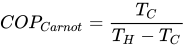
where is the indoor temperature and is the outdoor temperature. Both temperatures must be measured using a thermodynamic temperature scale based at absolute zero such as Kelvin or Rankine. The EER is calculated by multiplying the COP by 3.412 BTU/W⋅h as described above:


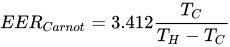
Assuming an outdoor temperature of 95 °F (35 °C) and an indoor temperature of 80 °F (27 °C), the above equation gives (when temperatures are converted to the Kelvin or Rankine scales) a COP of 36, or an EER of 120. This is about 10 times more efficient than a typical home air conditioner available today.
The maximum EER decreases as the difference between the inside and outside air temperature increases, and vice versa. In a desert climate where the outdoor temperature is 120 °F (49 °C), the maximum COP drops to 13, or an EER of 46 (for an indoor temperature of 80 °F (27 °C)).
The maximum SEER can be calculated by averaging the maximum EER over the range of expected temperatures for the season.
US government SEER standards
[edit] | This section contains instructions or advice. (October 2011) |
SEER rating reflects overall system efficiency on a seasonal basis and EER reflects the system's energy efficiency at one specific operating condition. Both ratings are useful when choosing products, but the same rating must be used for comparisons.
Substantial energy savings can be obtained from more efficient systems. For example, by upgrading from SEER 9 to SEER 13, the power consumption is reduced by 30% (equal to 1 − 9/13).
With existing units that are still functional and well-maintained, when the time value of money is considered, retaining existing units rather than proactively replacing them may be the most cost effective. However, the efficiency of air conditioners can degrade significantly over time.[3]
But when either replacing equipment, or specifying new installations, a variety of SEERs are available. For most applications, the minimum or near-minimum SEER units are most cost effective, but the longer the cooling seasons, the higher the electricity costs, and the longer the purchasers will own the systems, the more that incrementally higher SEER units are justified. Residential split-system AC units of SEER 20 or more are now available. The higher SEER units typically have larger coils and multiple compressors, with some also having variable refrigerant flow and variable supply air flow.
1992
[edit]In 1987 legislation taking effect in 1992 was passed requiring a minimum SEER rating of 10.[4] It is rare to see systems rated below SEER 9 in the United States because aging, existing units are being replaced with new, higher efficiency units.
2006
[edit]Beginning in January 2006 a minimum SEER 13 was required.[5] The United States requires that residential systems manufactured after 2005 have a minimum SEER rating of 13. ENERGY STAR qualified Central Air Conditioners must have a SEER of at least 14.5. Window units are exempt from this law so their SEERs are still around 10.
2015
[edit]In 2011 the US Department of Energy (DOE) revised energy conservation rules to impose elevated minimum standards and regional standards for residential HVAC systems.[6] The regional approach recognizes the differences in cost-optimization resulting from regional climate differences. For example, there is little cost benefit in having a very high SEER air conditioning unit in Maine, a state in the northeast US.
Starting January 1, 2015, split-system central air conditioners installed in the Southeastern Region of the United States of America must be at least 14 SEER. The Southeastern Region includes Alabama, Arkansas, Delaware, Florida, Georgia, Hawaii, Kentucky, Louisiana, Maryland, Mississippi, North Carolina, Oklahoma, South Carolina, Tennessee, Texas, and Virginia. Similarly, split-system central air conditioners installed in the Southwestern Region must be a minimum 14 SEER and 12.2 EER beginning on January 1, 2015. The Southwestern Region consists of Arizona, California, Nevada, and New Mexico. Split-system central air conditioners installed in all other states outside the Southeastern and Southwestern regions must continue to be a minimum of 13 SEER, which is the current national requirement.[6]
There have been many new advances in efficient technology over the past 10 years which have enabled manufacturers to increase their SEER ratings dramatically in order to stay above the required minimums set by the United States department of energy.[citation needed]
2023
[edit]Effective January 1, 2023, cooling products will be subject to regional minimum efficiencies, according to Seasonal Energy Efficiency Ratio 2 (SEER2). New M1 testing procedure[7] is designed to better reflect current field conditions. DOE increases systems' external static pressure from current SEER (0.1 in. of water) to SEER2 (0.5 in. of water). These pressure conditions were devised to consider ducted systems that would be seen in the field. With this change, new nomenclature will be used to denote M1 ratings (including EER2 and HSPF2).[8]
| Split System | Region | ||
|---|---|---|---|
| North | Southwest | Southeast | |
| AC < 45000 BTU/h | 13.4 SEER2 | 14.3 SEER2 / 11.7 EER2 | 14.3 SEER2 |
| AC ≥ 45000 BTU/h | 13.8 SEER2 / 11.2 EER2 | 13.8 SEER2 | |
Calculating the annual cost of electric energy for an air conditioner
[edit]Electric power is usually measured in kilowatts (kW). Electric energy is usually measured in kilowatt-hours (kW·h). For example, if an electric load that draws 1.5 kW of electric power is operated for 8 hours, it uses 12 kW·h of electric energy. In the United States, a residential electric customer is charged based on the amount of electric energy used. On the customer bill, the electric utility states the amount of electric energy, in kilowatt-hours (kW·h), that the customer used since the last bill, and the cost of the energy per kilowatt-hour (kW·h).
Air-conditioner sizes are often given as "tons" of cooling, where 1 ton of cooling equals 12,000 BTU/h (3.5 kW). 1 ton of cooling equals the amount of power that needs to be applied continuously over a 24-hour period to melt 1 ton of ice.
The annual cost of electric energy consumed by an air conditioner may be calculated as follows:
- (Cost, $/year) = (unit size, BTU/h) × (hours per year, h) × (energy cost, $/kW·h) ÷ (SEER, BTU/W·h) ÷ (1000, W/kW)
Example 1:
An air-conditioning unit rated at 72,000 BTU/h (21 kW) (6 tons), with a SEER rating of 10, operates 1000 hours per year at an electric energy cost of $0.12 per kilowatt-hour (kW·h). What is the annual cost of the electric energy it uses?
- (72,000 BTU/h) × (1000 h/year) × ($0.12/kW·h) ÷ (10 BTU/W·h) ÷ (1000 W/kW) = $860/year
Example 2.
A residence near Chicago has an air conditioner with a cooling capacity of 4 tons and an SEER rating of 10. The unit is operated 120 days each year for 8 hours per day (960 hours per year), and the electric energy cost is $0.10 per kilowatt-hour. What is its annual cost of operation in terms of electric energy? First, we convert tons of cooling to BTU/h:
- (4 tons) × (12,000 (BTU/h)/ton) = 48,000 BTU/h.
The annual cost of the electric energy is:
- (48,000 BTU/h) × (960 h/year) × ($0.10/kW·h) ÷ (10 BTU/W·h) ÷ (1000 W/kW) = $460/year
Maximum SEER ratings
[edit]Today there are mini-split (ductless) air conditioner units available with SEER ratings up to 42.[10][11] During the 2014 AHR Expo, Mitsubishi unveiled a new mini-split ductless AC unit with a SEER rating of 30.5.[12] GREE also released a 30.5 SEER rating mini split in 2015 as well.[13] Carrier launched a 42 SEER ductless air conditioner during 2018 Consumer electronic Show (CES), held in Las Vegas.[14] Traditional AC systems with ducts have maximum SEER ratings slightly below these levels. Also, practically, central systems will have an achieved energy efficiency ratio 10–20% lower than the nameplate rating due to the duct-related losses.
Additionally, there are ground-source residential AC units with SEER ratings up to 75.[15] However, ground-source heat pump effective efficiency is reliant on the temperature of the ground or water source used. Hot climates have a much higher ground or surface water temperature than cold climates and therefore will not be able to achieve such efficiencies. Moreover, the ARI rating scheme for ground-source heat pumps allows them to largely ignore required pump power in their ratings, making the achievable SEER values often practically lower than the highest efficiency air-source equipment—particularly for air cooling. There are a variety of technologies that will allow SEER and EER ratings to increase further in the near future.[16] Some of these technologies include rotary compressors, inverters, DC brushless motors, variable-speed drives, and integrated systems such as those found in solar-powered air conditioning.[16]
Heat pumps
[edit]A refrigeration cycle can be operated as a heat pump to move heat from outdoors into a warmer house. A heat pump with a higher SEER rating for cooling mode would also usually be more efficient in heating mode, rated using HSPF. When operated in heating mode, a heat pump is typically more efficient than an electrical resistance heater. This is because a space heater can convert only the input electrical energy directly to output heat energy, while a heat pump transfers heat from outdoors. In heating mode, the coefficient of performance is the ratio of heat provided to the energy used by the unit. An ideal resistance heater converting 100% of its input electricity to output heat would have COP = 1, equivalent to a 3.4 EER. The heat pump becomes less efficient as the outside temperature decreases, and its performance may become comparable to a resistance heater. For a heat pump with the minimum 13 SEER cooling efficiency, this is typically below −10 °F (−23 °C).[17]
Lower temperatures may cause a heat pump to operate below the efficiency of a resistance heater, so conventional heat pumps often include heater coils or auxiliary heating from LP or natural gas to prevent low efficiency operation of the refrigeration cycle. "Cold climate" heat pumps are designed to optimize efficiency below 0 °F (−18 °C). As of 2023 heat pumps are marketed that will extract heat from outdoor temperatures as low as −40 °F (−40 °C). In the case of cold climates, water or ground-source heat pumps are often the most efficient solution. They use the relatively constant temperature of ground water or of water in a large buried loop to moderate the temperature differences in summer and winter and improve performance year round. The heat pump cycle is reversed in the summer to act as an air conditioner.
See also
[edit]References
[edit]- ^ a b "ANSI/AHRI 210/240-2008: 2008 Standard for Performance Rating of Unitary Air-Conditioning & Air-Source Heat Pump Equipment". Air Conditioning, Heating and Refrigeration Institute. 2008. Archived from the original (PDF) on March 29, 2018. Retrieved May 22, 2014.
- ^ a b "U.S. DOE Building America House Simulation Protocols, Revised October 2010" (PDF). 2010.
- ^ US Department of Energy Framework Public Meeting for Residential Central Air Conditioners and Heat Pumps (June 12, 2008) at 35– 36 (transcript) [1].
- ^ "Fact Sheet | Air Conditioner Efficiency Standards: SEER 13 vs. SEER 12 | White Papers | EESI".
- ^ "Mike's Heating and Air Conditioning, "13 SEER Mandate"". Archived from the original on June 16, 2006.
- ^ a b "DOE Finalizes New Energy Conservation Standards for Residential HVAC Appliances". October 26, 2011. Retrieved May 22, 2014.
- ^ "Energy Conservation Program: Test Procedures for Central Air Conditioners and Heat Pumps". federalregister.gov. January 24, 2023. Retrieved June 20, 2023.
- ^ "SEER2 New Efficiency Standards". SEER2.com. Retrieved June 20, 2023.
- ^ "Heat Pump SEER2 Ratings | Heat Pump Efficiency". Carrier. Retrieved June 20, 2023.
- ^ "Carrier Launches the Most Efficient Air Conditioner You Can Buy in America". Carrier. Retrieved June 12, 2019.
- ^ "9,000 BTU 42 SEER Carrier Single Zone Heat Pump System - 230 Volt - High Wall". HVACDirect.com. Retrieved June 12, 2019.
- ^ "Most Energy-efficient Ductless Model on Market Provides Significant Heating Capacity in Extreme Cold Climates". February 4, 2014.>
- ^ "GREE Crown Mini Split". March 20, 2015.>
- ^ "Carrier Launches the Most Efficient Air Conditioner You Can Buy in America".
- ^ "Inverter Smart Source Unit Just Released up to 62.5 EER that's up to 75 SEER". 2012.
- ^ a b "How High Will SEER Go?". 2006.
- ^ Goodman GSH13 Product Specifications
External links
[edit]Seasonal energy efficiency ratio
View on GrokipediaFundamentals
Definition and Purpose
The seasonal energy efficiency ratio (SEER) is a metric used to evaluate the cooling efficiency of central air conditioners and air-conditioning heat pumps, calculated as the total cooling output in British thermal units (Btu) delivered during a representative annual cooling season divided by the total electrical energy input in watt-hours over the same period.[5] This ratio accounts for equipment performance across a range of part-load operating conditions and outdoor temperatures typical of a cooling season, rather than a single full-load point, providing a more realistic assessment of seasonal energy use.[6] SEER values are dimensionless, with higher ratings indicating greater efficiency; for instance, federal minimum standards have historically required residential units to achieve at least 13 SEER since 2006, later updated to 14 SEER for certain regions.[5] The primary purpose of SEER is to standardize comparisons of cooling system efficiency, facilitating informed consumer choices, manufacturer innovation toward energy savings, and regulatory enforcement of minimum performance thresholds under programs like those from the U.S. Department of Energy.[7] By simulating typical usage patterns—such as varying bin-hour temperatures from 65°F to 104°F—it estimates real-world energy consumption and operating costs more accurately than steady-state tests, helping to reduce overall electricity demand for cooling, which accounts for a significant portion of residential energy use in warmer climates.[6] SEER ratings also support ENERGY STAR certifications and utility rebate incentives, promoting adoption of higher-efficiency equipment to lower greenhouse gas emissions associated with power generation.[7]Measurement Methodology
The Seasonal Energy Efficiency Ratio (SEER) is measured through standardized laboratory testing of air conditioning units in psychrometric chambers that replicate indoor and outdoor environmental conditions, as specified in ANSI/AHRI Standard 210/240. Tests determine steady-state cooling capacity (in Btu/h) and power input (in watts) at designated full-load and part-load points, with indoor conditions fixed at 80°F dry-bulb and 67°F wet-bulb temperatures to simulate typical occupied spaces. Outdoor conditions vary to represent seasonal load diversity: a primary full-load test at 82°F dry-bulb and 65°F wet-bulb outdoor air approximates the weighted average temperature for U.S. cooling seasons, while a high-temperature test at 95°F dry-bulb assesses part-load operation.[8][9] Additional cyclic testing evaluates on-off cycling losses by measuring recovery capacity after short off-periods (e.g., 6 minutes off, 30 minutes on at 95°F outdoor), off-mode power draw, and degradation coefficient (CD), which quantifies efficiency reductions from startup transients and fan heat during off-cycles. The part-load factor (PLF) at 50% runtime fraction is derived as PLF(0.5) = 1 - CD × (1 - 0.5), incorporating these losses to reflect real-world thermostat control rather than continuous operation. SEER is then calculated via the simplified formula SEER = EER_B × PLF(0.5), where EER_B is the energy efficiency ratio (cooling output divided by power input) from the 82°F test, adjusted for the approximated seasonal runtime distribution.[10][9] This approach approximates a full temperature bin analysis, which weights EER values across 8 bins (65°F to 104°F in 5°F increments) using historical cooling degree-hour data from representative U.S. locations (e.g., 1,000 equivalent full-load hours annually, with ~44% of load at or below 82°F). The simplified method correlates closely with bin results for single-speed units (within 5%) but requires fewer tests, prioritizing practicality for certification while capturing dominant seasonal behaviors like reduced runtime at milder temperatures. An optional detailed bin method, using interpolated EER for each bin from tested points, may be applied for variable-speed systems or validation.[11][9][12]Evolution to SEER2
The U.S. Department of Energy (DOE) initiated the development of SEER2 in response to discrepancies between laboratory SEER ratings and actual field performance of central air conditioners and heat pumps, primarily due to outdated testing assumptions about system installation conditions.[13] The original SEER metric, established under the Energy Policy and Conservation Act amendments, relied on test procedures with low external static pressure (ESP) levels of approximately 0.1 to 0.2 inches of water column (in. w.c.), which idealized airflow resistance far below typical residential ductwork constraints.[14] This led to overstated efficiency claims, as real-world installations often experience higher resistance from duct leaks, filters, and configurations, reducing effective performance by up to 20-30% in some cases.[15] To address these limitations, DOE proposed updated test procedures in the mid-2010s, culminating in the adoption of Appendix M1 to 10 CFR Part 430, which defines SEER2.[16] The core change increases the default ESP to 0.5 in. w.c. for blower testing, reflecting average installed system pressures derived from field data and industry surveys conducted by organizations like the Air-Conditioning, Heating, and Refrigeration Institute (AHRI).[14][15] Additional refinements incorporate higher airflow rates, cyclic operation losses, and part-load conditions more representative of variable-speed compressors and seasonal bin temperatures, ensuring ratings account for intermittent runtime and non-ideal outdoor humidity.[17] These modifications result in SEER2 values that are systematically 4-7% lower than equivalent SEER ratings for the same equipment, providing consumers and regulators with a more conservative and realistic efficiency benchmark.[18] The transition to SEER2 was formalized through DOE's 2017 direct final rule on test procedure amendments, with voluntary adoption encouraged thereafter and mandatory compliance enforced starting January 1, 2023, for all new residential split-system units manufactured or imported into the U.S.[19][13] This timeline aligned with broader energy conservation standards under the National Appliance Energy Conservation Act (NAECA), raising regional minimum efficiencies (e.g., from 14 SEER to 14.3 SEER2 in northern states) while preserving overall energy savings projections through the adjusted metric.[15] Manufacturers were required to retest and recertify products via AHRI, prompting industry-wide redesigns focused on robust fan motors and optimized coils to maintain competitive ratings under the stricter protocol.[20] Subsequent DOE rules in 2024-2025 have further refined Appendix M1 for emerging technologies like multi-stage systems, but the foundational ESP and realism enhancements remain central to SEER2's design.[21]Related Efficiency Metrics
Comparison to EER
The Energy Efficiency Ratio (EER) quantifies the steady-state cooling performance of an air conditioning system at a fixed set of conditions: an outdoor dry-bulb temperature of 95°F (35°C), 50% outdoor relative humidity, an indoor dry-bulb temperature of 80°F (27°C), and 50% indoor relative humidity, with the system operating at full load capacity. It is defined as the ratio of total cooling provided in British thermal units per hour (BTU/h) to the electrical power input in watts, yielding a dimensionless value.[22] This metric emphasizes efficiency during peak hot-weather operation, where demand on the system is highest, and is particularly relevant for sizing equipment to handle extreme temperatures without excessive energy draw or capacity shortfalls.[22] In comparison, the Seasonal Energy Efficiency Ratio (SEER) averages efficiency across a representative cooling season, using a standardized model that weights performance at multiple outdoor temperatures (from bin data typically spanning 65°F to 104°F or higher), incorporates part-load operations, cycling effects, and supplemental heat rejection during startup and shutdown. SEER is computed as the total seasonal cooling output in BTU divided by total electrical energy input in watt-hours, providing a holistic view of annual energy use under variable real-world conditions rather than a single snapshot.[22] Unlike EER's focus on full-load, high-ambient stress, SEER accounts for the fact that air conditioners rarely operate continuously at peak capacity; instead, they cycle on and off or modulate output, often at milder temperatures where thermodynamic efficiency is inherently higher due to smaller temperature differentials between indoors and outdoors.[22] For equivalent systems, SEER values typically exceed EER values—often by 20-30%—because the seasonal weighting includes periods of elevated efficiency at lower ambient temperatures, offsetting the reduced performance at EER's hotter test point.[23] However, EER remains a required rating for central air conditioners under U.S. Department of Energy standards, complementing SEER by highlighting peak-demand reliability; for instance, pre-2023 regulations mandated minimum EER levels (e.g., 10.9-11.5 depending on system type) alongside SEER minima to ensure balanced performance in diverse climates.[22] Systems optimized for high EER may underperform seasonally if part-load controls are inefficient, underscoring that neither metric alone captures full operational dynamics—SEER for energy cost prediction, EER for instantaneous capacity assurance.[24]Comparison to COP
The Seasonal Energy Efficiency Ratio (SEER) quantifies the total cooling output in British thermal units (BTU) provided by an air conditioning system over a representative cooling season, divided by the total electrical energy input in watt-hours, yielding a value in BTU per watt-hour (BTU/Wh).[24] In contrast, the Coefficient of Performance (COP) measures the ratio of useful thermal output (cooling or heating) to the work input required, expressed as a dimensionless quantity (e.g., watts of cooling per watt of electricity).[25] While both metrics assess thermodynamic efficiency, COP typically evaluates steady-state performance under fixed conditions, such as a specific outdoor temperature, whereas SEER incorporates variable seasonal factors including part-load operation, cycling losses, and fluctuating ambient temperatures.[26] A direct numerical relationship exists between SEER and the cooling-mode COP due to unit conventions: COP ≈ SEER / 3.412, where the factor 3.412 converts BTU/Wh to equivalent dimensionless watts-per-watt, as 1 watt-hour of electricity produces approximately 3.412 BTU of cooling under ideal conditions.[27] [28] For instance, a system with a SEER of 16 corresponds to a COP of roughly 4.7, though this approximation holds better for the steady-state Energy Efficiency Ratio (EER)—SEER's non-seasonal counterpart—since SEER often exceeds EER by 15% to 35% owing to higher efficiencies at partial loads.[26] [27] SEER's seasonal averaging makes it more representative of real-world energy use in cooling-dominated climates, but it applies exclusively to cooling, unlike COP, which can evaluate both cooling and heating modes (with seasonal variants like SCOP for heating).[29] COP is preferred for theoretical analyses or international standards emphasizing instantaneous performance, while SEER aligns with U.S. regulatory frameworks focused on annual operating costs.[30] Neither metric accounts for auxiliary energy losses (e.g., fans or defrost cycles) identically, requiring context-specific interpretation for system comparisons.[24]Distinctions from HSPF
The Seasonal Energy Efficiency Ratio (SEER) quantifies the cooling performance of air conditioners and heat pumps by dividing the total cooling output in British thermal units (Btu) over a typical cooling season by the total electrical energy input in watt-hours (Wh), yielding a dimensionless ratio that reflects efficiency under varying seasonal loads.[22] In contrast, the Heating Seasonal Performance Factor (HSPF) measures the heating performance exclusively of heat pumps, calculated as the total heat output in Btu during a normal heating season divided by the total electrical energy consumed in Wh, also resulting in a Btu/Wh ratio.[22] [6] A primary distinction lies in their operational focus: SEER evaluates efficiency during the cooling mode, simulating warmer outdoor temperatures and part-load conditions typical of summer operation, whereas HSPF assesses heating mode efficiency under colder temperatures and variable heating demands of winter, incorporating factors like defrost cycles that reduce performance in low-ambient conditions.[31] [32] SEER applies to both standalone central air conditioners and the cooling function of heat pumps, while HSPF is relevant only to heat pumps capable of reversing operation for heating, excluding non-reversible cooling-only units.[33] [34] Both metrics employ bin-temperature methods to model seasonal performance across a range of outdoor conditions—SEER using cooling-hour distributions from representative U.S. climates, and HSPF using heating-degree-hour profiles—but the underlying load profiles differ fundamentally due to the inverse thermodynamic demands of heat rejection (cooling) versus heat extraction (heating).[22] [32] Numerically, high-efficiency systems often exhibit SEER values of 14–20 alongside HSPF ratings of 8–10, reflecting that heating in colder climates inherently demands more input energy per unit of output compared to cooling, though direct comparability requires context-specific analysis.[31] For heat pumps, these ratings are determined independently, allowing selection based on balanced cooling and heating needs without assuming equivalence.[34]Theoretical and Practical Boundaries
Theoretical Maximum SEER
The theoretical maximum SEER is governed by the Carnot cycle, which sets the fundamental thermodynamic limit for the efficiency of any refrigeration or air conditioning system acting as a reversed heat engine between varying hot and cold reservoir temperatures over a cooling season. This limit arises because no real process can exceed the reversible efficiency defined by the second law of thermodynamics, where entropy generation in irreversible processes like friction, heat conduction across finite temperature differences, and fluid flow resistances reduces achievable performance.[35][26] For cooling, the Carnot coefficient of performance (COP), defined as the ratio of cooling provided to electrical work input, is given bywhere is the absolute temperature (in Kelvin) of the cold reservoir (evaporator, approximating indoor conditions) and is that of the hot reservoir (condenser, tied to outdoor conditions). Since SEER and its instantaneous analog EER are expressed in British thermal units per watt-hour (BTU/W-h), the corresponding Carnot EER converts via the factor 3.412 (accounting for 1 BTU/h ≈ 0.293 W):
This yields the maximum possible EER at any given operating condition.[26] To obtain the theoretical maximum SEER, the Carnot EER must be evaluated at each standard outdoor dry-bulb temperature bin (typically ranging from 65°F to 115°F in the AHRI/SEER protocol), weighted by the fraction of seasonal cooling load and operating hours allocated to that bin in the specified reference climate. The resulting SEER is the total seasonal cooling output divided by total electrical input under these ideal conditions, assuming remains fixed (e.g., around 40–45°F saturation temperature for typical evaporators) while tracks the bin temperature plus a small approach differential for heat rejection. Lower bin temperatures yield disproportionately higher Carnot efficiencies due to reduced , elevating the seasonal average beyond a single-point rating like EER at 95°F outdoor. However, no numerical universal maximum exists without specifying exact bin distributions, assumptions, and load curves, as these vary by standard and location; computed values for U.S. reference conditions often exceed 25–30 but remain finite due to warmer dominant bins.[36][26] Real-world systems fall far short of this limit, with typical COP values of 2–4 representing roughly 10% of the Carnot value for small temperature lifts but up to 30% for standard air conditioning deltas around 35–40°F, owing to non-ideal compression, throttling losses, and finite-rate heat transfer. Advances like variable-speed compressors or advanced refrigerants narrow the gap incrementally but cannot surpass the thermodynamic bound without violating physical laws.[26]
Factors Constraining Achievable Ratings
Achievable SEER ratings for central air conditioners are fundamentally limited by thermodynamic irreversibilities inherent to vapor-compression cycles, including non-isentropic compression in the compressor, throttling losses across the expansion valve, and entropy generation due to finite temperature gradients in evaporators and condensers. These processes deviate from ideal reversible cycles, reducing the coefficient of performance (COP) to approximately 50% or less of the Carnot limit under typical operating conditions, as quantified through exergy analysis showing the compressor and evaporator as primary sources of irreversibility.[37][38] Engineering trade-offs further constrain ratings, as enhancing efficiency requires oversized heat exchangers to minimize approach temperatures and improve heat transfer, but this elevates material costs, system bulk, and fan power demands to overcome increased airflow resistance. Single-stage compressors, common in lower-SEER units, exhibit poor part-load efficiency critical for seasonal averaging, necessitating variable-speed or multi-stage designs for ratings above 15 SEER, which introduce electronic controls and precision manufacturing challenges.[39][40] Economic realities impose practical ceilings, with each incremental SEER gain demanding disproportionately expensive components like advanced coil geometries and inverter-driven compressors, yielding diminishing returns on energy savings that rarely justify costs beyond 20-24 SEER for standard residential applications. Reliability diminishes in highly efficient designs due to greater complexity, including sensitivity to refrigerant purity and vibration in variable-capacity systems, while market standards prioritize balanced performance over marginal efficiency pursuits.[41][42]Highest Commercially Available Ratings
As of 2025, the highest commercially available Seasonal Energy Efficiency Ratio 2 (SEER2) ratings for residential central air conditioners exceed 25, with Lennox's SL28XCV model achieving 25.8 SEER2 through variable-speed compressor technology.[43] This rating surpasses equivalents from competitors, such as Carrier's Infinity 24 series at approximately 24 SEER2 and Trane's XV20i at up to 21.5 SEER2.[44][45] These peak efficiencies are typically limited to premium split-system units certified under standards from the Air-Conditioning, Heating, and Refrigeration Institute (AHRI), reflecting performance in controlled laboratory conditions rather than guaranteed field results. For heat pumps, which use SEER2 for cooling capacity, comparable high ratings apply, with Lennox's SL25XPV model reaching up to 24 SEER2 in variable-capacity configurations.[46] Such systems integrate advanced features like modulating compressors and enhanced heat exchangers to approach practical limits, though real-world performance depends on factors including ductwork integrity and regional climate loads. Manufacturers emphasize that these ratings equate to substantial energy savings—potentially 30-50% over minimum-efficiency units—but at installation costs exceeding $10,000 for top-tier models.[45] Availability of units above 24 SEER2 remains niche, confined to brands investing in proprietary innovations amid regulatory pressures like the 2025 refrigerant transitions.[47]Regulatory History and Standards
Pre-1992 Baseline
Prior to the establishment of federal standards, residential central air conditioners in the United States operated without mandatory minimum energy efficiency requirements, allowing manufacturers to produce units with varying performance levels driven primarily by market competition rather than regulation.[3][48] The National Appliance Energy Conservation Act of 1987 (NAECA) laid the groundwork for the first such standards, but they did not take effect until January 1, 1992, leaving the pre-1992 period as a baseline of unregulated efficiency.[3] Efficiency during this era was typically evaluated using the Energy Efficiency Ratio (EER), a steady-state metric that quantifies cooling output in British thermal units per hour (BTU/h) divided by power input in watts under fixed conditions, such as an outdoor temperature of 95°F (35°C) and indoor conditions of 80°F (27°C) dry-bulb with 50% relative humidity.[6] Unlike the later Seasonal Energy Efficiency Ratio (SEER), which incorporates part-load operation and seasonal temperature variations, EER focused on full-load performance and did not account for real-world cycling losses or diverse operating conditions, often overstating field efficiency.[49] Pre-1992 units generally exhibited lower efficiencies, with typical ratings equivalent to 6 to 8 SEER when retrospectively estimated using modern conversion methods. For example, air conditioners manufactured in the 1970s commonly achieved around 6 SEER, while those from the mid-1980s averaged closer to 8 SEER, reflecting incremental improvements from technological advancements like better compressors and refrigerants but without standardized seasonal testing.[50][51] Units as low as 6.9 SEER were common in installations from the late 1980s, highlighting the variability absent regulatory floors.[52] A 6 EER unit from 1974, for instance, aligned with early baseline performance before broader adoption of higher-capacity coils and fans.[49] Voluntary industry efforts, such as those by the Air-Conditioning and Refrigeration Institute (ARI, now AHRI), promoted efficiency labeling and higher-performing models, but these did not enforce uniformity or prevent subpar units from dominating lower-cost segments.[53] The pre-1992 baseline thus represented a diverse market where average efficiencies lagged behind later mandates; the 1992 SEER 10 minimum equated to roughly a 30% improvement over many 1970s-era installations, underscoring the regulatory intent to elevate the floor without retroactively applying to existing stock.[1][54]1992 National Appliance Energy Conservation Act Standards
The National Appliance Energy Conservation Act of 1987 (NAECA) amended the Energy Policy and Conservation Act to mandate that the U.S. Department of Energy (DOE) establish minimum energy conservation standards for 13 categories of residential appliances, including central air conditioners and central air conditioning heat pumps, with compliance required for units manufactured starting January 1, 1992.[55] These standards introduced the first federal minimum seasonal energy efficiency ratio (SEER) requirements, setting a baseline of 10.0 SEER for both split-system and single-package central air conditioners to reduce national energy consumption and improve efficiency over pre-existing voluntary industry practices, where average ratings often fell below 8 SEER.[3][55] For central air conditioning heat pumps, the 1992 standards specified a minimum of 10.0 SEER for cooling efficiency alongside a minimum heating seasonal performance factor (HSPF) of 6.8, applying uniformly to split systems and single-package units without regional variations at the time.[55] These thresholds were determined by DOE based on technological feasibility, economic justification, and projected energy savings, estimated to conserve approximately 2.5 quads of energy over the lifetime of affected equipment through 2020.[3] Compliance testing followed procedures outlined in the Code of Federal Regulations, using bin-temperature methods to simulate seasonal performance rather than steady-state conditions.[6] The standards marked a shift from unregulated markets to mandatory federal oversight, with manufacturers required to certify compliance via the Air-Conditioning, Heating, and Refrigeration Institute (AHRI), though enforcement relied on DOE audits and penalties for non-compliance up to $100 per unit per day.[55] Prior to 1992, efficiencies varied widely, with many systems operating at 7-9 SEER, and the new rules effectively phased out sub-10 SEER units, spurring incremental improvements in compressor technology and coil design without prohibiting their sale if produced before the cutoff.[3] These baselines remained unchanged until the 2006 updates under the Energy Policy Act of 2005.[55]2006 Minimum Efficiency Updates
In January 2006, the U.S. Department of Energy (DOE) enforced revised federal energy conservation standards under the Energy Policy and Conservation Act, elevating the minimum seasonal energy efficiency ratio (SEER) requirement for residential split-system central air conditioners from 10 SEER to 13 SEER.[3] These standards applied to units manufactured or imported on or after January 23, 2006, targeting systems with capacities up to 65,000 Btu/h.[56] The update marked the first major revision since the 1992 National Appliance Energy Conservation Act, aiming to curb national electricity demand amid rising cooling loads.[3] Corresponding requirements extended to single-package central air conditioners, which also faced a 13 SEER minimum, while central heat pumps—evaluated under both SEER for cooling and heating seasonal performance factor (HSPF) for heating—were mandated to achieve at least 13 SEER and 7.7 HSPF.[57] Manufacturers complied by redesigning compressors, coils, and controls to meet the higher efficiency thresholds without exemptions for most residential applications, though commercial and certain oversized units retained lower baselines until later rules.[58] DOE analyses projected that the shift would yield cumulative energy savings of approximately 4.2 quadrillion Btu from 2006 to 2030, equivalent to the annual output of several large power plants, while reducing peak summer grid strain.[1] The 30% efficiency gain over prior 10 SEER units stemmed from enhanced part-load performance metrics in the SEER test procedure, emphasizing variable-speed technologies and improved refrigerant flow, though real-world savings varied by climate and installation quality.[59] Compliance was verified through third-party testing under DOE protocols, with non-conforming units barred from U.S. markets, spurring industry innovation but initially raising upfront equipment costs by 10-20% for consumers.[60] These standards remained in place nationwide until 2015 regional adjustments, establishing 13 SEER as the benchmark for over a decade.[3]2015 Regional Differentiations
In 2015, the U.S. Department of Energy (DOE) established differentiated minimum efficiency standards for residential central air conditioners and heat pumps, effective for units manufactured or installed on or after January 1, 2015, to account for varying climate demands across the country. These regional standards raised the baseline SEER requirement from the prior national 13 SEER level, setting it at 13 SEER for the Northern region while imposing 14 SEER in the Southern regions, with additional energy efficiency ratio (EER) minima in hotter areas to address higher cooling loads and peak demands.[61][62] The nation was divided into three zones: the Northern region, encompassing states with 5,000 or more heating degree days (HDD), applied a uniform 13 SEER minimum for split-system air conditioners; the Southeast (hot-humid climates) and Southwest (hot-dry climates), covering states with fewer than 5,000 HDD, required 14 SEER for split systems, plus EER of 12.2 for capacities under 45,000 Btu/h and 11.7 EER for 45,000 Btu/h or greater in both subregions. Single-package units faced analogous but slightly higher thresholds, such as 14 SEER nationally with regional EER uplifts in the Southwest. The Southeast included states like Alabama, Florida, Georgia, Louisiana, Mississippi, North Carolina, South Carolina, and parts of others with high humidity; the Southwest comprised Arizona, California, Nevada, and New Mexico, emphasizing dry heat conditions. This zoning aimed to prioritize energy savings where air conditioning usage is most intensive, potentially reducing national electricity consumption by aligning standards with local weather patterns rather than a one-size-fits-all approach.[61][62][63] Enforcement varied by region: Northern standards hinged on manufacturing date, while Southern rules applied to installation location, prohibiting non-compliant units from being installed there even if manufactured earlier, with a compliance grace period extending to July 1, 2016, for existing inventory. These measures stemmed from DOE's 2011 rulemaking, finalized amid industry pushback on costs, but upheld to achieve projected savings of over 200 billion kWh annually by 2043 without unduly burdening northern markets with oversized efficiencies. Violations could result in fines up to $252 per unit per day, enforced via state regulators and DOE oversight.[61][64]2023 SEER2 Transition and Regional Tiers
In January 2023, the U.S. Department of Energy (DOE) implemented a mandatory transition to SEER2 for rating the cooling efficiency of residential central air conditioners and heat pumps, replacing the prior SEER metric. This shift required all newly manufactured units to be tested and certified under the updated procedure outlined in 10 CFR Appendix M1, which incorporates more realistic operating conditions such as increased external static pressure (from 0.1-0.2 inches of water to 0.5 inches) and cyclic degradation factors to account for on/off cycling. The changes result in SEER2 values approximately 5% lower than equivalent SEER ratings, with a conversion factor of roughly SEER ≈ SEER2 × 1.05, ensuring the new standards maintain comparable real-world energy conservation stringency without raising baseline requirements.[15][13][65] The transition prohibited the manufacture of non-SEER2-compliant units after December 31, 2022, though limited sell-through of pre-2023 inventory was permitted in the Northern region; in contrast, no sell-through was allowed for air conditioners in the Southeast and Southwest regions, where installation of subcompliant units became illegal effective January 1, 2023, to enforce regional protections against overuse in hotter climates. Manufacturers faced retesting burdens, leading to product line adjustments, but the DOE calibrated minima to avoid net efficiency hikes—translating prior Northern 14 SEER and Southern 15 SEER baselines to 13.4 SEER2 and 14.3 SEER2, respectively, for most split-system units under 45,000 Btu/h capacity. Heat pumps followed similar adjustments under HSPF2, though with sell-through allowances in Southern regions.[15][65][66] Regional tiers, originally differentiated in 2015 to tailor standards to climate variations, were preserved and recalibrated under SEER2, dividing the U.S. into Northern (States north of the 36th parallel, excluding specified exceptions), Southeast, and Southwest zones. These tiers apply primarily to split-system and single-package air conditioners, mandating higher efficiencies in Southern regions to curb peak demand and emissions where cooling loads are greater. The following table summarizes minimum SEER2 requirements for ducted split-system air conditioners under 45,000 Btu/h capacity:| Region | Minimum SEER2 |
|---|---|
| Northern | 13.4 |
| Southeast | 14.3 |
| Southwest | 14.3 (with additional EER2 ≥ 11.5 to address high-temperature performance) |
2025 Refrigerant Phase-Out and Efficiency Adjustments
The U.S. Environmental Protection Agency (EPA), under the American Innovation and Manufacturing (AIM) Act of 2020, finalized regulations prohibiting the manufacture and import of new residential and light commercial central air conditioners and heat pumps using hydrofluorocarbon (HFC) refrigerants with a global warming potential (GWP) exceeding 700, effective January 1, 2025, for most split systems and components.[20] This targets R-410A (GWP 2,088), mandating a transition to lower-GWP alternatives classified as A2L (mildly flammable), such as R-32 (GWP 675) and R-454B (GWP 466), approved under the EPA's Significant New Alternatives Policy (SNAP) program.[69] Systems manufactured before this date can be installed until January 1, 2026, providing a sell-through period, but post-2025 production shifts entirely to A2L-compliant designs, requiring enhanced safety features like refrigerant leak sensors and mitigation devices.[20] The refrigerant transition influences seasonal energy efficiency ratio (SEER) performance through inherent thermodynamic differences, as A2L options exhibit superior heat transfer coefficients and volumetric cooling capacities compared to R-410A, enabling equivalent or improved efficiency in redesigned systems.[70] For instance, R-32-based units have demonstrated 10-15% higher SEER2 ratings in comparative testing against R-410A equivalents, such as a 3-ton system achieving approximately 14.5-15.5 SEER2 versus 13.4 SEER2, attributable to R-32's lower viscosity and higher latent heat of vaporization, which reduce compressor work and refrigerant charge volume by up to 20-30%.[70] [71] However, added safety components, including powered leak detection systems, introduce minor auxiliary energy draws (typically 5-10 watts), which are factored into ratings but may marginally offset gains in real-world operation without optimized installation.[20] In parallel, the U.S. Department of Energy (DOE) amended federal test procedures for central air conditioners and heat pumps via a final rule published January 7, 2025, effective February 6, 2025, with compliance required by July 7, 2025, to accommodate A2L refrigerants and align with updated industry standards (AHRI 210/240-2024 for residential units).[20] These adjustments retain SEER2 as the core metric under Appendix M1 but incorporate provisions for mandatory constant circulation testing, single cooling air volume rates, and a default degradation coefficient of 0.25 for off-mode losses in outdoor units with no matched indoor unit (OUWNM).[20] For high-GWP units produced after January 1, 2025 (intended for service-only), OUWNM ratings become mandatory, while multi-refrigerant outdoor units require separate certification per refrigerant charge.[20] Appendix M2 introduces seasonal metrics like SCORE (seasonal cooling performance) for variable-capacity systems, effective with future standards, ensuring lab-derived SEER2 values better reflect field performance under A2L conditions without altering the 2023-established regional minima (e.g., 14-15 SEER2 in southern tiers).[20] These changes prioritize causal accuracy in efficiency claims amid the phase-out, though empirical data indicate no broad upward revision to minimum standards, focusing instead on procedural rigor to mitigate discrepancies between rated and actual seasonal efficiency.[20]Applications in HVAC Systems
Central Air Conditioners
Central air conditioners, comprising split systems with an outdoor condensing unit and indoor air handler or evaporator coil, or packaged units integrating both components, employ the Seasonal Energy Efficiency Ratio (SEER) to evaluate cooling performance across simulated seasonal conditions rather than at a single operating point. SEER quantifies the ratio of total cooling output in British thermal units (BTU) delivered over a typical cooling season to the total electrical energy input in watt-hours, using a weighted average of efficiency at multiple capacity levels and outdoor temperatures from 65°F to 104°F, as defined in U.S. Department of Energy (DOE) test procedures.[2][20] This metric accounts for part-load operations common in residential and light commercial central systems, where full capacity is rarely sustained, distinguishing it from the Energy Efficiency Ratio (EER), which tests solely at 95°F outdoor conditions.[72] Testing for central air conditioners follows DOE Appendix M1 (for SEER2, effective since January 1, 2023), incorporating higher external static pressure to mimic real ductwork resistance and updated airflow rates for more accurate field representation, resulting in SEER2 values approximately 3-5% lower than legacy SEER for equivalent units.[73][15] Manufacturers certify combined outdoor-indoor pairings via the Air-Conditioning, Heating, and Refrigeration Institute (AHRI), as mismatched components—such as an efficient outdoor unit with a low-efficiency coil—can reduce achieved SEER below rated values due to suboptimal refrigerant flow and heat transfer.[15] Variable-capacity compressors in advanced central systems enhance SEER by modulating speed to match varying loads, achieving ratings up to 23-26 SEER2, compared to 13-16 SEER2 for single-stage fixed-speed models.[74] In practice, SEER guides consumer and contractor selection for central air conditioners serving ducted whole-home distribution, where higher ratings correlate with reduced annual cooling costs proportional to local climate and usage hours; for instance, a 16 SEER2 unit versus a 14 SEER2 minimum consumes roughly 12-15% less energy under identical conditions.[75] However, SEER excludes duct leakage, infiltration, or thermostat setbacks, factors that can diminish system-level efficiency by 20-30% in poorly sealed homes.[67] Regional minimums apply: systems under 45,000 BTU/h require 13.4 SEER2 (northern U.S.) or 14.3 SEER2 (southern U.S.) since 2023, with larger units at 13.4 SEER2 nationwide, driving market shifts toward compliant models.[76][77]Heat Pumps and Dual-Fuel Systems
Heat pumps function as reversible vapor-compression systems capable of both heating and cooling, with the Seasonal Energy Efficiency Ratio (SEER) specifically evaluating their cooling-mode performance over a representative seasonal period. SEER for heat pumps is calculated as the total cooling output in British thermal units (BTU) divided by the total electrical energy input in watt-hours, mirroring the metric for air conditioners but applied only to the cooling cycle. Federal minimum efficiency standards, updated via the Department of Energy in 2023 to SEER2 equivalents, mandate at least 14.3 SEER2 for split-system heat pumps in northern U.S. regions and 15.2 SEER2 in southern regions, ensuring baseline electrical savings during summer operations. Higher SEER ratings, such as 16 or above, correlate with variable-speed compressors and advanced controls that modulate output to match load, reducing energy waste in variable cooling demands.[78][79][80] While SEER addresses cooling, heat pumps' overall utility in heating-dominated climates is limited by declining coefficient of performance (COP) at low ambient temperatures, where supplemental electric resistance heating—inefficient at roughly 1 COP—often supplements output below 30°F (–1°C). This thermodynamic constraint arises from the Carnot limit on heat pump efficiency, where COP decreases inversely with the temperature lift required from cold outdoor air. Empirical field data from cold regions show average real-world SEER realizations 10–20% below lab ratings due to installation variables like duct leakage and refrigerant charge, underscoring the need for proper sizing to avoid short-cycling that erodes rated efficiency. ENERGY STAR-certified models, requiring minimum SEER2 of 15 and Heating Seasonal Performance Factor (HSPF2) of 7.5, prioritize systems with demonstrated field-verified performance to bridge lab-to-real gaps.[81] Dual-fuel systems integrate an electric heat pump with a fossil-fuel furnace (typically natural gas or propane at 80–98% AFUE), automating fuel selection via thermostats programmed to switch at balance points where the marginal cost of heat pump operation exceeds furnace efficiency—often 20–35°F (–7 to 2°C) depending on local utility rates and equipment COP curves. In these hybrids, SEER governs the heat pump's cooling efficiency, with common configurations achieving 14–18 SEER while the furnace provides high-capacity heating without relying on the heat pump's auxiliary strips, yielding 20–40% lower annual heating costs in climates with prolonged sub-freezing periods compared to all-electric setups. For instance, a 16 SEER heat pump paired with an 80% AFUE furnace in a dual-fuel package can deliver combined seasonal efficiencies superior to standalone heat pumps in zones with 4,000+ heating degree days, as gas combustion maintains near-constant output independent of outdoor temperature gradients. Manufacturers like Trane and YORK certify such systems with integrated controls that optimize switchover based on real-time pricing signals or weather forecasts, enhancing causal energy matching to demand. Real-world analyses indicate dual-fuel adoption reduces peak electrical grid loads during winter, though total emissions depend on regional fuel carbon intensities—e.g., natural gas at 117 lbs CO₂/MMBtu versus grid electricity varying from 300–900 lbs/MWh.[82][83][84]Economic Evaluations
Calculating Seasonal Energy Costs
To estimate seasonal energy costs for air conditioning systems, the total electrical energy consumption over the cooling season is calculated as the seasonal cooling load divided by the SEER value, then converted to kilowatt-hours and multiplied by the local electricity rate. The energy use in kWh is given by , where is the rated cooling capacity in BTU/h, is the equivalent full-load hours (EFLH) representing the effective runtime at full capacity to meet the total cooling demand, and the 1000 accounts for unit conversion from watt-hours to kWh.[85] The seasonal cost is then , with as the electricity rate in dollars per kWh. This approach assumes the SEER accurately reflects field performance under standardized test conditions, though real-world factors like duct losses or maintenance can alter results.[22] EFLH varies significantly by climate, home insulation, and usage patterns, typically ranging from 500 hours in cooler regions to over 2,000 in hot climates, with U.S. residential averages often around 1,000 hours based on billing and load data analyses.[86] For instance, in a moderate U.S. climate with 1,000 EFLH, a 3-ton (36,000 BTU/h) central air conditioner rated at SEER 14 consumes approximately kWh per season; at an average residential rate of $0.16/kWh (as of 2023 EIA data), the cost is about $412. Higher SEER values reduce costs proportionally—for the same setup, a SEER 20 unit drops consumption to 1,800 kWh and cost to $288, yielding 30% savings. Regional adjustments are essential; tools from the U.S. Department of Energy incorporate bin-hour data mimicking diverse weather patterns to refine EFLH estimates beyond simple averages.[87]| Parameter | Description | Typical U.S. Range/Example |
|---|---|---|
| (BTU/h) | Rated capacity; 1 ton = 12,000 BTU/h | 24,000–60,000 (2–5 tons for homes) |
| (hours) | EFLH; site-specific via degree-days or metering | 800–1,200 (national avg. ~1,000)[88] |
| SEER | Efficiency ratio from AHRI-certified tests | 13–25 (minimum federal standard 14–15 as of 2023) |
| ($/kWh) | Local rate; varies by utility and time-of-use | $0.12–$0.20 (2023 avg. $0.16) |