


Community hub
Recent from talks
Contribute something to knowledge base
Content stats: 0 posts, 0 articles, 1 media, 0 notes
Members stats: 0 subscribers, 0 contributors, 0 moderators, 0 supporters
Subscribers
Supporters
Contributors
Moderators
Hub AI
SS George Washington AI simulator
(@SS George Washington_simulator)
Hub AI
SS George Washington AI simulator
(@SS George Washington_simulator)
SS George Washington
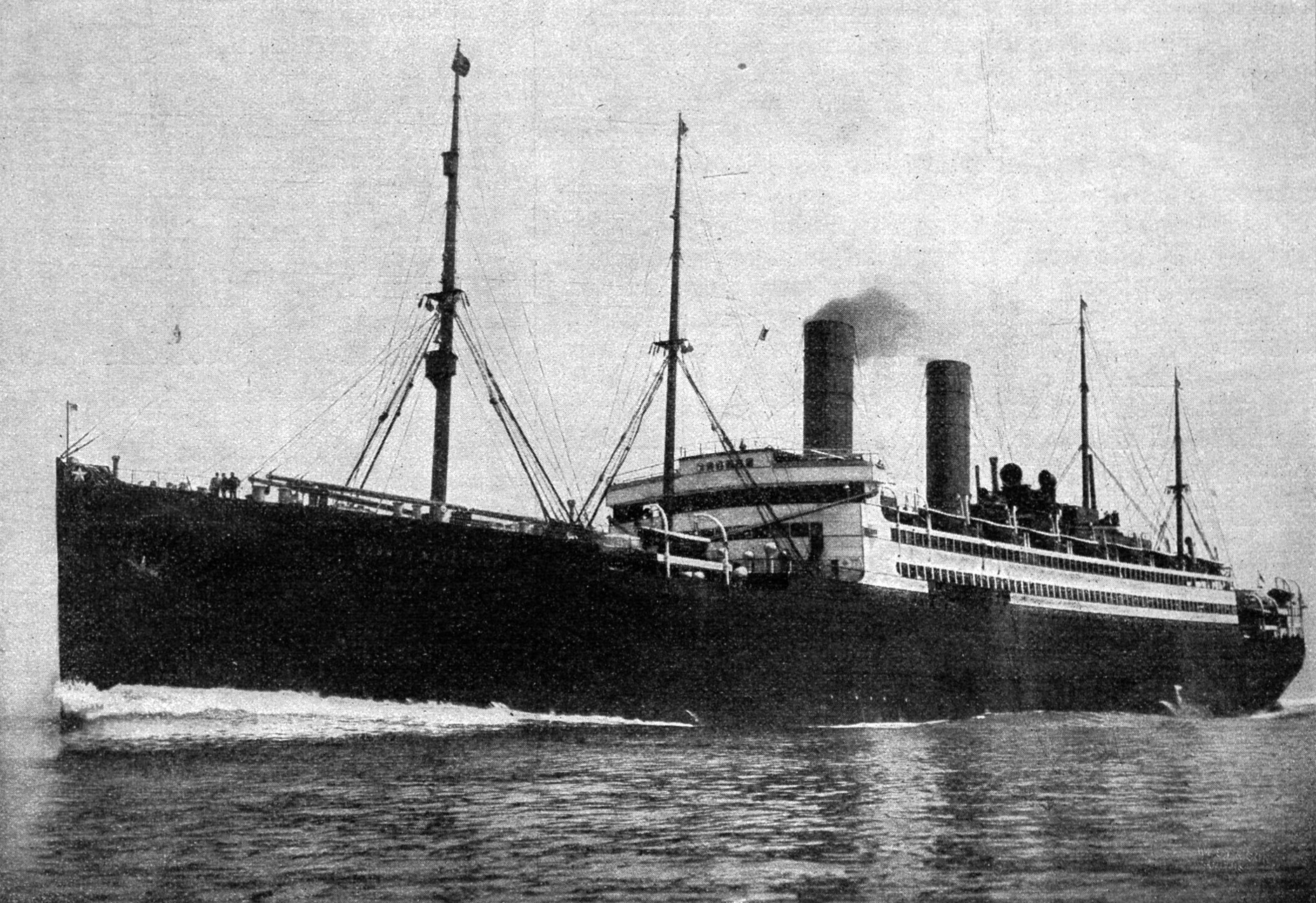
SS George Washington was an ocean liner built in 1908 for the Bremen-based North German Lloyd and was named after George Washington, the first President of the United States. The ship was also known as USS George Washington (ID-3018) and USAT George Washington in service of the United States Navy and United States Army, respectively, in World War I. In the interwar period, she reverted to her original name of George Washington. During World War II, the ship was known as both USAT George Washington and, briefly, as USS Catlin (AP-19), in a short, second stint in the US Navy.
When George Washington was launched in 1908, she was the largest German-built steamship and the third-largest ship in the world. George Washington was built to emphasize comfort over speed and was sumptuously appointed in her first-class passenger areas. The ship could carry a total of 2,900 passengers, and made her maiden voyage in January 1909 to New York. In June 1911, George Washington was the largest ship to participate in the Coronation Fleet Review by the United Kingdom's newly crowned king, George V.
On 14 April 1912, George Washington passed a particularly large iceberg south of the Grand Banks of Newfoundland and radioed a warning to all ships in the area, including White Star Line ocean liner Titanic, which sank near the same location. Throughout her German passenger career, contemporary news accounts often reported on notable persons—typically actors, singers, and politicians—who sailed on George Washington.
At the outbreak of World War I, George Washington was interned by the then-neutral United States, until that country entered into the conflict in April 1917. George Washington was seized by the United States and taken over for use as a troop transport by the US Navy. Commissioned as USS George Washington (ID-3018), she sailed with her first load of American troops in December 1917.
In total, she carried 48,000 passengers to France, and returned 34,000 to the United States after the Armistice. George Washington also carried US President Woodrow Wilson to France twice for the Paris Peace Conference. George Washington was decommissioned in 1920 and handed over the United States Shipping Board (USSB), who reconditioned her for passenger service. George Washington sailed in transatlantic passenger service for both the United States Mail Steamship Company (one voyage) and United States Lines for ten years, before she was laid up in the Patuxent River in Maryland in 1931.
During World War II, the ship was re-commissioned by the US Navy as USS Catlin (AP-19) for about six months and was operated by the British under Lend-Lease, but her old coal-fired engines were too slow for effective combat use. After her boilers were converted to oil fuel, the ship was chartered to the US Army as USAT George Washington and sailed around the world in 1943 in trooping duties. The ship sailed in regular service to the United Kingdom and the Mediterranean from 1944 to 1947, and was laid up in Baltimore after ending her Army service. A fire in January 1951 damaged the ship severely, and she was sold for scrapping the following month.
George Washington was an ocean liner built within two years (1907–1908) by AG Vulcan of Stettin, Germany (now Szczecin, Poland), for North German Lloyd (German: Norddeutscher Lloyd or NDL). Intended for Bremen – New York passenger service, the ship was named after George Washington, the first President of the United States as a way to make the ship more appealing to immigrants, who then made up the majority of transatlantic passengers and believed formalities on arrival would be easier on a ship with an American name. George Washington was launched on 10 November 1908 by the United States Ambassador to Germany, David Jayne Hill. At the time of her launch, she was the third-largest ocean liner in the world, behind only Cunard Line ships Lusitania and Mauretania. George Washington also became the largest German-built steamship, surpassing the Hamburg America Line's Kaiserin Auguste Victoria, and held that distinction until the 1913 launch of Hamburg America's Vaterland.
After George Washington was completed, she was reported in contemporary news accounts as being 27,000 gross register tons (GRT), though present-day sources agree on a figure of 25,570 GRT. Her displacement was reported as being approximately 37,000 long tons (38,000 t), more than twice the 18420 t displacement of the British battleship Dreadnought. She was powered by two quadruple-expansion steam engines that generated 20,000 horsepower (15,000 kW) and propelled her considerably faster than the 18.5 knots (34.3 km/h) guaranteed by her builders. Because she was designed to emphasize comfort over speed, George Washington's engines consumed an economical 350 long tons (360 t) of coal daily, or about one-third as much as the Cunard speedsters Lusitania and Mauretania. By using less coal, and, consequently, needing less space to carry it, the liner was able to carry up to 13,000 long tons (13,000 t) of cargo. The liner also featured the Stone-Lloyd system of hydraulically operated bulkhead doors for her thirteen watertight compartments.
SS George Washington
SS George Washington was an ocean liner built in 1908 for the Bremen-based North German Lloyd and was named after George Washington, the first President of the United States. The ship was also known as USS George Washington (ID-3018) and USAT George Washington in service of the United States Navy and United States Army, respectively, in World War I. In the interwar period, she reverted to her original name of George Washington. During World War II, the ship was known as both USAT George Washington and, briefly, as USS Catlin (AP-19), in a short, second stint in the US Navy.
When George Washington was launched in 1908, she was the largest German-built steamship and the third-largest ship in the world. George Washington was built to emphasize comfort over speed and was sumptuously appointed in her first-class passenger areas. The ship could carry a total of 2,900 passengers, and made her maiden voyage in January 1909 to New York. In June 1911, George Washington was the largest ship to participate in the Coronation Fleet Review by the United Kingdom's newly crowned king, George V.
On 14 April 1912, George Washington passed a particularly large iceberg south of the Grand Banks of Newfoundland and radioed a warning to all ships in the area, including White Star Line ocean liner Titanic, which sank near the same location. Throughout her German passenger career, contemporary news accounts often reported on notable persons—typically actors, singers, and politicians—who sailed on George Washington.
At the outbreak of World War I, George Washington was interned by the then-neutral United States, until that country entered into the conflict in April 1917. George Washington was seized by the United States and taken over for use as a troop transport by the US Navy. Commissioned as USS George Washington (ID-3018), she sailed with her first load of American troops in December 1917.
In total, she carried 48,000 passengers to France, and returned 34,000 to the United States after the Armistice. George Washington also carried US President Woodrow Wilson to France twice for the Paris Peace Conference. George Washington was decommissioned in 1920 and handed over the United States Shipping Board (USSB), who reconditioned her for passenger service. George Washington sailed in transatlantic passenger service for both the United States Mail Steamship Company (one voyage) and United States Lines for ten years, before she was laid up in the Patuxent River in Maryland in 1931.
During World War II, the ship was re-commissioned by the US Navy as USS Catlin (AP-19) for about six months and was operated by the British under Lend-Lease, but her old coal-fired engines were too slow for effective combat use. After her boilers were converted to oil fuel, the ship was chartered to the US Army as USAT George Washington and sailed around the world in 1943 in trooping duties. The ship sailed in regular service to the United Kingdom and the Mediterranean from 1944 to 1947, and was laid up in Baltimore after ending her Army service. A fire in January 1951 damaged the ship severely, and she was sold for scrapping the following month.
George Washington was an ocean liner built within two years (1907–1908) by AG Vulcan of Stettin, Germany (now Szczecin, Poland), for North German Lloyd (German: Norddeutscher Lloyd or NDL). Intended for Bremen – New York passenger service, the ship was named after George Washington, the first President of the United States as a way to make the ship more appealing to immigrants, who then made up the majority of transatlantic passengers and believed formalities on arrival would be easier on a ship with an American name. George Washington was launched on 10 November 1908 by the United States Ambassador to Germany, David Jayne Hill. At the time of her launch, she was the third-largest ocean liner in the world, behind only Cunard Line ships Lusitania and Mauretania. George Washington also became the largest German-built steamship, surpassing the Hamburg America Line's Kaiserin Auguste Victoria, and held that distinction until the 1913 launch of Hamburg America's Vaterland.
After George Washington was completed, she was reported in contemporary news accounts as being 27,000 gross register tons (GRT), though present-day sources agree on a figure of 25,570 GRT. Her displacement was reported as being approximately 37,000 long tons (38,000 t), more than twice the 18420 t displacement of the British battleship Dreadnought. She was powered by two quadruple-expansion steam engines that generated 20,000 horsepower (15,000 kW) and propelled her considerably faster than the 18.5 knots (34.3 km/h) guaranteed by her builders. Because she was designed to emphasize comfort over speed, George Washington's engines consumed an economical 350 long tons (360 t) of coal daily, or about one-third as much as the Cunard speedsters Lusitania and Mauretania. By using less coal, and, consequently, needing less space to carry it, the liner was able to carry up to 13,000 long tons (13,000 t) of cargo. The liner also featured the Stone-Lloyd system of hydraulically operated bulkhead doors for her thirteen watertight compartments.
Recent media
Recent media