


Community hub
Recent from talks
Contribute something
Nothing was collected or created yet.
Iceberg
View on Wikipedia


An iceberg is a piece of fresh water ice more than 15 meters (16 yards) long[1] that has broken off a glacier or an ice shelf and is floating freely in open water.[2][3] Smaller chunks of floating glacially derived ice are called "growlers" or "bergy bits".[4][5] Much of an iceberg is below the water's surface, which led to the expression "tip of the iceberg" to illustrate a small part of a larger unseen issue. Icebergs are considered a serious maritime hazard.
Icebergs vary considerably in size and shape. Icebergs that calve from glaciers in Greenland are often irregularly shaped while Antarctic ice shelves often produce large tabular (table top) icebergs. The largest iceberg in recent history, named B-15, was measured at nearly 300 by 40 kilometres (186 by 25 mi) in 2000.[6] The largest iceberg on record was an Antarctic tabular iceberg measuring 335 by 97 kilometres (208 by 60 mi) sighted 240 kilometres (150 mi) west of Scott Island, in the South Pacific Ocean, by the USS Glacier on November 12, 1956. This iceberg was larger than Belgium.[7]
Etymology
[edit]The word iceberg is a partial loan translation from the Dutch word ijsberg, literally meaning ice mountain,[8] cognate to Danish isbjerg, German Eisberg, Low Saxon Iesbarg and Swedish isberg.
Overview
[edit]Typically about one-tenth of the volume of an iceberg is above water, which follows from Archimedes's Principle of buoyancy; the density of pure ice is about 920 kg/m3 (57 lb/cu ft), and that of seawater about 1,025 kg/m3 (64 lb/cu ft). The contour of the underwater portion can be difficult to judge by looking at the portion above the surface.
_(NSF).jpg)
| Size class | Height (m) | Length (m) |
|---|---|---|
| Growler | <1 | <5 |
| Bergy bit | 1–5 | 5–15 |
| Small | 5–15 | 15–60 |
| Medium | 15–45 | 60–122 |
| Large | 45–75 | 122–213 |
| Very large | >75 | >213 |
The largest icebergs recorded have been calved, or broken off, from the Ross Ice Shelf of Antarctica. Icebergs may reach a height of more than 100 metres (300 ft) above the sea surface and have mass ranging from about 100,000 tonnes up to more than 10 million tonnes. Icebergs or pieces of floating ice smaller than 5 meters above the sea surface are classified as "bergy bits"; smaller than 1 meter—"growlers".[9] The largest known iceberg in the North Atlantic was 168 metres (551 ft) above sea level, reported by the USCG icebreaker Eastwind in 1958, making it the height of a 55-story building. These icebergs originate from the glaciers of western Greenland and may have interior temperatures of −15 to −20 °C (5 to −4 °F).[10]

Drift
[edit]A given iceberg's trajectory through the ocean can be modelled by integrating the equation

where m is the iceberg mass, v the drift velocity, and the variables f, k, and F correspond to the Coriolis force, the vertical unit vector, and a given force. The subscripts a, w, r, s, and p correspond to the air drag, water drag, wave radiation force, sea ice drag, and the horizontal pressure gradient force.[11][12]
Icebergs deteriorate through melting and fracturing, which changes the mass m, as well as the surface area, volume, and stability of the iceberg.[12][13] Iceberg deterioration and drift, therefore, are interconnected. Fracturing must be considered when modelling iceberg drift.[12]
Winds and currents may move icebergs close to coastlines, where they can become frozen into pack ice (one form of sea ice), or drift into shallow waters, where they can come into contact with the seabed, a phenomenon called seabed gouging.
Mass loss
[edit]Icebergs lose mass due to melting, and calving. Melting can be due to solar radiation, or heat and salt transport from the ocean. Iceberg calving is generally enhanced by waves impacting the iceberg.
Melting tends to be driven by the ocean, rather than solar radiation. Ocean driven melting is often modelled as
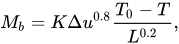
where is the melt rate in m/day, is the relative velocity between the iceberg and the ocean, is the temperature difference between the ocean and the iceberg, and is the length of the iceberg. is a constant based on properties of the iceberg and the ocean and is approximately in the polar ocean.[14]



The influence of the shape of an iceberg[15] and of the Coriolis force[16] on iceberg melting rates has been demonstrated in laboratory experiments.
Wave erosion is more poorly constrained but can be estimated by
![{\displaystyle M_{\text{e}}=cS_{s}(T_{\text{s}}+2)[1+{\text{cos}}(I_{\text{c}}^{3}\pi )],}](https://wikimedia.org/api/rest_v1/media/math/render/svg/8425a1bb854b3f5f057b0f8efed4d586cb04b847)
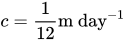
where is the wave erosion rate in m/day, , describes the sea state, is the sea surface temperature, and is the sea ice concentration.[14]



Bubbles
[edit]Air trapped in snow forms bubbles as the snow is compressed to form firn and then glacial ice.[17] Icebergs can contain up to 10% air bubbles by volume.[17][failed verification] These bubbles are released during melting, producing a fizzing sound that some may call "Bergie Seltzer". This sound results when the water-ice interface reaches compressed air bubbles trapped in the ice. As each bubble bursts it makes a "popping" sound[10] and the acoustic properties of these bubbles can be used to study iceberg melt.[18]
Stability
[edit]An iceberg may flip, or capsize, as it melts and breaks apart, changing the center of gravity. Capsizing can occur shortly after calving when the iceberg is young and establishing balance.[19] Icebergs are unpredictable and can capsize anytime and without warning. Large icebergs that break off from a glacier front and flip onto the glacier face can push the entire glacier backwards momentarily, producing 'glacial earthquakes' that generate as much energy as an atomic bomb.[20][21]
Color
[edit]Icebergs are generally white because they are covered in snow, but can be green, blue, yellow, black, striped, or even rainbow-colored.[22] Seawater, algae and lack of air bubbles in the ice can create diverse colors. Sediment can create the dirty black coloration present in some icebergs.[23]
Shape
[edit]

In addition to size classification (Table 1), icebergs can be classified on the basis of their shapes. The two basic types of iceberg forms are tabular and non-tabular. Tabular icebergs have steep sides and a flat top, much like a plateau, with a length-to-height ratio of more than 5:1.[24]
This type of iceberg, also known as an ice island,[25] can be quite large, as in the case of Pobeda Ice Island. Antarctic icebergs formed by breaking off from an ice shelf, such as the Ross Ice Shelf or Filchner–Ronne Ice Shelf, are typically tabular. The largest icebergs in the world are formed this way.
Non-tabular icebergs have different shapes and include:[26]
- Dome: An iceberg with a rounded top.
- Pinnacle: An iceberg with one or more spires.
- Wedge: An iceberg with a steep edge on one side and a slope on the opposite side.
- Dry-dock: An iceberg that has eroded to form a slot or channel.
- Blocky: An iceberg with steep, vertical sides and a flat top. It differs from tabular icebergs in that its aspect ratio, the ratio between its width and height, is small, more like that of a block than a flat sheet.
Monitoring and control
[edit]History
[edit]
Prior to 1914 there was no system in place to track icebergs to guard ships against collisions[citation needed] despite fatal sinkings of ships by icebergs. In 1907, SS Kronprinz Wilhelm, a German liner, rammed an iceberg and suffered a crushed bow, but she was still able to complete her voyage. The advent of watertight compartmentalization in ship construction led designers to declare their ships "unsinkable".
During the 1912 sinking of the Titanic, the iceberg that sank the Titanic killed more than 1,500 of its estimated 2,224 passengers and crew, seriously damaging the 'unsinkable' claim. For the remainder of the ice season of that year, the United States Navy patrolled the waters and monitored ice movements. In November 1913, the International Conference on the Safety of Life at Sea met in London to devise a more permanent system of observing icebergs. Within three months the participating maritime nations had formed the International Ice Patrol (IIP). The goal of the IIP was to collect data on meteorology and oceanography to measure currents, ice-flow, ocean temperature, and salinity levels. They monitored iceberg dangers near the Grand Banks of Newfoundland and provided the "limits of all known ice" in that vicinity to the maritime community. The IIP published their first records in 1921, which allowed for a year-by-year comparison of iceberg movement.
Technological development
[edit].jpg)
Aerial surveillance of the seas in the early 1930s allowed for the development of charter systems that could accurately detail the ocean currents and iceberg locations. In 1945, experiments tested the effectiveness of radar in detecting icebergs. A decade later, oceanographic monitoring outposts were established for the purpose of collecting data; these outposts continue to serve in environmental study. A computer was first installed on a ship for the purpose of oceanographic monitoring in 1964, which allowed for a faster evaluation of data. By the 1970s, ice-breaking ships were equipped with automatic transmissions of satellite photographs of ice in Antarctica. Systems for optical satellites had been developed but were still limited by weather conditions. In the 1980s, drifting buoys were used in Antarctic waters for oceanographic and climate research. They are equipped with sensors that measure ocean temperature and currents.
Side looking airborne radar (SLAR) made it possible to acquire images regardless of weather conditions. On November 4, 1995, Canada launched RADARSAT-1. Developed by the Canadian Space Agency, it provides images of Earth for scientific and commercial purposes. This system was the first to use synthetic aperture radar (SAR), which sends microwave energy to the ocean surface and records the reflections to track icebergs. The European Space Agency launched ENVISAT (an observation satellite that orbits the Earth's poles)[27] on March 1, 2002. ENVISAT employs advanced synthetic aperture radar (ASAR) technology, which can detect changes in surface height accurately. The Canadian Space Agency launched RADARSAT-2 in December 2007, which uses SAR and multi-polarization modes and follows the same orbit path as RADARSAT-1.[28]
Modern monitoring
[edit]Iceberg concentrations and size distributions are monitored worldwide by the U.S. National Ice Center (NIC), established in 1995, which produces analyses and forecasts of Arctic, Antarctic, Great Lakes and Chesapeake Bay ice conditions. More than 95% of the data used in its sea ice analyses are derived from the remote sensors on polar-orbiting satellites that survey these remote regions of the Earth.

The NIC is the only organization that names and tracks all Antarctic Icebergs. It assigns each iceberg larger than 10 nautical miles (19 km) along at least one axis a name composed of a letter indicating its point of origin and a running number. The letters used are as follows:[29]
- A – longitude 0° to 90° W (Bellingshausen Sea, Weddell Sea)
- B – longitude 90° W to 180° (Amundsen Sea, Eastern Ross Sea)
- C – longitude 90° E to 180° (Western Ross Sea, Wilkes Land)
- D – longitude 0° to 90° E (Amery Ice Shelf, Eastern Weddell Sea)

The Danish Meteorological Institute monitors iceberg populations around Greenland using data collected by the synthetic aperture radar (SAR) on the Sentinel-1 satellites.[30]
Iceberg management
[edit]In Labrador and Newfoundland, iceberg management plans have been developed to protect offshore installations from impacts with icebergs.[31]
Commercial use
[edit]The idea of towing large icebergs to other regions as a source of water has been raised since at least the 1950s, without having been put into practice.[32] In 2017, a business from the UAE announced plans to tow an iceberg from Antarctica to the Middle East; in 2019 salvage engineer Nick Sloane announced a plan to move one to South Africa[33] at an estimated cost of $200 million.[32] In 2019, a German company, Polewater, announced plans to tow Antarctic icebergs to places like South Africa.[34][35]
Companies have used iceberg water in products such as bottled water, fizzy ice cubes and alcoholic drinks.[34] For example, Iceberg Beer by Quidi Vidi Brewing Company is made from icebergs found around St. John's, Newfoundland.[36] Although annual iceberg supply in Newfoundland and Labrador exceeds the total freshwater consumption of the United States, in 2016 the province introduced a tax on iceberg harvesting and imposed a limit on how much fresh water can be exported yearly.[34]
Oceanography and ecology
[edit]
The freshwater injected into the ocean by melting icebergs can change the density of the seawater in the vicinity of the iceberg.[37][38] Fresh melt water released at depth is lighter, and therefore more buoyant, than the surrounding seawater causing it to rise towards the surface.[37][38] Icebergs can also act as floating breakwaters, impacting ocean waves.[39]
Icebergs contain variable concentrations of nutrients and minerals that are released into the ocean during melting.[40][41] Iceberg-derived nutrients, particularly the iron contained in sediments, can fuel blooms of phytoplankton.[40][42] Samples collected from icebergs in Antarctica, Patagonia, Greenland, Svalbard, and Iceland, however, show that iron concentrations vary significantly,[41] complicating efforts to generalize the impacts of icebergs on marine ecosystems.
Recent large icebergs
[edit]
Iceberg B15 calved from the Ross Ice Shelf in 2000 and initially had an area of 11,000 square kilometres (4,200 sq mi). It broke apart in November 2002. The largest remaining piece of it, Iceberg B-15A, with an area of 3,000 square kilometres (1,200 sq mi), was still the largest iceberg on Earth until it ran aground and split into several pieces October 27, 2005, an event that was observed by seismographs both on the iceberg and across Antarctica.[43] It has been hypothesized that this breakup may also have been abetted by ocean swell generated by an Alaskan storm 6 days earlier and 13,500 kilometres (8,400 mi) away.[44][45]
- 1987, Iceberg B-9, 5,390 km2 (2,080 sq mi)
- 1998, Iceberg A-38, about 6,900 km2 (2,700 sq mi)[46]
- 1999, Iceberg B-17B 140 km2 (54 sq mi), shipping alert issued December 2009.[47]
- 2000, Iceberg B-15 11,000 km2 (4,200 sq mi)
- 2002, Iceberg C-19, 5,500 km2 (2,100 sq mi)
- 2002, Iceberg B-22, 5,490 km2 (2,120 sq mi)
- 2003 broke off, Iceberg B-15A, 3,100 km2 (1,200 sq mi)
- 2006, Iceberg D-16, 310 km2 (120 sq mi)
- 2010, Ice sheet, 260 km2 (100 sq mi), broken off of Petermann Glacier in northern Greenland on August 5, 2010, considered to be the largest Arctic iceberg since 1962.[48] About a month later, this iceberg split into two pieces upon crashing into Joe Island in the Nares Strait next to Greenland.[49] In June 2011, large fragments of the Petermann Ice Islands were observed off the Labrador coast.[50]
- 2014, Iceberg B-31, 615 km2 (237 sq mi), 2014[51]
- 2017, Iceberg A-68, (Larsen C) 5,800 km2 (2,200 sq mi)[52]
- 2018, Iceberg B-46, 225 km2 (87 sq mi)[53]
- 2019, Iceberg D-28, 1,636 km2 (632 sq mi)[54]
- 2021, Iceberg A-74 from the Brunt Ice Shelf, 1,270 km2 (490 sq mi)[55][56]
- 2021, Iceberg A-76 from the Ronne Ice Shelf, 4,320 km2 (1,670 sq mi)[57]
In culture and metaphorical use
[edit]
One of the most infamous icebergs in history is the iceberg that sank the Titanic. The catastrophe led to the establishment of an International Ice Patrol shortly afterwards. Icebergs in both the northern and southern hemispheres have often been compared in size to multiples of the 59.1 square kilometres (22.8 sq mi)-area of Manhattan Island.[58][59][60][61][62]
Artists have used icebergs as the subject matter for their paintings. Frederic Edwin Church, The Icebergs, 1861 was painted from sketches Church completed on a boat trip off Newfoundland and Labrador.[63] Caspar David Friedrich, The Sea of Ice, 1823–1824 is a polar landscape with an iceberg and ship wreck depicting the dangers of such conditions.[64] William Bradford created detailed paintings of sailing ships set in arctic coasts and was fascinated by icebergs.[65] Albert Bierstadt made studies on arctic trips aboard steamships in 1883 and 1884 that were the basis of his paintings of arctic scenes with colossal icebergs made in the studio.[66]
American poet, Lydia Sigourney, wrote the poem "Icebergs". While on a return journey from Europe in 1841, her steamship encountered a field of icebergs overnight, during an Aurora Borealis. The ship made it through unscathed to the next morning, when the sun rose and "touched the crowns, Of all those arctic kings".[67]
Because much of an iceberg is below the water's surface and not readily visible, the expression "tip of [an] iceberg" is often used to illustrate that what is visible or addressable is a small part of a larger unseen issue. Metaphorical references to icebergs include the iceberg theory or theory of omission in writing adopted, for example, by Ernest Hemingway, Sigmund Freud's iceberg model of the psyche,[68] the "behavioural iceberg",[69] and models analysing the frequencies of accidents and underlying errors.[70]
See also
[edit]
References
[edit]- ^ a b "Iceberg Formation: International Ice Patrol" (PDF). International Ice Patrol. Archived from the original (PDF) on 2017-05-09. Retrieved 2021-08-23.
- ^ "iceberg". Cambridge Dictionary. Retrieved 2024-07-06.
- ^ "Common Misconceptions about Icebergs and Glaciers". Ohio State University. 19 July 2011.
Icebergs float in salt water, but they are formed from freshwater glacial ice.
- ^ "bergy bit". National Snow and Ice Data Center. Retrieved 2024-07-16.
- ^ "Bergy Bits and Growlers". www.athropolis.com. Retrieved 2019-12-01.
- ^ Remy, J.-P.; Becquevort, S.; Haskell, T.G.; Tison, J.-L. (December 2008). "Impact of the B-15 iceberg "stranding event" on the physical and biological properties of sea ice in McMurdo Sound, Ross Sea, Antarctica". Antarctic Science. 20 (6): 593–604. Bibcode:2008AntSc..20..593R. doi:10.1017/S0954102008001284. ISSN 0954-1020. S2CID 73604210.
- ^ "Antarctica shed a 208-mile-long berg in 1956". The Polar Times. 43: 18. 1956. Archived from the original on 2006-05-22 – via USA Today.
- ^ "Iceberg". Online Etymology Dictionary. Retrieved 2006-03-26.
- ^ "Iceberg Classification Systems".
- ^ a b "Facts on Icebergs". Canadian Geographic. 2006. Archived from the original on 2006-03-31.
- ^ Carlson, Daniel F.; Boone, Wieter; Meire, Lorenz; Abermann, Jakob; Rysgaard, Søren (2017-08-28). "Bergy Bit and Melt Water Trajectories in Godthåbsfjord (SW Greenland) Observed by the Expendable Ice Tracker". Frontiers in Marine Science. 4 276. Bibcode:2017FrMaS...4..276C. doi:10.3389/fmars.2017.00276. ISSN 2296-7745.
- ^ a b c Bigg, Grant R.; Wadley, Martin R.; Stevens, David P.; Johnson, John A. (October 1997). "Modelling the dynamics and thermodynamics of icebergs". Cold Regions Science and Technology. 26 (2): 113–135. Bibcode:1997CRST...26..113B. doi:10.1016/S0165-232X(97)00012-8.
- ^ Crawford, Anna; Mueller, Derek; Joyal, Gabriel (2018-04-08). "Surveying Drifting Icebergs and Ice Islands: Deterioration Detection and Mass Estimation with Aerial Photogrammetry and Laser Scanning". Remote Sensing. 10 (4): 575. Bibcode:2018RemS...10..575C. doi:10.3390/rs10040575. hdl:10023/16996. ISSN 2072-4292.
- ^ a b Cenedese, Claudia; Straneo, Fiamma (19 January 2023). "Icebergs Melting". Annual Review of Fluid Mechanics. 55 (1): 377–402. Bibcode:2023AnRFM..55..377C. doi:10.1146/annurev-fluid-032522-100734.
- ^ Hester, Eric W.; McConnochie, Craig D.; Cenedese, Claudia; Couston, Louis-Alexandre; Vasil, Geoffrey (12 February 2021). "Aspect ratio affects iceberg melting". Physical Review Fluids. 6 (2) 023802. arXiv:2009.10281. Bibcode:2021PhRvF...6b3802H. doi:10.1103/PhysRevFluids.6.023802.
- ^ Meroni, Agostino N.; McConnochie, Craig D.; Cenedese, Claudia; Sutherland, Bruce; Snow, Kate (10 January 2019). "Nonlinear influence of the Earth's rotation on iceberg melting". Journal of Fluid Mechanics. 858: 832–851. Bibcode:2019JFM...858..832M. doi:10.1017/jfm.2018.798. S2CID 126234419.
- ^ a b Scholander, P. F.; Nutt, D. C. (1960). "Bubble Pressure in Greenland Icebergs". Journal of Glaciology. 3 (28): 671–678. doi:10.3189/S0022143000017950. ISSN 0022-1430.
- ^ Glowacki, Oskar; Deane, Grant B.; Moskalik, Mateusz (2018-05-16). "The Intensity, Directionality, and Statistics of Underwater Noise From Melting Icebergs". Geophysical Research Letters. 45 (9): 4105–4113. Bibcode:2018GeoRL..45.4105G. doi:10.1029/2018GL077632. ISSN 0094-8276. S2CID 135352794.
- ^ MacAyeal, Douglas R.; Abbot, Dorian S.; Sergienko, Olga V. (2011). "Iceberg-capsize tsunamigenesis". Annals of Glaciology. 52 (58): 51–56. Bibcode:2011AnGla..52...51M. doi:10.3189/172756411797252103. ISSN 0260-3055.
- ^ Stephen Ornes (April 3, 2012). "Flipping Icebergs". ScienceNews for Students. Retrieved June 9, 2019.
- ^ Nell Greenfieldboyce (June 25, 2015). "Study Reveals What Happens During A 'Glacial Earthquake'". NPR. Retrieved March 9, 2021.
- ^ Katherine Wright (January 5, 2018). "Icebergs Can Be Green, Black, Striped, Even Rainbow". Scientific American. Retrieved June 9, 2019.
- ^ Roach, Lettie (11 January 2019). "Image of the Week - Super-cool colours of icebergs". EGU Blogs. European Geosciences Union. Retrieved 6 November 2020.
- ^ "Sizes and Shapes of Icebergs" (PDF). International Ice Patrol. Retrieved 2006-12-20.
- ^ Weeks, W.F. (2010), On Sea Ice, University of Alaska Press, p. 399
- ^ Holly Gordon (2006). "Iceberg Physiology". Canadian Geographic. Archived from the original on 2006-03-31.
- ^ "Envisat". European Space Agency. Retrieved 2011-03-09.
- ^ Ainslie MacLellan (2006). "Tracking Monsters". Canadian Geographic. Archived from the original on 2006-10-31.
- ^ "New Iceberg Breaks off Ronne Ice Shelf in Antarctica". NOAA. 15 October 1998. Retrieved 2011-03-09.
- ^ "Icebergs: Polar Portal". polarportal.dk. Retrieved 28 January 2025.
- ^ Ice-management, Newfoundland Labrador offshore-industry
- ^ a b "Why a Middle Eastern business thirsty for water can't just tow an iceberg from Antarctica". Australian Broadcasting Corporation. 14 August 2019.
- ^ Maynard, Matt (12 June 2022). "Iceberg towing: a bizarre 'solution' to the freshwater crisis". Geographical. Retrieved 15 January 2024.
- ^ a b c Matthew H. Birkhold (October 31, 2019). "$166 Water Could Dictate International Iceberg Law". The Atlantic. Retrieved September 8, 2021.
- ^ "Home Page". Polewater. Retrieved September 8, 2021.
- ^ Emma Jacobs (February 29, 2012). "Newfoundland Gives Whole New Meaning To Ice Cold Beer". Morning Edition. Retrieved September 8, 2021.
- ^ a b Yankovsky, Alexander E.; Yashayaev, Igor (September 2014). "Surface buoyant plumes from melting icebergs in the Labrador Sea". Deep Sea Research Part I: Oceanographic Research Papers. 91: 1–9. Bibcode:2014DSRI...91....1Y. doi:10.1016/j.dsr.2014.05.014.
- ^ a b Stephenson, Gordon R.; Sprintall, Janet; Gille, Sarah T.; Vernet, Maria; Helly, John J.; Kaufmann, Ronald S. (June 2011). "Subsurface melting of a free-floating Antarctic iceberg". Deep Sea Research Part II: Topical Studies in Oceanography. 58 (11–12): 1336–1345. Bibcode:2011DSRII..58.1336S. doi:10.1016/j.dsr2.2010.11.009.
- ^ Ardhuin, Fabrice; Tournadre, Jean; Queffeulou, Pierre; Girard-Ardhuin, Fanny; Collard, Fabrice (January 2011). "Observation and parameterization of small icebergs: Drifting breakwaters in the southern ocean". Ocean Modelling. 39 (3–4): 405–410. Bibcode:2011OcMod..39..405A. doi:10.1016/j.ocemod.2011.03.004.
- ^ a b Duprat, Luis P. A. M.; Bigg, Grant R.; Wilton, David J. (March 2016). "Enhanced Southern Ocean marine productivity due to fertilization by giant icebergs". Nature Geoscience. 9 (3): 219–221. Bibcode:2016NatGe...9..219D. doi:10.1038/ngeo2633. ISSN 1752-0894.
- ^ a b Hopwood, Mark J.; Carroll, Dustin; Höfer, Juan; Achterberg, Eric P.; Meire, Lorenz; Le Moigne, Frédéric A. C.; Bach, Lennart T.; Eich, Charlotte; Sutherland, David A.; González, Humberto E. (December 2019). "Highly variable iron content modulates iceberg-ocean fertilisation and potential carbon export". Nature Communications. 10 (1): 5261. Bibcode:2019NatCo..10.5261H. doi:10.1038/s41467-019-13231-0. ISSN 2041-1723. PMC 6868171. PMID 31748607.
- ^ Wu, Shuang-Ye; Hou, Shugui (2017-03-17). "Impact of icebergs on net primary productivity in the Southern Ocean". The Cryosphere. 11 (2): 707–722. Bibcode:2017TCry...11..707W. doi:10.5194/tc-11-707-2017. ISSN 1994-0424.
- ^ Martin, Seelye; Drucker, Robert; Aster, Richard; Davey, Fred; Okal, Emile; Scambos, Ted; MacAyeal, Douglas (2010). "Kinematic and seismic analysis of giant tabular iceberg breakup at Cape Adare, Antarctica". Journal of Geophysical Research. 115 (B6): B06311. Bibcode:2010JGRB..115.6311M. doi:10.1029/2009JB006700. S2CID 16420188.
- ^ "Alaskan storm cracks giant iceberg to pieces in faraway Antarctica".
- ^ MacAyeal, Douglas R; Okal, Emile A; Aster, Richard C; Bassis, Jeremy N; Brunt, Kelly M; Cathles, L. Mac; Drucker, Robert; Fricker, Helen A; Kim, Young-Jin; Martin, Seelye; Okal, Marianne H; Sergienko, Olga V; Sponsler, Mark P; Thom, Jonathan E (2006). "Transoceanic wave propagation links iceberg calving margins of Antarctica with storms in tropics and Northern Hemisphere". Geophysical Research Letters. 33 (17): L17502. Bibcode:2006GeoRL..3317502M. doi:10.1029/2006GL027235.
- ^ "Iceberg A-38B off South Georgia". Visible Earth. Archived from the original on 2008-10-05. Retrieved 2011-03-09.
- ^ "Shipping alert issued over giant iceberg". Associated Press. December 11, 2009.
- ^ "Huge ice sheet breaks from Greenland glacier". BBC. 2010-08-07. Retrieved 2011-03-09.
- ^ "Massive Iceberg Crashes into Island, Splits in Two". Archived from the original on 2011-03-10.
- ^ "Massive ice island heading for southern Labrador". CBC News. 2011-06-23.
- ^ Lendon, Brad (22 April 2014). "Iceberg is twice the size of Atlanta". CNN.
- ^ "Iceberg four times the size of London breaks off from Antarctica ice shelf". The Telegraph. Archived from the original on 2022-01-12. Retrieved 14 July 2017.
- ^ "Pine Island Glacier Quickly Drops Another Iceberg". Nasa Earth Observatory. NASA. 8 November 2018. Retrieved 12 November 2018.
- ^ Cox, Lisa (1 September 2019). "Giant iceberg breaks off east Antarctica". The Guardian. Retrieved 1 September 2019.
- ^ "Brunt Ice Shelf in Antarctica calves". British Antarctic Survey. 26 February 2021.
- ^ LT Falon M. Essary (1 March 2021). "Iceberg A-74 Calves from the Brunt Ice Shelf in the Weddell Sea". U.S. National Ice Center.
- ^ "World's largest iceberg breaks off from Antarctica". CNN.com. 19 May 2021.
- ^ Zamira Rahim (September 14, 2020). "A chunk of ice twice the size of Manhattan has broken off Greenland in the last two years". CNN. Retrieved September 19, 2020.
- ^ Maddie Stone (February 21, 2019). "An Iceberg 30 Times the Size of Manhattan Is About to Break Off Antarctica". Gizmodo. Archived from the original on October 27, 2019. Retrieved September 3, 2023.
- ^ Lorraine Chow (November 1, 2018). "An iceberg 5 times bigger than Manhattan just broke off from Antarctica". Business Insider. Archived from the original on October 27, 2019. Retrieved October 27, 2019.
- ^ "An iceberg about 70 times the size of Manhattan broke off from Antarctica, creating the world's largest iceberg". 20 May 2021.
- ^ "An iceberg 80 times the size of Manhattan could destroy a fragile South Atlantic ecosystem". 4 November 2020.
- ^ "The Icebergs". Dallas Museum of Art. Archived from the original on July 19, 2023. Retrieved March 7, 2024.
- ^ "Online Collection - Caspar David Friedrich, The Sea of Ice, 1823/24". Hamburger Kunsthalle (in German). Archived from the original on September 22, 2022. Retrieved March 7, 2024.
- ^ Overeem, Irina (January 28, 2018). "Full article/ William Bradford/ Sailing Ships and Arctic Seas". Arctic, Antarctic, and Alpine Research. 35 (4): 541. doi:10.1657/1523-0430(2003)035[0541:BR]2.0.CO;2. ISSN 1523-0430. Archived from the original on April 26, 2022. Retrieved March 7, 2024.
- ^ "Albert Bierstadt (1830-1902), Icebergs". Christie's. Archived from the original on March 8, 2024. Retrieved March 8, 2024.
- ^ Sigourney, Lydia (1850). "Icebergs". Poems for the Sea. H. S. Parsons & Company.
- ^ Heffner, Christopher. "Freud's Structural and Topographical Models of Personality". Psychology 101. Archived from the original on 13 September 2011. Retrieved 5 September 2011.
- ^ London Borough of Bromley: Bromley Parenting Hub, Activity #07: The behavioural iceberg, published in October 2021, accessed on 22 April 2025
- ^ Wright, L., "Towards an Empirical Test of the Iceberg Model" in the Proceedings of the European Commission Joint Research Centre's EAM 2000, 19th European Annual Conference on Human Decision Making and Manual Control, Ispra, 26-28 June 2000, pages 145-152, accessed on 22 April 2025
External links
[edit]
- Iceberg Finder Service for east coast of Canada
- Icebergs of The Arctic and Antarctic
 Works related to Iceberg at Wikisource


| International | |
|---|---|
| National | |
| Other | |

Iceberg
View on GrokipediaIntroduction
Etymology
The term "iceberg" is a partial calque from the Dutch word ijsberg, literally translating to "ice mountain," where ijs means "ice" and berg means "mountain."[1] The Dutch term itself derives from Middle Dutch ijsberch, a compound of ijs ("ice") and berch ("mountain"), reflecting its Germanic roots.[6] This word evolved in maritime contexts during the 16th and 17th centuries through Dutch and Scandinavian influences, as navigators encountered Arctic ice formations; cognates include Danish isbjerg, Norwegian isberg, and German Eisberg, all sharing the Proto-Germanic elements for "ice" and "high elevation."[7][8] The first recorded use in English appeared in 1774, describing a distant glacier resembling a humped hill, with the contemporary sense of a detached, floating mass of ice emerging around 1820.[1] By the 19th century, "iceberg" gained prominence in scientific literature and nautical terminology, particularly following increased polar exploration.[8] In other languages, adaptations followed suit, such as the French iceberg, borrowed directly from English in the early 19th century for similar maritime and descriptive purposes.[9]Definition and overview
An iceberg is a large piece of freshwater ice that originates from glaciers or ice shelves and floats in open ocean waters after calving or breaking off from its source.[2] These masses of ice form when unstable sections of land-based or floating ice detach due to natural processes like melting, cracking, or tidal forces, entering the marine environment where they drift with ocean currents.[10] By definition, an iceberg must protrude more than 5 meters (16 feet) above the sea surface, have a thickness of at least 30 meters (98 feet), and cover a surface area greater than 500 square meters (5,382 square feet) to distinguish it from smaller fragments such as bergy bits (1-5 meters high) or growlers (less than 1 meter high), which are not classified as full icebergs.[2] Due to the lower density of ice compared to seawater—approximately 917 kg/m³ for ice versus 1025 kg/m³ for seawater—about 90% of an iceberg's volume remains submerged below the waterline, with only a small fraction visible above the surface.[11] This buoyancy principle explains why the exposed portion often misrepresents the total scale and potential hazards of these floating ice features. Icebergs are predominantly distributed in polar regions, including the Arctic Ocean around Greenland and the Southern Ocean surrounding Antarctica, where they play a key role in the cryosphere-ocean system by transporting freshwater and influencing marine ecosystems.[12] Antarctic sources alone account for over 90% of the global iceberg mass in the Southern Hemisphere, far exceeding Arctic contributions due to the vast extent of the Antarctic ice sheet.[10] Occasionally, drifting icebergs reach subpolar or temperate latitudes, such as the North Atlantic shipping lanes, where they have historically posed risks to navigation.[2]Physical properties
Size and shape
Icebergs vary significantly in size, from small ones with lengths of 15–60 m and heights of 5–15 m above sea level to vast tabular forms spanning hundreds of square kilometers in surface area. Smaller floating ice fragments, such as growlers (less than 1 m high and about 20 m² in area) and bergy bits (1–5 m high and up to 300 m² in area), are not classified as icebergs.[2] Large icebergs can exceed 150 m in height above water. The largest recorded iceberg by area was B-15, which calved from Antarctica's Ross Ice Shelf in March 2000 and initially covered approximately 11,000 km², comparable to the size of the U.S. state of Connecticut. More recently, iceberg A23a, calved from the Filchner-Ronne Ice Shelf in 1986, has been the largest active iceberg as of November 2025, with a current area of approximately 3,500 km² after significant fragmentation.[13][14][15] Iceberg shapes are broadly classified into tabular and non-tabular categories, reflecting their formation origins and subsequent modifications. Tabular icebergs, derived from Antarctic ice shelves, exhibit flat tops and near-vertical sides, with a length-to-height ratio greater than 5:1, often maintaining broad, plateau-like profiles over vast areas. Non-tabular icebergs, typically calved from glaciers, display more varied morphologies, including domed (smoothly rounded summits), pinnacled (featuring tall spires or peaks), blocky (steep, vertical faces with a flat top, common in the Weddell Sea region), wedged (one sloping side and a steep edge on the other), and drydock (U- or V-shaped notches resembling a ship's dry dock).[16][17] The morphology of an iceberg is shaped by its initial calving mechanism, as well as post-formation processes like wave action and differential melting. Calvings from ice shelves produce the characteristic tabular forms, whereas glacier-derived icebergs start as irregular masses that evolve through mechanical erosion from waves, which undercut and sculpt edges, and melting patterns that preferentially remove submerged or exposed portions. Submarine melting, in particular, accelerates shape changes by creating overhangs and promoting fragmentation in tabular icebergs.[18][19] Estimating an iceberg's volume and mass relies on remote sensing techniques, including aerial photogrammetry and satellite-based methods such as interferometric synthetic aperture radar (e.g., TanDEM-X) for topographic mapping and laser altimetry (e.g., ICESat-2) for freeboard measurements, which allow inference of the submerged draft assuming ice density around 917 kg/m³. These approaches enable volume calculations by integrating surface area with height profiles; for instance, giant tabular icebergs like B-15 are estimated to contain billions to trillions of tonnes of ice, equivalent to the mass of several large cities.[20][21]Color and appearance
Icebergs predominantly exhibit white hues due to the scattering of light by numerous tiny air bubbles trapped within the ice, which reflect all wavelengths of visible light equally.[22][23] These bubbles, formed from compressed snow, create an opaque appearance that dominates the surface of most icebergs.[24] In contrast, blue tones emerge in denser sections where prolonged compression has expelled many air bubbles, allowing light to penetrate deeper into the ice; here, longer red wavelengths are absorbed, while shorter blue wavelengths are transmitted and scattered back to the observer.[25][26] "Blue icebergs," often vivid in hue, typically originate from ancient glacial ice that has undergone extensive compression over centuries, resulting in larger ice crystals and minimal bubble content.[24][27] Color variations arise from impurities and environmental interactions. Green icebergs, less common, form from marine-origin ice rich in iron oxides or dissolved organic matter, which imparts a yellowish tint that combines with the underlying blue to produce green shades; algae growth on submerged surfaces can also contribute to greenish appearances when exposed.[28][23][29] Black streaks or patches often result from embedded rock debris, sediments, or soot accumulated during the glacier's flow over land, creating dark lines that contrast sharply against lighter ice.[23] The age and degree of compression further influence these visuals, with older, more compacted ice appearing more translucent and intensely colored.[24][26] Optical effects enhance the striking appearance of icebergs. In thinner sections, the ice becomes translucent, revealing subtle blue-green shades as light passes through with less scattering.[30] Refraction within the ice can produce rainbow-like spectra when sunlight interacts with crystal edges or water interfaces, dispersing light into its component colors.[30] The presence of internal bubbles contributes to the overall opacity observed in thicker portions.[24] Perceived colors also depend on viewing conditions. The angle of sunlight alters light penetration and scattering, with low angles enhancing shadows and intensifying blues or greens, while overhead light promotes whiter appearances.[31][30] Surrounding water clarity affects the visibility of submerged portions, where clearer waters allow vibrant underwater hues to influence the overall visual impact from above.[22]Internal structure and stability
Icebergs consist primarily of freshwater ice derived from the compaction of snow over successive seasons, forming distinct layers that reflect annual accumulation cycles. This ice incorporates trapped air bubbles from the compression process, which can constitute up to 10% of the volume and contribute to internal structural variations. Sediments and minor impurities, including trace salts from atmospheric deposition or glacial entrainment, may also be embedded within the ice matrix.[32][23] The internal architecture of icebergs includes crevasses—deep fractures originating from the parent glacier—and melt channels that develop as water percolates through the ice. Density variations arise from alternating layers of firn (compacted snow) and denser glacier ice, with pure ice averaging 917 kg/m³ compared to surrounding seawater at approximately 1025 kg/m³. These heterogeneities influence how stress is distributed within the structure.[33][16] Stability is governed by the iceberg's center of gravity relative to its center of buoyancy, with roughly 90% of the volume submerged due to the density contrast between ice and seawater. Uneven melting, particularly at the base or sides, can shift the center of gravity upward or asymmetrically, increasing tipping risks, while wave action exacerbates these instabilities by inducing torque. Rollover events, where an iceberg capsizes to reorient itself, have been documented through modeling and laboratory studies, often triggered shortly after calving when the initial shape is precarious.[34] Signs of structural degradation include audible cracking from expanding fractures and the calving of smaller ice pieces, which further compromises integrity as the iceberg drifts. These processes highlight the dynamic balance between internal composition and external forces affecting longevity.[35][36]Formation and types
Sources of formation
Icebergs form primarily through calving, the mechanical breaking off of ice masses from the termini of tidewater glaciers and floating ice shelves in polar regions.[37] Tidewater glaciers, which flow directly into the ocean, and ice shelves, which are extensions of ice sheets over the sea, serve as the main sources, with calving occurring when accumulated stresses exceed the ice's tensile strength.[38] Notable examples include Greenland's Jakobshavn Glacier (now Ilulissat Isbræ), one of the fastest-flowing tidewater glaciers, which releases numerous icebergs into the North Atlantic annually.[39] In Antarctica, the Ross Ice Shelf produces massive tabular icebergs, while Pine Island Glacier in the Amundsen Sea sector frequently calves large volumes due to its rapid retreat.[32] Arctic sea ice edges contribute smaller, fragmented pieces, but these are distinct from true icebergs derived from land ice.[40] The calving process is initiated by tensile stresses at the ice front, where longitudinal extension causes crevasses and rifts to propagate, eventually leading to detachment.[37] These stresses arise from the ice's flow dynamics, buoyancy at the grounding line, and imbalances between accumulation and ablation.[38] Tidal influences play a key role by flexing the ice shelf during high and low tides, accelerating rift growth and fracture propagation, particularly on Antarctic shelves.[41] Seismic events, such as those induced by tidal bending or distant earthquakes, can also trigger calving by exploiting existing weaknesses in the ice structure.[42] Regionally, Antarctica accounts for approximately 90% of global iceberg volume, with its ice shelves and glaciers discharging vast quantities into the Southern Ocean.[43] Key contributors include the Weddell and Ross Seas, where large ice shelves dominate production, and the Amundsen Sea Embayment, home to Pine Island and Thwaites Glaciers, which together release hundreds of gigatons of ice annually.[44] In contrast, Greenland's tidewater glaciers, concentrated along the southeast and west coasts, produce the majority of Northern Hemisphere icebergs, though at a much smaller scale overall.[39] Calving rates have shown quantitative increases in recent decades compared to pre-2000 baselines. In Antarctica, studies have estimated annual calving fluxes at 1,300–2,000 Gt per year, with a highly variable 1997–2021 average of 1,600 ± 520 Gt per year and no clear pan-Antarctic trend, though with heightened activity at vulnerable sites like Pine Island Glacier.[45][44] As of 2024, total Antarctic Ice Sheet discharge (including calving) reached approximately 2,224 ± 200 Gt/yr.[46] For Greenland, iceberg discharge from tidewater glaciers rose from 462 Gt per year around 2000 to 546 Gt per year by 2012, reflecting accelerated front retreat; more recent data indicate annual ice sheet mass loss of around 250–300 Gt/yr as of 2023, with calving comprising a significant portion.[47][48] These trends result in more frequent and voluminous calving events, influencing the types of icebergs produced, such as larger tabular forms from Antarctic shelves versus irregular blocks from Greenland glaciers.[49]Classification by type
Icebergs are primarily classified by their origin, distinguishing between those calved from valley glaciers, known as glacial icebergs, which typically exhibit irregular, jagged shapes due to the dynamic flow of terrestrial ice, and those derived from floating ice shelves, called shelf or tabular icebergs, which form flat, table-like structures from the uniform breakup of extensive ice platforms. Smaller fragments originating from sea ice, rather than land-based glaciers or shelves, are generally not considered full icebergs but contribute to hazardous floating ice in polar regions. This origin-based categorization reflects the diverse processes leading to iceberg formation, with glacial types more common in the Arctic and shelf types predominant in the Antarctic.[12][2][50] Size-based classification follows the international nomenclature established by the World Meteorological Organization (WMO), which uses the iceberg's freeboard (height above sea level) and longest horizontal dimension (length) to define categories, ensuring standardized reporting for navigation and research. The system delineates progressively larger forms, starting from minor threats to major navigational hazards.[51][52] The WMO categories are summarized in the following table:| Type | Freeboard (height above sea, m) | Length (longest dimension, m) |
|---|---|---|
| Growler | < 1 | < 5 |
| Bergy bit | 1 to < 5 | 5 to < 15 |
| Small iceberg | 5 to 15 | 15 to 60 |
| Medium iceberg | 16 to 45 | 61 to 120 |
| Large iceberg | 46 to 75 | 121 to 200 |
| Very large iceberg | > 75 | > 200 |
Behavior and dynamics
Drift patterns
Iceberg drift is primarily driven by ocean currents, which account for the majority of their movement, with winds providing a secondary influence of approximately 2% of the wind velocity relative to the current.[56] In the North Atlantic, icebergs calved from Greenland glaciers are transported southward by the East Greenland Current and then the Labrador Current, carrying them along the western Greenland coast and into the Labrador Sea.[57] These currents dominate the trajectory, pushing icebergs toward the Grand Banks of Newfoundland, where warmer waters accelerate their transit before complete melting.[58] In the Southern Ocean, Antarctic icebergs follow a predominantly counter-clockwise path around the continent, influenced by the Antarctic Circumpolar Current (ACC), which circulates eastward and traps many bergs in a gyre-like motion for extended periods.[59] This circulation often keeps icebergs within Antarctic waters until they escape through passages like the Drake Passage before dispersing northward.[59] Wind effects vary by iceberg size and shape; smaller bergs with higher sail-to-draft ratios experience greater wind-driven deviation, up to several degrees from current direction, while larger tabular icebergs remain more aligned with oceanic flow.[56] Typical drift speeds range from 0.1 to 0.2 m/s, though peaks exceeding 1 m/s occur under strong winds or currents, allowing long-distance travels lasting up to three years in circumpolar routes.[56][60] For instance, Greenland-origin icebergs may reach latitudes around 40°N after several months to a year, depending on seasonal current strengths and occasional grounding events that temporarily halt progress.[57] Predicting drift patterns relies on models incorporating buoy deployments and satellite observations, which provide real-time position data to forecast trajectories and mitigate shipping risks.[61] These tools, such as those used by the International Ice Patrol, integrate current and wind data to simulate paths with accuracies improving over short-term horizons of days to weeks.[61]Melting processes
Icebergs lose mass primarily through three mechanisms: submarine melting, surface ablation, and wave erosion. Submarine melting, the dominant process, involves the transfer of heat from ocean currents to the submerged portions of the iceberg, often driven by turbulent convection and upwelling of warmer water. This mechanism accounts for the majority of mass loss, with observed rates typically ranging from 0.1 to 2 m per day depending on local conditions, such as in East Greenland fjords where summer averages reach about 0.39 m per day.[62][63] Surface ablation occurs via direct exposure to atmospheric heat, primarily solar radiation and sensible heat from wind, leading to evaporation and sublimation on the exposed upper surfaces. Rates for this process are generally lower, around 1-1.4 mm per hour in summer conditions, equivalent to approximately 1 m per month in high-latitude environments.[64] Wave erosion contributes by mechanically abrading the iceberg's sides and base through oscillatory motion and breaking waves, enhancing melt rates particularly for smaller or irregularly shaped bergs; laboratory studies show this can reduce overall stability and increase lateral mass loss by up to 20% in wavy conditions.[65][66] Several factors influence these melting rates. Ocean water temperatures in polar regions, typically 0-4°C during the melt season, drive the thermal gradient for submarine melting, with even slight increases (e.g., 0.5-1°C above freezing) accelerating rates significantly.[67] Salinity gradients between the freshwater iceberg and surrounding seawater create double-diffusive convection, promoting turbulent mixing that enhances heat flux to the ice-ocean interface.[68] Iceberg size plays a key role, as smaller bergs exhibit higher surface-area-to-volume ratios, leading to proportionally faster melting compared to larger ones.[69] The melting of icebergs releases substantial freshwater into the ocean, with regional estimates in Greenland fjords alone contributing fluxes of 400-2,830 m³ per second during peak seasons, equivalent to thousands of cubic kilometers annually on a global scale when aggregated across polar regions.[70] This input cools surface waters and influences local stratification. Post-calving, icebergs experience an initial phase of rapid mass loss due to exposure to relatively warm near-shore waters, with rates tapering as the berg diminishes in size and drift patterns carry it into cooler, open ocean environments.[71]Human interaction and monitoring
Historical efforts
Early observations of icebergs by sailors date back to the 18th and 19th centuries, when whalers and explorers in the North Atlantic and Arctic regions frequently encountered and recorded sightings in ship logbooks to navigate hazardous waters.[72] These nautical reports, often from British and American whaling vessels operating near Greenland and Newfoundland, provided informal warnings but lacked systematic coordination, leading to occasional collisions and losses.[73] The sinking of the RMS Titanic on April 15, 1912, after striking an iceberg in the North Atlantic, resulted in over 1,500 deaths and served as the primary catalyst for organized international efforts to monitor and mitigate iceberg threats to maritime traffic.[74] In response, the International Conference for the Safety of Life at Sea (SOLAS) in 1913 led to the establishment of the International Ice Patrol in 1914, funded by 13 nations with interests in trans-Atlantic shipping, including the United States, United Kingdom, and Canada.[74] Initially, the patrol relied on ship-based scouting using U.S. Revenue Cutter Service vessels to locate icebergs near major shipping lanes and broadcast positions via radio to warn approaching ships.[75] Operations were interrupted during World War I and fully suspended during World War II due to wartime priorities, with informal iceberg reporting handled by naval convoys in the North Atlantic.[76] The patrol resumed in March 1946 under U.S. Coast Guard leadership, refocusing on systematic surveillance of North Atlantic shipping lanes to prevent disasters amid postwar commercial recovery.[77] Key milestones in the patrol's early development included the introduction of aerial reconnaissance in 1946, when a U.S. Coast Guard PBY-5A aircraft conducted the first dedicated iceberg survey flight from Argentia, Newfoundland, marking a shift toward broader coverage beyond ship limitations.[78] Additionally, rudimentary radio communications from patrol vessels and merchant ships in the 1940s enhanced real-time tracking, allowing daily broadcasts of iceberg limits to guide safe passage.[75] These efforts laid the groundwork for more advanced monitoring techniques in subsequent decades.Modern technologies and management
Modern detection of icebergs employs advanced satellite radar systems, such as the European Space Agency's Sentinel-1 constellation, which uses C-band synthetic aperture radar (SAR) to provide continuous, all-weather imaging for identifying and tracking large icebergs regardless of cloud cover or darkness. For example, Sentinel-1 data enabled detailed monitoring of the A-68 iceberg's path and fragmentation following its 2017 calving from the Larsen C Ice Shelf.[79] Aircraft patrols complement satellite observations by offering high-resolution visual and radar reconnaissance; the U.S. Coast Guard-led International Ice Patrol (IIP) conducts seasonal flights over the North Atlantic to detect and position icebergs, producing daily charts and bulletins for maritime safety.[80] Underwater sensors, particularly sonar deployed on autonomous underwater vehicles (AUVs), allow for mapping of icebergs' submerged profiles, which can extend up to nine times the visible height and pose collision risks to vessels.[81] Since the 2010s, artificial intelligence (AI) has enabled automated iceberg identification from satellite imagery, reducing manual analysis time and improving accuracy in cluttered environments like sea ice fields. Machine learning algorithms, including convolutional neural networks trained on SAR data, classify icebergs by size and shape; a 2019 machine learning approach using Radarsat-1 and Radarsat-2 SAR mosaics around Antarctica achieved 97.5% accuracy in iceberg detection.[82] A 2023 tool extended this to Python-based tracking of icebergs larger than 0.4 km² across polar regions.[83] Iceberg management focuses on avoidance rather than direct intervention, with the IIP disseminating route advisories through iceberg limit lines that define safe shipping corridors in the North Atlantic, in line with International Maritime Organization (IMO) requirements under the Safety of Life at Sea (SOLAS) Convention for ice reporting and navigation.[80] Towing proposals to redirect hazardous icebergs from high-traffic areas have been considered since the mid-20th century but remain rarely implemented due to prohibitive costs.[84] Key organizations coordinate these efforts globally: the IIP, funded by 17 IMO member states and led by the U.S. Coast Guard, monitors North Atlantic icebergs and shares data via public platforms like the Navigation Center.[74] In the Antarctic, the Scientific Committee on Antarctic Research (SCAR) oversees monitoring through its International Iceberg Database, which aggregates over 370,000 iceberg positions from more than 34,000 ship-based observations since 1974 for size, position, and distribution analysis, promoting open data access for international research.[85][86] Up to 2025, advancements include unmanned aerial vehicles (UAVs) for close-range imaging, providing sub-meter resolution data on iceberg surfaces and melt dynamics in remote areas; a 2019 campaign in the North Atlantic demonstrated their use in delivering GPS tracking units to icebergs via tether systems for position monitoring.[87] Machine learning-driven drift forecasts have also evolved, with physics-informed deep learning models integrating SAR tracks, ocean currents, and wind to predict trajectories days in advance; a 2025 spatiotemporal framework improved forecasting accuracy compared to traditional hydrodynamic models.[88]Commercial and resource uses
Icebergs have been proposed as a potential source of fresh water through towing operations, where large Antarctic icebergs would be captured and transported to water-scarce coastal regions for melting and harvesting.[89] In the 1970s, Saudi Prince Mohamed Al-Faisal sponsored international conferences to explore this concept, aiming to deliver icebergs to the Arabian Peninsula, including a planned tow from Antarctica to Saudi Arabia.[90] Similar ideas resurfaced in the United Arab Emirates in the 2010s, with companies like Ice Logistics proposing to tow bergs northward for desalination augmentation, though these efforts highlighted significant melt losses during transit—up to 50% or more due to warmer waters—rendering the approach economically unviable.[91][92] Tourism centered on iceberg viewing has emerged as a viable commercial activity, particularly in regions where bergs naturally drift. In Newfoundland and Labrador, Canada, annual iceberg cruises along "Iceberg Alley" from April to July attract thousands of visitors, boosting local economies through boat tours, accommodations, and related services; this sector contributes to the province's broader tourism GDP of approximately $547 million in 2019, with icebergs serving as a key draw that offsets declines in traditional industries like fishing.[93][94] In Greenland, iceberg tourism in areas like Ilulissat Icefjord— a UNESCO World Heritage site—forms part of the national tourism industry, which generated nearly $270 million from foreign visitors in 2023, supporting jobs in remote communities through guided expeditions and eco-tours.[95] Scientific sampling of icebergs involves drilling or coring to extract material for research, including paleoclimate reconstruction through analysis of trapped air bubbles, isotopes, and particulates that reveal historical atmospheric conditions.[96] Limited commercial bottling of iceberg-derived water has also occurred, marketed for its ancient purity and low mineral content; brands such as Berg from Newfoundland and Iluliaq from Greenland harvest small quantities from calved ice, producing premium products sold at high prices, though this remains a niche market without industrial scale.[97][98] Exploiting icebergs faces substantial challenges, including logistical difficulties in towing massive structures over thousands of kilometers, potential purity issues from surface contaminants or marine pollutants during drift, and ethical concerns over environmental disruption, such as localized changes in ocean salinity or interference with Antarctic ecosystems.[92][91] As of 2025, no large-scale commercial or resource extraction operations have been established, due to these barriers and the preference for more reliable alternatives like desalination.[89]Environmental and ecological roles
Oceanographic influences
Icebergs exert significant influences on oceanographic processes through their melting, which introduces freshwater and alters physical and chemical properties of seawater. The release of freshwater from melting icebergs creates buoyant plumes that rise to the surface, enhancing vertical stratification in the upper ocean layers. This stratification inhibits vertical mixing, reducing the exchange of heat and salts between surface and deeper waters, which in turn slows the thermohaline circulation—a key driver of global ocean overturning.[99] The chemical signature of iceberg meltwater further modifies ocean chemistry, particularly in nutrient-limited regions. As icebergs disintegrate, they liberate trace elements such as iron and silicates embedded in the ice from glacial sources. In the iron-scarce Southern Ocean, this input acts as a fertilizer, promoting enhanced productivity in surface waters by alleviating micronutrient limitations. Silicate release similarly supports diatom growth, contributing to shifts in regional biogeochemical cycles. These nutrient dynamics can extend hundreds of kilometers from the iceberg, influencing broader water mass properties.[100][101] Large icebergs also physically interact with ocean flows, serving as semi-mobile barriers that disrupt local current patterns. Their substantial mass and draft—often extending hundreds of meters below the surface—can deflect or stall currents, creating eddies and modifying flow velocities in their vicinity. For instance, the massive tabular iceberg A-68A, which calved from Antarctica's Larsen C Ice Shelf in 2017 and measured over 5,800 km² initially, altered circulation around South Georgia Island during its 2017–2018 drift by impeding shelf currents and generating localized turbulence. Such modifications can persist for months, reshaping heat and momentum transport on regional scales.[102] Globally, iceberg melting represents a notable source of freshwater to the world's oceans, with an estimated annual flux of approximately 1,550 Gt, equivalent to about 0.05 Sv (1 Sv = 10⁶ m³ s⁻¹). This input, predominantly from Antarctic sources (around 1,300–2,000 Gt yr⁻¹), contributes to long-term salinity reductions and influences basin-scale circulation patterns, though it is dwarfed by other freshwater sources like precipitation and river runoff. These oceanographic effects underscore icebergs' role in modulating marine environments beyond their immediate vicinity.[103]Ecological impacts
Icebergs create unique habitats that support diverse marine communities, particularly on their undersides where algae colonize the ice surfaces, attracting krill and small fish that feed on these primary producers. These "iceberg ecosystems" function as mobile biodiversity hotspots, fostering elevated levels of microbial activity, zooplankton, and fish assemblages compared to surrounding open waters, thereby enhancing local trophic interactions. Meltwater from icebergs boosts primary production by releasing iron and other nutrients into surface waters, which alleviate micronutrient limitations and stimulate phytoplankton blooms that underpin Antarctic food webs.[104] This enhanced productivity sustains key species like Antarctic krill (Euphausia superba), whose populations benefit from the increased algal biomass, propagating energy transfer to higher trophic levels such as fish and seabirds.[104] However, icebergs also disrupt ecosystems through physical interactions; when grounding, their keels scour the seafloor, removing benthic organisms and creating barren patches that alter community structure for years, favoring opportunistic colonizers over stable assemblages.[105] Additionally, drifting icebergs cast shadows and promote dense sea ice formation in their wakes, reducing light penetration and inhibiting photosynthesis in underlying phytoplankton communities.[106] A prominent case is the B-15 iceberg, which calved from the Ross Ice Shelf in 2000 and drifted into the Weddell Sea, where it blocked currents and generated extensive sea ice cover, suppressing phytoplankton biomass by up to 90% in affected areas and causing multi-year shifts in the regional ecosystem, including declines in primary production and impacts on krill-dependent predators.[106] These changes persisted for several years until the iceberg fragmented, highlighting the prolonged ecological footprint of large icebergs.[106]Climate change implications
Climate change has accelerated the calving of icebergs from Antarctic ice shelves, driven by warming ocean temperatures and atmospheric conditions that promote glacier retreat. Observations indicate that the Antarctic Ice Sheet's mass loss through calving and melting has increased sixfold since the 1980s, with rates of 40 Gt/yr in 1979–1990 rising to 252 Gt/yr in 2009–2017, and accelerating at 94 Gt/yr per decade from 1979 to 2017 (averaging ~58 Gt/yr over the period).[107] This increase is particularly pronounced in West Antarctica, where dynamic ice discharge has risen due to enhanced basal melting and ice flow speeds, contributing to a net loss of approximately 107 gigatons per year across the continent from 1979 to 2023. Recent estimates as of 2025 indicate an accelerated loss rate of about 135 Gt/yr for the Antarctic Ice Sheet.[48][108] Icebergs play a dual role in sea-level rise: their formation through calving from grounded ice sheets directly contributes to global sea levels as the displaced land-based ice melts, while their subsequent melting adds fresh water to the oceans. Collectively, mass loss from ice sheets and glaciers, including iceberg calving, accounts for about 1.5 to 2.3 millimeters per year of observed sea-level rise in recent decades.[109] Additionally, the drift and melting of icebergs reduce ocean surface albedo by exposing darker waters, which absorb more solar radiation and amplify regional warming in a positive feedback loop.[110] Meltwater from disintegrating icebergs introduces large volumes of freshwater into the North Atlantic and Southern Ocean, freshening surface waters and inhibiting deep convection processes essential for ocean circulation. This stratification can weaken the Atlantic Meridional Overturning Circulation (AMOC), a critical component of global heat distribution, by reducing the formation of dense deep water.[111] Such disruptions, observed in paleoclimate records and modeled under continued warming, could lead to broader climate instability, including altered precipitation patterns and cooling in parts of the Northern Hemisphere.[112] Projections from climate models suggest that under moderate to high emissions scenarios, iceberg calving rates could increase substantially by 2100 due to accelerated ice-shelf thinning and potential collapse.[113] In the Arctic, where glacier retreat is also intensifying, monitoring gaps persist as of 2025, with scarce in-situ observations in regions like the Barents Sea complicating drift forecasts and risk assessments amid rising numbers of icebergs.[114] These trends underscore the need for enhanced satellite and modeling capabilities to track the escalating impacts on global climate systems.Notable icebergs
Historical examples
One of the earliest documented encounters with significant icebergs during scientific exploration occurred during the United States Exploring Expedition (1838–1842), led by Lieutenant Charles Wilkes. On January 10, 1840, the squadron encountered its first iceberg in the Antarctic, with the water temperature dropping to 32°F as they passed within a mile of the massive structure.[115] This event marked a pivotal moment in Antarctic discovery, as the expedition mapped extensive coastlines while navigating hazardous iceberg fields, contributing to early understandings of polar oceanography and ice dynamics.[115] In the late 19th century, Glaciar San Rafael in Chilean Patagonia became notable for frequent calving events that produced large icebergs, some of which were towed northward to Callao, Peru, for commercial use as freshwater.[116] These calvings, occurring amid a period of glacier retreat from Little Ice Age maxima around 1875, highlighted the navigational risks in southern fjords and supported early economic exploitation of polar ice.[116][117] The 1890s saw an exceptional surge in Antarctic icebergs entering mercantile shipping routes, with historical logs recording 258 independent sightings between 1892 and 1893 alone across Atlantic, Indian, and Pacific sectors.[118] Ships such as the Loch Rannoch and Thermopylae reported being surrounded by dense fields, prompting Admiralty warnings and near-collisions that underscored the era's growing maritime vulnerabilities in sub-Antarctic waters.[118] The iceberg responsible for the sinking of the RMS Titanic on April 14–15, 1912, exemplified the acute navigation hazards in the North Atlantic. Estimated at 50–100 feet above the waterline and 200–400 feet long, it had drifted southward from near the Grand Banks of Newfoundland, part of an unusually heavy ice season with over 1,000 bergs reported.[119][120] The disaster, claiming over 1,500 lives, directly led to the establishment of the International Ice Patrol in 1913 by 13 nations to monitor and warn of iceberg threats in shipping lanes.[74][121] In the North Atlantic, 1929 marked a severe ice year with 1,350 icebergs drifting into shipping lanes, posing extreme risks to transatlantic vessels amid post-World War I traffic surges.[122] These giants, originating from Greenland's calving glaciers, forced route deviations and heightened the urgency for systematic patrols, building on Titanic-era reforms.[122] Iceberg B-15, calved from Antarctica's Ross Ice Shelf in March 2000, remains the largest recorded at approximately 295 km long and 37 km wide, covering 11,000 km².[123] It drifted into McMurdo Sound, grounding and blocking access for over two years, which disrupted scientific resupply and severely impacted local ecosystems by limiting sea ice formation and krill access for wildlife.[124][125] This event highlighted icebergs' role in altering regional ocean circulation and prompted enhanced satellite monitoring protocols.[125]Recent calvings
In July 2017, iceberg A-68 calved from Antarctica's Larsen C Ice Shelf, representing approximately 10% of the shelf's area and measuring about 5,800 square kilometers at the time of detachment.[126][127] Initially intact, it quickly fragmented into A-68a (roughly 5,710 square kilometers) and smaller pieces like A-68b, then drifted northward through the Weddell Sea, influencing local ocean salinity and temperature as it passed near South Georgia by 2020.[128][129] Satellite observations tracked its full disintegration into smaller fragments by late 2020, highlighting the rapid evolution of large tabular icebergs in warming Antarctic waters.[102] The calving of A-76 in May 2021 from the Filchner-Ronne Ice Shelf marked it as the world's largest recorded iceberg, spanning 4,320 square kilometers—equivalent to the size of Rhode Island—with dimensions of 170 kilometers long and 25 kilometers wide.[130][131] U.S. National Ice Center and NOAA's JPSS satellites provided continuous monitoring as it entered the Weddell Sea, where it later fractured into three main pieces, including the dominant A-76a (about 3,390 square kilometers).[132][133] By 2022, A-76a had navigated into the Drake Passage, demonstrating the dynamic drift patterns of massive icebergs detached from stable ice shelves.[134] Iceberg A-23a, originally calved in 1986 but long grounded in the Weddell Sea, began significant movement in 2020 after refloating, measuring around 3,900 square kilometers during its initial drift phase.[135] It progressed northward, becoming fully mobile by December 2024 when it broke free from the South Orkney Islands region and entered the Scotia Sea.[136] In March 2025, A-23a ran aground approximately 70 kilometers offshore from South Georgia Island; measuring about 3,672 square kilometers at the start of 2025, it refloated in May 2025 and resumed drifting, undergoing ongoing fragmentation.[137][138] By September 2025, its area had reduced to about 1,700 square kilometers, and as of November 14, 2025, to approximately 439 square kilometers according to the U.S. National Ice Center, as it disintegrated into thousands of smaller pieces.[139][140]Cultural significance
Depictions in media and art
Icebergs have been a recurring motif in literature and film, often symbolizing peril and the sublime forces of nature. In James Cameron's 1997 film Titanic, the iceberg is central to the narrative, depicted as a massive, jagged obstacle that collides with the RMS Titanic on April 14, 1912, leading to the ship's sinking; this portrayal draws from survivor accounts and historical records to recreate the event with dramatic realism.[141] Herman Melville explored icebergs in his poetry, notably in "The Berg (A Dream)" (1888), where the unyielding iceberg represents inexorable fate as a ship deliberately steers into it, evoking themes of human hubris against nature's indifference.[142] Werner Herzog's 2007 documentary Encounters at the End of the World features icebergs in the Antarctic landscape, capturing their haunting beauty and isolation through interviews with scientists and visuals of the frozen expanses, emphasizing existential themes in extreme environments.[143] In visual art, icebergs have inspired Romantic and modern interpretations that highlight their majestic yet treacherous forms. Caspar David Friedrich's oil painting The Sea of Ice (1823–1824) portrays a shipwreck entombed in a chaotic field of Arctic icebergs, using a stark palette to convey the sublime terror of the polar wilderness and human vulnerability.[144] Modern photography has elevated icebergs as subjects of environmental artistry; for instance, National Geographic's Extreme Ice Survey, led by photographer James Balog, documents calving events and drifting bergs through time-lapse imagery, blending scientific documentation with aesthetic appreciation to raise awareness of glacial retreat.[145] Documentaries and animations have further popularized iceberg imagery in visual media, merging education with storytelling. The 2012 documentary Chasing Ice, directed by Jeff Orlowski, follows Balog's multiyear effort to photograph rapidly melting glaciers in Greenland and Alaska, culminating in footage of the largest iceberg calving event ever filmed—a 75-minute spectacle at Ilulissat Icefjord that underscores climate urgency.[146] In Disney's animated film Frozen (2013), icy formations inspired by glacial structures, including towering ice spires reminiscent of bergs, form the backdrop for the kingdom of Arendelle's eternal winter, with the opening sequence depicting ice harvesting that evokes the labor-intensive world of frozen landscapes.[147] More recently, the 2022 BBC series Frozen Planet II includes dramatic footage of iceberg calving and drift, highlighting their role in climate change narratives through high-definition visuals of polar environments.[148] Scientific illustrations of icebergs have historically served both exploratory and educational purposes, evolving from sketches to detailed maps. During 19th-century Antarctic expeditions, artists like those on the HMS Challenger voyage produced hand-drawn sketches of iceberg configurations to aid navigation and document hazards, as seen in expedition logs from the 1870s. In the 20th century, the Harriman Expedition (1899) yielded precise sketches and maps by surveyors such as Henry Gannett, illustrating Alaskan fjords cluttered with icebergs and contributing to early glaciological studies.[149] These works, preserved in archives, provided foundational visuals for understanding iceberg dynamics before widespread photography.[150]Metaphorical and idiomatic uses
The phrase "tip of the iceberg" is a common English idiom referring to a small, visible portion of a much larger, often hidden, problem or situation. This expression gained prominence in the early 20th century following the 1912 sinking of the RMS Titanic, which collided with an iceberg whose submerged mass caused the disaster, highlighting the dangers of what lies beneath the surface.[151] In psychology, the iceberg serves as a metaphor for the structure of the human mind, particularly in Sigmund Freud's model of consciousness. The conscious mind is depicted as the exposed tip, while the preconscious and unconscious—encompassing repressed desires, memories, and instincts—form the vast submerged bulk that influences behavior without direct awareness.[152] This analogy, introduced in Freud's works around 1915, underscores how much of mental life remains hidden, shaping actions in subtle ways.[153] Symbolically, the iceberg represents concealed threats in environmentalism, where visible effects like melting polar ice signal deeper climate change impacts such as rising sea levels and ecosystem disruptions.[154] In business contexts, it illustrates unseen risks, such as operational vulnerabilities or market shifts that lurk below apparent stability, urging leaders to probe beyond surface metrics.[155] In popular culture, the metaphor appears in political discourse to denote broader implications, as in references to the "immigration iceberg," where visible border issues mask underlying socioeconomic and policy challenges.[156] Self-help literature employs it to explore emotional depths, portraying surface anger or frustration as the tip, with underlying vulnerabilities like fear or sadness comprising the hidden mass, encouraging introspection for personal growth.[157] Globally, similar metaphors persist across languages; in Russian, the equivalent "verkhushka aysberga" (tip of the iceberg) conveys the same idea of partial visibility, reflecting the idiom's cross-cultural resonance tied to the universal image of icebergs.[158]References
- https://en.wiktionary.org/wiki/ijsberg
- https://en.wiktionary.org/wiki/iceberg#French