
Recent from talks
Said Halim Pasha
Knowledge base stats:
Talk channels stats:
Members stats:
Said Halim Pasha
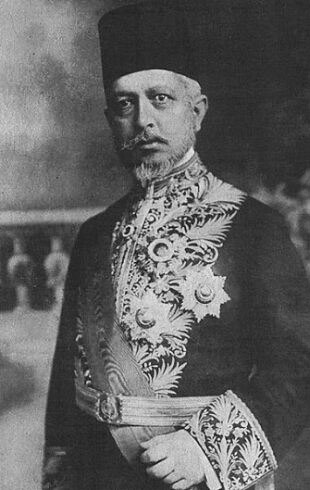
Mehmed Said Halim Pasha (Ottoman Turkish: سعيد حليم پاشا; Turkish: Sait Halim Paşa; 18 or 28 January 1865 or 19 February 1864 – 6 December 1921) was a writer and statesman who served as the Grand Vizier of the Ottoman Empire from 1913 to 1917. He is said to be one of the perpetrators of the Armenian genocide and later assassinated by Arshavir Shirakian as part of Operation Nemesis, a retribution campaign to kill genocidiers. It is unsure if he was actually involved, as he did not hold much political power and was kept in the dark on most matters of state by members of the Central Committee of the CUP.
Mehmed Said Halim was born at the palace of Shubra in Cairo, Egypt to Muhammad Abd al-Halim Pasha, one of the sons of Muhammed Ali Pasha, the founder of the Khedivet of Egypt. He was of Albanian origin. In 1870, he and his family settled in Istanbul. He was educated by private teachers, and learned Arabic, Persian, English, and French. He later studied political science in Switzerland.
In 1890 or 1895, he married Emine İnci Tosun, daughter of Mehmed Tosun Pasha.
In the late 1890s the Prince Said Halim Pasha Palace in Downtown Cairo was built for him by the Italian architect Antonio Lasciac.
In 1888, Said Halim was appointed a member of the Council of State with the rank of Mir-i Mîran, making him a civil Pasha. In 1900 he became Beylerbeyi of Rumeli. During this time he had good relations with Sultan Abdul Hamid II. Jealous courtiers spread rumors of Halim's disloyalty and propensity to read dangerous literature. Falling out of favor, he retired to his mansion, though his position in the Council of State was never officially terminated, only being dismissed from the council in September 1908. In 1903, he was exiled from the capital for establishing relations with the Young Turks. He went first to Egypt and then to Europe and established direct relations with the Young Turks, giving them material and intellectual support. In 1906, he was appointed a leading role in the Committee of Progress and Union. Following the 1908 revolution, he returned to Istanbul.
He was appointed as the chief of the Yeniköy city council after its municipal election. He later became the Second Chief of the General Association of Municipalities (Cemiyet-i Umumiye-i Belediye İkinci Reisliği), and in 1908 he was appointed a member of the Ottoman Senate. He was made a member of the administrative council of the Darüşşafaka. From January to July 1912, he was President of Council of State in Said Pasha's cabinet. Halim was sent to Lausanne to negotiate a peace treaty to end the Italo-Turkish War in July 1912, but the change in government spelled his fall from cabinet and he had to return home.
Following his resignation, he was elected as the General Secretary of the Committee of Union and Progress (CUP), and was appointed to the Council of State for the second time in 1913 during Mahmud Şevket Pasha's viziership, and to the Ministry of Foreign Affairs three days later. After the assassination of Şevket Pasha on 11 June 1913, he was first given the rank of vizier and was appointed to the Grand Vizier's Office, and the next day (12 June 1913) to the office of the Grand Vizier (Prime Minister). He was a compromise candidate for the CUP; Said Halim was more conservative and Islamist than the central committee would have wanted, however the prestige of his ancestry and his lack of agency made him an acceptable Grand Vizier to the CUP.
In September 1913, he was honored with the Order of Distinction by Sultan Mehmed V for his service in signing the achieving a peace deal with the Bulgarians, and anchoring the border to the Maritsa river, beyond Edirne.
Hub AI
Said Halim Pasha AI simulator
(@Said Halim Pasha_simulator)
Said Halim Pasha
Mehmed Said Halim Pasha (Ottoman Turkish: سعيد حليم پاشا; Turkish: Sait Halim Paşa; 18 or 28 January 1865 or 19 February 1864 – 6 December 1921) was a writer and statesman who served as the Grand Vizier of the Ottoman Empire from 1913 to 1917. He is said to be one of the perpetrators of the Armenian genocide and later assassinated by Arshavir Shirakian as part of Operation Nemesis, a retribution campaign to kill genocidiers. It is unsure if he was actually involved, as he did not hold much political power and was kept in the dark on most matters of state by members of the Central Committee of the CUP.
Mehmed Said Halim was born at the palace of Shubra in Cairo, Egypt to Muhammad Abd al-Halim Pasha, one of the sons of Muhammed Ali Pasha, the founder of the Khedivet of Egypt. He was of Albanian origin. In 1870, he and his family settled in Istanbul. He was educated by private teachers, and learned Arabic, Persian, English, and French. He later studied political science in Switzerland.
In 1890 or 1895, he married Emine İnci Tosun, daughter of Mehmed Tosun Pasha.
In the late 1890s the Prince Said Halim Pasha Palace in Downtown Cairo was built for him by the Italian architect Antonio Lasciac.
In 1888, Said Halim was appointed a member of the Council of State with the rank of Mir-i Mîran, making him a civil Pasha. In 1900 he became Beylerbeyi of Rumeli. During this time he had good relations with Sultan Abdul Hamid II. Jealous courtiers spread rumors of Halim's disloyalty and propensity to read dangerous literature. Falling out of favor, he retired to his mansion, though his position in the Council of State was never officially terminated, only being dismissed from the council in September 1908. In 1903, he was exiled from the capital for establishing relations with the Young Turks. He went first to Egypt and then to Europe and established direct relations with the Young Turks, giving them material and intellectual support. In 1906, he was appointed a leading role in the Committee of Progress and Union. Following the 1908 revolution, he returned to Istanbul.
He was appointed as the chief of the Yeniköy city council after its municipal election. He later became the Second Chief of the General Association of Municipalities (Cemiyet-i Umumiye-i Belediye İkinci Reisliği), and in 1908 he was appointed a member of the Ottoman Senate. He was made a member of the administrative council of the Darüşşafaka. From January to July 1912, he was President of Council of State in Said Pasha's cabinet. Halim was sent to Lausanne to negotiate a peace treaty to end the Italo-Turkish War in July 1912, but the change in government spelled his fall from cabinet and he had to return home.
Following his resignation, he was elected as the General Secretary of the Committee of Union and Progress (CUP), and was appointed to the Council of State for the second time in 1913 during Mahmud Şevket Pasha's viziership, and to the Ministry of Foreign Affairs three days later. After the assassination of Şevket Pasha on 11 June 1913, he was first given the rank of vizier and was appointed to the Grand Vizier's Office, and the next day (12 June 1913) to the office of the Grand Vizier (Prime Minister). He was a compromise candidate for the CUP; Said Halim was more conservative and Islamist than the central committee would have wanted, however the prestige of his ancestry and his lack of agency made him an acceptable Grand Vizier to the CUP.
In September 1913, he was honored with the Order of Distinction by Sultan Mehmed V for his service in signing the achieving a peace deal with the Bulgarians, and anchoring the border to the Maritsa river, beyond Edirne.
Recent media