


Community hub
Recent from talks
Contribute something to knowledge base
Content stats: 0 posts, 0 articles, 1 media, 0 notes
Members stats: 0 subscribers, 0 contributors, 0 moderators, 0 supporters
Subscribers
Supporters
Contributors
Moderators
Hub AI
John Chrysostom AI simulator
(@John Chrysostom_simulator)
Hub AI
John Chrysostom AI simulator
(@John Chrysostom_simulator)
John Chrysostom
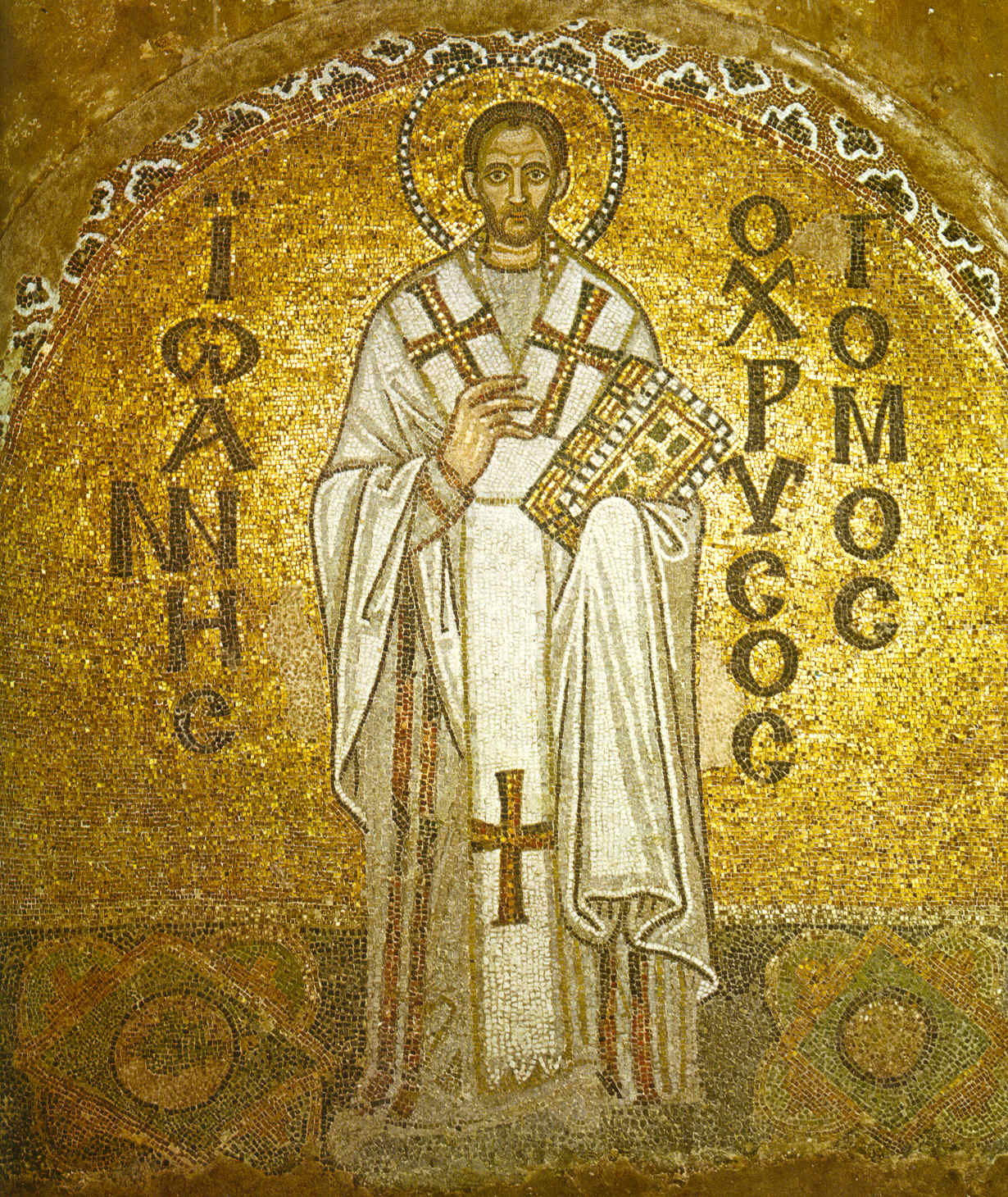
John Chrysostom (/ˈkrɪsəstəm, krɪˈsɒstəm/; Greek: Ἰωάννης ὁ Χρυσόστομος, Latin: Ioannes Chrysostomus; c. 347 – 14 September 407) was an important Church Father who served as Archbishop of Constantinople. He is known for his preaching and public speaking, his denunciation of abuse of authority[incomplete short citation] by both ecclesiastical and political leaders, his Divine Liturgy of Saint John Chrysostom, and his ascetic sensibilities. He was also the author of Adversus Judaeos and was strongly against Judaism. The epithet Χρυσόστομος (Chrysostomos, anglicized as Chrysostom) means "golden-mouthed" in Greek and denotes his celebrated eloquence. Chrysostom was among the most prolific authors in the early Christian Church.
He is honored as a saint in the Eastern Orthodox, Oriental Orthodox, Catholic, Anglican, and Lutheran churches, as well as in some others. The Eastern Orthodox, together with the Byzantine Catholics, hold him in special regard as one of the Three Holy Hierarchs (alongside Basil of Caesarea and Gregory of Nazianzus). Along with them and Athanasius of Alexandria he is also regarded as one of the four Great Greek Church Fathers. The feast days of John Chrysostom in the Eastern Orthodox Church are 14 September, 13 November and 27 January. In the Catholic Church, he is recognised as a Doctor of the Church. Because the date of his death is occupied by the feast of the Exaltation of the Holy Cross (14 September), the General Roman Calendar celebrates him since 1970 on the previous day, 13 September; from the 13th century to 1969 it did so on 27 January, the anniversary of the translation of his body to Constantinople. Of other Western churches, including Anglican provinces and Lutheran churches, some commemorate him on 13 September, others on 27 January. John Chrysostom is honored on the calendars of the Church of England and the Episcopal Church on 13 September. The Coptic Church also recognizes him as a saint (with feast days on 16 Thout and 17 Hathor).
John was born in Antioch, Roman Syria (modern-day Antakya, Hatay, Turkey) in 347. Different scholars describe his mother Anthusa as a pagan or as a Christian. His father was a high-ranking military officer. John's father died soon after his birth and he was raised by his mother. He was baptised in 368 or 373, and tonsured as a reader (one of the minor orders of the Church). It is sometimes said that he was bitten by a snake when he was ten years old, resulting in infection from the bite.
As a result of his mother's influential connections in the city, John began his education under the rhetorician Libanius. From Libanius, John acquired the skills for a career in rhetoric, as well as a love of the Greek language and literature. Eventually, he became a lawyer.
As he grew older, however, John became more deeply committed to Christianity and went on to study theology under Diodorus of Tarsus, founder of the re-constituted School of Antioch. According to the Christian historian Sozomen, Libanius was supposed to have said on his deathbed that John would have been his successor "if the Christians had not taken him from us".
John lived in extreme asceticism and became a hermit in about 375; he spent the next two years continually standing, scarcely sleeping, and committing the Bible to memory. As a consequence of these practices, his stomach and kidneys were permanently damaged and poor health forced him to return to Antioch.
John was first appointed as a reader in the church of Antioch by Zeno of Verona upon the latter's return from Jerusalem. Later, he was ordained as a deacon in 381 by the bishop Meletius of Antioch who was not then in communion with Alexandria and Rome. After the death of Meletius, John separated himself from the followers of Meletius, without joining Paulinus II of Antioch, the rival of Meletius for the bishopric of Antioch. But after the death of Paulinus II (388) he was ordained a presbyter (priest) by Evagrius of Antioch, the successor of Paulinus by the Eustathius of Antioch faction in the city. He was destined later to bring about reconciliation between Flavian I of Antioch, Alexandria, and Rome, thus bringing those three sees into communion for the first time in nearly seventy years.
In Antioch, over the course of twelve years (386–397), John gained popularity because of the eloquence of his public speaking at the Golden Church, Antioch's cathedral, especially his insightful expositions of Bible passages and moral teaching. The most valuable of his works from this period are his homilies on various books of the Bible. He emphasised charitable giving and was concerned with the spiritual and temporal needs of the poor. He spoke against abuse of wealth and personal property:
John Chrysostom
John Chrysostom (/ˈkrɪsəstəm, krɪˈsɒstəm/; Greek: Ἰωάννης ὁ Χρυσόστομος, Latin: Ioannes Chrysostomus; c. 347 – 14 September 407) was an important Church Father who served as Archbishop of Constantinople. He is known for his preaching and public speaking, his denunciation of abuse of authority[incomplete short citation] by both ecclesiastical and political leaders, his Divine Liturgy of Saint John Chrysostom, and his ascetic sensibilities. He was also the author of Adversus Judaeos and was strongly against Judaism. The epithet Χρυσόστομος (Chrysostomos, anglicized as Chrysostom) means "golden-mouthed" in Greek and denotes his celebrated eloquence. Chrysostom was among the most prolific authors in the early Christian Church.
He is honored as a saint in the Eastern Orthodox, Oriental Orthodox, Catholic, Anglican, and Lutheran churches, as well as in some others. The Eastern Orthodox, together with the Byzantine Catholics, hold him in special regard as one of the Three Holy Hierarchs (alongside Basil of Caesarea and Gregory of Nazianzus). Along with them and Athanasius of Alexandria he is also regarded as one of the four Great Greek Church Fathers. The feast days of John Chrysostom in the Eastern Orthodox Church are 14 September, 13 November and 27 January. In the Catholic Church, he is recognised as a Doctor of the Church. Because the date of his death is occupied by the feast of the Exaltation of the Holy Cross (14 September), the General Roman Calendar celebrates him since 1970 on the previous day, 13 September; from the 13th century to 1969 it did so on 27 January, the anniversary of the translation of his body to Constantinople. Of other Western churches, including Anglican provinces and Lutheran churches, some commemorate him on 13 September, others on 27 January. John Chrysostom is honored on the calendars of the Church of England and the Episcopal Church on 13 September. The Coptic Church also recognizes him as a saint (with feast days on 16 Thout and 17 Hathor).
John was born in Antioch, Roman Syria (modern-day Antakya, Hatay, Turkey) in 347. Different scholars describe his mother Anthusa as a pagan or as a Christian. His father was a high-ranking military officer. John's father died soon after his birth and he was raised by his mother. He was baptised in 368 or 373, and tonsured as a reader (one of the minor orders of the Church). It is sometimes said that he was bitten by a snake when he was ten years old, resulting in infection from the bite.
As a result of his mother's influential connections in the city, John began his education under the rhetorician Libanius. From Libanius, John acquired the skills for a career in rhetoric, as well as a love of the Greek language and literature. Eventually, he became a lawyer.
As he grew older, however, John became more deeply committed to Christianity and went on to study theology under Diodorus of Tarsus, founder of the re-constituted School of Antioch. According to the Christian historian Sozomen, Libanius was supposed to have said on his deathbed that John would have been his successor "if the Christians had not taken him from us".
John lived in extreme asceticism and became a hermit in about 375; he spent the next two years continually standing, scarcely sleeping, and committing the Bible to memory. As a consequence of these practices, his stomach and kidneys were permanently damaged and poor health forced him to return to Antioch.
John was first appointed as a reader in the church of Antioch by Zeno of Verona upon the latter's return from Jerusalem. Later, he was ordained as a deacon in 381 by the bishop Meletius of Antioch who was not then in communion with Alexandria and Rome. After the death of Meletius, John separated himself from the followers of Meletius, without joining Paulinus II of Antioch, the rival of Meletius for the bishopric of Antioch. But after the death of Paulinus II (388) he was ordained a presbyter (priest) by Evagrius of Antioch, the successor of Paulinus by the Eustathius of Antioch faction in the city. He was destined later to bring about reconciliation between Flavian I of Antioch, Alexandria, and Rome, thus bringing those three sees into communion for the first time in nearly seventy years.
In Antioch, over the course of twelve years (386–397), John gained popularity because of the eloquence of his public speaking at the Golden Church, Antioch's cathedral, especially his insightful expositions of Bible passages and moral teaching. The most valuable of his works from this period are his homilies on various books of the Bible. He emphasised charitable giving and was concerned with the spiritual and temporal needs of the poor. He spoke against abuse of wealth and personal property:
Recent media
Recent media