
Recent from talks
Samhan
Knowledge base stats:
Talk channels stats:
Members stats:
Samhan
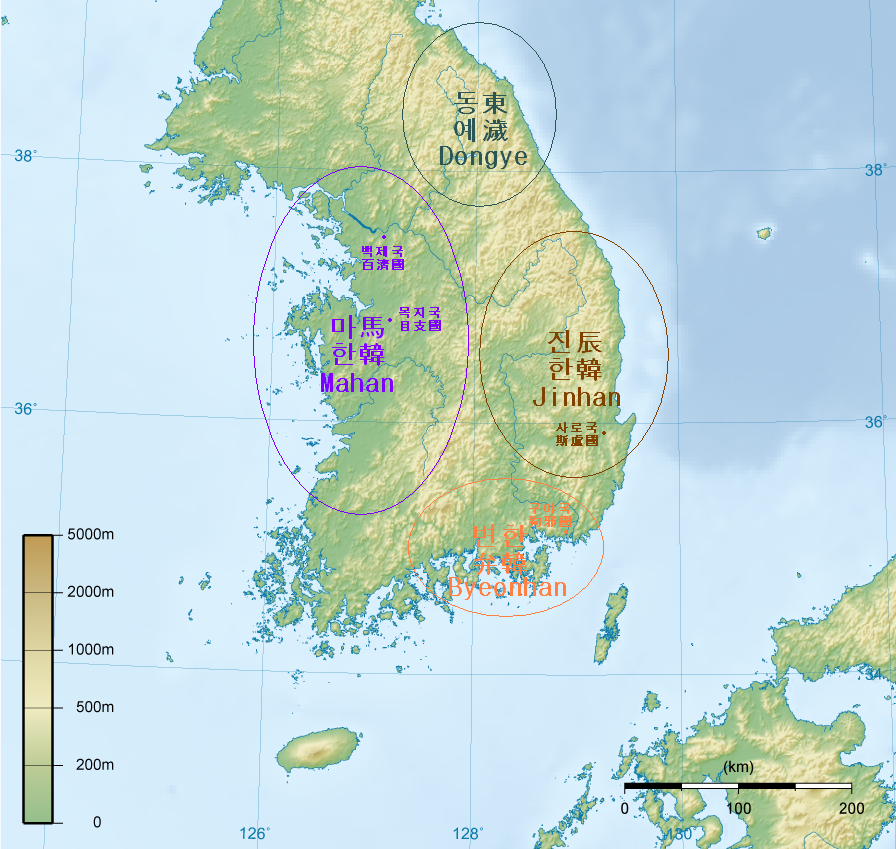
Samhan, or Three Hans (Korean: 삼한; Hanja: 三韓), is the collective name of the three confederacies: Byeonhan, Jinhan, and Mahan that emerged in the first century BCE during the Proto–Three Kingdoms of Korea, or Samhan, period. Located in the central and southern regions of the Korean Peninsula, the Samhan confederacies eventually merged and developed into the Paekche, Silla kingdoms and Kaya confederacy. The name "Samhan" also refers to the Three Kingdoms of Korea.
The Samhan are thought to have formed around the time of the fall of Old Chosŏn in northern Korea in 108 BCE. Kim Pusik's Samguk sagi, one of the two representative history books of Korea, mentions that people of Jin Han are migrants from Old Chosŏn, which suggests that early Han tribes who came to Southern Korean peninsula are originally Old Chosŏn people; this coincides with the state of Jin in southern Korea also disappearing from written records. By the 4th century, Mahan was fully absorbed into the Paekche kingdom, Jinhan into the Silla kingdom, and Byeonhan into the Kaya confederacy, which was later annexed by Silla.[citation needed]
Beginning in the 7th century, the name "Samhan" became synonymous with the Three Kingdoms of Korea. The "Han" in the names of the Korean Empire, Daehan Jeguk, and the Republic of Korea (South Korea), Daehan Minguk or Hanguk, are named in reference to the Three Kingdoms of Korea, not the ancient confederacies in the southern Korean Peninsula.
In 1897, Gojong changed the name of Joseon to the Korean Empire, Daehan Jeguk, in reference to the Three Kingdoms of Korea. In 1919, the provisional government in exile during the Japanese occupation declared the name of Korea as the Republic of Korea, Daehan Minguk, also in reference to the Three Kingdoms of Korea.
According to the Samguk sagi and Samguk yusa, Silla implemented a national policy, "Samhan Unification" (삼한일통; 三韓一統), to integrate Paekche and Goguryeo refugees. In 1982, a memorial stone dating back to 686 was discovered in Cheongju with an inscription: "The Three Han were unified and the domain was expanded." During the Later Silla period, the concepts of Samhan as the ancient confederacies and the Three Kingdoms of Korea were merged. In a letter to an imperial tutor of the Tang dynasty, Ch'oe Ch'i-wŏn equated Byeonhan to Paekche, Jinhan to Silla, and Mahan to Goguryeo. By the Goryeo period, Samhan became a common name to refer to all of Korea. In his Ten Mandates to his descendants, Wang Geon declared that he had unified the Three Han (Samhan), referring to the Three Kingdoms of Korea. Samhan continued to be a common name for Korea during the Joseon period and was widely referenced in the Annals of the Joseon Dynasty.
In China, the Three Kingdoms of Korea were collectively called Samhan since the beginning of the 7th century. The use of the name Samhan to indicate the Three Kingdoms of Korea was widespread in the Tang dynasty. Goguryeo was alternately called Mahan by the Tang dynasty, as evidenced by a Tang document that called Goguryeo generals "Mahan leaders" (마한추장; 馬韓酋長) in 645. In 651, Emperor Gaozong of Tang sent a message to the king of Paekche referring to the Three Kingdoms of Korea as Samhan. Epitaphs of the Tang dynasty, including those belonging to Paekche, Goguryeo, and Silla refugees and migrants, called the Three Kingdoms of Korea "Samhan", especially Goguryeo. For example, the epitaph of Go Hyeon (고현; 高玄), a Tang dynasty general of Goguryeo origin who died in 690, calls him a "Liaodong Samhan man" (요동 삼한인; 遼東 三韓人). The History of Liao equates Byeonhan to Silla, Jinhan to Buyeo, and Mahan to Goguryeo.
In Japan, Samhan is read as "Sankan (さんかん)" but unlike Korea and China, it is synonymous with the Three Kingdoms and not just the Samhan confederacies as seen in the Invasion of the Three Koreas (三韓征伐; Sankan Seibatsu). The invasion is commonly regarded as the Silla–Wa War which could posit the idea that the use of "Han" in Japan was already analogous with the Korean (韓) identity throughout its history as they often amalgamated Samhan with the Three Kingdoms despite certain polities such as Byeonhan (later Kaya) and Goguryeo (from Buyeo) lacking any direct connection.
"Samhan" became a name for the Three Kingdoms of Korea beginning in the 7th century.
Hub AI
Samhan AI simulator
(@Samhan_simulator)
Samhan
Samhan, or Three Hans (Korean: 삼한; Hanja: 三韓), is the collective name of the three confederacies: Byeonhan, Jinhan, and Mahan that emerged in the first century BCE during the Proto–Three Kingdoms of Korea, or Samhan, period. Located in the central and southern regions of the Korean Peninsula, the Samhan confederacies eventually merged and developed into the Paekche, Silla kingdoms and Kaya confederacy. The name "Samhan" also refers to the Three Kingdoms of Korea.
The Samhan are thought to have formed around the time of the fall of Old Chosŏn in northern Korea in 108 BCE. Kim Pusik's Samguk sagi, one of the two representative history books of Korea, mentions that people of Jin Han are migrants from Old Chosŏn, which suggests that early Han tribes who came to Southern Korean peninsula are originally Old Chosŏn people; this coincides with the state of Jin in southern Korea also disappearing from written records. By the 4th century, Mahan was fully absorbed into the Paekche kingdom, Jinhan into the Silla kingdom, and Byeonhan into the Kaya confederacy, which was later annexed by Silla.[citation needed]
Beginning in the 7th century, the name "Samhan" became synonymous with the Three Kingdoms of Korea. The "Han" in the names of the Korean Empire, Daehan Jeguk, and the Republic of Korea (South Korea), Daehan Minguk or Hanguk, are named in reference to the Three Kingdoms of Korea, not the ancient confederacies in the southern Korean Peninsula.
In 1897, Gojong changed the name of Joseon to the Korean Empire, Daehan Jeguk, in reference to the Three Kingdoms of Korea. In 1919, the provisional government in exile during the Japanese occupation declared the name of Korea as the Republic of Korea, Daehan Minguk, also in reference to the Three Kingdoms of Korea.
According to the Samguk sagi and Samguk yusa, Silla implemented a national policy, "Samhan Unification" (삼한일통; 三韓一統), to integrate Paekche and Goguryeo refugees. In 1982, a memorial stone dating back to 686 was discovered in Cheongju with an inscription: "The Three Han were unified and the domain was expanded." During the Later Silla period, the concepts of Samhan as the ancient confederacies and the Three Kingdoms of Korea were merged. In a letter to an imperial tutor of the Tang dynasty, Ch'oe Ch'i-wŏn equated Byeonhan to Paekche, Jinhan to Silla, and Mahan to Goguryeo. By the Goryeo period, Samhan became a common name to refer to all of Korea. In his Ten Mandates to his descendants, Wang Geon declared that he had unified the Three Han (Samhan), referring to the Three Kingdoms of Korea. Samhan continued to be a common name for Korea during the Joseon period and was widely referenced in the Annals of the Joseon Dynasty.
In China, the Three Kingdoms of Korea were collectively called Samhan since the beginning of the 7th century. The use of the name Samhan to indicate the Three Kingdoms of Korea was widespread in the Tang dynasty. Goguryeo was alternately called Mahan by the Tang dynasty, as evidenced by a Tang document that called Goguryeo generals "Mahan leaders" (마한추장; 馬韓酋長) in 645. In 651, Emperor Gaozong of Tang sent a message to the king of Paekche referring to the Three Kingdoms of Korea as Samhan. Epitaphs of the Tang dynasty, including those belonging to Paekche, Goguryeo, and Silla refugees and migrants, called the Three Kingdoms of Korea "Samhan", especially Goguryeo. For example, the epitaph of Go Hyeon (고현; 高玄), a Tang dynasty general of Goguryeo origin who died in 690, calls him a "Liaodong Samhan man" (요동 삼한인; 遼東 三韓人). The History of Liao equates Byeonhan to Silla, Jinhan to Buyeo, and Mahan to Goguryeo.
In Japan, Samhan is read as "Sankan (さんかん)" but unlike Korea and China, it is synonymous with the Three Kingdoms and not just the Samhan confederacies as seen in the Invasion of the Three Koreas (三韓征伐; Sankan Seibatsu). The invasion is commonly regarded as the Silla–Wa War which could posit the idea that the use of "Han" in Japan was already analogous with the Korean (韓) identity throughout its history as they often amalgamated Samhan with the Three Kingdoms despite certain polities such as Byeonhan (later Kaya) and Goguryeo (from Buyeo) lacking any direct connection.
"Samhan" became a name for the Three Kingdoms of Korea beginning in the 7th century.
Recent media