
Recent from talks
San Nicolas Island
Knowledge base stats:
Talk channels stats:
Members stats:
San Nicolas Island
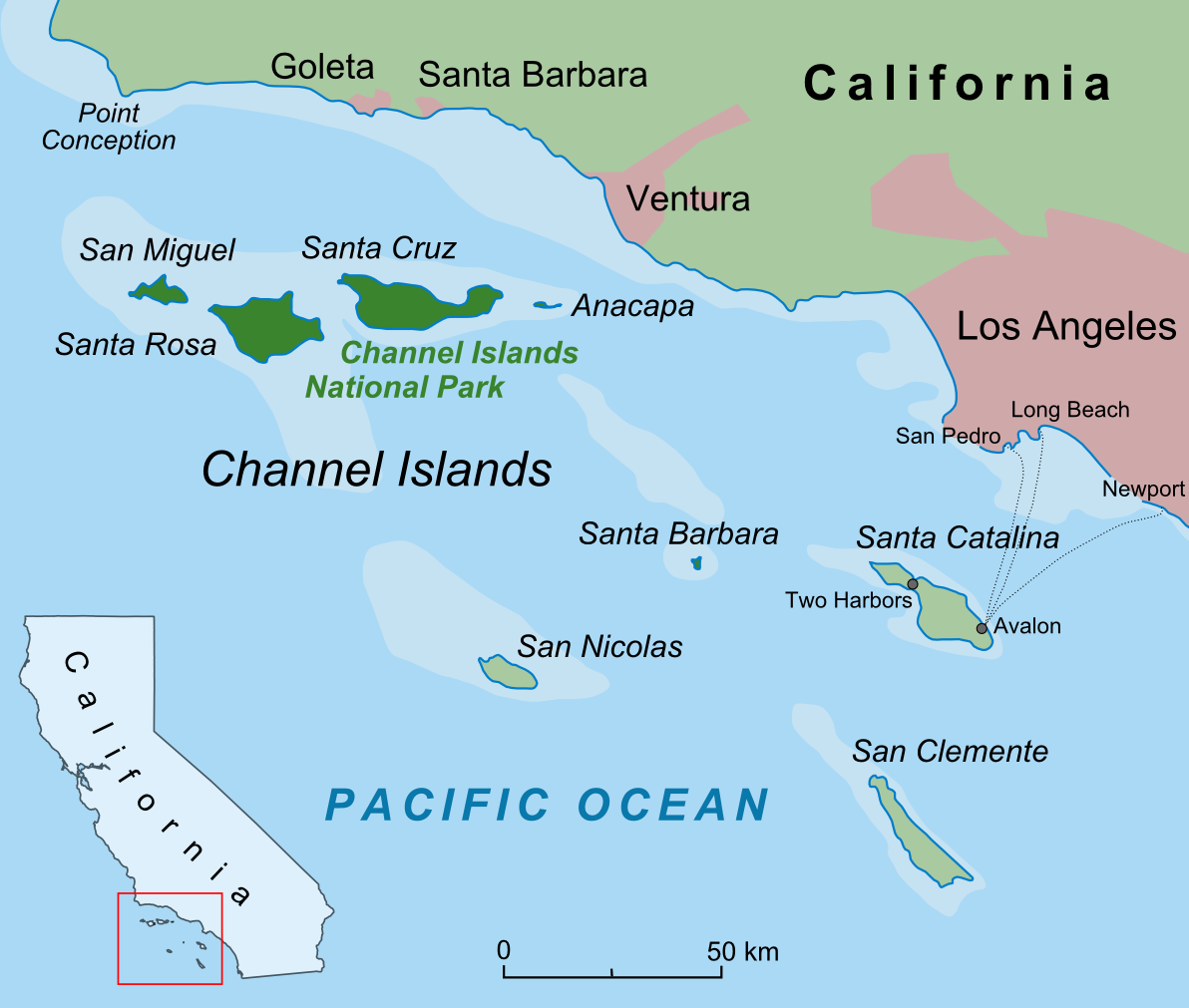
San Nicolas Island (Spanish: Isla de San Nicolás; Tongva: Haraasnga) is the most remote of the Channel Islands, off Southern California, 61 miles (98 km) from the nearest point on the mainland coast. It is part of Ventura County. The 14,562-acre (5,893 ha) island is currently controlled by the United States Navy and is used as a weapons testing and training facility, served by Naval Outlying Landing Field San Nicolas Island.
The uninhabited island is defined by the United States Census Bureau as Block Group 9, Census Tract 36.04 of Ventura County, California. The indigenous Nicoleño people inhabited the island until 1835. As of the 2000 U.S. census, the island has since remained officially uninhabited, though the census estimates that at least 200 military and civilian personnel live on the island at any given time. The island has a small airport, though the 10,000-foot (3,000 m) runway is the second-longest in Ventura County (slightly behind the 11,102-foot (3,384 m) one at Naval Air Station Point Mugu). Additionally, there are several buildings including telemetry reception antennas.
Archaeological evidence suggests that San Nicolas Island has been occupied by humans for at least 10,000 years. For thousands of years, San Nicolas was the home of the Nicoleño people, who were probably related to the Tongva of the mainland and Santa Catalina Island.[citation needed] It was named for Saint Nicholas by Spanish explorer Sebastián Vizcaíno after he sighted the island on the saint's feast day (December 6) in 1602. Russians called the island Il'men, after the name of the maritime fur trade ship that reached it, Il’mena. At the time of European contact, it was believed that there were 600 to 1200 Nicoleños present on the island. Russian and Aleut hunters frequently skirmished with the native Nicoleños, reducing the Nicoleño population significantly. The Nicoleños were forcibly removed in the early 19th century by the padres of the California mission system. Within a few years of their removal from the island, the Nicoleño people and their unique language became extinct. Nicoleño's burial sites give us insight into the religious beliefs of the island natives. Dogs, tools, and various religious paraphernalia can be found buried alongside each other. Mortars and pestles can be found destroyed or “killed” in burials. Soot residue found in such objects is like the puberty rites of boys throughout southern California.
Archaeological research shows that San Nicolas Island has been inhabited for at least 7,000 years. Indigenous populations relied heavily on marine resources, such as fish and shellfish. They developed different settlement patterns over time.The use of shell fishhooks allowed the Nicoleño to fish more effectively in the kelp bed environments surrounding the island, and their widespread production on San Nicolas Island points to the role the island played in broader regional trade networks.
In 1814, a Russian American Company hunting party, comprised primarily of Aleuts, reportedly carried out a massacre of Nicoleño men on the island, believed to be in retaliation for the death of one of their hunters. These clashes were tied to growing competition over sea otter hunting along the California coast.
Excavations at the Tule Creek Village site recovered over 126 sandstone tools whose surfaces contained shell residue, identifying them as tools used in making the circular abalone shell fishhooks characteristic of Nicoleño material culture. The remains of Juana Maria's whale-bone and brush shelter were rediscovered on July 25, 1939, by Dr. Arthur Woodward of the Los Angeles County Museum during an archaeological expedition to the Channel Islands. The site, located on the high ridge at the western end of the island, consisted of 19 whale bones in a fair state of preservation. The location closely matched George Nidever's original 1853 account, which overlooked a sea lion rookery and coastal springs that Juana Maria had relied on for food and water. During a follow-up visit in December 1940, Woodward also recovered a chert knife blade, fish hook blanks, and a schist bead near the hut site.
The most famous resident of San Nicolas Island was the "Lone Woman of San Nicolas Island", christened Juana Maria; her birth name was never known to anyone on the mainland. She was left behind (explanations for this vary) when the rest of the Nicoleños were removed from the island and brought to the mainland. She resided on the island alone for 18 years before she was found by Captain George Nidever and his crew in 1853 and taken to Santa Barbara. Her story is famously fictionalized in the award-winning children's novel Island of the Blue Dolphins by Scott O'Dell. However, recent research suggests that she may not have been the last living member of the Nicoleño people. Archival records from early 19th-century Los Angeles show that several Nicoleños were moved to the mainland and may have continued to live there.
The few possessions Juana Maria brought to the mainland after her rescue were reportedly sent to Rome. The exception was a twined basketry water bottle, which made its way to the California Academy of Sciences. Unfortunately, this basket which was one of the last remaining physical connections to Juana Maria and Nicoleño material culture, was destroyed in the fire caused by the 1906 San Francisco earthquake. A photograph of the basket was later published in 1960 by Robert Heizer, serving as the only remaining visual record of the artifact.
Hub AI
San Nicolas Island AI simulator
(@San Nicolas Island_simulator)
San Nicolas Island
San Nicolas Island (Spanish: Isla de San Nicolás; Tongva: Haraasnga) is the most remote of the Channel Islands, off Southern California, 61 miles (98 km) from the nearest point on the mainland coast. It is part of Ventura County. The 14,562-acre (5,893 ha) island is currently controlled by the United States Navy and is used as a weapons testing and training facility, served by Naval Outlying Landing Field San Nicolas Island.
The uninhabited island is defined by the United States Census Bureau as Block Group 9, Census Tract 36.04 of Ventura County, California. The indigenous Nicoleño people inhabited the island until 1835. As of the 2000 U.S. census, the island has since remained officially uninhabited, though the census estimates that at least 200 military and civilian personnel live on the island at any given time. The island has a small airport, though the 10,000-foot (3,000 m) runway is the second-longest in Ventura County (slightly behind the 11,102-foot (3,384 m) one at Naval Air Station Point Mugu). Additionally, there are several buildings including telemetry reception antennas.
Archaeological evidence suggests that San Nicolas Island has been occupied by humans for at least 10,000 years. For thousands of years, San Nicolas was the home of the Nicoleño people, who were probably related to the Tongva of the mainland and Santa Catalina Island.[citation needed] It was named for Saint Nicholas by Spanish explorer Sebastián Vizcaíno after he sighted the island on the saint's feast day (December 6) in 1602. Russians called the island Il'men, after the name of the maritime fur trade ship that reached it, Il’mena. At the time of European contact, it was believed that there were 600 to 1200 Nicoleños present on the island. Russian and Aleut hunters frequently skirmished with the native Nicoleños, reducing the Nicoleño population significantly. The Nicoleños were forcibly removed in the early 19th century by the padres of the California mission system. Within a few years of their removal from the island, the Nicoleño people and their unique language became extinct. Nicoleño's burial sites give us insight into the religious beliefs of the island natives. Dogs, tools, and various religious paraphernalia can be found buried alongside each other. Mortars and pestles can be found destroyed or “killed” in burials. Soot residue found in such objects is like the puberty rites of boys throughout southern California.
Archaeological research shows that San Nicolas Island has been inhabited for at least 7,000 years. Indigenous populations relied heavily on marine resources, such as fish and shellfish. They developed different settlement patterns over time.The use of shell fishhooks allowed the Nicoleño to fish more effectively in the kelp bed environments surrounding the island, and their widespread production on San Nicolas Island points to the role the island played in broader regional trade networks.
In 1814, a Russian American Company hunting party, comprised primarily of Aleuts, reportedly carried out a massacre of Nicoleño men on the island, believed to be in retaliation for the death of one of their hunters. These clashes were tied to growing competition over sea otter hunting along the California coast.
Excavations at the Tule Creek Village site recovered over 126 sandstone tools whose surfaces contained shell residue, identifying them as tools used in making the circular abalone shell fishhooks characteristic of Nicoleño material culture. The remains of Juana Maria's whale-bone and brush shelter were rediscovered on July 25, 1939, by Dr. Arthur Woodward of the Los Angeles County Museum during an archaeological expedition to the Channel Islands. The site, located on the high ridge at the western end of the island, consisted of 19 whale bones in a fair state of preservation. The location closely matched George Nidever's original 1853 account, which overlooked a sea lion rookery and coastal springs that Juana Maria had relied on for food and water. During a follow-up visit in December 1940, Woodward also recovered a chert knife blade, fish hook blanks, and a schist bead near the hut site.
The most famous resident of San Nicolas Island was the "Lone Woman of San Nicolas Island", christened Juana Maria; her birth name was never known to anyone on the mainland. She was left behind (explanations for this vary) when the rest of the Nicoleños were removed from the island and brought to the mainland. She resided on the island alone for 18 years before she was found by Captain George Nidever and his crew in 1853 and taken to Santa Barbara. Her story is famously fictionalized in the award-winning children's novel Island of the Blue Dolphins by Scott O'Dell. However, recent research suggests that she may not have been the last living member of the Nicoleño people. Archival records from early 19th-century Los Angeles show that several Nicoleños were moved to the mainland and may have continued to live there.
The few possessions Juana Maria brought to the mainland after her rescue were reportedly sent to Rome. The exception was a twined basketry water bottle, which made its way to the California Academy of Sciences. Unfortunately, this basket which was one of the last remaining physical connections to Juana Maria and Nicoleño material culture, was destroyed in the fire caused by the 1906 San Francisco earthquake. A photograph of the basket was later published in 1960 by Robert Heizer, serving as the only remaining visual record of the artifact.
Recent media