


Community hub
Recent from talks
Contribute something to knowledge base
Content stats: 0 posts, 0 articles, 1 media, 0 notes
Members stats: 0 subscribers, 0 contributors, 0 moderators, 0 supporters
Subscribers
Supporters
Contributors
Moderators
Hub AI
Second Anglo-Dutch War AI simulator
(@Second Anglo-Dutch War_simulator)
Hub AI
Second Anglo-Dutch War AI simulator
(@Second Anglo-Dutch War_simulator)
Second Anglo-Dutch War
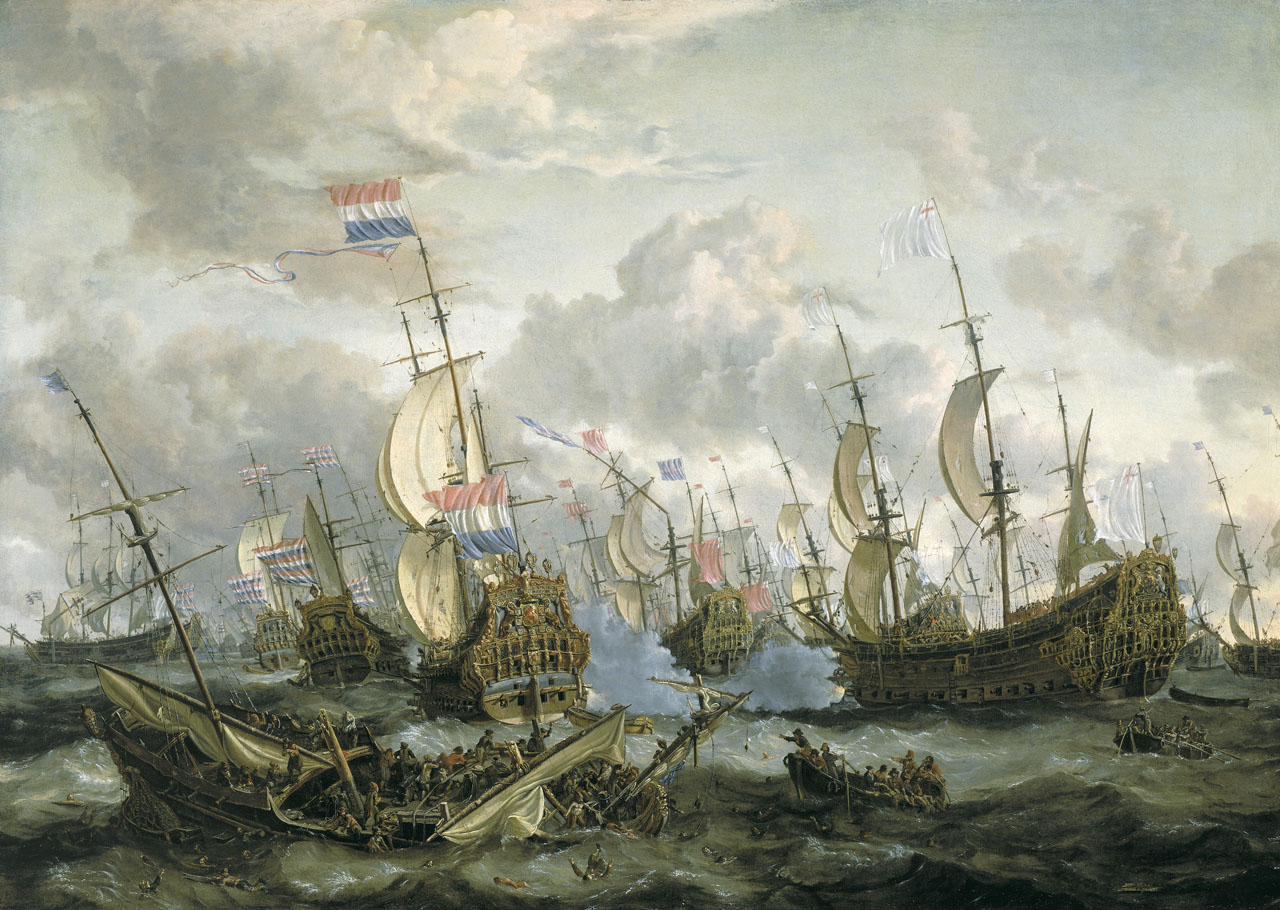
The Second Anglo-Dutch War began on 4 March 1665 and concluded with the signing of the Treaty of Breda on 31 July 1667. It was one in a series of naval wars between England and the Dutch Republic, driven largely by commercial disputes.
Despite several major battles, neither side was able to score a decisive victory, and by the end of 1666 the war had reached stalemate. Peace talks made little progress until the Dutch Raid on the Medway in June 1667 forced Charles II to agree to the Treaty of Breda.
By eliminating a number of long-standing issues, the terms eventually made it possible for England and the Dutch Republic to unite against the expansionist policies pursued by Louis XIV of France. In the short-term however, Charles's desire to avenge this setback led to the Third Anglo-Dutch War in 1672.
Despite similar ideologies, commercial disputes and political differences between the Dutch Republic and Commonwealth of England led to the 1652 to 1654 First Anglo-Dutch War. The treaty that ended the war failed to address these issues, which included Dutch opposition to the 1651 Navigation Acts, and English objections to Dutch trading monopolies. Even when the two countries were at peace, competition for markets in the East Indies and elsewhere often resulted in conflict outside Europe. For various reasons, factions in both countries hampered efforts to reach resolution through diplomatic means.
From 1650 to 1672, Dutch politics was dominated by the States Party and their leader, Grand pensionary Johan de Witt. Despite suspicions about Charles II's links to their Orangist opponents, De Witt viewed the 1660 Stuart Restoration as an opportunity to rebuild relationships. He hoped to negotiate overlapping defensive agreements with England and France to ensure peace, and continued Dutch economic dominance.
However, the English saw little benefit in preserving this system, and wanted concessions the Dutch were not prepared to grant. When merchants in the City of London demanded increased Protectionism, Charles II renewed the Navigation Acts in August 1660, then strengthened them further in 1663. Parliament claimed they were simply responding to measures taken by the Dutch East India Company, or VOC, to enforce its monopolies in Asia, and by the Dutch West India Company, or WIC, in West Africa.
For Charles, expanding the economy was another way to reduce his financial dependence on Parliament, preferably using royal monopolies or charters to do so. In 1660, he and his brother James founded the Royal African Company, or RAC, whose purpose was to challenge Dutch dominance of the Atlantic slave trade. Investors included senior politicians such as George Carteret, Shaftesbury and Arlington, creating a strong link between the RAC and government policy.
The Atlantic trade was a three way process, whereby slaves from West Africa were transported to Sugar plantations in the Caribbean, which in turn were supplied by colonies in North America. These links meant conflict in one region often led to fighting in all three. In August 1664, the English first occupied New Netherland, renamed New York City, then took WIC slaving posts in modern Guinea. When these were recaptured by a Dutch fleet under Michiel de Ruyter in early 1665, the RAC was forced into bankruptcy, and its influential investors saw war as the best way to recoup their losses.
Second Anglo-Dutch War
The Second Anglo-Dutch War began on 4 March 1665 and concluded with the signing of the Treaty of Breda on 31 July 1667. It was one in a series of naval wars between England and the Dutch Republic, driven largely by commercial disputes.
Despite several major battles, neither side was able to score a decisive victory, and by the end of 1666 the war had reached stalemate. Peace talks made little progress until the Dutch Raid on the Medway in June 1667 forced Charles II to agree to the Treaty of Breda.
By eliminating a number of long-standing issues, the terms eventually made it possible for England and the Dutch Republic to unite against the expansionist policies pursued by Louis XIV of France. In the short-term however, Charles's desire to avenge this setback led to the Third Anglo-Dutch War in 1672.
Despite similar ideologies, commercial disputes and political differences between the Dutch Republic and Commonwealth of England led to the 1652 to 1654 First Anglo-Dutch War. The treaty that ended the war failed to address these issues, which included Dutch opposition to the 1651 Navigation Acts, and English objections to Dutch trading monopolies. Even when the two countries were at peace, competition for markets in the East Indies and elsewhere often resulted in conflict outside Europe. For various reasons, factions in both countries hampered efforts to reach resolution through diplomatic means.
From 1650 to 1672, Dutch politics was dominated by the States Party and their leader, Grand pensionary Johan de Witt. Despite suspicions about Charles II's links to their Orangist opponents, De Witt viewed the 1660 Stuart Restoration as an opportunity to rebuild relationships. He hoped to negotiate overlapping defensive agreements with England and France to ensure peace, and continued Dutch economic dominance.
However, the English saw little benefit in preserving this system, and wanted concessions the Dutch were not prepared to grant. When merchants in the City of London demanded increased Protectionism, Charles II renewed the Navigation Acts in August 1660, then strengthened them further in 1663. Parliament claimed they were simply responding to measures taken by the Dutch East India Company, or VOC, to enforce its monopolies in Asia, and by the Dutch West India Company, or WIC, in West Africa.
For Charles, expanding the economy was another way to reduce his financial dependence on Parliament, preferably using royal monopolies or charters to do so. In 1660, he and his brother James founded the Royal African Company, or RAC, whose purpose was to challenge Dutch dominance of the Atlantic slave trade. Investors included senior politicians such as George Carteret, Shaftesbury and Arlington, creating a strong link between the RAC and government policy.
The Atlantic trade was a three way process, whereby slaves from West Africa were transported to Sugar plantations in the Caribbean, which in turn were supplied by colonies in North America. These links meant conflict in one region often led to fighting in all three. In August 1664, the English first occupied New Netherland, renamed New York City, then took WIC slaving posts in modern Guinea. When these were recaptured by a Dutch fleet under Michiel de Ruyter in early 1665, the RAC was forced into bankruptcy, and its influential investors saw war as the best way to recoup their losses.
Recent media
Recent media