


Community hub
Recent from talks
Contribute something to knowledge base
Content stats: 0 posts, 0 articles, 1 media, 0 notes
Members stats: 0 subscribers, 0 contributors, 0 moderators, 0 supporters
Subscribers
Supporters
Contributors
Moderators
Second Triumvirate
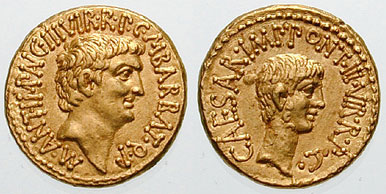
The Second Triumvirate was an extraordinary commission and magistracy created at the end of the Roman republic for Mark Antony, Lepidus, and Octavian to give them practically absolute power. It was formally constituted by law on 27 November 43 BC with a term of five years; it was renewed in 37 BC for another five years before expiring in 32 BC. Constituted by the lex Titia, the triumvirs were given broad powers to make or repeal legislation, issue judicial punishments without due process or right of appeal, and appoint all other magistrates. The triumvirs also split the Roman world into three sets of provinces.
The triumvirate, formed in the aftermath of a conflict between Antony and the senate, emerged as a force to reassert Caesarian control over the western provinces and wage war on the liberatores led by the men who assassinated Julius Caesar. After proscriptions, purging the senatorial and equestrian orders, and a brutal civil war, the liberatores were defeated at the Battle of Philippi. After Philippi, Antony and Octavian took the east and west, respectively, with Lepidus confined to Africa. The last remaining opposition to the Triumvirs came from Sextus Pompey, a son of Pompey the Great, who controlled Sicily, Corsica and Sardinia.
Octavian and Antony were pushed to cooperation, in part by their soldiers, and the triumvirs had their legal arrangement renewed for another five years in 37 BC. Eventually, after Antony's defeat in Parthia and Octavian's victory over Sextus Pompey, Octavian forced Lepidus from the triumvirate in 36 BC. Relations between the two remaining triumvirs broke down in the late 30s BC before they fought a final war, from which Octavian emerged the victor.
The name "Second Triumvirate" is a modern misnomer derived from the branding of the political alliance between Pompey, Crassus, and Caesar (created c. 59 BC) as the "First" Triumvirate. This nomenclature was unknown during and before the Renaissance and was first attested in the late 17th century, coming into widespread use only in the following century. Recent books have started to avoid the traditional nomenclature of "First" and "Second" Triumvirates. The Oxford Classical Dictionary, for example, warns "'First' and 'Second Triumvirate' are modern and misleading terms".
Following the assassination of Julius Caesar on 15 March 44 BC, there was initially a settlement reached between the perpetrators, who styled themselves liberatores, and remaining Caesarian supporters. This settlement included an amnesty for the tyrannicides, confirmation of Caesar's official actions, and abolition of the dictatorship. By late spring 44 BC, the provinces assigned by Caesar before his death – many to his later killers – were largely confirmed.
Mark Antony was one of the consuls for 44 BC and on 2 June 44 BC, was able to push through illegal legislation assigning to himself the provinces of Cisalpine and Transalpine Gaul, displacing their existing governors. These governorships secured for Antony a political future where he would be able to intimidate the senate and Italy from across the river Rubicon. Antony also persuaded the senate to disarm Marcus Brutus and Cassius (the two leading tyrannicides) giving them grain supply assignments; both men viewed these assignments as insults, later compounded by their assignment to minor provinces after their praetorships.
Relations between Antony and Caesar's legal heir, Octavian, also started to break down: Octavian was successful in attracting some of Caesar's veterans from Antony's camp, undercutting Antony's military support. Antony also sought later in the year to isolate Cicero politically, as the eloquent ex-consul was prestigious and on friendly terms with large portions of the aristocracy. Octavian, starting a bidding war for extreme Caesarians, broke with Antony and formed for himself a private army. In December 44 BC, Cicero induced the senate to honour Octavian's efforts and to support the existing governors of Cisalpine and Transalpine Gaul in retaining their provinces against Antony. The senate's forces, led by the two consuls and Octavian, put Antony to flight at the Battle of Mutina on 21 April 43 BC. After news of the victory, Cicero had the senate declare Antony a public enemy. But with both consuls dead, Octavian moved against the senate – both sides knew they were only using the other – and marched south to secure for himself the consulships opened by their deaths.
After Octavian and his forces reached Rome on 19 August 43 BC, he secured for himself election to the consulship with his cousin Quintus Pedius. They moved quickly to enact legislation confirming Octavian's adoption as Caesar's heir and establishing courts to condemn Caesar's assassins in absentia. They also repealed the declaration of Antony as a public enemy. Octavian then moved north to treat with Antony under Lepidus' protection. With the Caesarian soldiers' urging, Octavian and Antony reconciled; Octavian also would marry Antony's step-daughter Clodia. The three men then established themselves as the triumviri rei publicae constituendae (the latter words indicate a causa or commission for the reconstitution of the republic) for five years. This was confirmed by the lex Titia, proposed by a friendly tribune at their request.
Second Triumvirate
The Second Triumvirate was an extraordinary commission and magistracy created at the end of the Roman republic for Mark Antony, Lepidus, and Octavian to give them practically absolute power. It was formally constituted by law on 27 November 43 BC with a term of five years; it was renewed in 37 BC for another five years before expiring in 32 BC. Constituted by the lex Titia, the triumvirs were given broad powers to make or repeal legislation, issue judicial punishments without due process or right of appeal, and appoint all other magistrates. The triumvirs also split the Roman world into three sets of provinces.
The triumvirate, formed in the aftermath of a conflict between Antony and the senate, emerged as a force to reassert Caesarian control over the western provinces and wage war on the liberatores led by the men who assassinated Julius Caesar. After proscriptions, purging the senatorial and equestrian orders, and a brutal civil war, the liberatores were defeated at the Battle of Philippi. After Philippi, Antony and Octavian took the east and west, respectively, with Lepidus confined to Africa. The last remaining opposition to the Triumvirs came from Sextus Pompey, a son of Pompey the Great, who controlled Sicily, Corsica and Sardinia.
Octavian and Antony were pushed to cooperation, in part by their soldiers, and the triumvirs had their legal arrangement renewed for another five years in 37 BC. Eventually, after Antony's defeat in Parthia and Octavian's victory over Sextus Pompey, Octavian forced Lepidus from the triumvirate in 36 BC. Relations between the two remaining triumvirs broke down in the late 30s BC before they fought a final war, from which Octavian emerged the victor.
The name "Second Triumvirate" is a modern misnomer derived from the branding of the political alliance between Pompey, Crassus, and Caesar (created c. 59 BC) as the "First" Triumvirate. This nomenclature was unknown during and before the Renaissance and was first attested in the late 17th century, coming into widespread use only in the following century. Recent books have started to avoid the traditional nomenclature of "First" and "Second" Triumvirates. The Oxford Classical Dictionary, for example, warns "'First' and 'Second Triumvirate' are modern and misleading terms".
Following the assassination of Julius Caesar on 15 March 44 BC, there was initially a settlement reached between the perpetrators, who styled themselves liberatores, and remaining Caesarian supporters. This settlement included an amnesty for the tyrannicides, confirmation of Caesar's official actions, and abolition of the dictatorship. By late spring 44 BC, the provinces assigned by Caesar before his death – many to his later killers – were largely confirmed.
Mark Antony was one of the consuls for 44 BC and on 2 June 44 BC, was able to push through illegal legislation assigning to himself the provinces of Cisalpine and Transalpine Gaul, displacing their existing governors. These governorships secured for Antony a political future where he would be able to intimidate the senate and Italy from across the river Rubicon. Antony also persuaded the senate to disarm Marcus Brutus and Cassius (the two leading tyrannicides) giving them grain supply assignments; both men viewed these assignments as insults, later compounded by their assignment to minor provinces after their praetorships.
Relations between Antony and Caesar's legal heir, Octavian, also started to break down: Octavian was successful in attracting some of Caesar's veterans from Antony's camp, undercutting Antony's military support. Antony also sought later in the year to isolate Cicero politically, as the eloquent ex-consul was prestigious and on friendly terms with large portions of the aristocracy. Octavian, starting a bidding war for extreme Caesarians, broke with Antony and formed for himself a private army. In December 44 BC, Cicero induced the senate to honour Octavian's efforts and to support the existing governors of Cisalpine and Transalpine Gaul in retaining their provinces against Antony. The senate's forces, led by the two consuls and Octavian, put Antony to flight at the Battle of Mutina on 21 April 43 BC. After news of the victory, Cicero had the senate declare Antony a public enemy. But with both consuls dead, Octavian moved against the senate – both sides knew they were only using the other – and marched south to secure for himself the consulships opened by their deaths.
After Octavian and his forces reached Rome on 19 August 43 BC, he secured for himself election to the consulship with his cousin Quintus Pedius. They moved quickly to enact legislation confirming Octavian's adoption as Caesar's heir and establishing courts to condemn Caesar's assassins in absentia. They also repealed the declaration of Antony as a public enemy. Octavian then moved north to treat with Antony under Lepidus' protection. With the Caesarian soldiers' urging, Octavian and Antony reconciled; Octavian also would marry Antony's step-daughter Clodia. The three men then established themselves as the triumviri rei publicae constituendae (the latter words indicate a causa or commission for the reconstitution of the republic) for five years. This was confirmed by the lex Titia, proposed by a friendly tribune at their request.
Recent media
Recent media