Hubbry Logo
logo
Seedling
Community hub

Seedling

logo
0 subscribers
Read side by side
from Wikipedia
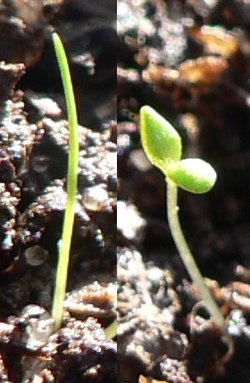
Monocot (left) and dicot (right)
Seedling of a Scots pine
Grass seedlings (150-minute time lapse)

A seedling is a young sporophyte developing out of a plant embryo from a seed. Seedling development starts with germination of the seed. A typical young seedling consists of three main parts: the radicle (embryonic root), the hypocotyl (embryonic shoot), and the cotyledons (seed leaves). The two classes of flowering plants (angiosperms) are distinguished by their numbers of seed leaves: monocotyledons (monocots) have one blade-shaped cotyledon, whereas dicotyledons (dicots) possess two round cotyledons. Gymnosperms are more varied. For example, pine seedlings have up to eight cotyledons.[citation needed] The seedlings of some flowering plants have no cotyledons at all. These are said to be acotyledons.

The plumule is the part of a seed embryo that develops into the shoot bearing the first true leaves of a plant. In most seeds, for example the sunflower, the plumule is a small conical structure without any leaf structure. Growth of the plumule does not occur until the cotyledons have grown above ground. This is epigeal germination. However, in seeds such as the broad bean, a leaf structure is visible on the plumule in the seed. These seeds develop by the plumule growing up through the soil with the cotyledons remaining below the surface. This is known as hypogeal germination.

Photomorphogenesis and etiolation

[edit]

Dicot seedlings grown in the light develop short hypocotyls and open cotyledons exposing the epicotyl. This is also referred to as photomorphogenesis. In contrast, seedlings grown in the dark develop long hypocotyls and their cotyledons remain closed around the epicotyl in an apical hook. This is referred to as skotomorphogenesis or etiolation. Etiolated seedlings are yellowish in color as chlorophyll synthesis and chloroplast development depend on light. They will open their cotyledons and turn green when treated with light.

In a natural situation, seedling development starts with skotomorphogenesis while the seedling is growing through the soil and attempting to reach the light as fast as possible. During this phase, the cotyledons are tightly closed and form the apical hook to protect the shoot apical meristem from damage while pushing through the soil. In many plants, the seed coat still covers the cotyledons for extra protection.

Upon breaking the surface and reaching the light, the seedling's developmental program is switched to photomorphogenesis. The cotyledons open upon contact with light (splitting the seed coat open, if still present) and become green, forming the first photosynthetic organs of the young plant. Until this stage, the seedling lives off the energy reserves stored in the seed. The opening of the cotyledons exposes the shoot apical meristem and the plumule consisting of the first true leaves of the young plant.

The seedlings sense light through the light receptors phytochrome (red and far-red light) and cryptochrome (blue light). Mutations in these photo receptors and their signal transduction components lead to seedling development that is at odds with light conditions, for example seedlings that show photomorphogenesis when grown in the dark..

Seedling growth and maturation

[edit]
Seedling of Nandina domestica (a dicot) showing two green cotyledon leaves, and the first "true" leaf with its distinct leaflets and red-green color.

Once the seedling starts to photosynthesize, it is no longer dependent on the seed's energy reserves. The apical meristems start growing and give rise to the root and shoot. The first "true" leaves expand and can often be distinguished from the round cotyledons through their species-dependent distinct shapes.[1] While the plant is growing and developing additional leaves, the cotyledons eventually senesce and fall off. Seedling growth is also affected by mechanical stimulation, such as by wind or other forms of physical contact, through a process called thigmomorphogenesis.

Temperature and light intensity interact as they affect seedling growth; at low light levels about 40 lumens/m2 a day/night temperature regime of 28 °C/13 °C is effective (Brix 1972).[2] A photoperiod shorter than 14 hours causes growth to stop, whereas a photoperiod extended with low light intensities to 16 h or more brings about continuous (free) growth. Little is gained by using more than 16 h of low light intensity once seedlings are in the free growth mode. Long photoperiods using high light intensities from 10,000 to 20,000 lumens/m2 increase dry matter production, and increasing the photoperiod from 15 to 24 hours may double dry matter growth (Pollard and Logan 1976, Carlson 1979).[3][4]

The effects of carbon dioxide enrichment and nitrogen supply on the growth of white spruce and trembling aspen were investigated by Brown and Higginbotham (1986).[5] Seedlings were grown in controlled environments with ambient or enriched atmospheric CO2 (350 or 750 f1/L, respectively) and with nutrient solutions with high, medium, and low N content (15.5, 1.55, and 0.16 mM). Seedlings were harvested, weighed, and measured at intervals of less than 100 days. N supply strongly affected biomass accumulation, height, and leaf area of both species. In white spruce only, the root weight ratio (RWR) was significantly increased with the low-nitrogen regime. CO2 enrichment for 100 days significantly increased the leaf and total biomass of white spruce seedlings in the high-N regime, RWR of seedlings in the medium-N regime, and root biomass of seedlings in the low-N regime.

First-year seedlings typically have high mortality rates, drought being the principal cause, with roots having been unable to develop enough to maintain contact with soil sufficiently moist to prevent the development of lethal seedling water stress. Somewhat paradoxically, however, Eis (1967a)[6] observed that on both mineral and litter seedbeds, seedling mortality was greater in moist habitats (alluvium and Aralia–Dryopteris) than in dry habitats (Cornus–Moss). He commented that in dry habitats after the first growing season surviving seedlings appeared to have a much better chance of continued survival than those in moist or wet habitats, in which frost heave and competition from lesser vegetation became major factors in later years. The annual mortality documented by Eis (1967a)[6] is instructive.

Pests and diseases

[edit]

Seedlings are particularly vulnerable to attack by pests and diseases[7] and can consequently experience high mortality rates. Diseases which are especially damaging to seedlings include damping off. Pests which are especially damaging to seedlings include cutworms, pillbugs, slugs and snails.[8]

Transplanting

[edit]

Seedlings are generally transplanted,[9] when the first pair of true leaves appear. This is often known as pricking out in the UK.[10][11] A shade may be provided if the area is arid or hot. A commercially available vitamin hormone concentrate may be used to avoid transplant shock which may contain thiamine hydrochloride, 1-Naphthaleneacetic acid and indole butyric acid.

Images

[edit]

See also

[edit]

References

[edit]

Bibliography

[edit]
Revisions and contributorsEdit on WikipediaRead on Wikipedia
from Grokipedia
A seedling is the young sporophyte plant that emerges from a germinating seed, representing the initial postembryonic phase of development where the embryo transitions from reliance on stored reserves to autotrophy through photosynthesis.[1][2] This stage typically includes a primary root (radicle), a shoot apex (plumule), and one or more cotyledons, which serve as the first leaves and nutrient storage organs.[3] Seedlings are highly vulnerable to environmental stresses, herbivores, and pathogens, yet they are crucial for plant population establishment and regeneration.[4] The formation of a seedling begins with seed germination, a process triggered by favorable conditions such as adequate moisture, oxygen, and temperature, typically ranging from 25–30°C for many species.[2] Germination proceeds in three main phases: imbibition, where the seed absorbs water and swells, softening the seed coat; a lag phase involving metabolic activation and breakdown of stored food reserves like starches into sugars; and emergence, where the radicle protrudes first, followed by the shoot.[3] In dicotyledonous plants, such as beans, cotyledons may emerge above ground (epigeous germination) to provide initial photosynthesis, while in monocotyledonous plants like grasses, a protective coleoptile sheathes the emerging shoot.[3] Light often plays a regulatory role, with some species requiring exposure to break dormancy, leading to etiolated (elongated and pale) growth in darkness before true leaf expansion upon illumination.[2] Ecologically, seedlings play a pivotal role in shaping plant communities by determining recruitment success, with herbivory accounting for much of their mortality and influencing species composition and diversity.[4] For instance, selective grazing can favor certain traits, altering vegetation structure over time, while seedlings' defenses—such as chemical compounds (e.g., iridoid glycosides) or physical toughness—evolve to enhance survival during this critical window.[4] In forestry and agriculture, understanding seedling biology aids in propagation, with optimal conditions ensuring robust establishment before the transition to the vegetative growth phase.[3]

Definition and Basics

Definition

A seedling is a young plant sporophyte that develops from the embryo within a seed, beginning with the emergence of the radicle and shoot after germination and continuing until the plant achieves photosynthetic independence through the development of true leaves.[3] This stage distinguishes the seedling from the dormant seed, which contains the undeveloped embryo and nutrient reserves, and from mature plants capable of reproduction.[1] The term "seedling" originates from the combination of "seed," derived from Old English sǣd meaning "that which is sown," and the diminutive suffix "-ling," indicating something small or young, with the word first appearing in English in the early 17th century to describe a young plant grown from seed.[5] In botanical literature, it has been used since at least 1608 to refer to the initial post-germination growth phase.[6] Key characteristics of seedlings include the position of the cotyledons relative to the soil surface, classifying them into hypogeal types, where cotyledons remain below ground (e.g., peas and corn), and epigeal types, where cotyledons are raised above ground (e.g., beans and sunflowers).[7] These types reflect adaptations in how the seedling utilizes stored seed reserves for initial growth, with the basic structure comprising a primary root (radicle) and embryonic shoot (plumule).[8] The seedling phase is the earliest segment of the plant's ontogeny, preceding the juvenile phase of vegetative expansion without reproductive competence and the adult phase marked by flowering and seed production, thereby representing a critical transition in the life cycle where the plant shifts from reliance on seed nutrients to environmental resources. This distinction underscores the seedling's vulnerability and specialized developmental priorities before entering later growth stages.[9]

Anatomy and Morphology

A seedling consists of several primary embryonic structures that form the foundation for post-germination growth. The radicle, the embryonic root, emerges first from the seed and develops into the primary root system, anchoring the plant and initiating water uptake.[3] The hypocotyl, located between the radicle and the cotyledons, serves as the transitional stem segment below the seed leaves.[10] Above the cotyledons lies the epicotyl, which extends as the upper stem and culminates in the plumule, the embryonic shoot containing the first true leaves and shoot apical meristem.[11] The cotyledons, or seed leaves, are specialized embryonic organs that store nutrients during seed development and provide initial sustenance to the growing seedling.[12] Morphological variations distinguish seedlings of dicotyledonous and monocotyledonous plants. Dicot seedlings typically feature two cotyledons and an elongating hypocotyl that lifts the cotyledons above the soil surface in epigeal germination, as seen in beans (Phaseolus vulgaris). The presence of two cotyledons indicates a dicotyledonous plant, which is common among many garden vegetables and herbs started in small pots, such as tomatoes, peppers, and beans. A green stem is typical for light-exposed seedlings of these plants, as they produce chlorophyll for photosynthesis. However, specific identification of the exact plant species is not possible from this description alone, as it lacks details like the shape, size, or texture of the first true leaves, which are key for differentiation.[13][3] In contrast, monocot seedlings, such as corn (Zea mays), possess a single cotyledon and exhibit hypogeal germination where the cotyledon remains below ground, with the epicotyl elongating to push the plumule upward.[3] Transitional features protect emerging tissues during soil penetration. Many dicot seedlings display an epicotyl hook, a curved structure at the tip of the epicotyl that straightens upon exposure to air, shielding the delicate plumule.[14] Monocot seedlings, particularly grasses, are equipped with a coleoptile, a protective sheath encasing the plumule as it emerges, and a coleorhiza covering the radicle.[3] At emergence, seedlings are typically small, ranging from 1 to 10 cm in length depending on species and conditions, with the aboveground shoot often measuring a few centimeters.[15] Tissue differentiation begins early, driven by meristems: the root apical meristem at the radicle tip produces primary root tissues, while the shoot apical meristem in the plumule generates stem and leaf primordia, enabling indeterminate growth.[16] These meristems give rise to dermal, ground, and vascular tissues that specialize for protection, storage, and transport, respectively.[17]

Germination and Emergence

Germination Process

Germination begins with the breakage of seed dormancy, a critical precondition that prevents premature sprouting and ensures survival until favorable conditions arise. This process often involves after-ripening, where dry storage under specific temperatures and moisture levels allows environmental cues such as temperature stratification, light exposure via phytochromes, and nitrate accumulation to alleviate dormancy, alongside a hormonal shift decreasing abscisic acid (ABA) levels and increasing gibberellins (GAs). Water imbibition follows as the seed absorbs water passively through its coat, causing swelling and initiating hydration of cellular structures, while oxygen availability supports aerobic respiration essential for energy production. Suitable temperatures, generally 20-30°C for most species, are required to optimize enzymatic activities, though ranges vary; for instance, many temperate crops germinate best between 15-25°C to avoid heat-induced secondary dormancy. The germination process unfolds in three distinct phases. Phase I, imbibition, involves rapid water uptake that rehydrates the embryo and endosperm without immediate metabolic surges, leading to seed coat expansion. Phase II, the lag phase, is a preparatory period lasting hours to days where metabolism reactivates: transcription and translation resume, mitochondria repair for ATP production, and enzymes synthesize in preparation for growth, all while visible changes remain minimal. Phase III culminates in radicle protrusion, where the embryonic root emerges through the seed coat, signaling the completion of germination and the transition to seedling establishment. Key metabolic events drive these phases, particularly the hydrolysis of stored reserves to fuel the embryonic axis. Starches in the endosperm are degraded into simple sugars via activation of amylases, such as α-amylase induced by GAs, providing carbohydrates for respiration and osmotic expansion of the embryo. Lipids and proteins undergo similar breakdown by lipases and proteases, respectively, releasing fatty acids and amino acids that support de novo synthesis of nucleic acids and structural components in the activating embryonic axis. Several factors influence the success and rate of germination, including seed viability, which can be rapidly assessed using the tetrazolium chloride (TZ) test; this biochemical method stains viable embryonic tissues red due to dehydrogenase activity reducing the colorless TTC to red formazan, estimating potential germination without waiting for actual sprouting. In major crops, such as wheat, germination typically completes in 5-7 days under optimal moist conditions at 15-25°C, though viability and environmental consistency are crucial for uniform emergence.

Radicle and Shoot Emergence

The radicle, the embryonic root, is the first structure to emerge from the seed coat, signifying the completion of germination in many plant species. This emergence occurs through the rupture of the seed coverings, driven by cell expansion in the embryo axis and weakening of surrounding tissues such as the endosperm, often facilitated by gibberellin-induced enzymes that remodel cell walls.[18] Once protruded, the radicle exhibits positive geotropism, growing downward in response to gravity to establish anchorage in the soil and initiate absorption of water and nutrients essential for seedling survival.[19] This process typically begins 8–24 hours after the onset of imbibition in non-dormant seeds, marking the transition from metabolic reactivation to visible structural development.[18] Following radicle establishment, shoot emergence involves the elongation of the hypocotyl and plumule, which collectively form the embryonic shoot axis. In dicotyledonous plants, the hypocotyl rapidly extends upward through the soil, often forming a protective apical hook at its tip to shield the delicate shoot apical meristem from mechanical damage during passage.[20] This hook develops through differential cell growth regulated by auxin gradients and ethylene signaling, maintaining a curved shape in darkness until exposure to light triggers its opening.[20] The plumule, housed within the hook, remains safeguarded until the shoot breaks the soil surface, enabling the transition to photosynthetic growth. In monocotyledonous plants, the shoot emerges protected by a coleoptile, a sheath that pierces the soil surface and allows the plumule to reach light.[3] Environmental factors significantly influence the success of both radicle and shoot emergence. Adequate soil moisture is critical for initial imbibition and sustained elongation, with deficits delaying or preventing protrusion, while excess can lead to oxygen deprivation.[21] Soil texture modulates emergence rates; loamy sand soils, with their balanced drainage and water-holding capacity, support higher success rates such as 70–80% emergence in crops like peppers under subirrigated conditions, while silt loam shows lower rates of 45–70%.[22] In contrast, heavy clay soils impede penetration due to compaction, reducing rates compared to sandy loams.[23] Timeframes for these emergences vary by species and conditions, generally spanning 1–7 days after the start of germination. Fast-germinating species like lettuce exhibit radicle and shoot emergence within 2–15 days under optimal temperatures of 40–80°F, often completing in under a week.[24] Slower species, such as oaks, require longer periods; acorns of white oaks typically show radicle emergence within 1-7 days post-imbibition, while red oaks exhibit both radicle and shoot emergence in spring following cold stratification over winter due to dormancy mechanisms.[25][26] These variations underscore the role of species-specific adaptations in responding to soil and climatic cues.

Physiological Development

Photomorphogenesis and Etiolation

Photomorphogenesis refers to the light-dependent developmental processes in seedlings that promote the transition from subterranean growth to aerial photosynthesis, primarily through the inhibition of hypocotyl elongation and the promotion of leaf expansion.[27] This response is mediated by photoreceptors such as phytochromes, which sense red and far-red light wavelengths, triggering conformational changes that initiate downstream signaling cascades.[28] In Arabidopsis thaliana seedlings, exposure to red light activates phytochrome B (phyB), which inhibits excessive stem growth and enhances cotyledon unfolding, ensuring efficient light capture upon emergence from soil.[27] In contrast, etiolation describes the morphology observed in dark-grown seedlings, which shares similarities with the shade-avoidance syndrome triggered by low red-to-far-red light ratios in shaded conditions, characterized by rapid hypocotyl elongation, small and unexpanded leaves, and a pale coloration due to the absence of chlorophyll synthesis.[29] This morphology is adaptive, facilitating penetration through soil layers toward light sources by prioritizing linear growth over photosynthetic development.[29] Phytochrome-interacting factors (PIFs), such as PIF3 and PIF4, accumulate in the dark to promote this etiolated state by activating genes for cell elongation; upon light exposure, phyB induces PIF degradation via ubiquitination, thereby repressing etiolation and promoting photomorphogenesis.[28] Cryptochromes, which primarily absorb blue light, complement phytochromes by further inhibiting hypocotyl elongation and stimulating cotyledon expansion in seedlings.[30] For instance, cryptochrome 2 (cry2) enhances blue light sensitivity at low intensities, mediating de-etiolation through interactions with signaling components like COP1, which suppresses photomorphogenic transcription factors in the dark.[30] Experimental evidence dates back to Charles Darwin's 1880 observations, where he demonstrated phototropism in etiolated grass seedlings by covering coleoptile tips, revealing light perception at the apex and subsequent bending toward unilateral light.[31] Modern studies using light-emitting diodes (LEDs) have elucidated these mechanisms in controlled environments, showing that blue LED light strongly inhibits etiolation in seedlings like tomato and Arabidopsis by accelerating chlorophyll accumulation and reducing hypocotyl length compared to red or far-red light alone.[32] These findings underscore the synergistic roles of phytochromes and cryptochromes in fine-tuning seedling morphology to optimize survival in variable light conditions.[32] Recent studies (as of 2025) highlight how external light signals interact with internal ethylene to facilitate seedling emergence from soil, integrating photomorphogenesis with hormonal control.[33]

Hormonal Regulation

Hormonal regulation plays a central role in coordinating the early developmental processes of seedlings, from breaking seed dormancy to establishing root and shoot systems. Plant hormones, or phytohormones, act as signaling molecules that influence cell division, elongation, differentiation, and responses to internal cues, ensuring coordinated growth after germination.[34] Key hormones involved include auxins, gibberellins, cytokinins, abscisic acid, and ethylene, each contributing to specific aspects of seedling architecture and physiology.[34] Auxins, primarily indole-3-acetic acid (IAA), are essential for establishing apical dominance and directing tropistic responses in seedlings, such as gravitropism in roots and phototropism in shoots.[34] They promote cell elongation and vascular differentiation, with polar auxin transport mediated by PIN-FORMED (PIN) proteins crucial for root initiation and lateral root formation during early seedling stages.[35] Gibberellins (GAs) drive stem elongation, particularly in the hypocotyl, facilitating shoot emergence and overall seedling height.[36] Cytokinins stimulate cell division in both root and shoot meristems, promoting the proliferation of tissues necessary for organ expansion in young seedlings.[37] In contrast, abscisic acid (ABA) maintains seed dormancy and modulates the transition to active growth by inhibiting germination under unfavorable conditions.[38] Hormone interactions fine-tune these processes; for instance, auxin and gibberellin exhibit synergy in promoting hypocotyl elongation, where GAs enhance auxin responsiveness to support rapid shoot growth.[39] Ethylene induces the characteristic "triple response" in etiolated seedlings—shortened hypocotyl, exaggerated apical hook, and radial swelling—acting to inhibit elongation under stress or dark conditions.[40] The balance between gibberellins and abscisic acid is pivotal for breaking dormancy, with a decreasing GA/ABA ratio triggering germination and subsequent seedling establishment.[41] In practical applications, synthetic auxins such as indole-3-butyric acid (IBA) are widely used as rooting hormones to enhance adventitious root formation in propagated seedlings, improving establishment success in horticultural practices.[42] These hormonal mechanisms collectively ensure adaptive development, with light modulating their levels to integrate environmental signals during emergence.[43]

Growth and Maturation

Vegetative Growth Stages

Following emergence, the vegetative growth phase of seedlings encompasses sequential developments in both shoot and root systems, enabling the transition to photosynthetic autonomy. This phase typically spans several weeks, divided into distinct stages marked by organ expansion and functional maturation. Initially, cotyledons expand rapidly to capture light and initiate photosynthesis, drawing on seed reserves while beginning to produce carbohydrates. In many species, this cotyledon expansion occurs within the first 1-2 weeks post-emergence, with cotyledon area reaching maximum size around 7 days after emergence in crops like castor bean.[44] Concurrently, below-ground root growth supports anchorage and initial nutrient uptake, though shoot dominance characterizes this early period.[45] The subsequent stage involves true leaf development, generally from 2-4 weeks after emergence, where the first true leaves unfurl and expand, surpassing cotyledons in photosynthetic efficiency. For instance, in Arabidopsis thaliana, the first true leaf emerges around 7-8 days post-germination, with full expansion by 2 weeks, enabling greater light interception and carbon fixation.[45] As true leaves mature, the plant shifts focus to their growth, with cotyledons often senescing after contributing to early biomass buildup. In the later vegetative phase, tillering in monocots or branching in dicots occurs, increasing shoot density and overall canopy structure to optimize resource capture; this typically begins after 3-4 weeks in annual grasses like rice.[46] Throughout these stages, growth metrics reflect rapid establishment, driven by exponential organ expansion. Leaf area index (LAI), a measure of canopy density, develops from near zero at emergence, enhancing light use efficiency.[47] Key transition markers include chlorophyll accumulation, which stabilizes photosynthetic quantum yield (Fv/Fm) early in dicots like Arabidopsis, and the shift from reserve-dependent nutrition—relying on seed stores—to photoautotrophy, achieved within 1-2 weeks as cotyledon and true leaf chloroplasts fully mature.[45] This metabolic transition is supported by developing roots for nutrient acquisition.[48] Species variations influence these timelines, with annuals exhibiting rapid vegetative progression for quick reproduction; for example, Arabidopsis completes early vegetative stages, including true leaf development, in about 2 weeks under optimal conditions. In contrast, perennials display slower establishment, often extending the juvenile vegetative phase over months to build perennial structures, as seen in relatives like Arabis alpina, where initial growth prioritizes longevity over speed.[49]

Nutrient Acquisition and Root Development

Seedling root development is crucial for establishing root architecture that supports nutrient and water acquisition after germination. The primary root, or radicle, elongates rapidly to anchor the seedling and explore the soil for resources, driven by cell division and expansion in the root meristem.[50] This elongation is regulated by the plant hormone auxin, which maintains meristem activity and directs gravitropic growth toward deeper soil layers.[51] Concurrently, lateral roots form through auxin-mediated signaling, initiating from pericycle cells in the primary root to branch out and increase the root system's absorptive surface area.[52] In early stages, auxin gradients trigger primordia development, enabling a branched architecture that enhances foraging efficiency for heterogeneous soil nutrients.[51] Nutrient uptake in seedlings primarily occurs via active transport mechanisms in root cells, where ions like nitrate are absorbed against concentration gradients using proton-coupled transporters. The nitrate transporter NRT1.1, for instance, facilitates high- and low-affinity uptake, allowing adaptation to varying soil nitrate levels essential for amino acid synthesis and growth.[53] Similarly, NRT2 family members support high-affinity transport under low-nutrient conditions, ensuring efficient nitrogen assimilation.[54] Rhizosphere microbes, including beneficial bacteria and fungi, further augment these pathways by solubilizing phosphates and fixing nitrogen, thereby improving ion availability and root nutrient absorption.[55] Arbuscular mycorrhizal fungi form symbiotic associations with seedling roots as early as the emergent stage, extending hyphal networks to access phosphorus and other immobile nutrients beyond the root depletion zone.[56] These microbial interactions can enhance nutrient uptake, promoting robust early growth.[57] Seedlings rely on finite cotyledon reserves for initial sustenance, typically lasting 7-14 days post-germination, after which root-derived nutrients become indispensable to avoid starvation.[58] Failure in root development or penetration can lead to rapid depletion of these reserves, impairing metabolic processes and increasing mortality risk as the seedling transitions to autotrophy.[59] Soil interactions significantly influence this process; optimal pH ranges of 5.5-7.0 maximize nutrient solubility and transporter activity, while deviations reduce ion availability and root elongation.[60] Soil compaction exacerbates limitations by increasing mechanical impedance, restricting primary and lateral root penetration and confining the root system to shallow layers with inadequate resources.[61] This can heighten vulnerability during the critical establishment phase.[62]

Environmental Interactions and Challenges

Light and Environmental Factors

Seedlings require light intensities within the photosynthetically active radiation (PAR) range of 100-500 µmol/m²/s to support healthy development and photosynthetic activity, with early stages often thriving at 100-300 µmol/m²/s to avoid excessive stress while promoting leaf expansion and chlorophyll synthesis.[63][64] Photoperiod, or the length of daily light exposure, significantly affects growth rates, as longer durations—such as 16 hours—can accelerate germination and biomass accumulation by up to several days compared to shorter periods like 8-12 hours in species such as Camellia sinensis.[65] These environmental light factors interact with photomorphogenic responses, as detailed in studies on etiolation and de-etiolation processes. Temperature gradients play a pivotal role in seedling vigor, defined by cardinal points for many temperate species: a minimum of 5-10°C below which emergence is delayed or inhibited, an optimum of 20-25°C for maximal growth, and a maximum of 30-35°C beyond which cellular damage and reduced metabolic rates occur.[66][67] For instance, in cool-habitat grasses like Stipa purpurea, base temperatures around 3.8-10°C align with temperate adaptations, ensuring synchronized emergence under fluctuating spring conditions. Water availability and soil quality directly influence seedling establishment, with drought tolerance often mediated by rapid stomatal closure that conserves moisture but temporarily curbs CO₂ uptake and photosynthesis.[68] Salinity thresholds are similarly critical, as electrical conductivity (EC) below 2 dS/m generally permits normal growth in most crops, whereas levels exceeding this reduce water uptake and ion balance, leading to osmotic stress and diminished root elongation.[69] Ongoing climate change exacerbates these abiotic pressures, with post-2020 research highlighting that soil warming by 2-5°C can decrease maize seedling emergence by 10-20% through accelerated soil drying and disrupted hydro-thermal balances during critical early stages.[70][71] As of 2025, additional studies show that warmer and drier conditions during seed development reduce seed mass, size, and germination rates in species like those in alpine environments, potentially altering plant community structures and recruitment success.[72]

Pests, Diseases, and Stress Responses

Seedlings are particularly vulnerable to biotic threats during their early growth stages, as their underdeveloped tissues provide easy targets for pests and pathogens. Common soil-dwelling insects such as cutworms (Agrotis spp.) and wireworms (larvae of click beetles, Elateridae family) target roots and germinating seeds, often severing stems at the soil line or boring into underground parts, leading to stand reduction and plant death.[73][74] Above-ground pests like aphids (Aphididae family) colonize tender shoots, sucking sap and transmitting viruses, which can stunt growth and cause leaf curling.[75][76] Fungal diseases pose significant risks to seedlings, with damping-off being one of the most prevalent, caused primarily by Pythium spp. and Rhizoctonia solani. These pathogens induce pre-emergence rot of seeds or post-emergence collapse of hypocotyls, manifesting as water-soaked lesions, reddish-brown discoloration, and rapid wilting near the soil surface.[77][78][79] Bacterial wilt, often due to Ralstonia solanacearum, affects seedlings in warm, moist conditions, resulting in sudden drooping of leaves, vascular discoloration, and stem rot that leads to plant collapse.[80][81] In response to these biotic stresses, seedlings activate defense mechanisms, including systemic acquired resistance (SAR), which is mediated by salicylic acid (SA) accumulation following initial pathogen or herbivore attack. SAR enhances resistance in distal tissues through the upregulation of pathogenesis-related (PR) proteins and antimicrobial compounds.[82][83] For herbivore defense, jasmonic acid (JA) pathways are induced, promoting the production of defensive volatiles and protease inhibitors that deter feeding and recruit natural enemies.[84][85] These hormonal signals, including SA and JA, integrate to balance responses against diverse threats, as detailed in broader hormonal regulation processes. Basic management of these pests and diseases relies on cultural practices to reduce inoculum and pest populations without relying on chemicals. Crop rotation with non-host plants disrupts pathogen and insect life cycles, significantly lowering disease incidence and soil pest densities over multiple seasons.[86][87] Additional practices, such as sanitation to remove infected debris and ensuring well-drained soil, further minimize risks during seedling establishment.[88][89]

Cultivation Practices

Transplanting Techniques

Transplanting seedlings is typically performed when they have developed 2 to 4 true leaves, a stage that indicates sufficient vegetative growth for handling without excessive stress, and when the roots have fully colonized the container to ensure a compact root ball.[90][91] This timing aligns with the early vegetative growth stage, allowing seedlings to establish quickly in the field while minimizing root disturbance.[92] Two primary methods are used for transplanting: bare-root and plug (containerized) transplanting. Bare-root transplanting involves lifting seedlings from the soil without adhering media, which is cost-effective and suitable for dormant plants but requires immediate planting to prevent desiccation and can lead to higher initial shock due to exposed roots.[93] In contrast, plug transplanting uses seedlings grown in small containers with intact soil around the roots, offering advantages such as reduced transplant shock, higher survival rates (often 10-20% greater than bare-root on adverse sites), and flexibility for planting outside optimal dormant seasons.[94] Plug methods are particularly favored in controlled horticulture for crops like vegetables, where maintaining root integrity supports faster establishment.[95] Prior to transplanting, seedlings undergo hardening off, a process of gradual exposure to outdoor conditions over 7 to 10 days to acclimate them to environmental stresses like wind, fluctuating temperatures, and full sunlight.[96] This begins with short periods (1-2 hours) in shaded, protected areas, progressively increasing to full-day exposure, which thickens cuticles, strengthens cell walls, and reduces wilting risk upon field transfer.[97] To mitigate transplant shock, root pruning is applied to remove damaged or circling roots, promoting new lateral root growth and improving soil contact, while post-transplant water management involves immediate thorough irrigation to settle the soil and maintain moisture without waterlogging.[98][99] For example, applying 1-2 liters per square meter initially helps rehydrate roots and supports recovery, with follow-up watering based on soil moisture to prevent drought stress during the establishment phase.[100] In controlled horticultural settings, transplanting achieves success rates of 80-95%, attributed to optimized conditions and handling, compared to lower rates (typically 50-80%) for direct seeding, where environmental variability increases losses from poor germination or early mortality.[101][102] These higher rates underscore the value of transplanting for uniform stands and yield reliability in commercial production.[103]

Propagation and Establishment Methods

Seedlings are propagated through controlled seed sowing methods to optimize germination and initial vigor, often in trays or greenhouse environments that provide consistent moisture, temperature, and protection from environmental stressors. In plug trays filled with soilless mixes such as peat-perlite blends, seeds are sown at densities tailored to species; for instance, broadleaf tree seedlings are typically placed at 40-130 per square meter to balance resource competition and promote even growth.[104] Hydroponic propagation systems further enhance efficiency by using inert media like rockwool cubes or peat pellets submerged in nutrient solutions, enabling root development without soil and reducing the risk of soil-borne pathogens during the starter phase.[105] These methods allow for high-throughput production, with trays often accommodating hundreds of seedlings per unit area for subsequent scaling to field applications. Establishment of seedlings in permanent sites focuses on techniques that support root anchoring, water access, and defense against biotic threats. Mulching with organic materials like straw or wood chips is widely applied around newly planted seedlings to retain soil moisture, potentially reducing evaporation losses by 20-50% and minimizing irrigation needs in arid conditions.[106] Companion planting integrates pest-deterrent species, such as marigolds near vegetable seedlings, to repel nematodes through root exudates like alpha-terthienyl, thereby lowering infestation rates without synthetic pesticides.[107] These practices must be timed carefully to avoid excessive moisture that could exacerbate transplant shock risks during initial rooting.[108] In agricultural systems, seedling propagation underpins crop rotation strategies by enabling the introduction of diverse species that disrupt pest and disease cycles while replenishing soil nutrients through varied root architectures.[109] For forestry applications, seedlings are raised in dedicated nurseries for 1-2 years to achieve target morphological specifications before outplanting, ensuring higher survival rates in restoration projects compared to direct seeding.[110] Advancements since 2015 have introduced precision seeding technologies, including drone-based systems that achieve uniform seed dispersal over large terrains, particularly in reforestation where quadcopter drones can deploy up to 3,600 pre-germinated seeds per day with minimal soil disturbance (as of 2017; more recent systems like those from Flash Forest achieve up to 1 million pods per day as of 2024).[111][112] These innovations improve placement accuracy to within centimeters, reducing seed waste and enhancing establishment uniformity in challenging landscapes.

References

User Avatar
No comments yet.