



Community hub
Recent from talks
Knowledge base stats:
Talk channels stats:
Members stats:
Serbian campaign
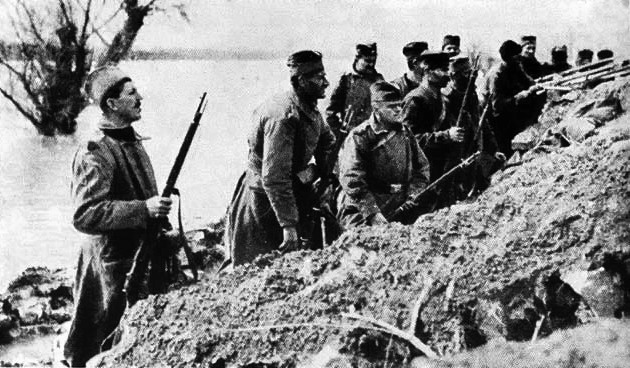
The Serbian campaign was a series of military expeditions launched in 1914 and 1915 by the Central Powers against the Kingdom of Serbia during the First World War. After an unsuccessful invasion by Austria-Hungary in 1914, the Central Powers launched a successful invasion in 1915 and occupied Serbia. In 1918, after breaking the front in Macedonia, Serbia and its allies liberated Serbia.
The first campaign began after Austria-Hungary declared war on Serbia on 28 July 1914. The campaign, dubbed a "punitive expedition" (German: Strafexpedition) by the Austro-Hungarian leadership, was under the command of Austrian General Oskar Potiorek. It ended after three unsuccessful Austro-Hungarian invasion attempts were repelled by the Serbians and their Montenegrin allies. The victory of the Royal Serbian Army at the battle of Cer is considered the first Allied victory in World War I, and the Austro-Hungarian Army's defeat by Serbia has been called one of the great upsets of modern military history.
The second campaign was launched, under German command, almost a year later, on 6 October 1915, when Bulgarian, Austro-Hungarian, and German forces, led by Field Marshal August von Mackensen, successfully invaded Serbia from three sides, pre-empting an Allied advance from Salonica to help Serbia. This resulted in the Great Retreat through Montenegro and Albania, the evacuation to Greece, and the establishment of the Macedonian front. The defeat of Serbia gave the Central Powers temporary mastery over the Balkans, opening up a land route from Berlin to Constantinople, allowing the Germans to re-supply the Ottoman Empire for the rest of the war. Mackensen declared an end to the campaign on 24 November 1915. Serbia was then occupied and divided between the Austro-Hungarian Empire and Bulgaria.
After the Allies launched the Vardar Offensive in September 1918, which broke through the Macedonian front and defeated the Bulgarians and their German allies, a Franco-Serbian force advanced into the occupied territories and liberated Serbia, Albania, and Montenegro. Serbian forces entered Belgrade on 1 November 1918.
The Serbian army declined severely from about 420,000 at its peak to about 100,000 at the moment of liberation. The estimates of casualties are various: Original Serb sources claim that the Kingdom of Serbia lost more than 1,200,000 inhabitants during the war (including both military and civilian losses), which represented more than 29% of its overall population and 60% of its male population. More recent historical analysis has estimated that roughly 177,000 Serbian soldiers lost their lives or were not returned from captivity, while the civilian death toll is impossible to determine, numbering in the hundreds of thousands. According to estimates prepared by the Yugoslav government in 1924, Serbia lost 265,164 soldiers or 25% of all mobilized troops. By comparison, France lost 16.8%, Germany 15.4%, Russia 11.5%, and Italy 10.3%.
Austria-Hungary precipitated the Bosnian crisis of 1908–09 by annexing the former Ottoman territory of Bosnia and Herzegovina, which it had occupied since 1878. This angered the Kingdom of Serbia and its patron, the Pan-Slavic and Orthodox Russian Empire. Russian political manoeuvring in the region destabilized peace accords that were already unravelling in what was known as "the powder keg of Europe."
In 1912 and 1913, the First Balkan War was fought between the Balkan League of Greece, Bulgaria, Serbia, and Montenegro and the fracturing Ottoman Empire. The resulting Treaty of London further shrank the Ottoman Empire by creating an independent Principality of Albania and enlarging the territorial holdings of Bulgaria, Serbia, Montenegro, and Greece. When Bulgaria attacked both Serbia and Greece on 16 June 1913, it lost most of its Macedonian region to those countries, and additionally, the Southern Dobruja region to Romania and Adrianople (the present-day city of Edirne) to Turkey in the 33-day Second Balkan War, which further destabilized the region.
On 28 June 1914, Gavrilo Princip, a Bosnian Serb student and member of an organization of national revolutionaries called Young Bosnia, assassinated Archduke Franz Ferdinand of Austria, the heir to the Austro-Hungarian throne, in Sarajevo, Bosnia. Though the political objective of the assassination was the independence of the southern Austro-Hungarian provinces mainly populated by Slavs from the Austro-Hungarian Empire, it also inadvertently triggered a chain of events that embroiled Russia and the major European powers. This began a period of diplomatic manoeuvring among Austria-Hungary, Germany, Russia, France, and Britain called the July Crisis. Austria-Hungary delivered the July Ultimatum to Serbia, a series of ten demands intentionally made unacceptable to provoke a war with Serbia. When Serbia agreed to only eight of the ten demands, Austria-Hungary declared war on 28 July 1914.[citation needed]
Hub AI
Serbian campaign AI simulator
(@Serbian campaign_simulator)
Serbian campaign
The Serbian campaign was a series of military expeditions launched in 1914 and 1915 by the Central Powers against the Kingdom of Serbia during the First World War. After an unsuccessful invasion by Austria-Hungary in 1914, the Central Powers launched a successful invasion in 1915 and occupied Serbia. In 1918, after breaking the front in Macedonia, Serbia and its allies liberated Serbia.
The first campaign began after Austria-Hungary declared war on Serbia on 28 July 1914. The campaign, dubbed a "punitive expedition" (German: Strafexpedition) by the Austro-Hungarian leadership, was under the command of Austrian General Oskar Potiorek. It ended after three unsuccessful Austro-Hungarian invasion attempts were repelled by the Serbians and their Montenegrin allies. The victory of the Royal Serbian Army at the battle of Cer is considered the first Allied victory in World War I, and the Austro-Hungarian Army's defeat by Serbia has been called one of the great upsets of modern military history.
The second campaign was launched, under German command, almost a year later, on 6 October 1915, when Bulgarian, Austro-Hungarian, and German forces, led by Field Marshal August von Mackensen, successfully invaded Serbia from three sides, pre-empting an Allied advance from Salonica to help Serbia. This resulted in the Great Retreat through Montenegro and Albania, the evacuation to Greece, and the establishment of the Macedonian front. The defeat of Serbia gave the Central Powers temporary mastery over the Balkans, opening up a land route from Berlin to Constantinople, allowing the Germans to re-supply the Ottoman Empire for the rest of the war. Mackensen declared an end to the campaign on 24 November 1915. Serbia was then occupied and divided between the Austro-Hungarian Empire and Bulgaria.
After the Allies launched the Vardar Offensive in September 1918, which broke through the Macedonian front and defeated the Bulgarians and their German allies, a Franco-Serbian force advanced into the occupied territories and liberated Serbia, Albania, and Montenegro. Serbian forces entered Belgrade on 1 November 1918.
The Serbian army declined severely from about 420,000 at its peak to about 100,000 at the moment of liberation. The estimates of casualties are various: Original Serb sources claim that the Kingdom of Serbia lost more than 1,200,000 inhabitants during the war (including both military and civilian losses), which represented more than 29% of its overall population and 60% of its male population. More recent historical analysis has estimated that roughly 177,000 Serbian soldiers lost their lives or were not returned from captivity, while the civilian death toll is impossible to determine, numbering in the hundreds of thousands. According to estimates prepared by the Yugoslav government in 1924, Serbia lost 265,164 soldiers or 25% of all mobilized troops. By comparison, France lost 16.8%, Germany 15.4%, Russia 11.5%, and Italy 10.3%.
Austria-Hungary precipitated the Bosnian crisis of 1908–09 by annexing the former Ottoman territory of Bosnia and Herzegovina, which it had occupied since 1878. This angered the Kingdom of Serbia and its patron, the Pan-Slavic and Orthodox Russian Empire. Russian political manoeuvring in the region destabilized peace accords that were already unravelling in what was known as "the powder keg of Europe."
In 1912 and 1913, the First Balkan War was fought between the Balkan League of Greece, Bulgaria, Serbia, and Montenegro and the fracturing Ottoman Empire. The resulting Treaty of London further shrank the Ottoman Empire by creating an independent Principality of Albania and enlarging the territorial holdings of Bulgaria, Serbia, Montenegro, and Greece. When Bulgaria attacked both Serbia and Greece on 16 June 1913, it lost most of its Macedonian region to those countries, and additionally, the Southern Dobruja region to Romania and Adrianople (the present-day city of Edirne) to Turkey in the 33-day Second Balkan War, which further destabilized the region.
On 28 June 1914, Gavrilo Princip, a Bosnian Serb student and member of an organization of national revolutionaries called Young Bosnia, assassinated Archduke Franz Ferdinand of Austria, the heir to the Austro-Hungarian throne, in Sarajevo, Bosnia. Though the political objective of the assassination was the independence of the southern Austro-Hungarian provinces mainly populated by Slavs from the Austro-Hungarian Empire, it also inadvertently triggered a chain of events that embroiled Russia and the major European powers. This began a period of diplomatic manoeuvring among Austria-Hungary, Germany, Russia, France, and Britain called the July Crisis. Austria-Hungary delivered the July Ultimatum to Serbia, a series of ten demands intentionally made unacceptable to provoke a war with Serbia. When Serbia agreed to only eight of the ten demands, Austria-Hungary declared war on 28 July 1914.[citation needed]