Hubbry Logo
RubimRubimMain
Open search
Rubim
Community hub
Rubim
logo
8 pages, 0 posts
0 subscribers
Be the first to start a discussion here.
Rubim
Rubim
from Wikipedia

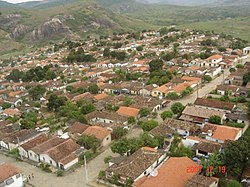
Rubim is a municipality in the northeast of the Brazilian state of Minas Gerais. Its population in 2020 was 10,256 inhabitants in a total area of 969 km2.[2] Neighboring municipalities are: Almenara, Jacinto, Santa Maria do Salto, Palmópolis, Rio do Prado, Jequitinhonha, and Felisburgo. The distance to Almenara, the regional center, is 36 km to the northwest. The elevation of the municipal seat is 254 meters. It became a municipality in 1943. This municipality is located in the valley of the Rubim do Sul River, a tributary of the Jequitinhonha River.

Key Information

Economics and social indicators

[edit]

The main economic activities are cattle raising, and subsistence farming. The GDP was R$31.6 million (US$14.52 million) in 2005. There was 01 banking agency in 2006. There were 216 automobiles in 2007. The main cash crop was coffee. In the health sector there were 6 health clinics and 1 hospital with 58 beds. The score on the Municipal Human Development Index was 0.625 (medium). This ranked Rubim 797th out of 853 municipalities in the state, with Poços de Caldas in first place with 0.841 and Setubinha in last place with 0.568. See Frigoletto for the complete list. In 2006 there were 454 rural farms with 500 hectares of planted area. Most of the rural area was natural pasture or woodland. Only 05 of the farms had tractors.

  • Illiteracy rate: 32.30%
  • Infant mortality rate: 19.23
  • Degree of urbanization: 77.94%
  • Life expectancy: 61.3 (average of male and female)
  • Percentage of urban residences connected to sewage system: 60.40 (All data are from 2000)[citation needed]

See also

[edit]

References

[edit]
[edit]
Revisions and contributorsEdit on WikipediaRead on Wikipedia
from Grokipedia
Rubim is a municipality located in the northeastern region of the Brazilian state of Minas Gerais, named after the Rubim River that flows through the area. As of the 2020 census, it has a population of 10,256 inhabitants and covers a total area of 969 square kilometers, making it a small rural community distinct from the state's larger urban centers. The municipality is characterized by rolling hills and remnants of the Caatinga and transitional forests, supporting agriculture as its primary economic activity, with coffee, dairy farming, and livestock production being key sectors. Geographically, Rubim lies at an elevation of 254 meters above sea level and experiences a tropical climate with dry winters, contributing to its scenic but challenging rural landscape. Established in 1943, it serves as an important local hub for surrounding rural areas, with basic infrastructure including schools, health centers, and access to regional transportation routes.

Geography

Location and Borders

Rubim is situated in the northeastern region of , Brazil, within the , a subregion known for its rural landscapes and river systems. The municipality's central seat is positioned at of approximately 16°22′ S latitude and 40°32′ W longitude. This placement places it in the broader , contributing to its integration into the state's northeastern mesoregion. The elevation of Rubim's municipal seat is around 254 meters above sea level, reflecting its position in a relatively low-lying area of the state's interior. Administratively, it forms part of the Mesorregião do Jequitinhonha and the Microrregião de Almenara, which organize local governance and statistical divisions across the state. This regional affiliation underscores Rubim's role in the interconnected network of municipalities in northeastern Minas Gerais. Rubim shares borders with several adjacent municipalities, including Almenara to the northwest, Jacinto, Santa Maria do Salto, Palmópolis, Rio do Prado, Jequitinhonha, and Felisburgo. These boundaries define its territorial extent of approximately 965 km² (as of 2024) and facilitate regional interactions, particularly with Almenara, located about 36 km away as a key nearby urban center. The Rubim River, after which the municipality is named, traverses the area and influences its geographical identity.

Physical Features and Climate

Rubim's physical landscape is characterized by a varied topography typical of the northeastern Minas Gerais region, featuring rolling hills, plateaus, and depressions influenced by the underlying geological structures of the Brazilian Shield. Approximately 60% of the municipality's 965 km² area consists of mountainous terrain, with 30% undulating and 10% flat, and elevations ranging from a minimum of 242 meters along watercourses to a maximum of 999 meters in elevated areas near Olho d'Água. This relief forms part of the dissected plateaus in the Jequitinhonha River Basin, with slopes often exceeding 13% that limit agricultural expansion and promote soil erosion in degraded zones. The municipality lies within the , with remnants of seasonal deciduous forest vegetation dominating the natural cover, alongside transitioning to in adjacent areas of the . Original forest cover has been significantly reduced due to , with current land use showing high proportions as in the region, much of it severely degraded, and about 32.7% remaining as forest formations across similar regional contexts. Environmental challenges include ongoing deforestation, as evidenced by recent legal actions for unauthorized suppression of , necessitating recovery programs to restore and prevent further . Key hydrological features center on the Rio Rubim and its tributaries, such as the Ribeirão Rubim de Pedra and Córrego Água Sempre-Viva, which form a dendritic drainage pattern within the larger Jequitinhonha River Basin. These water bodies support local aquifers, including fissural types in crystalline rocks and granular ones in alluvial deposits along river margins, contributing to groundwater resources despite low overall yields due to the rocky substrate. The rivers play a critical role in regional water circulation, though semi-arid conditions lead to elevated salinity in some sources and vulnerability to dry periods. Rubim experiences a classified as under the , marked by a distinct dry winter and rainy summer season. Average annual temperatures hover around 24°C, with monthly minima of 21–22°C and maxima of 29–31°C during the warmer months, while precipitation totals approximately 600–800 mm annually, concentrated between November and March. This , with low water circulation rates, exacerbates environmental pressures like and supports the prevalence of adapted to periodic water scarcity.

History

Founding and Early Development

Rubim's early history is rooted in the exploration and settlement of the northeastern region during the early 20th century, a period marked by as farmers, adventurers, and laborers sought new lands in one of the state's last agricultural frontiers. The area, characterized by its rural landscapes and proximity to river systems, attracted initial settlers driven by opportunities in farming and land clearance. Tiago José de Almeida is recognized as the first explorer, arriving with companions and agricultural tools to establish a presence amid , though the exact date remains unknown. This settlement was soon followed by an engineer from , who cleared forests, planted crops on farms such as Fazenda Guaraná, Pirajá, and Iracema, and displaced local indigenous populations after conflicts, paving the way for further European-descended settlers to take over the developed lands. Around 1918, Quinto Fernandes Ruas, a prominent figure from Pedra Azul, arrived and claimed land near the margins of the Rio Rubim do Sul, fostering community growth by welcoming additional migrants and promoting unity among residents. The emerging population center, initially named União to symbolize this harmony, developed through agriculture, with early activities centered on crop cultivation and basic farming supported by the river's access for irrigation and transport. Quinto Ruas built the first house in the settlement, located at what is now the corner of Praça Quinto Ruas, which served as a hub for the growing community; a second house followed, constructed by Eugênio Silva. The settlement's name was changed to Rubim in 1923, honoring the nearby Rio Rubim do Sul, when it was officially established as a district by State Law No. 843 on September 7, carved from the district of São João da Vigia within the municipality of Jequitinhonha. Early infrastructure developments were modest but essential, including the construction of rudimentary houses and commercial spaces with storage for agricultural goods, reflecting the socioeconomic push of internal migration in Minas Gerais' northeast, where families from nearby areas like Pedra Azul sought economic stability through land-based livelihoods. By the late 1930s, administrative shifts saw the district transferred to the municipality of Vigia (later Almenara) in 1938, setting the stage for further growth. These foundations in agriculture and community building culminated in Rubim's elevation to municipality status on December 31, 1943, via State Decree-Law No. 1058, with Quinto Fernandes Ruas honored as the patron of its founding.

Administrative Changes

Rubim was established as a district in 1923 through State Law No. 843 of September 7, 1923, which detached territory from the district of São João da Vigia and subordinated it to the municipality of . In 1938, Decree-Law No. 58 of January 12, 1938, transferred the district of Rubim from Jequitinhonha to the newly created municipality of Vigia (later renamed ), marking an early administrative realignment in the region's territorial organization. The municipality's official emancipation occurred on December 31, 1943, via State Decree-Law No. 1,058, which elevated the district to municipal status by detaching it from Almenara and incorporating the district of Rio do Prado, previously under Jequitinhonha, into its territory; installation took effect on January 1, 1944. This decree-law was later altered by State Decree-Law No. 1,488 of December 30, 1948, which refined the boundaries and administrative divisions effective from 1949 onward. A significant territorial adjustment followed in 1953 under State Law No. 1,039 of December 12, 1953, which created the district of Itapiru from a former settlement and annexed it to Rubim, while simultaneously detaching the district of Rio do Prado to establish it as an independent municipality; these changes took effect in the administrative division from January 1, 1954, to December 31, 1958. As a result, Rubim currently comprises two districts: the seat district of Rubim and Itapiru, spanning a total area of approximately 966 km² with borders shared with Almenara, Rio do Prado, Palmópolis, Jacinto, Santo Antônio do Jacinto, Felisburgo, and Jequitinhonha. In terms of broader integration, Rubim has been part of the Mesorregião do Jequitinhonha and the Microrregião de Almenara since the establishment of these planning units in the late 20th century, facilitating regional development initiatives under state and federal frameworks. The 1988 Federal Constitution's emphasis on municipal autonomy influenced local governance, leading to the promulgation of Rubim's Organic Law on March 20, 1990, which outlined provisions for district creation, organization, and suppression in alignment with state legislation. No major boundary disputes, mergers, or further district creations have been recorded in the post-1953 period.

Demographics

The population of Rubim has exhibited modest and fluctuating growth patterns over the decades, reflecting broader in rural municipalities of . According to historical census data from the , the municipality recorded 11,668 inhabitants in 1960, rising to 13,697 in 1970 before declining to 11,801 in 1980 and further to 10,758 in 1991. These shifts correspond to annual growth rates averaging approximately 1.6% in the 1960s, followed by negative rates of about -1.5% in the 1970s and slower declines in the 1980s and early 1990s. Subsequent censuses indicate stabilization and slight recovery, with the population at 9,666 in 2000 and 9,919 in 2010, yielding an average annual growth rate of around 0.3%. By 2022, the figure reached 10,298, reflecting a continued low positive growth of approximately 0.3% annually from 2010. An estimate for 2020 placed the population at 10,256, aligning with this gradual upward trend in recent years. Overall, since the mid-20th century, annual growth rates have averaged 0.5-1% in positive periods, influenced by regional patterns of and specific to northeastern Minas Gerais. The distribution of Rubim's population remains predominantly rural, underscoring its character as a . In 2010, out of a total of 9,908 residents, approximately 7,700 (about 78%) lived in rural areas, while 2,208 resided in urban settings, primarily the municipal seat. This over 70% rural proportion has contributed to the observed trends, as out-migration to larger urban centers in has offset local , with at a relatively low 11.49 deaths per 1,000 live births in recent data. Looking ahead, projections based on recent Brazilian demographic studies anticipate continued slow growth, estimating Rubim's population at 10,602 by 2025, implying an annual rate of about 1% from 2022 levels.

Ethnic and Social Composition

The ethnic composition of Rubim reflects typical patterns in , with a historical blending of , , and ancestries in the region, and no significant indigenous or populations reported. Religious demographics in Rubim are dominated by , consistent with broader trends in Minas Gerais' rural areas. There has been a notable growth in , reflecting national shifts toward non-Catholic Christianity in small municipalities. Social indicators reveal challenges associated with the area's . Poverty levels are above the average, with roughly 45.6% of the population living on per capita monthly income up to half the as of 2010, underscoring persistent . The shows a near balance, with females slightly outnumbering males, while the age pyramid indicates a youthful population structure featuring a broader base of younger residents due to higher birth rates in .

Economy

Primary Sectors

The primary economic sectors in Rubim are dominated by and , which form the backbone of the local economy in this . Agriculture focuses on the production of such as , , corn, , legumes, and . These activities are supported by the municipality's rolling hills and fertile soils, though specific production volumes for Rubim are limited in available data; for instance, plays a significant role, as evidenced by participation in that aid small producers. , particularly dairy and beef cattle, is a key component of the primary sector, contributing substantially to employment and output. According to data, livestock includes significant herds of cattle alongside smaller numbers of , , poultry, , and . This sector accounts for approximately 12% of the municipality's GDP, with beef cattle production being a characteristic activity employing around 120 formal workers. is also prominent, aligning with broader trends in Minas Gerais' . Secondary activities within the primary sectors include small-scale forestry, leveraging remnants of the for limited extraction, and , primarily , which serves local construction needs. Challenges in these sectors include limited market access for , addressed through programs like the Programa de Aquisição de Alimentos (PAA) and Programa Nacional de Alimentação Escolar (PNAE), which have boosted income during periods like the COVID-19 pandemic, and potential issues like soil erosion in hilly terrains, though detailed census data on these for Rubim is sparse. Overall, the agropecuary sector's contribution underscores Rubim's rural character, with over half of formal occupations tied to these activities despite public administration dominating GDP shares.

Infrastructure and Development

Rubim's transportation infrastructure is primarily supported by the state highway MG-412, which connects the municipality to in the south and extends northward toward Teófilo Otoni, enabling access to larger markets and services for local residents and agricultural producers. Rural roads, many of which remain unpaved, facilitate internal movement but often suffer from poor maintenance, particularly during the rainy season, impacting the efficiency of goods transport from farms to urban centers. The water supply system in Rubim serves approximately 69.5% of the population, with the majority (81.6%) receiving water via a general distribution network operated by public companies such as COPASA and COPANOR. Sanitation infrastructure covers 77.7% of residents through collection networks or septic systems, though no collected sewage is currently treated, leading to environmental concerns. Average per capita water consumption stands at 126.8 liters per day, with tariffs averaging R$6.0 per cubic meter. Energy infrastructure in the region supports agricultural operations and household needs across the municipality's rural expanse. Development efforts in Rubim include federal programs aimed at family agriculture, such as government food acquisition initiatives, which have positively affected local producers by increasing income and market access for small-scale farmers. Local agribusiness cooperatives play a key role in these efforts, fostering collective bargaining and resource sharing among rural communities. Economically, Rubim's GDP per capita was R$10,876.73 in 2021, reflecting a reliance on public administration and services alongside agriculture. The municipality faces challenges in job creation despite positive formal employment growth in recent years.

Government and Administration

Local Governance

The local government of Rubim operates under the standard municipal structure outlined in Brazil's Federal Constitution, with executive power vested in a mayor elected by popular vote every four years. The legislative branch is represented by the Câmara Municipal de Rubim, a unicameral city council composed of 9 vereadores (councilors), also elected every four years to oversee municipal laws and budgets. Key administrative departments include the Gabinete do Prefeito for executive coordination, the Secretaria Municipal de Administração e Planejamento for financial and strategic oversight, and other specialized secretarias handling areas such as works and public services. In the most recent municipal elections held on October 6, 2024, João Paulo da Silva, known as "Bola" from the Partido Republicanos, was elected mayor in the first round with 81.71% of the valid votes, defeating Ianara Dutra. This outcome reflects the influence of center-right parties in local politics, consistent with broader trends in Minas Gerais where parties like Republicanos often perform strongly in municipal contests. The 9 vereadores elected in 2024 represent a mix of local affiliations, ensuring representation for the rural constituency. Municipal budget allocation prioritizes rural development initiatives, including infrastructure and agricultural support, as guided by annual Lei de Diretrizes Orçamentárias (LDO) and Lei Orçamentária Anual (LOA) approved by the city council. For the 2025 fiscal year, the LOA estimates revenues and fixes expenditures with a focus on essential public functions, though specific sectoral breakdowns are detailed in official transparency portals.

Public Services

Rubim's public services are managed by the municipal administration in coordination with state and federal programs, emphasizing basic infrastructure in a predominantly rural setting. Sanitation coverage in the municipality includes 69.5% for water supply and 77.7% for sewage collection as of 2023, with 0% sewage treatment, according to data from the Instituto Água e Saneamento citing SINISA and IBGE. Efforts are focused on expanding access to treated water and sewage systems, particularly along the Rubim River basin. This coverage has improved from previous years but remains challenged by the dispersed population and terrain. Public security in Rubim is handled by the local Military Police detachment, which maintains a modest presence suited to the area's low population density. Crime rates are relatively low, with incidents primarily involving property theft rather than violent offenses, as reported in annual security assessments by the Minas Gerais State Public Security Secretariat. These efforts contribute to a stable environment that supports agricultural activities. Social welfare programs in Rubim implement national initiatives such as Bolsa Família, providing financial assistance to low-income families and covering a significant portion of the population below the poverty line. The local social assistance secretariat oversees distribution and eligibility, with approximately 1,100 families registered as of 2024, according to federal government records. These programs are crucial for addressing socioeconomic vulnerabilities in the rural economy. Environmental services include waste recycling initiatives promoted by the municipal environment department, which has established collection points in urban areas to reduce landfill use. Tied to the protection of the Rubim River, these efforts involve community education campaigns and partnerships with state agencies for monitoring water quality, as outlined in local sustainability reports. Recycling rates have seen gradual increases, though challenges persist due to limited resources.

Culture and Society

Education and Health

Rubim's education system primarily consists of public institutions serving its rural population. According to data from the Brazilian Institute of Geography and Statistics (IBGE), the enrollment rate for children aged 6 to 14 years stands at 100% as of 2022, reflecting strong access to basic education in the municipality. The public network includes 8 schools with a total of 1,152 students enrolled and 95 teachers as of 2024, focusing mainly on primary and secondary levels. Higher education opportunities are limited locally, with residents typically accessing programs in nearby urban centers such as Almenara or Teófilo Otoni. School performance in Rubim is measured through the Basic Education Development Index (IDEB), which combines approval rates and standardized test scores. In 2023, Rubim achieved an IDEB score of 5.0 for early years of fundamental education (anos iniciais), 4.8 for final years (anos finais), and 3.3 for high school (ensino médio), indicating moderate performance with room for improvement in secondary levels compared to state trends in Minas Gerais, where overall IDEB scores have shown historical growth but vary by region. Literacy rates specific to Rubim are not detailed in available public datasets, though the high enrollment supports foundational literacy efforts aligned with national standards. In terms of health, Rubim maintains basic infrastructure to serve its approximately 10,000 inhabitants, with the primary facility being the Hospital São Vicente de Paulo, a municipal hospital providing essential services in a rural setting. This hospital includes specialized leitos for isolation and general clinical care, though exact bed capacity details are managed through the National Health Establishments Registry (CNES) under the Unified Health System (SUS). Common challenges include barriers to rural access, such as transportation limitations in the hilly terrain, which affect timely care for remote communities. Public health initiatives in Rubim emphasize preventive measures, including vaccination drives and the . The municipal health secretariat actively promotes periodic vaccination actions, including school-based posts, to boost coverage against diseases outlined in the . While specific vaccination coverage percentages for Rubim are not publicly detailed, state-level efforts in Minas Gerais, including the , aim for broad population coverage, with historical data showing around 66% statewide coverage in 2010, though local implementation in municipalities like Rubim focuses on expanding teams to address gaps. stands at 11.49 deaths per 1,000 live births as of 2023, highlighting ongoing needs for enhanced maternal and child health programs.

Cultural Heritage and Events

Rubim's cultural heritage is deeply rooted in the traditions of the Vale do Jequitinhonha region, where practices such as the Folia de Reis and Boi de Janeiro reflect a blend of Portuguese settler influences and local folk expressions, preserved through community organizations like Folias da Cultura/ONG Vokuim. These manifestations, including processions, music, and dances, represent key elements of the municipality's intangible cultural patrimony, emphasizing themes of faith and communal identity. A notable landmark in Rubim is the Paróquia Senhor Bom Jesus, which serves as a central site for religious and cultural activities, highlighting the community's devotion and architectural simplicity typical of rural Minas Gerais chapels. The annual Festa do Senhor Bom Jesus, held in honor of the parish's patron saint, features novenas, processions, local artisan stalls, and performances by regional artists, fostering a sense of cultural aggregation and tradition. Rubim actively participates in the Jornada do Patrimônio Cultural de Minas Gerais, an statewide initiative in September that promotes awareness of historical and cultural assets through guided tours, exhibitions, and discussions on preservation challenges. This event underscores efforts to safeguard the municipality's heritage amid its rural setting, though tourism remains limited, with potential growth in eco-tourism linked to nearby natural sites like remnants of the Atlantic Forest.

References

Add your contribution
Related Hubs
User Avatar
No comments yet.