
Recent from talks
Shakespeare's late romances
Knowledge base stats:
Talk channels stats:
Members stats:
Shakespeare's late romances
The late romances, often simply called the romances, are a grouping of William Shakespeare's last plays, comprising Pericles, Prince of Tyre; Cymbeline; The Winter's Tale; and The Tempest. The Two Noble Kinsmen, of which Shakespeare was co-author, is sometimes also included in the grouping. The term "romances" was first used for these late works in Edward Dowden's Shakspere (1877). Later writers have generally been content to adopt Dowden's term.
Shakespeare's plays cannot be precisely dated, but it is generally agreed that these comedies followed a series of tragedies including Othello, King Lear and Macbeth. Shakespeare wrote tragedies because their productions were financially successful, but he returned to comedy towards the end of his career, mixing it with tragic and mystical elements. Shakespeare's late romances were also influenced by the development of tragicomedy and the extreme elaboration of the courtly masque as staged by Ben Jonson and Inigo Jones. The subjects and style of these plays were also influenced by the preference of the monarch, by Shakespeare's ageing company and by their more upper class audiences.
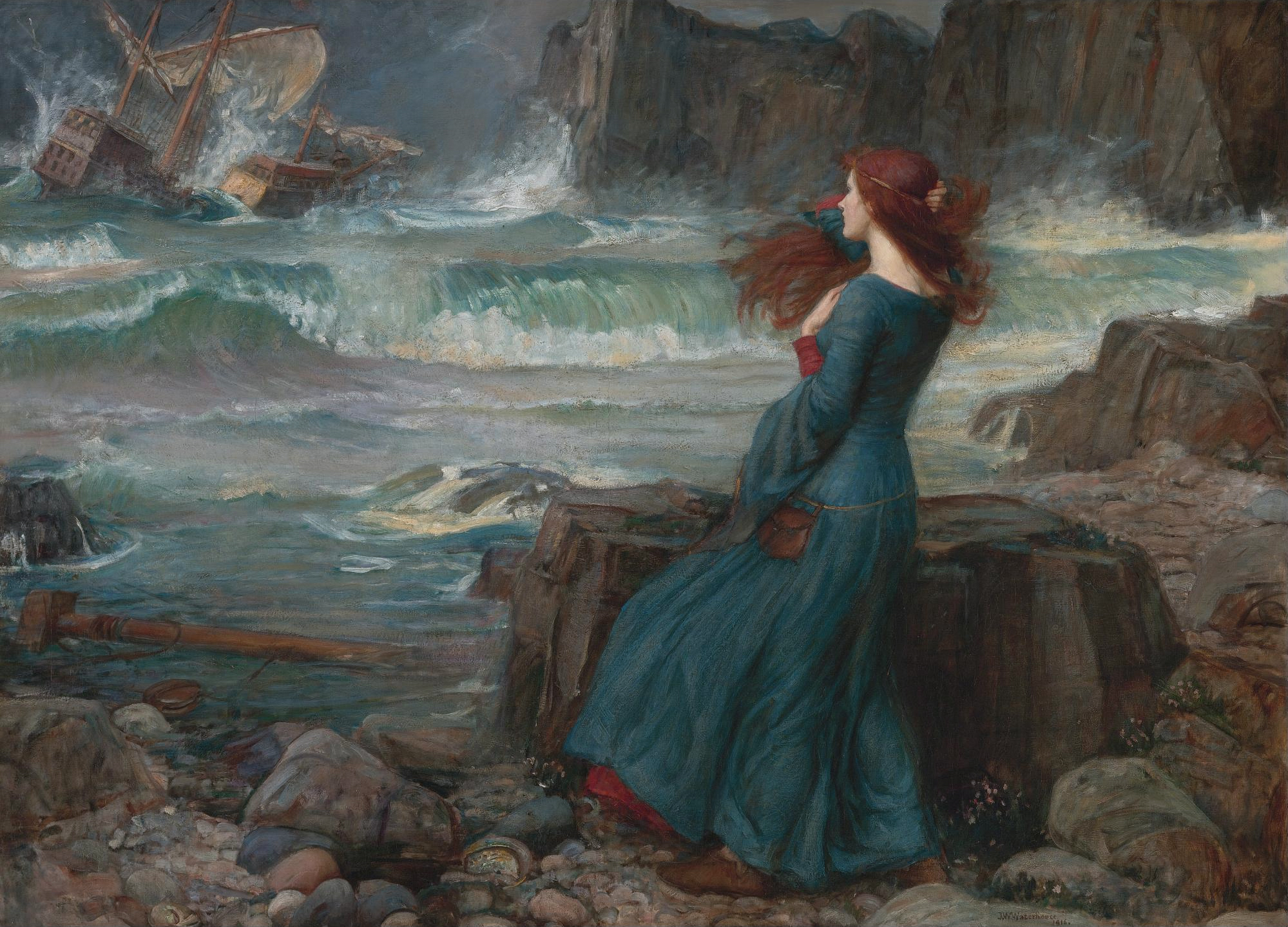
The romances call for spectacular effects to be shown onstage, including storms at sea, opulent interior and exterior scenery, dream settings and the illusion of time passing. Scholars have argued that the late plays deal with faith and redemption, and are variations on themes of rewarding virtue over vice.
Shakespeare's late romances are:
The Norton Shakespeare describes Henry VIII (ca. 1612–13) as being characteristic of the late romances, but still considers it one of the histories, as does Rowse.
The category of Shakespearean romance arises from a desire among critics for the late plays to be recognised as a more complex kind of comedy; the labels of romance and tragicomedy are preferred by the majority of modern critics and editors. In the First Folio of 1623, John Heminges and Henry Condell, its editors, listed The Tempest and The Winter's Tale as comedies, and Cymbeline as a tragedy. Pericles did not appear in it at all. In 1875, when Dowden argued that Shakespeare's late comedies should be called "romances", he did so because they resemble late medieval and early modern "romances", a genre in which stories were set across the immensity of space and time. The romances have grand plot points which are combined with humour, dramatic action and internal struggles. They also feature broader characters, larger spectacles and a different handling of the themes of appearance and reality. The late romances differed from early Shakespearean comedies by relying on grand themes, rather than specific moments. The romances are Shakespearean tragedies that end happily, instead of a moment of danger that moves rapidly to a solution. They also focus on the relationships between father and daughter.
The final plays share some common traits:
Shakespeare's romances were also influenced by two major developments in theatre in the early years of the seventeenth century. The first was the innovation of tragicomedy initiated by John Fletcher and developed in the early Beaumont and Fletcher collaborations. Tragicomedies made a pretence at "grave stuff" but invariably provided a happy ending with light entertainment. Shakespeare's romances are more sharply tragicomic than his comedies: threats of death and scenes of suffering are more acute. Encounters with the supernatural are also more direct and emphatic. The other influence was the extreme elaboration of the courtly masque being stage in the same period by Ben Jonson and Inigo Jones. Key scenes in the late romances are closely related to court masques: They embrace the visual magnificence but also the shallowness of such a display.
Hub AI
Shakespeare's late romances AI simulator
(@Shakespeare's late romances_simulator)
Shakespeare's late romances
The late romances, often simply called the romances, are a grouping of William Shakespeare's last plays, comprising Pericles, Prince of Tyre; Cymbeline; The Winter's Tale; and The Tempest. The Two Noble Kinsmen, of which Shakespeare was co-author, is sometimes also included in the grouping. The term "romances" was first used for these late works in Edward Dowden's Shakspere (1877). Later writers have generally been content to adopt Dowden's term.
Shakespeare's plays cannot be precisely dated, but it is generally agreed that these comedies followed a series of tragedies including Othello, King Lear and Macbeth. Shakespeare wrote tragedies because their productions were financially successful, but he returned to comedy towards the end of his career, mixing it with tragic and mystical elements. Shakespeare's late romances were also influenced by the development of tragicomedy and the extreme elaboration of the courtly masque as staged by Ben Jonson and Inigo Jones. The subjects and style of these plays were also influenced by the preference of the monarch, by Shakespeare's ageing company and by their more upper class audiences.
The romances call for spectacular effects to be shown onstage, including storms at sea, opulent interior and exterior scenery, dream settings and the illusion of time passing. Scholars have argued that the late plays deal with faith and redemption, and are variations on themes of rewarding virtue over vice.
Shakespeare's late romances are:
The Norton Shakespeare describes Henry VIII (ca. 1612–13) as being characteristic of the late romances, but still considers it one of the histories, as does Rowse.
The category of Shakespearean romance arises from a desire among critics for the late plays to be recognised as a more complex kind of comedy; the labels of romance and tragicomedy are preferred by the majority of modern critics and editors. In the First Folio of 1623, John Heminges and Henry Condell, its editors, listed The Tempest and The Winter's Tale as comedies, and Cymbeline as a tragedy. Pericles did not appear in it at all. In 1875, when Dowden argued that Shakespeare's late comedies should be called "romances", he did so because they resemble late medieval and early modern "romances", a genre in which stories were set across the immensity of space and time. The romances have grand plot points which are combined with humour, dramatic action and internal struggles. They also feature broader characters, larger spectacles and a different handling of the themes of appearance and reality. The late romances differed from early Shakespearean comedies by relying on grand themes, rather than specific moments. The romances are Shakespearean tragedies that end happily, instead of a moment of danger that moves rapidly to a solution. They also focus on the relationships between father and daughter.
The final plays share some common traits:
Shakespeare's romances were also influenced by two major developments in theatre in the early years of the seventeenth century. The first was the innovation of tragicomedy initiated by John Fletcher and developed in the early Beaumont and Fletcher collaborations. Tragicomedies made a pretence at "grave stuff" but invariably provided a happy ending with light entertainment. Shakespeare's romances are more sharply tragicomic than his comedies: threats of death and scenes of suffering are more acute. Encounters with the supernatural are also more direct and emphatic. The other influence was the extreme elaboration of the courtly masque being stage in the same period by Ben Jonson and Inigo Jones. Key scenes in the late romances are closely related to court masques: They embrace the visual magnificence but also the shallowness of such a display.
Recent media