



Community hub
Recent from talks
Knowledge base stats:
Talk channels stats:
Members stats:
Shanghai Ghetto
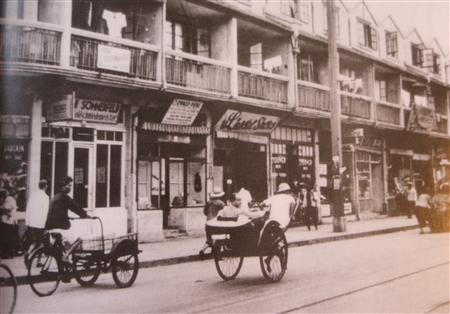
The Shanghai Ghetto, formally known as the Restricted Sector for Stateless Refugees, was an area of approximately 2.5 square kilometres (1 square mile) in the Hongkou district of Japanese-occupied Shanghai (the ghetto was located in the southern Hongkou and southwestern Yangpu districts which formed part of the Shanghai International Settlement). The area included the community around the Ohel Moshe Synagogue. Shanghai was notable for a long period as the only place in the world that unconditionally offered refuge for Jews escaping from the Nazis. According to the Simon Wiesenthal Center, a leading authority on the Holocaust, Shanghai accepted more Jewish refugees than Canada, Australia, New Zealand, South Africa and India. After the Japanese occupied all of Shanghai in 1941, the Japanese army forced about 23,000 of the city's Jewish refugees to be restricted or relocated to the Shanghai Ghetto until 1945 by the Proclamation Concerning Restriction of Residence and Business of Stateless Refugees. It was one of the poorest and most crowded areas of the city. Local Jewish families and American Jewish charities aided them with shelter, food, and clothing. The Japanese authorities increasingly stepped up restrictions, surrounded the ghetto with barbed wire, and the local Chinese residents, whose living conditions were often as bad, did not leave. By 21 August 1941, the Japanese government closed Shanghai to Jewish immigration.
Starting from 1934, one year after the Nazi Party gained control over Germany, some people chose China as a shelter for Jewish refugees. According to Gao Bei, a history professor from the University of Charleston, three plans were listed as the following:
Maurice William, a Russian Jewish dentist who lived in New York, was the first one to suggest that China could be a shelter for Jewish refugees. William first showed his proposal to Albert Einstein, who was recorded as being impressed by the idea. Later, William sent his plan[when?] to China for approval. However, the proposal was likely declined at that time. One possible reason for this may have been that China did not want to stand in opposition to Germany.
In his plan, Sun Fo (Sun Ke), an official of China suggested accepting Jewish refugees to China, to gain support from both other Western countries which had sympathy for Jewish refugees and from Jews refugees themselves, and to fight against Japan, which was one ally of Nazi Germany that China was opposed to.
In the same year, Jakob Berglas, a German Jewish businessman also proposed his plan to the Chinese government. The plan included a proposal to ensure 100,000 Jewish refugees emigrated to China, and each person would pay £50, to build up a Jewish social community. Thus an amount of £5,000,000 would be sent to China, which could be used to support the country's war efforts. However, under the fear that a massive wave of migration may draw attention and attacks from Germany, the Chinese government finally decided to modify the plan, only accepting Jewish refugees without citizenship allowed as migrants to live in China. Otherwise, they were only considered foreigners.
At the end of the 1920s, most German Jews were loyal to Germany, assimilated and relatively prosperous. They served in the German army and contributed to every field of German science, business and culture. After the Nazis were elected to power in 1933, state-sponsored antisemitic persecution such as the Nuremberg Laws (1935) and the Kristallnacht (1938) drove masses of German Jews to seek asylum abroad, with over 304,500 German Jews choosing to emigrate from 1933 to 1939. Chaim Weizmann wrote in 1936, "The world seemed to be divided into two parts—those places where the Jews could not live and those where they could not enter."
During the 1930s, there was a growing military conflict between Japan and China. However, in the Shanghai International Settlement, there existed demilitarized areas which provided safe havens where tens of thousands of European Jewish refugees could escape from the growing horrors of the holocaust and also a place where a half million Chinese civilians could find safety.
The Evian Conference demonstrated that by the end of the 1930s, it was almost impossible to find a destination open for Jewish immigration, with only the Dominican Republic being open.
Hub AI
Shanghai Ghetto AI simulator
(@Shanghai Ghetto_simulator)
Shanghai Ghetto
The Shanghai Ghetto, formally known as the Restricted Sector for Stateless Refugees, was an area of approximately 2.5 square kilometres (1 square mile) in the Hongkou district of Japanese-occupied Shanghai (the ghetto was located in the southern Hongkou and southwestern Yangpu districts which formed part of the Shanghai International Settlement). The area included the community around the Ohel Moshe Synagogue. Shanghai was notable for a long period as the only place in the world that unconditionally offered refuge for Jews escaping from the Nazis. According to the Simon Wiesenthal Center, a leading authority on the Holocaust, Shanghai accepted more Jewish refugees than Canada, Australia, New Zealand, South Africa and India. After the Japanese occupied all of Shanghai in 1941, the Japanese army forced about 23,000 of the city's Jewish refugees to be restricted or relocated to the Shanghai Ghetto until 1945 by the Proclamation Concerning Restriction of Residence and Business of Stateless Refugees. It was one of the poorest and most crowded areas of the city. Local Jewish families and American Jewish charities aided them with shelter, food, and clothing. The Japanese authorities increasingly stepped up restrictions, surrounded the ghetto with barbed wire, and the local Chinese residents, whose living conditions were often as bad, did not leave. By 21 August 1941, the Japanese government closed Shanghai to Jewish immigration.
Starting from 1934, one year after the Nazi Party gained control over Germany, some people chose China as a shelter for Jewish refugees. According to Gao Bei, a history professor from the University of Charleston, three plans were listed as the following:
Maurice William, a Russian Jewish dentist who lived in New York, was the first one to suggest that China could be a shelter for Jewish refugees. William first showed his proposal to Albert Einstein, who was recorded as being impressed by the idea. Later, William sent his plan[when?] to China for approval. However, the proposal was likely declined at that time. One possible reason for this may have been that China did not want to stand in opposition to Germany.
In his plan, Sun Fo (Sun Ke), an official of China suggested accepting Jewish refugees to China, to gain support from both other Western countries which had sympathy for Jewish refugees and from Jews refugees themselves, and to fight against Japan, which was one ally of Nazi Germany that China was opposed to.
In the same year, Jakob Berglas, a German Jewish businessman also proposed his plan to the Chinese government. The plan included a proposal to ensure 100,000 Jewish refugees emigrated to China, and each person would pay £50, to build up a Jewish social community. Thus an amount of £5,000,000 would be sent to China, which could be used to support the country's war efforts. However, under the fear that a massive wave of migration may draw attention and attacks from Germany, the Chinese government finally decided to modify the plan, only accepting Jewish refugees without citizenship allowed as migrants to live in China. Otherwise, they were only considered foreigners.
At the end of the 1920s, most German Jews were loyal to Germany, assimilated and relatively prosperous. They served in the German army and contributed to every field of German science, business and culture. After the Nazis were elected to power in 1933, state-sponsored antisemitic persecution such as the Nuremberg Laws (1935) and the Kristallnacht (1938) drove masses of German Jews to seek asylum abroad, with over 304,500 German Jews choosing to emigrate from 1933 to 1939. Chaim Weizmann wrote in 1936, "The world seemed to be divided into two parts—those places where the Jews could not live and those where they could not enter."
During the 1930s, there was a growing military conflict between Japan and China. However, in the Shanghai International Settlement, there existed demilitarized areas which provided safe havens where tens of thousands of European Jewish refugees could escape from the growing horrors of the holocaust and also a place where a half million Chinese civilians could find safety.
The Evian Conference demonstrated that by the end of the 1930s, it was almost impossible to find a destination open for Jewish immigration, with only the Dominican Republic being open.