Hubbry Logo
Shark catfishShark catfishMain
Open search
Shark catfish
Community hub
Shark catfish
logo
8 pages, 0 posts
0 subscribers
Be the first to start a discussion here.
Shark catfish
Shark catfish
from Wikipedia

Shark catfish
Temporal range: Miocene–Recent
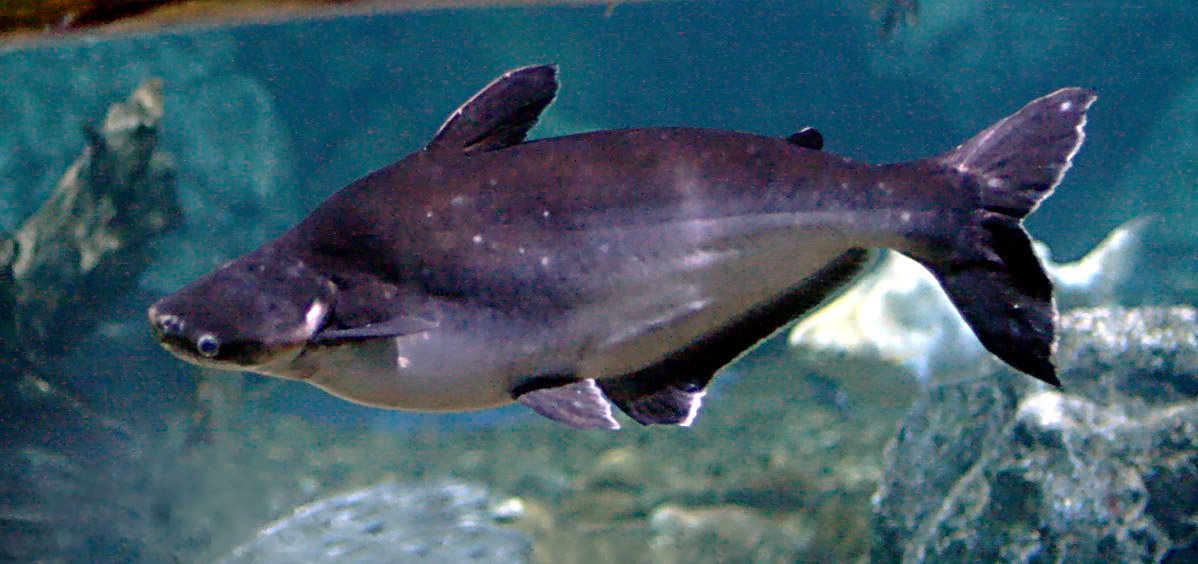
Pangasius hypophthalmus
Scientific classification Edit this classification
Kingdom: Animalia
Phylum: Chordata
Class: Actinopterygii
Order: Siluriformes
Suborder: Siluroidei
Superfamily: Arioidea
Family: Pangasiidae
Bleeker, 1858
Genera

Cetopangasius
Helicophagus
Pangasianodon
Pangasius
Pseudolais

The shark catfishes form the family Pangasiidae. They are found in fresh and brackish waters across southern Asia, from Pakistan to Borneo.[1] Among the 30-odd members of this family is the plant-eating, endangered Mekong giant catfish Pangasianodon gigas, one of the largest known freshwater fish.[1] Several species are the basis of productive aquaculture industries in Vietnam's Mekong Delta.

Taxonomy and fossil record

[edit]

Although Pangasiidae forms a monophyletic group, several studies indicate this group may actually be a subtaxon nested within the family Schilbeidae. Thus, Pangasiidae's familial status may not deserve continued recognition.[2]

Two fossil pangasiid species are described, Cetopangasius chaetobranchus from the Miocene, and Pangasius indicus, from the Eocene. However, the reported age of P. indicus from the Eocene is debatable, as the Sipang Fauna stratum where it is found has never been officially dated. Therefore, the earliest reliable pangasiid fossil age is of C. chaetobranchus from the Miocene.[2]

Description

[edit]

The dorsal fin is located far forward, close to the head, and is often high and triangular, thus inspiring the common name. The anal fin is somewhat lengthy, with 26–46 rays. Usually, they have two pairs of barbels, maxillary barbels and one pair of chin barbels, though adult Mekong giant catfish have only maxillary barbels. Pangasiids have compressed bodies and single small adipose fins.[1]

References

[edit]
[edit]
Revisions and contributorsEdit on WikipediaRead on Wikipedia
from Grokipedia
Shark catfishes, comprising the family Pangasiidae within the order Siluriformes, are a group of elongated, shark-like freshwater and catfishes native to southern , distributed from to and . These fish are characterized by their laterally compressed bodies, two pairs of chin barbels (without nasal barbels), a positioned near the head with 1–2 spines and 5–7 soft rays, a notably long anal fin bearing 26–46 rays, a small adipose fin separate from the caudal fin, and 39–52 vertebrae. The family includes four genera and 29 species, with body sizes ranging from small forms to giants such as Pangasius gigas, which can attain lengths of up to 3 meters and weights exceeding 300 kg. Pangasiidae species inhabit a variety of riverine environments, including deep pools, rapids, and streams in major systems like the and Chao Phraya basins, where many undertake seasonal migrations for spawning; while primarily freshwater, one species (Pangasius krempfi) is known to enter marine waters. They exhibit primarily carnivorous feeding habits in the wild, preying on , , and some plant matter. Economically, shark catfishes hold substantial importance in aquaculture and fisheries, particularly in Southeast Asia; Vietnam produced approximately 1.5 million tonnes in 2020, with output estimated at 1.67 million tonnes in 2024 (as of December 2024).; Exports generated $2.26 billion in 2018, and reached about $1.7 billion in 2024, with first-half 2025 exports at $1.023 billion (up 11% year-on-year).; Key cultured species include the striped catfish (Pangasianodon hypophthalmus), basa (Pangasius bocourti), and others like Pangasius djambal, valued for their rapid growth, high feed efficiency, and suitability for high-density farming in the Mekong Delta, where they are processed into fillets, surimi, and other products for international markets. Some species also feature in the ornamental aquarium trade due to their distinctive appearance.

Taxonomy and evolution

Classification

The shark catfishes are classified within the family Pangasiidae, which belongs to the order Siluriformes and the superorder . Members of the Pangasiidae family are distinguished from other families by their laterally compressed, elongated body form and a small adipose that is separate from the caudal . The family includes four recognized genera: Helicophagus (3 species), Pangasianodon (2 species), Pangasius (23 species), and Pseudolais (2 species), encompassing a total of approximately 30 valid species. Notable species within the family include Pangasianodon hypophthalmus (), Pangasius sanitwongsei (), and Pangasianodon gigas (). Recent taxonomic revisions, supported by phylogenetic studies in 2023 and 2024, have confirmed the of Pangasiidae and its genera through analyses of complete mitogenomes, cytochrome b, and cytochrome c oxidase subunit I genes.

Fossil record

The earliest known of the Pangasiidae family date to the period (possibly Eocene or ) in , where primitive forms closely resembling extant species have been documented. These include Pangasius indicus (originally described as †Brachyspondylus indicus), recovered from the Sangkarewang Formation in the Padang Highlands of , , indicating the family's presence in ancient freshwater or brackish environments during the Paleogene; the exact age of this fossil locality remains indeterminate. This Paleogene record suggests that core morphological traits, such as the elongated body and shark-like head profile, were already established by this time. Key fossil taxa from the further illustrate the family's development, with Cetopangasius chaetobranchus representing a significant find from lacustrine deposits associated with Phetchabun in north-central . Described from multiple specimens, including a 335 mm , this species exhibits reduced pelvic fins and other adaptations suited to Miocene lake systems, highlighting early specialization within the family. These fossils, dated to approximately 15–20 million years ago, provide evidence of the family's adaptation to diverse aquatic habitats in during the . Phylogenetic analyses calibrated with these fossils indicate that major diversification within Pangasiidae occurred during the , driven by the tectonic uplift of the and the subsequent formation of extensive river networks across . Molecular clock estimates place the divergence of Pangasiidae from related schilbid catfishes at around 15 million years ago, with genus-level speciation in the (10–5 million years ago). The development of proto-rivers like the around 17–24 million years ago created interconnected fluvial systems that facilitated speciation and range expansion for freshwater catfishes, including pangasiids. Late Miocene radiations further supported the emergence of modern genera through habitat fragmentation and ecological opportunities in these evolving drainages. All documented Pangasiidae fossils are confined to , with no records from outside this region, reinforcing the family's endemic origins in Asian freshwater ecosystems. Pleistocene climate oscillations, including sea-level fluctuations and glacial cycles, likely impacted distributions by altering river connectivity and habitat availability, though direct paleontological evidence from this epoch remains limited for the family.

Physical description

Morphology

Shark catfish, members of the family Pangasiidae, possess an elongated, laterally compressed body that tapers gradually from a pointed snout to a slender caudal peduncle, resulting in a streamlined, shape reminiscent of and suited to rapid movement through riverine environments. This body form lacks scales, featuring instead a smooth, naked skin that enhances hydrodynamic efficiency. The head is broad with a wide equipped with small teeth, and the eyes are moderately large, positioned dorsolaterally. The fins contribute to both propulsion and defense; the dorsal fin originates near the head and includes two stout spines followed by 5-7 soft rays, while the pectoral fins bear strong, serrated spines that can inflict injury on predators or handlers. The anal fin is notably elongate with 26-46 rays, extending posteriorly along much of the ventral margin, and a small adipose fin is present between the dorsal and caudal fins. The caudal fin is deeply forked, supporting powerful bursts of speed, though not heterocercal as in true . Sensory structures include two pairs of barbels—elongate maxillary barbels that often reach beyond the pectoral fin base and shorter mandibular barbels—lacking nasal barbels typical of many other families. Internally, shark catfish feature a robust , typically divided into two or three chambers and extending posteriorly to the base of the anal fin, which provides buoyancy control essential for maintaining position in varying current strengths of fast-flowing habitats. The system is well-developed along the body, aiding in the detection of water movements and prey in low-visibility conditions.

Size and coloration

Shark catfish exhibit significant variation in body size across the family Pangasiidae, with ranging from small forms to some of the largest known. The smallest , such as Pseudolais pleurotaenia, reach a maximum length of 35 cm standard length (SL). In contrast, the largest, Pangasianodon gigas (), can attain up to 300 cm total length (TL) and 350 kg in weight. Growth patterns in shark catfish are characterized by rapid increases during the juvenile phase, which slow considerably in adulthood. In settings, Pangasianodon hypophthalmus (striped catfish) demonstrates fast early growth, reaching 1.5 kg within 6 months under optimal conditions. For P. gigas, individuals can grow to 150–200 kg within 6 years, reflecting one of the highest growth rates among freshwater species. Coloration in shark catfish varies ontogenetically and between species, often shifting from vibrant juvenile patterns to subdued adult hues. Juveniles of P. hypophthalmus, known as the iridescent shark, display an iridescent silver-blue sheen with black stripes along the and below it. As adults, they transition to a uniform dull gray without stripes. Similarly, P. gigas lacks stripes throughout life, with a gray body and gray fins. Sexual dimorphism is minimal across most shark catfish species, though females may be slightly larger than males in certain cases. For instance, in Pangasius bocourti, mature females exhibit greater body weight (by 26%) and fork length (by 7%) compared to males. In P. hypophthalmus, no clear external dimorphism is present. Age in shark catfish is determined through analysis of otoliths, the calcified stones that form annual growth rings. Wild individuals can live 20–60 years or more, depending on the species and conditions.

Distribution and habitat

Geographic range

Shark catfish of the family Pangasiidae are native to freshwater and brackish habitats across southern , ranging from the in eastward through the to the islands of and in . This distribution encompasses major river systems in the region, reflecting the family's adaptation to large, tropical riverine environments. Key river basins supporting pangasiid populations include the Indus in , the Ganges in and , the Irrawaddy in , the Chao Phraya in , and notably the , which spans , , , and . The Mekong Basin, in particular, serves as an endemic hotspot with the highest species diversity within the family, hosting over a dozen species such as Pangasianodon gigas and Pangasius krempfi. Introduced populations have arisen from aquaculture escapes in the Philippines and Malaysia; while the striped catfish (Pangasianodon hypophthalmus) is probably established in the Philippines, self-sustaining wild populations outside the native range remain limited or unconfirmed. Historical range contractions have occurred since the 1950s, primarily due to human activities including dam construction, habitat alteration, and , leading to localized declines across several basins; recent studies (as of 2025) confirm widespread and strong impacts of river barriers on the distribution of shark catfishes in the Mekong Basin.

Ecological preferences

Shark catfish, belonging to the family Pangasiidae, primarily inhabit freshwater and brackish systems across southern , favoring large s characterized by strong currents, deep pools, and substrates of sand or mud that support their benthopelagic lifestyle. These environments provide the necessary flow for navigation and foraging, with species like the striped catfish (Pangasianodon hypophthalmus) commonly found in the main channels of major river basins such as the and Chao Phraya. Some species, including Pangasius pangasius, extend into brackish estuarine zones, where juveniles occupy the upper freshwater tidal areas before transitioning to more saline conditions as sub-adults. Preferred water parameters for shark catfish typically include a range of 6.0–7.5 and temperatures between 22–30°C, conditions prevalent in their tropical riverine habitats. They exhibit notable tolerance to low dissolved oxygen levels, facilitated by facultative air-breathing capabilities in many , such as P. hypophthalmus, which rely on a suprabranchial organ to gulp air at the surface during hypoxic periods common in slow-moving pools or flooded areas. Microhabitat preferences vary ontogenetically, with juveniles often utilizing shallow floodplains and tributaries for rearing, where nutrient-rich waters support rapid growth, while adults predominate in deeper main channels that offer stability and prey availability. Shark catfish frequently co-occur with cyprinids and other migratory species during shared riverine migrations, forming part of diverse assemblages in floodplain-connected systems. Adaptations to seasonal monsoonal floods are evident in their potamodromous behavior, where adults undertake upstream migrations in May–July to reach spawning grounds in high-water conditions, ensuring eggs and larvae are carried downstream to nursery floodplains as waters recede. This synchronization with flood pulses maintains population connectivity across their Southeast Asian ranges.

Biology and behavior

Feeding habits

Shark catfish in the Pangasiidae display omnivorous feeding habits, with diets comprising , crustaceans, , molluscs, and matter such as and . Juveniles primarily consume invertebrates including , , and small crustaceans, while adults exhibit an ontogenetic shift toward greater piscivory, incorporating larger and molluscs alongside continued intake of material and . This dietary flexibility supports their role as generalist feeders in dynamic riverine environments. Foraging occurs primarily along the river bottom, where shark catfish use prominent barbels to sense prey via chemoreception and employ feeding mechanisms to capture items, ranging from slow suction for planktonic organisms to faster strikes for mobile prey. Many species, such as Pangasianodon hypophthalmus, exhibit nocturnal feeding patterns, enhancing prey detection in low-light conditions. Within river food webs, shark catfish function as mid-level predators at a of approximately 3.2–3.4, facilitating energy transfer from primary producers and herbivores to higher carnivores, with typical efficiencies of around 10% per trophic step due to metabolic losses and incomplete consumption. Dietary composition shows seasonal variations, with increased consumption of plant matter and during low-water periods when invertebrate and availability declines in confined habitats. In aquaculture settings, farmed shark catfish such as Pangasianodon hypophthalmus are provided pellet-based diets containing 28–32% protein from grain derivatives, , and plant sources to replicate natural omnivory and optimize growth.

Reproduction

Shark catfish, primarily represented by species in the family Pangasiidae such as Pangasianodon hypophthalmus, exhibit through , where males release over eggs laid by females in open water. Females are highly fecund, producing between 100,000 and 2 million eggs per spawning event, with the number scaling positively with body size; for instance, females weighing 2-5 kg typically yield 300,000 to 1.4 million eggs. This prolific output supports the species' reliance on high-volume to offset natural losses in riverine environments. Spawning is tightly synchronized with the monsoon season, occurring from May to October in the main channels of large rivers like the , and is triggered by rising water levels that flood adjacent habitats. During this period, adults undertake upstream migrations to spawning grounds in or deep pools, releasing , demersal eggs that attach to substrates. There is no , and eggs hatch in 24-36 hours at temperatures around 28°C, with embryonic development completing rapidly under optimal conditions of 27-30°C. Upon hatching, larvae emerge at 3-4 mm in length with a prominent , remaining planktonic for 1-2 weeks while absorbing the yolk and commencing exogenous feeding on . By days 5-10, fins develop fully, and the larvae transition to a more benthic , foraging on the river bottom; this early phase experiences high mortality rates, up to 90%, primarily due to predation in the dynamic floodplains. In aquaculture, captive breeding of species like Pangasianodon hypophthalmus relies on hormonal induction using agents such as Ovaprim or pituitary extracts to synchronize ovulation. Recent studies as of 2025 have incorporated natural extracts, such as , alongside hormones to enhance breeding efficiency, achieving hatchability rates up to 82%. Additionally, genomic approaches are being explored to improve disease resistance and reproductive traits. These techniques have enhanced overall reproductive success, enabling year-round seed production for commercial farming.

Social behavior and migration

Shark catfish, particularly species in the genus Pangasius such as P. hypophthalmus and P. macronema, exhibit schooling behavior that varies with life stage. Juveniles typically form large schools numbering in the hundreds, which provides protection from predators through collective vigilance and confusion effects during threats. In contrast, adults are generally more solitary or aggregate in smaller groups, often during foraging or migration, reducing competition for resources while maintaining some social coordination. These fish are potamodromous, undertaking extensive upstream migrations in river systems like the , covering distances exceeding 700 km—sometimes up to 1,000 km or more—to reach spawning grounds during the flood season from May to . After spawning, adults and post-hatching larvae drift downstream with the current to rearing habitats, synchronizing with seasonal water level rises for optimal dispersal. Communication during these movements and interactions relies on chemical cues, including pheromones that signal spawning readiness and aggregation sites, facilitating coordinated group dynamics. However, hydropower dams in the River basin have increasingly blocked these migrations since the , leading to population declines and behavioral adaptations such as altered schooling patterns, as documented in studies up to 2025. Territoriality among shark catfish is minimal under normal conditions, allowing flexible group formations in dynamic riverine environments. However, during low-water seasons, individuals may defend localized feeding areas more aggressively to secure limited resources like and smaller . In terms of interspecific interactions, shark catfish are opportunistic predators that prey on smaller and crustaceans, contributing to trophic regulation in their habitats. Conversely, juveniles and smaller adults serve as prey for larger predators, including crocodiles such as the (Crocodylus siamensis) in the basin.

Human interactions

Fisheries and aquaculture

Shark catfish, primarily species in the Pangasius such as the (Pangasianodon hypophthalmus), are commercially harvested from wild stocks in the basin as part of the region's extensive inland capture fisheries. These fisheries yield an estimated 2.3 million tonnes of annually across all species, with Pangasius contributing significantly to local consumption and export-oriented processing. The targeted capture focuses on adult for and juveniles for supply, supporting both domestic markets and initial stocking efforts. Aquaculture dominates the economic exploitation of shark catfish, with Vietnam accounting for over 80% of global production centered in the . In 2024, Vietnamese output reached 1.6 million tonnes, projected to increase to 1.65 million tonnes in 2025 through expanded pond systems. These pond-based operations typically achieve yields of 200-400 tonnes per in intensive setups, enabling high-density farming with multiple cycles per year. Farming techniques emphasize efficiency and sustainability, including polyculture systems that integrate shark catfish with to enhance resource utilization and reduce waste. Since the , selective breeding programs have prioritized fast-growth traits and traits like salinity tolerance, improving overall and resilience in the Mekong Delta's variable conditions. Trade in shark catfish products is robust, with frozen fillets primarily exported to and the , while live fish serve Asian domestic markets. Vietnam's exports generated approximately USD 2 billion in revenue in 2025, underscoring the sector's global reach. The industry, valued at USD 2-3 billion overall by 2025, increasingly incorporates certifications like the Stewardship Council (ASC) standard to meet international demands for responsible production.

Conservation status

The conservation status of shark catfishes (family Pangasiidae) varies across its 29 species, with many assessed as Least Concern by the International Union for Conservation of Nature (IUCN) due to their wide distributions in Asian river basins. However, several species face significant threats from , habitat degradation due to dam construction blocking migration routes, , and hydrological changes in major systems like the and Chao Phraya. Large migratory species are particularly vulnerable. The (Pangasianodon gigas) is classified as Critically Endangered (CR), with an estimated population decline of over 80% in three generations from intense fishing pressure and barriers to spawning grounds. Similarly, the (Pangasius sanitwongsei) is Critically Endangered due to and habitat loss in the Chao Phraya basin. The (Pangasianodon hypophthalmus), though heavily farmed, has wild populations listed as Endangered (EN) owing to capture fisheries and reduced access to breeding areas. Other species, such as Pangasius krempfi, are Vulnerable (VU) from similar pressures. Conservation measures include listings on Appendix I for critically endangered species like P. gigas, bans on for giants in some areas, and initiatives for and habitat restoration in the region. Many species remain , highlighting the need for further research on population trends.

References

Add your contribution
Related Hubs
User Avatar
No comments yet.