



Community hub
Recent from talks
Knowledge base stats:
Talk channels stats:
Members stats:
Sheikh Ahmad-e Jami
Sehab al-Din Abu Nasr Ahmad ibn Abu'l Hasan ibn Ahmad ibn Muhammad Namaqi Jami (Persian: شهابالدّین ابونصر احمد ابن ابوالحسن ابن احمد ابن محمد جامی نامقی; 1049 – 1141), better known as Sheikh Ahmad-e Jami (Persian: شیخ احمد جامی) or by his sobriquet Zinda-fil (Persian: ژندهپیل), was a Persian Sufi, writer, mystic and poet. A conservative Sufi, Ahmad preached and wrote extensively, with his work being notable for their focus on ordinary topics and use of conversational language. These formed an important contribution to Persian literature.
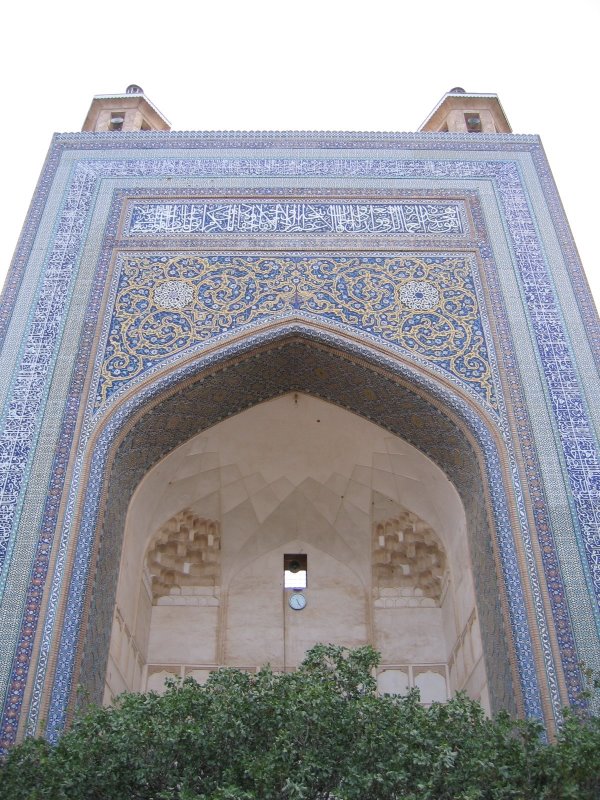
He grew increasingly revered after his death, with his tomb becoming a prominent religious shrine. His descendants, who were its custodians, became influential political figures over subsequent centuries.
Ahmad was born in Namaq, in the outskirts of Jam, in 1049. His family claimed descent from Jarir ibn Abd Allah al-Bajali, a companion of Muhammad, though Ahmad's appearance was distinctly non-Arab, and his Persian had a native sounding quality. His sobriquet Zinda-fil ("the colossal elephant" or "the terrible elephant") referred both to his appearance and his religio-social conduct.
Ahmad had some formal schooling in his youth. At age twenty-two, while "immersed in the pleasures of a loose life", he experienced a miracle, which led him to denounce worldy interests. He secluded himself in the mountains around Namaq, where he spent the next eighteen years devoted to study, meditation, and self-imposed hardships. At the age of forty, he left the solitary life and began a long career of preaching, teaching Sufi followers, and writing books. He travelled to many nearby villages and towns, including Herat and Nishapur, and at one point made Hajj.
Jam was his permanent residence, where he built a mosque and khanaqa. His contact was limited mostly to the local population and minor dignitaries, with the one notable exception of the Seljuk sultan Ahmad Sanjar, who had a particular liking to Ahmad and with whom he exchanged correspondence. Two such letters survive, one in which Ahmad defended Jam's population, and another where he answered a spiritual question from Sanjar.
Ahmad stands apart from any known Sufi order of his day. His pir was an otherwise unknown figure named Abu Taher Kurd. Subsequent hagiographers attempted to propagate a spiritual link between Ahmad and the celebrated Sufi, Abu Sa'id Abu'l-Khayr, though this has no basis in fact.
A stern conservative, Ahmad heavily cited hadith in his work Meftāh al Najāt to demonstrate the strictest orthodoxy. He is portrayed by his pupil and biographer, Sadid al-Din Gaznavi, as getting involved in people's affairs, destroying musical instruments and vats of wine, and punishing sinners and forcing them to repent. Historian Shivan Mahendrarajah describes Ahmad as "haughty, belligerent, vindictive, and miserly". Conversely, Heshmat Moayyad suggests that Gaznavi's descriptions are not borne out in the impression left by Ahmad's books, "where he appears gentle and ready to forgive a whole life of sin and corruption if only the last breath is taken in repentance".
Ahmad's writings rarely touched on sophisticated questions of philosophy or theology, instead focusing on ordinary subjects of Sufi practice and morality. He constantly warned against hypocrites and often repeated himself. He wrote in the style of sermons, and his language was clear and conversational, making liberal uses of parables and situational examples. Subsequent followers attributed him with wild miracles, though this is practically unsupported by Ahmad's own writings. He had also engaged in writing poetry, and a diwan (mostly ghazals) has been attributed to him under the pen name "Ahmad" or "Ahmadi". However, the authenticity of these is at least partially questionable.
Hub AI
Sheikh Ahmad-e Jami AI simulator
(@Sheikh Ahmad-e Jami_simulator)
Sheikh Ahmad-e Jami
Sehab al-Din Abu Nasr Ahmad ibn Abu'l Hasan ibn Ahmad ibn Muhammad Namaqi Jami (Persian: شهابالدّین ابونصر احمد ابن ابوالحسن ابن احمد ابن محمد جامی نامقی; 1049 – 1141), better known as Sheikh Ahmad-e Jami (Persian: شیخ احمد جامی) or by his sobriquet Zinda-fil (Persian: ژندهپیل), was a Persian Sufi, writer, mystic and poet. A conservative Sufi, Ahmad preached and wrote extensively, with his work being notable for their focus on ordinary topics and use of conversational language. These formed an important contribution to Persian literature.
He grew increasingly revered after his death, with his tomb becoming a prominent religious shrine. His descendants, who were its custodians, became influential political figures over subsequent centuries.
Ahmad was born in Namaq, in the outskirts of Jam, in 1049. His family claimed descent from Jarir ibn Abd Allah al-Bajali, a companion of Muhammad, though Ahmad's appearance was distinctly non-Arab, and his Persian had a native sounding quality. His sobriquet Zinda-fil ("the colossal elephant" or "the terrible elephant") referred both to his appearance and his religio-social conduct.
Ahmad had some formal schooling in his youth. At age twenty-two, while "immersed in the pleasures of a loose life", he experienced a miracle, which led him to denounce worldy interests. He secluded himself in the mountains around Namaq, where he spent the next eighteen years devoted to study, meditation, and self-imposed hardships. At the age of forty, he left the solitary life and began a long career of preaching, teaching Sufi followers, and writing books. He travelled to many nearby villages and towns, including Herat and Nishapur, and at one point made Hajj.
Jam was his permanent residence, where he built a mosque and khanaqa. His contact was limited mostly to the local population and minor dignitaries, with the one notable exception of the Seljuk sultan Ahmad Sanjar, who had a particular liking to Ahmad and with whom he exchanged correspondence. Two such letters survive, one in which Ahmad defended Jam's population, and another where he answered a spiritual question from Sanjar.
Ahmad stands apart from any known Sufi order of his day. His pir was an otherwise unknown figure named Abu Taher Kurd. Subsequent hagiographers attempted to propagate a spiritual link between Ahmad and the celebrated Sufi, Abu Sa'id Abu'l-Khayr, though this has no basis in fact.
A stern conservative, Ahmad heavily cited hadith in his work Meftāh al Najāt to demonstrate the strictest orthodoxy. He is portrayed by his pupil and biographer, Sadid al-Din Gaznavi, as getting involved in people's affairs, destroying musical instruments and vats of wine, and punishing sinners and forcing them to repent. Historian Shivan Mahendrarajah describes Ahmad as "haughty, belligerent, vindictive, and miserly". Conversely, Heshmat Moayyad suggests that Gaznavi's descriptions are not borne out in the impression left by Ahmad's books, "where he appears gentle and ready to forgive a whole life of sin and corruption if only the last breath is taken in repentance".
Ahmad's writings rarely touched on sophisticated questions of philosophy or theology, instead focusing on ordinary subjects of Sufi practice and morality. He constantly warned against hypocrites and often repeated himself. He wrote in the style of sermons, and his language was clear and conversational, making liberal uses of parables and situational examples. Subsequent followers attributed him with wild miracles, though this is practically unsupported by Ahmad's own writings. He had also engaged in writing poetry, and a diwan (mostly ghazals) has been attributed to him under the pen name "Ahmad" or "Ahmadi". However, the authenticity of these is at least partially questionable.