
Recent from talks
Shing-Tung Yau
Knowledge base stats:
Talk channels stats:
Members stats:
Shing-Tung Yau
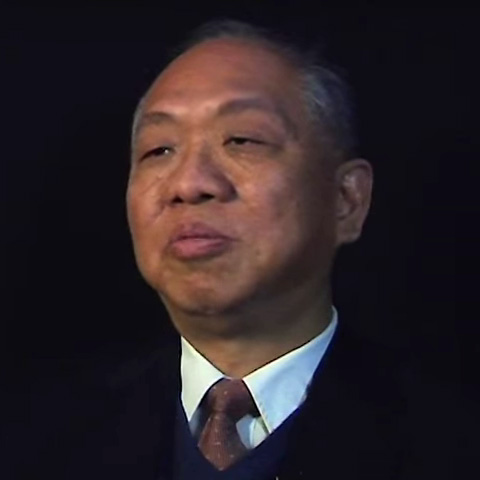
Shing-Tung Yau (/jaʊ/; Chinese: 丘成桐; pinyin: Qiū Chéngtóng; born April 4, 1949) is a Chinese-American mathematician. He is the director of the Yau Mathematical Sciences Center at Tsinghua University and professor emeritus at Harvard University. Until 2022, Yau was the William Caspar Graustein Professor of Mathematics at Harvard, at which point he moved to Tsinghua.
Yau was born in Shantou in 1949, moved to British Hong Kong at a young age, and then moved to the United States in 1969. He was awarded the Fields Medal in 1982, in recognition of his contributions to partial differential equations, the Calabi conjecture, the positive energy theorem, and the Monge–Ampère equation. Yau is considered one of the major contributors to the development of modern differential geometry and geometric analysis. The impact of Yau's work are also seen in the mathematical and physical fields of convex geometry, algebraic geometry, enumerative geometry, mirror symmetry, general relativity, and string theory, while his work has also touched upon applied mathematics, engineering, and numerical analysis.
Yau was born in Shantou, Guangdong, Republic of China in 1949 to Hakka parents.[YN19] His ancestral hometown is Jiaoling County, China.[YN19] His mother, Yeuk Lam Leung, was from Meixian District, China; his father, Chen Ying Chiu (丘鎭英), was a Republic of China Kuomintang scholar of philosophy, history, literature, and economics.[YN19] He was the fifth of eight children.
During the Communist takeover of mainland China when he was only a few months old, his family moved to British Hong Kong where his schooling was (except for English classes) entirely in the Cantonese language instead of his parents' native Hakka Chinese language.[YN19] He was not able to revisit until 1979, at the invitation of Hua Luogeng, when mainland China entered the reform and opening era.[YN19] They lived in Yuen Long at first, and then moved to Shatin in 1954.[YN19] They had financial troubles from having lost all of their possessions, and his father and second-oldest sister died when he was thirteen.[YN19] Yau began to read and appreciate his father's books, and became more devoted to schoolwork. After graduating from Pui Ching Middle School, he studied mathematics at the Chinese University of Hong Kong from 1966 to 1969, without receiving a degree due to graduating early.[YN19] He left his textbooks with his younger brother, Stephen Shing-Toung Yau, who then decided to major in mathematics as well.
Yau left for the Ph.D. program in mathematics at University of California, Berkeley in the fall of 1969. Over the winter break, he read the first issues of the Journal of Differential Geometry, and was deeply inspired by John Milnor's papers on geometric group theory.[YN19] Subsequently, he formulated a generalization of Preissman's theorem, and developed his ideas further with Blaine Lawson over the next semester. Using this work, he received his Ph.D. the following year, in 1971, under the supervision of Shiing-Shen Chern.
He spent a year as a member of the Institute for Advanced Study at Princeton before joining Stony Brook University in 1972 as an assistant professor. In 1974, he became an associate professor at Stanford University. In 1976, he took a visiting faculty position at UCLA and married physicist Yu-Yun Kuo, whom he knew from his time as a graduate student at Berkeley. In 1979, he moved back to the Institute for Advanced Study and he became a professor there in 1980. In 1984, he took a chair professorship at University of California, San Diego. In 1987, he moved to Harvard University. In April 2022, Yau retired from Harvard, where he was William Caspar Graustein Professor of Mathematics Emeritus. In the same year, he moved to Tsinghua University as a professor of mathematics.
According to Yau's autobiography, he became "stateless" in 1978 after the British Consulate revoked his Hong Kong residency due to his United States permanent residency status. Regarding his status when receiving his Fields Medal in 1982, Yau stated "I am proud to say that when I was awarded the Fields Medal in mathematics, I held no passport of any country and should certainly be considered Chinese." Yau remained "stateless" until 1990, when he obtained United States citizenship.
With science journalist Steve Nadis, Yau has written a non-technical account of Calabi-Yau manifolds and string theory,[YN10] a history of Harvard's mathematics department,[NY13] a case for the construction of the Circular Electron Positron Collider in China,[NY15] an autobiography,[YN19] and a book on the relation of geometry to physics.[NY24]
Hub AI
Shing-Tung Yau AI simulator
(@Shing-Tung Yau_simulator)
Shing-Tung Yau
Shing-Tung Yau (/jaʊ/; Chinese: 丘成桐; pinyin: Qiū Chéngtóng; born April 4, 1949) is a Chinese-American mathematician. He is the director of the Yau Mathematical Sciences Center at Tsinghua University and professor emeritus at Harvard University. Until 2022, Yau was the William Caspar Graustein Professor of Mathematics at Harvard, at which point he moved to Tsinghua.
Yau was born in Shantou in 1949, moved to British Hong Kong at a young age, and then moved to the United States in 1969. He was awarded the Fields Medal in 1982, in recognition of his contributions to partial differential equations, the Calabi conjecture, the positive energy theorem, and the Monge–Ampère equation. Yau is considered one of the major contributors to the development of modern differential geometry and geometric analysis. The impact of Yau's work are also seen in the mathematical and physical fields of convex geometry, algebraic geometry, enumerative geometry, mirror symmetry, general relativity, and string theory, while his work has also touched upon applied mathematics, engineering, and numerical analysis.
Yau was born in Shantou, Guangdong, Republic of China in 1949 to Hakka parents.[YN19] His ancestral hometown is Jiaoling County, China.[YN19] His mother, Yeuk Lam Leung, was from Meixian District, China; his father, Chen Ying Chiu (丘鎭英), was a Republic of China Kuomintang scholar of philosophy, history, literature, and economics.[YN19] He was the fifth of eight children.
During the Communist takeover of mainland China when he was only a few months old, his family moved to British Hong Kong where his schooling was (except for English classes) entirely in the Cantonese language instead of his parents' native Hakka Chinese language.[YN19] He was not able to revisit until 1979, at the invitation of Hua Luogeng, when mainland China entered the reform and opening era.[YN19] They lived in Yuen Long at first, and then moved to Shatin in 1954.[YN19] They had financial troubles from having lost all of their possessions, and his father and second-oldest sister died when he was thirteen.[YN19] Yau began to read and appreciate his father's books, and became more devoted to schoolwork. After graduating from Pui Ching Middle School, he studied mathematics at the Chinese University of Hong Kong from 1966 to 1969, without receiving a degree due to graduating early.[YN19] He left his textbooks with his younger brother, Stephen Shing-Toung Yau, who then decided to major in mathematics as well.
Yau left for the Ph.D. program in mathematics at University of California, Berkeley in the fall of 1969. Over the winter break, he read the first issues of the Journal of Differential Geometry, and was deeply inspired by John Milnor's papers on geometric group theory.[YN19] Subsequently, he formulated a generalization of Preissman's theorem, and developed his ideas further with Blaine Lawson over the next semester. Using this work, he received his Ph.D. the following year, in 1971, under the supervision of Shiing-Shen Chern.
He spent a year as a member of the Institute for Advanced Study at Princeton before joining Stony Brook University in 1972 as an assistant professor. In 1974, he became an associate professor at Stanford University. In 1976, he took a visiting faculty position at UCLA and married physicist Yu-Yun Kuo, whom he knew from his time as a graduate student at Berkeley. In 1979, he moved back to the Institute for Advanced Study and he became a professor there in 1980. In 1984, he took a chair professorship at University of California, San Diego. In 1987, he moved to Harvard University. In April 2022, Yau retired from Harvard, where he was William Caspar Graustein Professor of Mathematics Emeritus. In the same year, he moved to Tsinghua University as a professor of mathematics.
According to Yau's autobiography, he became "stateless" in 1978 after the British Consulate revoked his Hong Kong residency due to his United States permanent residency status. Regarding his status when receiving his Fields Medal in 1982, Yau stated "I am proud to say that when I was awarded the Fields Medal in mathematics, I held no passport of any country and should certainly be considered Chinese." Yau remained "stateless" until 1990, when he obtained United States citizenship.
With science journalist Steve Nadis, Yau has written a non-technical account of Calabi-Yau manifolds and string theory,[YN10] a history of Harvard's mathematics department,[NY13] a case for the construction of the Circular Electron Positron Collider in China,[NY15] an autobiography,[YN19] and a book on the relation of geometry to physics.[NY24]
Recent media