



Community hub
Recent from talks
Knowledge base stats:
Talk channels stats:
Members stats:
Ship model
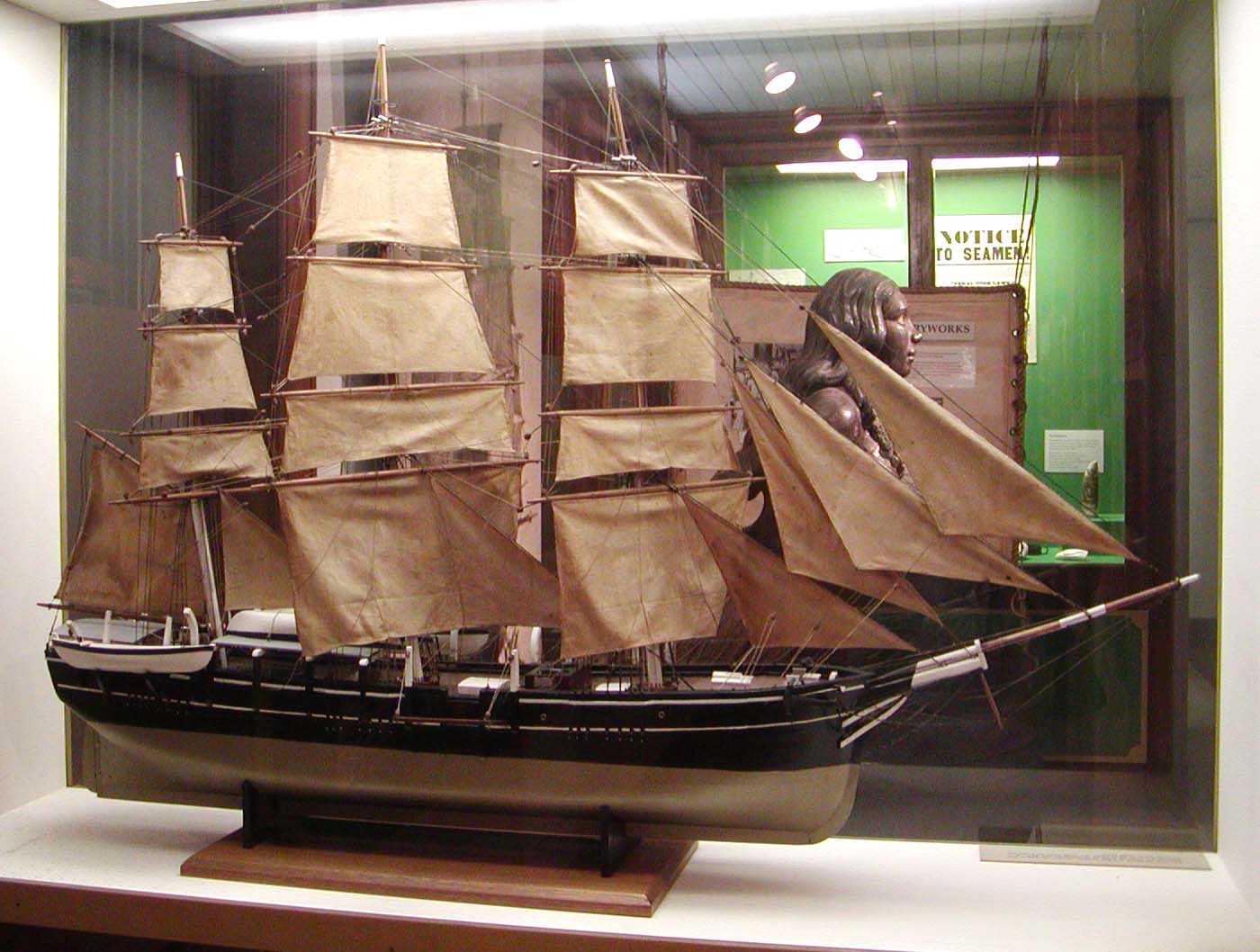
Ship models or model ships are scale models of ships. They can range in size from 1/6000 scale wargaming miniatures to large vessels capable of holding people.
Ship modeling is a craft as old as shipbuilding itself, stretching back to ancient times when water transport was first developed.
Ancient ship and boat models have been discovered throughout the Mediterranean, especially from ancient Greece, Egypt, and Phoenicia. These models provide archaeologists with valuable information regarding seafaring technology and the sociological and economic importance of seafaring. In spite of how helpful ancient boat and ship models are to archaeologists, they are not always easily or correctly interpreted due to artists’ mistakes, ambiguity in the model design, and wear and tear over the centuries.
Ships "were among the most technologically complex mechanisms of the ancient world." Ships made far-flung travel and trade more comfortable and economical, and they added a whole new facet to warfare. Thus, ships carried a great deal of significance to the people of the ancient world, and this is expressed partly through the creation of boat and ship models. Ancient boat and ship models are made of a variety of materials and are intended for different purposes. The most common purposes for boat and ship models include burial votives, house hold articles, art, and toys. While archaeologists have found ship and boat models from societies all around the Mediterranean, the three of the most prolific ship model building cultures were the Greeks, Phoenicians, and Egyptians.
Archaeologists have determined that Ancient Greek ship models were used as burial or votive offerings and as household articles such as lamps or drinking vessels. The kinds of ships depicted in Ancient Greek models can be classified broadly as small craft, merchant vessels, and warships. Models were cast in different materials, including wood, bronze, lead, and clay.
Greek warships were popular subjects to be made in miniature. One particular model, acquired by the Staatliches Museum (engl.: Land museum) in Kassel, Germany, proves to be helpful to archaeologists and historians in understanding what a hemiolia warship was like. Archaeologists have tentatively dated the Kassel model to be from the 6th or 5th centuries BC through iconographic and literary sources. This ship model is made of clay and features a distinctive prow shaped like a boar's head that is described by Herodotus in The History, and depicted on pottery, coins seals and drinking cups. The model is a miniature of a vessel that would have been too small to be a typical warship. The presence of holes bored into 8 thwarts in the ship suggests that the thwarts may have been seats for a pegged-in dummy crew. If the holes bored into the thwarts are indeed meant to accommodate a dummy crew, the crew seating would have been arranged with two men per bench amidships, and one man per bench fore and aft where the ship narrows so that there is only room for one man. Alec Tilley (former Royal Navy and Navy of Oman officer) suggests that a small ship with this type of seating arrangement would have been called a hemiolia, or a one-and-a-halfer. The name indicates that two oarsmen would have been seated on half of the benches and one on the others. Until this ship model was discovered, archaeologists, classicists, and historians had only been able to hypothesize on what the seating arrangement might have been like on a hemiolia based on its name.
Not all ancient Greek ship models are of warships. One boat model from a house deposit in Mochlos, Crete, dating to around 3000BC, is thought to be too small to be a war ship. Belgian maritime historian L.Basch postulates that the boat "cannot have been propelled by more than four oarsmen … so it can hardly be other than a fishing boat." As opposed to other Early Bronze Age ship and boat models, this model was not found in a burial context. This model is thought to be a child's toy or a piece of art, instead of a burial offering. The model itself features a projection of the keel beyond the stem-post at both ends. Despite appearances, these projections are not rams. Because the model is depicting a fishing boat, there would be no need for rams. This model in particular has helped archaeologists understand that not all keel projections in depictions of boats during this time are necessarily rams. Instead, keel projections on depictions of Bronze Age ships are explained as cut-waters or as beaching protection.
Phoenician ship models also provide archaeologists information regarding the technical aspects of seafaring, and the cultural importance of seafaring for the ancient Phoenicians. However, some models offer tantalizing pieces of information that are, however, difficult to interpret. Item number H-3134 at the Hecht Museum, a dark-brown clay model of a 5th-century BCE oared boat, is one such craft. The vessel has no provenance, save for the reported location of its discovery off the Phoenician coast, but scientists have been able to tentatively confirm the origin and authenticity of this model. The model is of an oared boat manned by three pairs of oarsmen, who are rendered with "hands … raised to their chests, in the last instant of pulling the oar in the water, before lifting it for the recovery." The mystery of this model is the purpose of small holes- three on the starboard side, and four on port- that were made in the sides of the ship with a sharp tool before the clay dried. It is believed that the holes are too small to pass an oar through, and thus would not be used for rowing purposes. This is hard to prove, however, because the poorly preserved state of the model and the amount of fouling that is layered on the model makes it difficult to definitively rule out this possibility. Another theory regarding the purpose of these holes suggests that "ropes for holding oars were threaded through these holes."
Hub AI
Ship model AI simulator
(@Ship model_simulator)
Ship model
Ship models or model ships are scale models of ships. They can range in size from 1/6000 scale wargaming miniatures to large vessels capable of holding people.
Ship modeling is a craft as old as shipbuilding itself, stretching back to ancient times when water transport was first developed.
Ancient ship and boat models have been discovered throughout the Mediterranean, especially from ancient Greece, Egypt, and Phoenicia. These models provide archaeologists with valuable information regarding seafaring technology and the sociological and economic importance of seafaring. In spite of how helpful ancient boat and ship models are to archaeologists, they are not always easily or correctly interpreted due to artists’ mistakes, ambiguity in the model design, and wear and tear over the centuries.
Ships "were among the most technologically complex mechanisms of the ancient world." Ships made far-flung travel and trade more comfortable and economical, and they added a whole new facet to warfare. Thus, ships carried a great deal of significance to the people of the ancient world, and this is expressed partly through the creation of boat and ship models. Ancient boat and ship models are made of a variety of materials and are intended for different purposes. The most common purposes for boat and ship models include burial votives, house hold articles, art, and toys. While archaeologists have found ship and boat models from societies all around the Mediterranean, the three of the most prolific ship model building cultures were the Greeks, Phoenicians, and Egyptians.
Archaeologists have determined that Ancient Greek ship models were used as burial or votive offerings and as household articles such as lamps or drinking vessels. The kinds of ships depicted in Ancient Greek models can be classified broadly as small craft, merchant vessels, and warships. Models were cast in different materials, including wood, bronze, lead, and clay.
Greek warships were popular subjects to be made in miniature. One particular model, acquired by the Staatliches Museum (engl.: Land museum) in Kassel, Germany, proves to be helpful to archaeologists and historians in understanding what a hemiolia warship was like. Archaeologists have tentatively dated the Kassel model to be from the 6th or 5th centuries BC through iconographic and literary sources. This ship model is made of clay and features a distinctive prow shaped like a boar's head that is described by Herodotus in The History, and depicted on pottery, coins seals and drinking cups. The model is a miniature of a vessel that would have been too small to be a typical warship. The presence of holes bored into 8 thwarts in the ship suggests that the thwarts may have been seats for a pegged-in dummy crew. If the holes bored into the thwarts are indeed meant to accommodate a dummy crew, the crew seating would have been arranged with two men per bench amidships, and one man per bench fore and aft where the ship narrows so that there is only room for one man. Alec Tilley (former Royal Navy and Navy of Oman officer) suggests that a small ship with this type of seating arrangement would have been called a hemiolia, or a one-and-a-halfer. The name indicates that two oarsmen would have been seated on half of the benches and one on the others. Until this ship model was discovered, archaeologists, classicists, and historians had only been able to hypothesize on what the seating arrangement might have been like on a hemiolia based on its name.
Not all ancient Greek ship models are of warships. One boat model from a house deposit in Mochlos, Crete, dating to around 3000BC, is thought to be too small to be a war ship. Belgian maritime historian L.Basch postulates that the boat "cannot have been propelled by more than four oarsmen … so it can hardly be other than a fishing boat." As opposed to other Early Bronze Age ship and boat models, this model was not found in a burial context. This model is thought to be a child's toy or a piece of art, instead of a burial offering. The model itself features a projection of the keel beyond the stem-post at both ends. Despite appearances, these projections are not rams. Because the model is depicting a fishing boat, there would be no need for rams. This model in particular has helped archaeologists understand that not all keel projections in depictions of boats during this time are necessarily rams. Instead, keel projections on depictions of Bronze Age ships are explained as cut-waters or as beaching protection.
Phoenician ship models also provide archaeologists information regarding the technical aspects of seafaring, and the cultural importance of seafaring for the ancient Phoenicians. However, some models offer tantalizing pieces of information that are, however, difficult to interpret. Item number H-3134 at the Hecht Museum, a dark-brown clay model of a 5th-century BCE oared boat, is one such craft. The vessel has no provenance, save for the reported location of its discovery off the Phoenician coast, but scientists have been able to tentatively confirm the origin and authenticity of this model. The model is of an oared boat manned by three pairs of oarsmen, who are rendered with "hands … raised to their chests, in the last instant of pulling the oar in the water, before lifting it for the recovery." The mystery of this model is the purpose of small holes- three on the starboard side, and four on port- that were made in the sides of the ship with a sharp tool before the clay dried. It is believed that the holes are too small to pass an oar through, and thus would not be used for rowing purposes. This is hard to prove, however, because the poorly preserved state of the model and the amount of fouling that is layered on the model makes it difficult to definitively rule out this possibility. Another theory regarding the purpose of these holes suggests that "ropes for holding oars were threaded through these holes."