
Recent from talks
Shiraz
Knowledge base stats:
Talk channels stats:
Members stats:
Shiraz
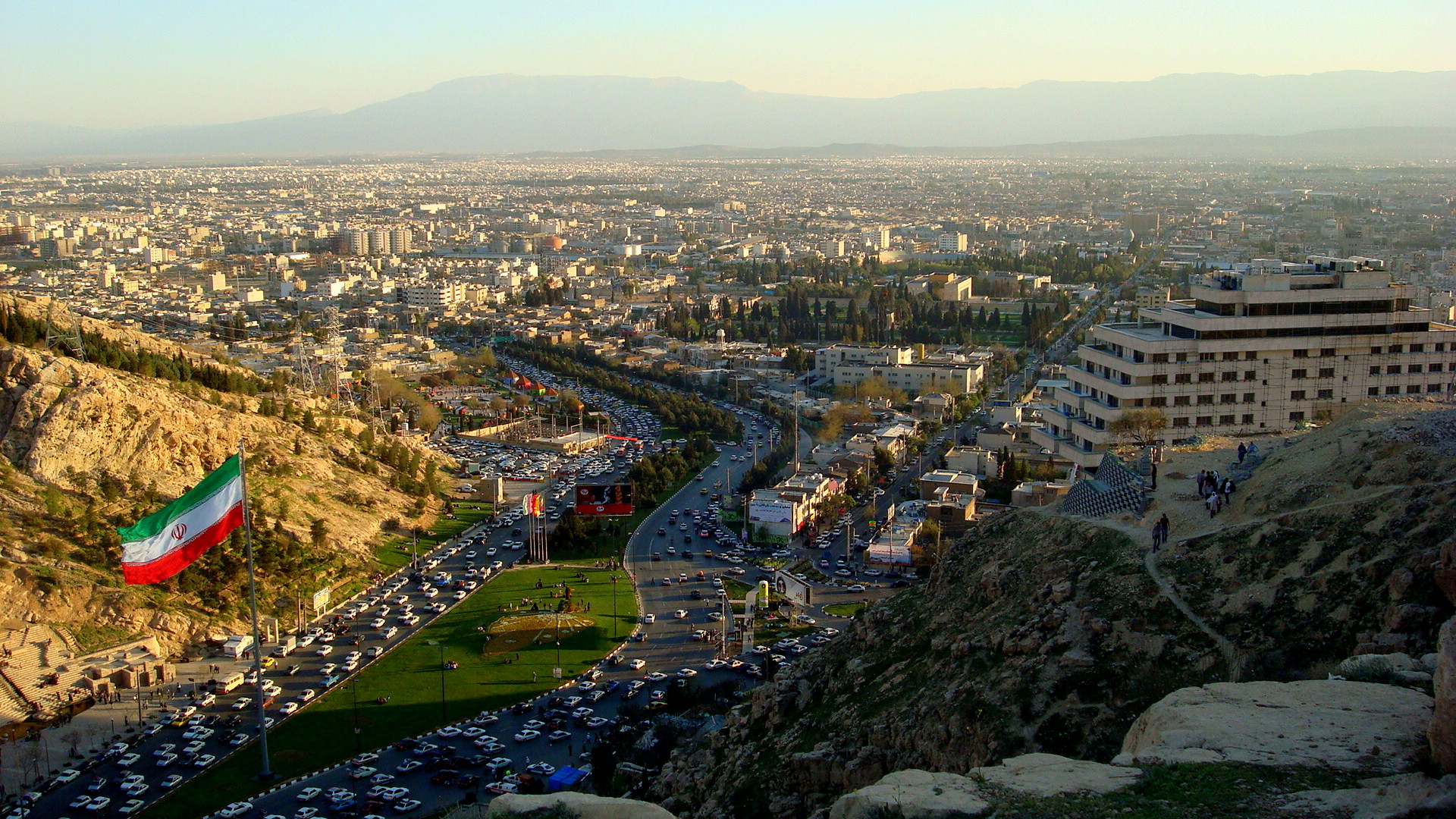
Shiraz is the fifth-most-populous city of Iran and the capital of Fars province, which has been historically known as Pars (پارس) and Persis. As of the 2016 national census, the population of the city was 1,565,572 people, and its built-up area with Sadra was home to almost 1,800,000 inhabitants. A census in 2021 showed an increase in the city's population to 1,995,500 people. Shiraz is located in southwestern Iran on the rudkhaneye khoshk (lit. 'dry river') seasonal river. Founded in the early Islamic period, the city has a moderate climate and has been a regional trade center for over a thousand years.
The earliest reference to the city, as Tiraziš, is on Elamite clay tablets dated to 2000 BCE. The modern city was founded by the Sasanian dynasty and restored by the Umayyad Caliphate in 693 CE and grew prominent under the successive Iranian Saffarid and Buyid dynasties in the 9th and 10th–11th centuries, respectively. In the 13th century, Shiraz became a leading center of the arts and letters, due to the encouragement of its ruler and the presence of many Persian scholars and artists. Two famous poets of Iran, Hafez and Saadi, are from Shiraz, whose tombs are located on the north side of the current city boundaries.
Shiraz is one of the top tourist cities in Iran and is known as the city of poets, literature, and flowers. It is also considered by many Iranians to be the city of gardens due to the presence of many gardens and fruit trees that can be seen throughout the city, such as Eram Garden. Shiraz is also a famous tourist destination. Every year many tourists come from around the world to visit the city. Shiraz has historically had major Jewish and Christian communities. The crafts of Shiraz consist of inlaid mosaic work of triangular design; silverware; pile carpet-weaving and weaving of kilim, called gilim and jajim in the villages and among the tribes. Dominant industries in the city include the production of cement, sugar, fertilizers, textile products, wood products, metalwork, and rugs.[citation needed] Shiraz also has a major oil refinery and is a major centre for Iran's electronic industries: 53 percent of Iran's electronic investment has been centred in Shiraz. The city is home to Iran's first solar powerplant.
The earliest reference to the city is on Elamite clay tablets dated to 2000 BCE, found in June 1970, while digging to make a kiln for a brick factory in the south western corner of the city. The tablets written in ancient Elamite name a city called Tiraziš. Phonetically, this is interpreted as /tiračis/ or /ćiračis/. This name became Old Persian /širājiš/; through regular sound change comes the modern Persian name Shirāz. The name Shiraz also appears on clay sealings found at a 2nd-century CE Sassanid ruin, east of the city. By some of the native writers, the name Shiraz has derived from a son of Tahmuras, the third Shāh (King) of the world according to Ferdowsi's Shāhnāma.
Though, there is no definitive record of its existence prior to the late 7th century CE, few archaeological finds dating from 1933 and beyond indicate that the site or vicinity of Shiraz was likely settled in the pre-Islamic era as early as the 6th century BCE. A number of Achaemenid and Sasanian-era remains have been discovered around the city, including reliefs at Barm-e Delak to the east and Guyim to the northwest, and ruins of Sasanian fortresses at Qasr-e Abu Nasr to the east and Fahandezh. The latter is identified with the fortress of Shahmobad mentioned as being in Shiraz by the 10th-century geographical work, Hudud al-'alam. the Sasanian and early Islamic-era clay seals found at Qasr-e-Abu Nasr mention the name "Shiraz" alongside the name of the Sasanian administrative district of the area, Ardashir-Khwarrah. According to the diplomat and academic John Limbert, this indicates that the name "Shiraz" is traced back to the Elamite "Shirrazish" and that both refer to a settlement that existed at the site of Qasr-e-Abu Nasr.
Interpretations of what type of settlement ancient Shiraz was vary. According to Berney and Ring, the lack of references to Shiraz in early Persian sources suggests the city could not have been more than a way-station in the plain in which it lies. On the other hand, according to Abdolmajed Arfaee, Achaemenid-era Shiraz must have been one of the most important settlements in the area. He bases this on its frequent appearance in the Persepolis Administrative Archives (84 different tablets) as well as the number of workers present – in groups as large as 490. Most textual references to Shiraz involve rations for workers; it is never mentioned as a travel destination. Arfaee says that Sasanian Shiraz was relatively insignificant before its re-foundation in the early Islamic period. According to John Limbert, however, Shiraz prospered between the 6th and 8th-centuries CE and was possibly the administrative center for the Shiraz plain until the modern city of Shiraz was founded.
Shiraz was founded or restored in 693 by Muhammad ibn Yusuf al-Thaqafi, the brother of the Umayyad viceroy of the eastern half of the caliphate, al-Hajjaj ibn Yusuf, or the latter's kinsman Muhammad ibn Qasim. The Arab Muslim army had conquered the wider region of Fars, where the site of Shiraz is located, in several expeditions launched from their garrison town of Basra between 640 and 653, and specifically captured the immediate area around Shiraz early on, in 641. This area did not possess any cities, though there were a number of forts which were forced to pay tribute to the Arabs. The Sasanians held firm in Istakhr, their capital in Fars, until the Arabs captured it in a heavy battle in 653, during which the plain of Shiraz had been utilized as an Arab campground. Because of Istakhr's deep association with the Sasanian Empire and the Zoroastrian religion, the Arabs sought to establish in nearby Shiraz a rival cultural and administrative center. Thus, during its initial founding in 693, the city was planned to be much larger than Isfahan. However, the initial ambitions were not realized and Shiraz remained a "provincial backwater" in the shadow of Istakhr until at least the late 9th century, according to Limbert. This is partly attributed to the reticence of the largely Zoroastrian population of Fars to inhabit the Islamic Arab city. As the population gradually shifted to Islam from Zoroastrianism and Istakhr concurrently declined, Shiraz grew into the practical center of Fars.
According to Muslim traditional sources, Shiraz was used as a hideout by three of the brothers of the Shia Muslim imam Ali al-Ridha following the latter's death in 817/18 and later by one of the brothers' sons, Ali ibn Hamza ibn Musa, until he was found and executed by the Abbasid authorities in c. 835. As Abbasid authority waned during this period, regional dynasties emerged with considerable autonomy. In the late 9th century, the Iranian Muslim Saffarid dynasty under Ya'qub ibn al-Layth made Shiraz the capital of their autonomous state, which encompassed most of modern-day Iran. In 894, Ya'qub's brother and successor, Amr, founded the city's first congregational mosque, today known as the Atigh Jame' Mosque.
Hub AI
Shiraz AI simulator
(@Shiraz_simulator)
Shiraz
Shiraz is the fifth-most-populous city of Iran and the capital of Fars province, which has been historically known as Pars (پارس) and Persis. As of the 2016 national census, the population of the city was 1,565,572 people, and its built-up area with Sadra was home to almost 1,800,000 inhabitants. A census in 2021 showed an increase in the city's population to 1,995,500 people. Shiraz is located in southwestern Iran on the rudkhaneye khoshk (lit. 'dry river') seasonal river. Founded in the early Islamic period, the city has a moderate climate and has been a regional trade center for over a thousand years.
The earliest reference to the city, as Tiraziš, is on Elamite clay tablets dated to 2000 BCE. The modern city was founded by the Sasanian dynasty and restored by the Umayyad Caliphate in 693 CE and grew prominent under the successive Iranian Saffarid and Buyid dynasties in the 9th and 10th–11th centuries, respectively. In the 13th century, Shiraz became a leading center of the arts and letters, due to the encouragement of its ruler and the presence of many Persian scholars and artists. Two famous poets of Iran, Hafez and Saadi, are from Shiraz, whose tombs are located on the north side of the current city boundaries.
Shiraz is one of the top tourist cities in Iran and is known as the city of poets, literature, and flowers. It is also considered by many Iranians to be the city of gardens due to the presence of many gardens and fruit trees that can be seen throughout the city, such as Eram Garden. Shiraz is also a famous tourist destination. Every year many tourists come from around the world to visit the city. Shiraz has historically had major Jewish and Christian communities. The crafts of Shiraz consist of inlaid mosaic work of triangular design; silverware; pile carpet-weaving and weaving of kilim, called gilim and jajim in the villages and among the tribes. Dominant industries in the city include the production of cement, sugar, fertilizers, textile products, wood products, metalwork, and rugs.[citation needed] Shiraz also has a major oil refinery and is a major centre for Iran's electronic industries: 53 percent of Iran's electronic investment has been centred in Shiraz. The city is home to Iran's first solar powerplant.
The earliest reference to the city is on Elamite clay tablets dated to 2000 BCE, found in June 1970, while digging to make a kiln for a brick factory in the south western corner of the city. The tablets written in ancient Elamite name a city called Tiraziš. Phonetically, this is interpreted as /tiračis/ or /ćiračis/. This name became Old Persian /širājiš/; through regular sound change comes the modern Persian name Shirāz. The name Shiraz also appears on clay sealings found at a 2nd-century CE Sassanid ruin, east of the city. By some of the native writers, the name Shiraz has derived from a son of Tahmuras, the third Shāh (King) of the world according to Ferdowsi's Shāhnāma.
Though, there is no definitive record of its existence prior to the late 7th century CE, few archaeological finds dating from 1933 and beyond indicate that the site or vicinity of Shiraz was likely settled in the pre-Islamic era as early as the 6th century BCE. A number of Achaemenid and Sasanian-era remains have been discovered around the city, including reliefs at Barm-e Delak to the east and Guyim to the northwest, and ruins of Sasanian fortresses at Qasr-e Abu Nasr to the east and Fahandezh. The latter is identified with the fortress of Shahmobad mentioned as being in Shiraz by the 10th-century geographical work, Hudud al-'alam. the Sasanian and early Islamic-era clay seals found at Qasr-e-Abu Nasr mention the name "Shiraz" alongside the name of the Sasanian administrative district of the area, Ardashir-Khwarrah. According to the diplomat and academic John Limbert, this indicates that the name "Shiraz" is traced back to the Elamite "Shirrazish" and that both refer to a settlement that existed at the site of Qasr-e-Abu Nasr.
Interpretations of what type of settlement ancient Shiraz was vary. According to Berney and Ring, the lack of references to Shiraz in early Persian sources suggests the city could not have been more than a way-station in the plain in which it lies. On the other hand, according to Abdolmajed Arfaee, Achaemenid-era Shiraz must have been one of the most important settlements in the area. He bases this on its frequent appearance in the Persepolis Administrative Archives (84 different tablets) as well as the number of workers present – in groups as large as 490. Most textual references to Shiraz involve rations for workers; it is never mentioned as a travel destination. Arfaee says that Sasanian Shiraz was relatively insignificant before its re-foundation in the early Islamic period. According to John Limbert, however, Shiraz prospered between the 6th and 8th-centuries CE and was possibly the administrative center for the Shiraz plain until the modern city of Shiraz was founded.
Shiraz was founded or restored in 693 by Muhammad ibn Yusuf al-Thaqafi, the brother of the Umayyad viceroy of the eastern half of the caliphate, al-Hajjaj ibn Yusuf, or the latter's kinsman Muhammad ibn Qasim. The Arab Muslim army had conquered the wider region of Fars, where the site of Shiraz is located, in several expeditions launched from their garrison town of Basra between 640 and 653, and specifically captured the immediate area around Shiraz early on, in 641. This area did not possess any cities, though there were a number of forts which were forced to pay tribute to the Arabs. The Sasanians held firm in Istakhr, their capital in Fars, until the Arabs captured it in a heavy battle in 653, during which the plain of Shiraz had been utilized as an Arab campground. Because of Istakhr's deep association with the Sasanian Empire and the Zoroastrian religion, the Arabs sought to establish in nearby Shiraz a rival cultural and administrative center. Thus, during its initial founding in 693, the city was planned to be much larger than Isfahan. However, the initial ambitions were not realized and Shiraz remained a "provincial backwater" in the shadow of Istakhr until at least the late 9th century, according to Limbert. This is partly attributed to the reticence of the largely Zoroastrian population of Fars to inhabit the Islamic Arab city. As the population gradually shifted to Islam from Zoroastrianism and Istakhr concurrently declined, Shiraz grew into the practical center of Fars.
According to Muslim traditional sources, Shiraz was used as a hideout by three of the brothers of the Shia Muslim imam Ali al-Ridha following the latter's death in 817/18 and later by one of the brothers' sons, Ali ibn Hamza ibn Musa, until he was found and executed by the Abbasid authorities in c. 835. As Abbasid authority waned during this period, regional dynasties emerged with considerable autonomy. In the late 9th century, the Iranian Muslim Saffarid dynasty under Ya'qub ibn al-Layth made Shiraz the capital of their autonomous state, which encompassed most of modern-day Iran. In 894, Ya'qub's brother and successor, Amr, founded the city's first congregational mosque, today known as the Atigh Jame' Mosque.
Recent media