


Community hub
Recent from talks
Contribute something to knowledge base
Content stats: 0 posts, 0 articles, 1 media, 0 notes
Members stats: 0 subscribers, 0 contributors, 0 moderators, 0 supporters
Subscribers
Supporters
Contributors
Moderators
Hub AI
Siege of Lankaran AI simulator
(@Siege of Lankaran_simulator)
Hub AI
Siege of Lankaran AI simulator
(@Siege of Lankaran_simulator)
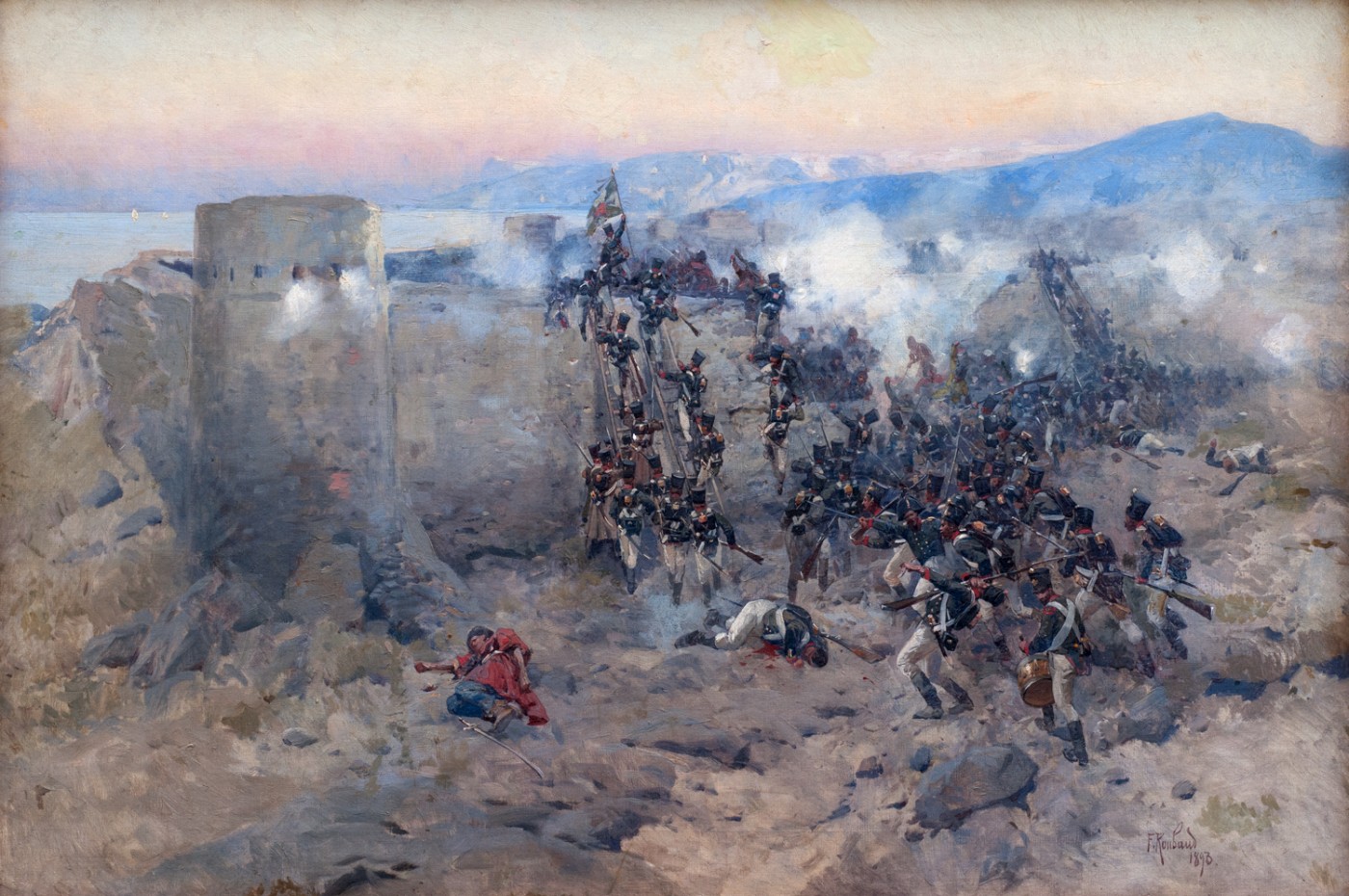
Siege of Lankaran
The siege of Lankaran (Persian: محاصره لنکران; Russian: Штурм Ленкорани) took place from 7 January to 13 January 1813 during the Russo-Persian War (1804–1813). Lankaran, a city in the Talish region, was previously held by Mir-Mostafa Khan of the Talysh Khanate, a subject of Iran. However, due to his defiance, he was ousted from the city by Iranian forces in August 1812. Now directly held by the Iranians, the city was soon besieged by the Russian commander Pyotr Kotlyarevsky, who had recently defeated the Iranian crown-prince Abbas Mirza at the battle of Aslanduz.
Shortly before the siege, Kotlyarevsky had offered the 4,000 stationed soldiers and their commander Sadeq Khan Qajar the chance to surrender, but they refused. Kotlyarevsky subsequently started the shelling of the city, and by 13 January, the Russians had captured Lankaran. The majority of the defenders, as well as Sadeq Khan, were killed, whilst Kotlyarevsky was wounded. Mir-Mostafa Khan was subsequently reinstated, and thus the Talysh Khanate was once again under Russian suzerainty.
The war effectively came to an end after the siege of Lankaran, as Iran was soon compelled to accept an unfavourable peace as Britain (who funded their war campaign) decided it was no longer worth continuing the conflict. On 24 October 1813, Iran and Russia signed the Treaty of Gulistan, in which Iran agreed to cede the majority of their holdings in the eastern Caucasus to Russia, including the northern part of Talish.
Lankaran is a city located in the northern part of the historical Talish region. Following the death of the Iranian monarch Nader Shah (r. 1736–1747) in 1747, it was made the capital of the newly established Talysh Khanate. Like other khanates in the Caucasus, it was still seen as an Iranian dependency even when the shahs (kings) in mainland Iran lacked the power to enforce their rule in the area. Since the 1760s, the Russians had shown interest in the Caucasus, growing more determined to increase their involvement and influence there. The Russo-Iranian War of 1804–1813 erupted when the Russians seized the city of Ganja, which had been governed by the Ganja Khanate.
The khan of the Talysh Khanate, Mir-Mostafa Khan kept shifting his allegiance between Iran and Russia, which both the Iranian monarch Fath-Ali Shah Qajar (r. 1797–1834) and his designated heir Abbas Mirza had grown tired of. After trying unsuccessfully to make Mir-Mostafa Khan side with Iran again, they decided to put an end to his authority in Lankaran. A unified Iranian force from several places and directions assaulted Lankaran in August 1812, routing Mir-Mostafa Khan's forces and the Russians who helped him. Mir-Mostafa Khan was able to flee to Gamishvan.
Abbas Mirza had ignored British officers' requests to set up guards at Aslanduz in order to deter Russian assaults. As a result, Russian commander Pyotr Kotlyarevsky led two successful ambushes against the Iranians, causing significant damage and stealing most of Abbas Mirza's artillery. Due to Abbas Mirza's withdrawal towards Tabriz following the battle of Aslanduz, Kotlyarevsky had time to attack Lankaran.
On January 7, Kotlyarevsky besieged Lankaran, which was being defended by 4,000 soldiers led by Sadeq Khan Qajar. Kotlyarevsky contacted Sadeq Khan the following day and demanded that he give over the fort. He went on to say that the Russians had defeated Abbas Mirza at Aslanduz and that Fath-Ali Shah (whom he addressed him as Baba Khan instead), was powerless to oppose the Russians. Sadeq Khan was unwilling to give up because Abbas Mirza had instructed him to hold the fort until the very last man. As a result, Kotlyarevsky subsequently gave the order for the ships to launch mortars towards the city. On January 10, the defenders were contacted by Kotlyarevsky, who urged them to surrender to save themselves, their wives and children, and their possessions. He reiterated Abbas Mirza's defeat and also the destruction of the Arkevan fortress.
On January 12, Kotlyarevsky gave the defenders three hours to submit quietly. Having run out of shells, he next gave the order for the troops to charge the city. He had the majority of his troops organized into three columns, but had his artillery surrounded by two companies from the Georgian Grenadier Regiment to give impression that he intended to launch the main assault from that place. The first column was led by Lieutenant-colonel Ushakov and included six companies from the Georgian Grenadier Regiment; the second column by Major Povalishin and included 297 members of the Caspian Naval Battalion and two companies from the Troitskii Regiment; and the third column by Major Tereshkevich and included 350 members of the Georgian Grenadier and 17th Jäger Regiments. 1,661 soldiers, 59 officers, and 37 military bands made up the entire contingent.
Siege of Lankaran
The siege of Lankaran (Persian: محاصره لنکران; Russian: Штурм Ленкорани) took place from 7 January to 13 January 1813 during the Russo-Persian War (1804–1813). Lankaran, a city in the Talish region, was previously held by Mir-Mostafa Khan of the Talysh Khanate, a subject of Iran. However, due to his defiance, he was ousted from the city by Iranian forces in August 1812. Now directly held by the Iranians, the city was soon besieged by the Russian commander Pyotr Kotlyarevsky, who had recently defeated the Iranian crown-prince Abbas Mirza at the battle of Aslanduz.
Shortly before the siege, Kotlyarevsky had offered the 4,000 stationed soldiers and their commander Sadeq Khan Qajar the chance to surrender, but they refused. Kotlyarevsky subsequently started the shelling of the city, and by 13 January, the Russians had captured Lankaran. The majority of the defenders, as well as Sadeq Khan, were killed, whilst Kotlyarevsky was wounded. Mir-Mostafa Khan was subsequently reinstated, and thus the Talysh Khanate was once again under Russian suzerainty.
The war effectively came to an end after the siege of Lankaran, as Iran was soon compelled to accept an unfavourable peace as Britain (who funded their war campaign) decided it was no longer worth continuing the conflict. On 24 October 1813, Iran and Russia signed the Treaty of Gulistan, in which Iran agreed to cede the majority of their holdings in the eastern Caucasus to Russia, including the northern part of Talish.
Lankaran is a city located in the northern part of the historical Talish region. Following the death of the Iranian monarch Nader Shah (r. 1736–1747) in 1747, it was made the capital of the newly established Talysh Khanate. Like other khanates in the Caucasus, it was still seen as an Iranian dependency even when the shahs (kings) in mainland Iran lacked the power to enforce their rule in the area. Since the 1760s, the Russians had shown interest in the Caucasus, growing more determined to increase their involvement and influence there. The Russo-Iranian War of 1804–1813 erupted when the Russians seized the city of Ganja, which had been governed by the Ganja Khanate.
The khan of the Talysh Khanate, Mir-Mostafa Khan kept shifting his allegiance between Iran and Russia, which both the Iranian monarch Fath-Ali Shah Qajar (r. 1797–1834) and his designated heir Abbas Mirza had grown tired of. After trying unsuccessfully to make Mir-Mostafa Khan side with Iran again, they decided to put an end to his authority in Lankaran. A unified Iranian force from several places and directions assaulted Lankaran in August 1812, routing Mir-Mostafa Khan's forces and the Russians who helped him. Mir-Mostafa Khan was able to flee to Gamishvan.
Abbas Mirza had ignored British officers' requests to set up guards at Aslanduz in order to deter Russian assaults. As a result, Russian commander Pyotr Kotlyarevsky led two successful ambushes against the Iranians, causing significant damage and stealing most of Abbas Mirza's artillery. Due to Abbas Mirza's withdrawal towards Tabriz following the battle of Aslanduz, Kotlyarevsky had time to attack Lankaran.
On January 7, Kotlyarevsky besieged Lankaran, which was being defended by 4,000 soldiers led by Sadeq Khan Qajar. Kotlyarevsky contacted Sadeq Khan the following day and demanded that he give over the fort. He went on to say that the Russians had defeated Abbas Mirza at Aslanduz and that Fath-Ali Shah (whom he addressed him as Baba Khan instead), was powerless to oppose the Russians. Sadeq Khan was unwilling to give up because Abbas Mirza had instructed him to hold the fort until the very last man. As a result, Kotlyarevsky subsequently gave the order for the ships to launch mortars towards the city. On January 10, the defenders were contacted by Kotlyarevsky, who urged them to surrender to save themselves, their wives and children, and their possessions. He reiterated Abbas Mirza's defeat and also the destruction of the Arkevan fortress.
On January 12, Kotlyarevsky gave the defenders three hours to submit quietly. Having run out of shells, he next gave the order for the troops to charge the city. He had the majority of his troops organized into three columns, but had his artillery surrounded by two companies from the Georgian Grenadier Regiment to give impression that he intended to launch the main assault from that place. The first column was led by Lieutenant-colonel Ushakov and included six companies from the Georgian Grenadier Regiment; the second column by Major Povalishin and included 297 members of the Caspian Naval Battalion and two companies from the Troitskii Regiment; and the third column by Major Tereshkevich and included 350 members of the Georgian Grenadier and 17th Jäger Regiments. 1,661 soldiers, 59 officers, and 37 military bands made up the entire contingent.
Recent media
Recent media