



Community hub
Recent from talks
Contribute something
Nothing was collected or created yet.
Signal strength in telecommunications
View on Wikipedia
 | This article needs additional citations for verification. (January 2017) |
In telecommunications, particularly in radio frequency engineering, signal strength is the transmitter power output as received by a reference antenna at a distance from the transmitting antenna. High-powered transmissions, such as those used in broadcasting, are measured in dB-millivolts per metre (dBmV/m). For very low-power systems, such as mobile phones, signal strength is usually expressed in dB-microvolts per metre (dBμV/m) or in decibels above a reference level of one milliwatt (dBm). In broadcasting terminology, 1 mV/m is 1000 μV/m or 60 dBμ (often written dBu).
Examples
[edit]- 100 dBμ or 100 mV/m: blanketing interference may occur on some receivers
- 60 dBμ or 1.0 mV/m: frequently considered the edge of a radio station's protected area in North America
- 40 dBμ or 0.1 mV/m: the minimum strength at which a station can be received with acceptable quality on most receivers
Relationship to average radiated power
[edit]The electric field strength at a specific point can be determined from the power delivered to the transmitting antenna, its geometry and radiation resistance. Consider the case of a center-fed half-wave dipole antenna in free space, where the total length L is equal to one half wavelength (λ/2). If constructed from thin conductors, the current distribution is essentially sinusoidal and the radiating electric field is given by



where is the angle between the antenna axis and the vector to the observation point, is the peak current at the feed-point, is the permittivity of free-space, is the speed of light in vacuum, and is the distance to the antenna in meters. When the antenna is viewed broadside () the electric field is maximum and given by





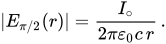
Solving this formula for the peak current yields

The average power to the antenna is
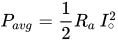
where is the center-fed half-wave antenna's radiation resistance. Substituting the formula for into the one for and solving for the maximum electric field yields



Therefore, if the average power to a half-wave dipole antenna is 1 mW, then the maximum electric field at 313 m (1027 ft) is 1 mV/m (60 dBμ).
For a short dipole () the current distribution is nearly triangular. In this case, the electric field and radiation resistance are


Using a procedure similar to that above, the maximum electric field for a center-fed short dipole is

RF signals
[edit]Although there are cell phone base station tower networks across many nations globally, there are still many areas within those nations that do not have good reception. Some rural areas are unlikely to ever be covered effectively since the cost of erecting a cell tower is too high for only a few customers. Even in areas with high signal strength, basements and the interiors of large buildings often have poor reception.
Weak signal strength can also be caused by destructive interference of the signals from local towers in urban areas, or by the construction materials used in some buildings causing significant attenuation of signal strength. Large buildings such as warehouses, hospitals and factories often have no usable signal further than a few metres from the outside walls.
This is particularly true for the networks which operate at higher frequency since these are attenuated more by intervening obstacles, although they are able to use reflection and diffraction to circumvent obstacles.
Estimated received signal strength
[edit]The estimated received signal strength in an active RFID tag can be estimated as follows:

In general, you can take the path loss exponent into account:[1]

| Parameter | Description |
|---|---|
| dBme | Estimated received power in active RFID tag |
| −43 | Minimum received power |
| 40 | Average path loss per decade for mobile networks |
| r | Distance mobile device - cell tower |
| R | Mean radius of the cell tower |
| γ | Path loss exponent |
The effective path loss depends on frequency, topography, and environmental conditions.
Actually, one could use any known signal power dBm0 at any distance r0 as a reference:

Number of decades
[edit]- would give an estimate of the number of decades, which coincides with an average path loss of 40 dB/decade.

Estimate the cell radius
[edit]When we measure cell distance r and received power dBmm pairs, we can estimate the mean cell radius as follows:
![{\displaystyle R_{e}=\operatorname {avg} [\ r\ 10^{(\mathrm {dBm_{m}} +43.0)/40.0}\ ]}](https://wikimedia.org/api/rest_v1/media/math/render/svg/cc5a497db4c1c6b8efecd5859763cc80335932ca)
Specialized calculation models exist to plan the location of a new cell tower, taking into account local conditions and radio equipment parameters, as well as consideration that mobile radio signals have line-of-sight propagation, unless reflection occurs.
See also
[edit]References
[edit]- ^ Figueiras, João; Frattasi, Simone (2010). Mobile Positioning and Tracking: From Conventional to Cooperative Techniques. John Wiley & Sons. ISBN 978-1119957560.
External links
[edit]Signal strength in telecommunications
View on GrokipediaBasic Concepts
Definition and Importance
In telecommunications, signal strength refers to the magnitude of an electrical signal that carries information, particularly the power level of the received radio frequency signal at the receiver's antenna.[9] This measurement captures how effectively the signal has propagated from the transmitter through the environment, accounting for factors like distance and obstacles, and serves as a foundational indicator of the signal's usability in communication systems.[9] The importance of signal strength lies in its direct influence on overall system performance, including communication quality, achievable data rates, error rates, and coverage extent. Strong signal strength ensures reliable detection and decoding of information, minimizing bit errors and supporting higher throughput, whereas weak signals result in increased packet loss, dropped connections, and reduced service reliability, such as in mobile calls or data sessions.[10] In practical terms, adequate signal strength is essential for maintaining quality of service (QoS) across wireless networks, enabling seamless handovers and preventing coverage gaps in areas with obstructions.[10] Historically, early telecommunications in the 20th century heavily relied on analog signal amplitude to achieve voice clarity, as continuous waveform variations directly determined the fidelity of transmitted audio over wired or early radio systems. These analog approaches were susceptible to degradation, limiting long-distance clarity and prompting the eventual shift to digital methods for improved robustness.[11] A key concept tied to signal strength is the signal-to-noise ratio (SNR), which quantifies the desired signal's power relative to background noise or interference, serving as a primary metric for ensuring reliable detection in both analog and digital systems. Higher SNR values indicate clearer reception with lower error probabilities, making it indispensable for assessing and optimizing telecommunication link quality.[12]Units of Measurement
Signal strength in telecommunications is quantified using both absolute and relative scales to describe power levels, voltage amplitudes, and field intensities. Absolute scales provide direct measurements against a fixed reference, while relative scales express ratios between signals. The decibel (dB) serves as the fundamental unit for relative measurements, defined as for power ratios, where and are two power levels.[13] This logarithmic scale compresses wide dynamic ranges typical in RF signals, facilitating comparisons of signal attenuation or gain.[13] A common absolute power unit is the decibel-milliwatt (dBm), which measures signal power relative to 1 milliwatt (mW). The conversion from power in milliwatts to dBm is given by , and the inverse is .[13] For example, a received signal of -90 dBm corresponds to mW (or W), indicating a weak but detectable signal in cellular systems.[14] To express power in watts, the formula becomes , accounting for the 30 dB difference between 1 mW and 1 W.[13] dBm is widely used for specifying transmitter outputs, receiver sensitivities, and link budgets in wireless networks.[14] Relative to a reference signal, such as the carrier in modulated transmissions, power levels are often expressed in decibels relative to the carrier (dBc). This unit quantifies the amplitude of spurious or harmonic components compared to the main carrier power, using the formula dBc.[15] dBc is essential for assessing signal purity and interference in spectrum analyzers and compliance testing.[16] Voltage-based units, such as microvolts (μV), measure the induced signal amplitude at a receiver input, typically across a specified impedance like 50 Ω. Receiver sensitivity is often rated in μV, where lower values indicate better performance; for instance, a 1 μV signal represents a very weak input requiring high-gain amplification. This unit is common in analog and early digital radio specifications.[17] For electromagnetic field propagation, signal strength is expressed as electric field strength in volts per meter (V/m). This unit describes the intensity of the propagating wave and is converted to decibels relative to 1 μV/m via , or equivalently .[18] V/m is standardized for regulatory limits on emissions and coverage predictions in broadcasting and mobile services.[18]Theoretical Relationships
Relation to Radiated Power
In telecommunications, the average radiated power from a transmitter is often quantified using effective isotropic radiated power (EIRP), which represents the total power that would be radiated by an isotropic antenna to achieve the same maximum power density in a given direction as the actual antenna system.[19] EIRP is calculated as the product of the transmitter output power and the antenna gain, providing a standardized metric for comparing transmitter performance across different systems.[20] An isotropic radiator serves as the theoretical reference for antenna gain calculations, defined as a hypothetical point source that radiates power equally in all directions with a gain of 0 dBi. This ideal model allows engineers to express the directive properties of real antennas relative to uniform spherical radiation, facilitating the quantification of how antennas concentrate energy.[21] Antenna gain significantly impacts effective radiated power by directing more energy toward the intended receiver, thereby increasing the equivalent power output in that direction without additional transmitter input. For instance, directional antennas with higher gain, such as parabolic dishes, can boost EIRP by factors of 10 dB or more compared to omnidirectional types, enhancing signal strength over distance.[23] The fundamental relationship between transmitted and received signal power is described by the Friis transmission equation in its simplified form for free-space conditions: where is the received power, is the transmitted power, and are the gains of the transmitting and receiving antennas, is the wavelength, and is the distance between antennas.[24] This equation illustrates how radiated power at the transmitter, modulated by antenna gains, directly determines the signal strength at the receiver under ideal propagation.Path Loss Fundamentals
Path loss in telecommunications represents the reduction in power density of an electromagnetic signal as it propagates from the transmitter to the receiver, primarily due to the spreading of the wavefront over distance.[25] This phenomenon is a core factor in determining the effective range and reliability of wireless links, as it directly impacts the received signal strength relative to the transmitted power.[25] In the ideal scenario of free-space propagation—assuming a line-of-sight path through vacuum or air with no obstacles or reflections—the free-space path loss (FSPL) provides a baseline model for this attenuation. Derived from the Friis transmission equation, the FSPL expresses the ratio of transmitted to received power as a function of distance and wavelength. The linear form of the loss is given by where is the propagation distance and is the signal wavelength.[26] In decibels, for practical calculations, this becomes with as the frequency in Hz, in meters, and as the speed of light ( m/s).[26] This equation highlights the quadratic dependence on distance in free space, where power density decreases inversely with the square of the distance due to spherical spreading.[26] Path loss models are broadly classified as deterministic or stochastic. Deterministic models compute loss based on precise environmental geometry and wave physics, yielding exact predictions for specific scenarios, while stochastic models incorporate statistical variations to account for random environmental effects, providing probabilistic outcomes suitable for broader planning.[27] A canonical example of a deterministic model beyond free space is the two-ray ground reflection model, which considers both the direct line-of-sight path and a single reflection from the ground surface between elevated transmitter and receiver antennas.[28] This model approximates the received power by superposing the electric fields from the two paths, resulting in a path loss that transitions from free-space behavior at short distances to a steeper dependence at longer ranges due to destructive interference.[28] The frequency dependence of path loss is evident in the FSPL formulation, as wavelength inversely scales with frequency. Consequently, higher frequencies yield shorter wavelengths, leading to greater attenuation over the same distance—for instance, signals at millimeter-wave bands (e.g., above 30 GHz) incur significantly more loss than those at sub-6 GHz bands, limiting range but enabling higher data rates in short-link applications.[26] This scaling underscores the trade-offs in spectrum allocation for telecommunications systems.[26]RF Signal Analysis
Received Signal Strength Estimation
Received Signal Strength Indicator (RSSI) serves as a device-reported metric that quantifies the power level of a received radio frequency (RF) signal, typically expressed in decibels-milliwatts (dBm), across various wireless protocols including Wi-Fi and cellular networks.[29] In Wi-Fi systems compliant with IEEE 802.11 standards, RSSI measures the RF energy received at a station, often estimated from beacon signals transmitted by access points, providing an indication of link quality for applications such as localization and handover decisions.[29] For cellular networks, as defined in 3GPP specifications, RSSI represents the total wideband received power observed by the user equipment over the measurement bandwidth, encompassing the serving cell power, interference, and thermal noise, which aids in radio resource management and cell selection processes. This metric, while not absolute due to variations in implementation, enables real-time assessment of signal reception in dynamic environments. Measurement of received signal strength can be performed using specialized equipment or integrated receiver components. Spectrum analyzers are widely employed in RF telecommunications to directly measure RSS by sweeping across frequency bands and capturing the amplitude of the incoming signal, allowing engineers to visualize power levels and identify interference sources during network deployment or troubleshooting. Alternatively, built-in automatic gain control (AGC) mechanisms in receivers provide an indirect estimation of RSSI by dynamically adjusting the amplifier gain to maintain a constant output signal level, where the required gain adjustment inversely correlates with the input signal strength, often serving as the basis for the reported RSSI value.[30] These techniques ensure accurate monitoring without overloading the receiver circuitry, particularly in variable signal conditions. Empirical models offer predictive capabilities for estimating RSS in specific environments, accounting for propagation characteristics. The Okumura-Hata model, derived from extensive field measurements in urban and suburban areas, predicts path loss to facilitate RSS estimation by incorporating terrain-specific corrections, applicable to frequencies between 150 MHz and 1920 MHz and base station heights up to 200 meters. Developed by Yoshihisa Okumura and refined by Masaharu Hata, this model uses empirical formulas to adjust for urban clutter, suburban scattering, and distance-dependent attenuation, enabling planners to forecast signal strength for mobile radio services like early cellular systems. Path loss serves as a core component in these estimations, transforming transmitted power into expected received levels. Such models are particularly valuable for initial network design, where direct measurements are infeasible. Several key factors influence the accuracy of RSS estimation, primarily distance, frequency, and antenna characteristics. Signal strength diminishes with increasing transmitter-receiver distance due to free-space path loss, which scales inversely with the square of the distance, leading to rapid degradation in RSS values over longer ranges.[31] Higher operating frequencies exacerbate this effect, as path loss increases proportionally with frequency squared, resulting in weaker RSS for millimeter-wave bands compared to sub-6 GHz cellular signals.[31] Antenna effects, including gain and orientation, further modulate RSS; directive antennas with higher gain can enhance received power by focusing energy, while misalignment reduces effective strength, necessitating calibration in estimation algorithms.[32] These factors underscore the need for context-aware adjustments in predictive models to achieve reliable RSS forecasts.Multipath and Fading Effects
In telecommunications, multipath propagation arises when radio frequency (RF) signals from a transmitter reach the receiver through multiple indirect paths, resulting from reflections off buildings, vehicles, terrain, or other obstacles, as well as diffractions and scattering. These delayed signal components interfere at the receiver, producing constructive interference that amplifies the signal strength or destructive interference that attenuates it, leading to rapid fluctuations in the received signal envelope over short distances or time periods.[33] Such interference manifests as small-scale fading, distinct from larger-scale path loss, and is particularly pronounced in urban or indoor environments where line-of-sight (LOS) paths are obstructed. In non-line-of-sight (NLOS) conditions, where no dominant direct path exists and signals arrive via numerous scattered paths with random phases, the fading is characterized as Rayleigh fading; the envelope amplitude follows a Rayleigh distribution, with probability density function where represents the power in each of the two orthogonal Gaussian components of the complex signal.[34] This model assumes isotropic scattering and equal average power in all directions, resulting in deep fades where signal strength can drop by 20–40 dB below the mean.[33] When a strong LOS component is present alongside multipath, the fading shifts to Rician distribution, accounting for the direct path's fixed amplitude superimposed on scattered components; this was first mathematically derived in the context of noise-plus-sinusoid signals.[35] The Rician factor , defined as the ratio of LOS power to scattered power, quantifies the LOS dominance, with higher values yielding less severe fading compared to Rayleigh cases. Additionally, log-normal shadowing describes slower, location-dependent variations in signal strength due to large obstacles blocking the propagation path, modeled as a normal distribution in decibels with standard deviation typically 4–12 dB depending on the environment.[33] To counteract these fading effects, diversity techniques exploit signal redundancies across multiple dimensions. Spatial diversity employs multiple antennas at the transmitter or receiver to capture independent fading realizations, combining them via methods like maximal ratio combining to improve signal-to-noise ratio. Frequency diversity transmits redundant signals over separated carrier frequencies to avoid correlated fades, while brief overviews of these approaches highlight their role in enhancing reliability without delving into implementation specifics.[34]Practical Applications
Cellular Network Coverage
In cellular networks, coverage prediction relies on estimating the minimum signal strength required to maintain reliable service, such as voice calls or data connections. For legacy systems like GSM and UMTS, a typical minimum received signal strength indicator (RSSI) threshold for initiating handover is around -100 dBm to ensure adequate voice quality and prevent call drops during mobility.[36] These thresholds are derived from path loss models that account for signal attenuation over distance, allowing network planners to map out cell boundaries where signal levels drop below viable limits.[37] Handoff processes in cellular systems are triggered by fluctuations in signal strength, enabling seamless transitions between base stations as mobile devices move. When signal strength from the serving cell weakens below a predefined threshold—often -100 dBm in GSM/UMTS—while a neighboring cell offers stronger reception, the network initiates handover to maintain connectivity.[38] This mechanism is closely linked to cell breathing, a phenomenon particularly prominent in CDMA-based networks like UMTS, where increased traffic load raises interference and requires higher transmit power, effectively shrinking the cell's coverage area inward.[36] As a result, the effective cell edge contracts, potentially forcing more frequent handoffs or coverage gaps if not managed through power control algorithms.[39] In 4G LTE and 5G NR networks, signal strength plays a pivotal role in advanced techniques like multiple-input multiple-output (MIMO) and beamforming to extend and optimize coverage. Massive MIMO systems use signal strength measurements to form directional beams that concentrate energy toward users, improving received signal levels by up to 10-15 dB in challenging environments and thus expanding effective coverage without additional infrastructure. Beamforming in 5G dynamically adjusts based on real-time signal feedback, mitigating propagation losses and enabling reliable service in high-mobility scenarios.[40] Real-world deployments highlight stark contrasts in signal decay challenges between urban and rural areas. In urban settings, dense buildings cause rapid multipath fading and shadowing, leading to signal strengths dropping 20-30 dB faster than in open rural terrains, necessitating smaller cells and higher site density for consistent coverage.[37] Rural areas, conversely, face greater free-space path loss over longer distances due to sparse infrastructure, where signal decay from terrain irregularities can reduce effective coverage radii by 50% or more compared to flat urban models, often requiring elevated towers or repeaters to sustain minimum thresholds.[41]Wireless LAN Performance
In wireless local area networks (WLANs), particularly those based on IEEE 802.11 standards such as Wi-Fi, signal strength directly influences achievable data rates and overall performance. For instance, in 802.11g networks operating in the 2.4 GHz band, the received signal strength indicator (RSSI) must typically exceed -73 dBm to support the maximum data rate of 54 Mbps, assuming a noise floor of approximately -95 dBm and a 20 MHz channel width; lower RSSI values lead to automatic rate adaptation to slower speeds like 6 Mbps at around -92 dBm to maintain connectivity.[42] These thresholds ensure reliable modulation schemes, such as orthogonal frequency-division multiplexing (OFDM), but performance degrades in environments where RSSI falls below -80 dBm, prompting fallback to more robust direct-sequence spread spectrum (DSSS) modes. In modern Wi-Fi 6 (802.11ax) and Wi-Fi 7 (802.11be) networks, as of 2025, signal strength management is enhanced with features like orthogonal frequency-division multiple access (OFDMA) and multi-user MIMO, allowing higher data rates (up to 9.6 Gbps for Wi-Fi 6 and 46 Gbps for Wi-Fi 7) at RSSI levels similar to legacy standards but with improved efficiency in dense environments. For example, Wi-Fi 6 maintains reliable 1 Gbps links at RSSI above -75 dBm in 160 MHz channels, benefiting from better interference rejection.[43] Indoor propagation in WLANs is particularly challenged by structural obstacles, where wall penetration loss significantly attenuates signal strength. Common building materials introduce losses ranging from 10 to 20 dB; for example, a 10 cm thick wood wall may cause about 6 dB of attenuation, while a 30 cm thick brick wall can result in up to 17 dB loss at 2.4 GHz frequencies.[44] This attenuation reduces effective coverage area, often necessitating additional access points to maintain adequate RSSI levels across floors or partitioned spaces, as signals weaken exponentially with distance and obstructions. To optimize WLAN performance, site surveys are essential for mapping signal strength variations. Tools like Ekahau provide detailed heatmaps that visualize RSSI distribution, coverage gaps, and capacity metrics, enabling precise access point placement and channel selection during deployment or troubleshooting.[45] These surveys reveal how indoor fading exacerbates signal variability in multipath-rich environments. In dense WLAN deployments, such as enterprise offices or high-density venues, co-channel interference from overlapping access points on the same frequency band further diminishes effective signal strength by elevating the noise floor and reducing signal-to-interference-plus-noise ratio (SINR). This interference can halve throughput and shrink usable range by 20-30% in crowded 2.4 GHz spectra, where only three non-overlapping channels (1, 6, 11) are available, underscoring the need for careful channel planning and power management to mitigate its impact.[46]Calculation Methods
Link Budget Analysis
Link budget analysis provides a comprehensive accounting of all gains and losses in a telecommunications link to determine if the received signal strength suffices for reliable communication. This process integrates transmitter characteristics, propagation effects, and receiver capabilities into a single budget, often expressed in decibels to simplify calculations involving multiplicative factors. By quantifying the end-to-end signal attenuation and amplification, engineers can predict link performance and identify potential bottlenecks before deployment.[47] The core link budget equation for received power (in dBm) is given by: where is the transmitter output power (in dBm), and are the transmitter and receiver antenna gains (in dBi), is the free-space path loss (in dB), encompasses additional losses such as cable, connector, and atmospheric effects (in dB), and represents margins like fade margin (in dB). This formulation stems from the Friis transmission equation extended to include practical impairments.[47][48] Transmitter power denotes the effective output after any internal losses, directly influencing the initial signal strength and tying into radiated power concepts where effective isotropic radiated power (EIRP) equals . Antenna gains and capture the focusing effects of directional antennas, with higher values (e.g., 20-40 dBi for microwave dishes) concentrating energy toward the receiver. Free-space loss models ideal propagation as , where is distance in meters, is frequency in Hz, and is the speed of light; other losses add real-world degradations like 1-3 dB for cabling.[47][48] A critical component is the fade margin, incorporated as to buffer against signal fluctuations from environmental factors, typically set at 10-20 dB for standard reliability in terrestrial links. The receiver sensitivity defines the minimum for acceptable bit error rates, often around -104 dBm for typical wireless modems operating at data rates like 9600 bps. The resulting link margin, minus sensitivity, must be positive and exceed the fade margin to ensure the link meets performance thresholds.[49][50] For a practical illustration, consider a point-to-point microwave link at 12 GHz spanning 5 km with line-of-sight clearance. Assume dBm from a standard transmitter, dBi and dBi from parabolic antennas, negligible other losses ( dB), and dB calculated via the Friis formula. Including 6 dB diffraction loss for minor path obstruction, dBm. With a receiver sensitivity of -80 dBm and a 10 dB fade margin, the link margin is dB, indicating robust performance well above requirements.[51]Cell Radius Estimation
Cell radius estimation in telecommunications involves determining the maximum distance from a base station where the received signal strength meets a minimum threshold for reliable communication, often derived from path loss models. The Hata model is empirical and applicable for frequencies 150-1500 MHz, base station heights 30-200 m, and distances 1-20 km in urban, suburban, or rural environments. In free space conditions, the basic formula rearranges the free-space path loss (FSPL) equation to solve for distance : where is in kilometers, is the frequency in MHz, and is the free-space basic transmission loss in dB, typically assuming isotropic antennas and no additional gains or losses, with as transmit power and as the minimum required received power.[4] This approximation assumes line-of-sight propagation and provides an upper bound on coverage, ignoring environmental attenuations.[4] For realistic environments, empirical models like the Hata model adjust the free-space estimate to account for terrain, buildings, and urban clutter, particularly in urban areas where path loss increases nonlinearly with distance. The Hata model path loss for urban settings is given by: where is carrier frequency in MHz, is base station antenna height in meters, is distance in km, is mobile antenna height in meters, and is a correction factor for mobile height. Rearranging for cell radius yields , where ; this form approximates environmental corrections, with and as model-derived constants (e.g., for power scaling in urban paths). These adjustments reduce the estimated radius compared to free space, often by 50-80% in dense urban settings due to shadowing and multipath. Estimating cell radius requires balancing transmit power , antenna height , and the required , as higher extends radius but increases interference and energy costs, while elevating mitigates ground clutter at the expense of mechanical complexity and regulatory limits on effective radiated power. For voice services, might be around -90 dBm for acceptable bit error rates, whereas data applications demand higher values like -80 dBm, shrinking radius due to increased signal-to-noise needs. Link budget analysis provides inputs like and gains for these estimations.[52] As an example, for a 20 W (43 dBm) base station at 900 MHz with m, m, and dBm in an urban area (assuming dB and no antenna gains), the Hata model yields dB, resulting in an estimated cell radius of approximately 1.7 km after solving the rearranged equation, sufficient for voice coverage but limited by urban attenuation.References
- https://eng.libretexts.org/Bookshelves/Electrical_Engineering/[Electronics](/page/Electronics)/Microwave_and_RF_Design_I_-Radio_Systems%28Steer%29/04%253A_Antennas_and_the_RF_Link/4.05%253A_Antenna_Parameters