Hubbry Logo
Simo MatavuljSimo MatavuljMain
Open search
Simo Matavulj
Community hub
Simo Matavulj
logo
8 pages, 0 posts
0 subscribers
Be the first to start a discussion here.
Simo Matavulj
Simo Matavulj
from Wikipedia

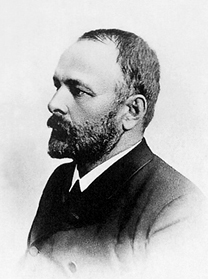
Simo Matavulj (Serbian: Симо Матавуљ; 12 September 1852 – 20 February 1908) was a Serbian writer and translator.[1][2]

Key Information

Biography

[edit]

After finishing elementary school in Italian and Serbian in his hometown of Šibenik, he continued his secondary education in Krupa Monastery and Teacher's College in Zadar from which he graduated in 1871. After graduation, he went to Islam Grčki, where he served as secretary to Count Ilija Janković, the last descendant of Stojan Janković. In 1881, he started working as a teacher in Montenegro, where he met Pavel Rovinsky. A year later, he used an opportunity presented by the government to escort several students from prominent Montenegrin families to schools in Milan and Paris, where he met Anatole France among other writers. He moved to Serbia in 1887.[3]

He was a representative of lyric realism, especially in short prose. As a writer, he is best known for employing his skill in holding up to ridicule the peculiar foibles of the Dalmatian folk.

Matavulj was an honorary member of the Matica srpska of Novi Sad, the first president of the Association of Writers of Serbia, president of the Society of Artists of Serbia and a member of the Serbian Royal Academy.[2]

Serbian poetic circle.

Legacy

[edit]

Nobel prize winner Ivo Andrić called him "the master storyteller".[4]

Works

[edit]
  • Noć uoči Ivanje, Zadar, 1873.
  • Naši prosjaci, Zadar, 1881.
  • Iz Crne Gore i Primorja I, Novi Sad, 1888.
  • Iz Crne Gore i Primorja II, Cetinje, 1889.
  • Novo oružje, Belgrade, 1890.
  • Iz prіmorskog žіvota, Zagreb, 1890.
  • Sa Jadrana, Belgrade, 1891.
  • Iz beogradskog života, Belgrade, 1891.
  • Bakonja fra-Brne, Belgrade, 1892.
  • Uskok, Belgrade, 1893.
  • Iz raznijeh krajeva, Mostar, 1893.
  • Boka i Bokelji, Novi Sad, 1893.
  • Primorska obličja, Novi Sad, 1899.
  • Deset godina u Mavritaniji, Belgrade, 1899.
  • Tri pripovetke, Mostar, 1899.
  • Na pragu drugog života, Sremski Karlovci, 1899.
  • S mora i planine, Novi Sad, 1901.
  • Beogradske priče, Belgrade, 1902.
  • Pošljednji vitezovi i Svrzimantija, Mostar, 1903.
  • Život, Belgrade 1904.
  • Na slavi, Belgrade, 1904.
  • Zavjet, Belgrade, 1904.
  • Car Duklijan, Mostar, 1906.
  • Nemirne duše, Belgrade, 1908.
  • Bilješke jednoga pisca, Belgrade, 1923.
  • Golub Dobrašinović

Translations

[edit]

References

[edit]

Sources

[edit]
  • Translated and adapted from Jovan Skerlić's Istorija nove srpske književnosti / History of New Serbian Literature (Belgrade, 1921), pp. 390–395.
[edit]
Revisions and contributorsEdit on WikipediaRead on Wikipedia
from Grokipedia
Simo Matavulj is a Serbian writer and translator known for his realist prose that vividly depicted everyday life, social customs, and regional cultures along the Adriatic coast, in Montenegro, and in Belgrade during the late 19th and early 20th centuries. His most notable works include the novels Bakonja fra Brne and Uskok, as well as numerous short story collections such as Iz primorskog života, Iz beogradskog života, and Primorska obličja. Matavulj is recognized for his psychological depth in novellas, his travelogues, memoirs, and translations from French authors including Guy de Maupassant, Émile Zola, and Molière. He was elected a full member of the Serbian Royal Academy in 1904. Born on 12 September 1852 in Šibenik (then part of the Austrian Empire, now in Croatia), Matavulj completed his teacher training in Zadar in 1872 and worked as a village teacher in Dalmatia before spending eight years teaching Italian in Herceg Novi. He participated as a volunteer in the Nevesinj uprising of 1875 and related conflicts, experiences that influenced his early writing. After expulsion by Austrian authorities, he moved to Cetinje in Montenegro, where he taught and began publishing serialized works, including parts of his novel Uskok. In 1889 he settled in Belgrade, where he taught at a gymnasium, worked in the Ministry of Foreign Affairs, and became active in literary circles as president of the writers' association. Matavulj published around 70 short stories and novellas, often drawing on his diverse experiences in coastal, mountain, and urban settings to explore themes of human nature, social change, and regional identity. He died in Belgrade on 20 February 1908.

Early life and education

Birth and family background

Simo Matavulj was born on September 12, 1852, in Šibenik, Kingdom of Dalmatia, then part of the Austrian Empire. He grew up in a Serbian family in the city, which maintained a distinct cultural presence amid the region's ethnic diversity. His father, Stefan Matavulj, worked as a merchant and died during Simo's childhood, leaving the family in difficult circumstances. Matavulj also had an uncle named Serafim, who served as abbot of the Krupa Monastery. Šibenik was a multi-ethnic coastal town with a population blending long-established Croatians and Serbs who had migrated from Bosnia and Herzegovina. Italian served as the primary language of instruction in local schools due to Austrian administration, while a Serbian school operated concurrently, reflecting the area's linguistic and cultural intersections. Matavulj described the local atmosphere as intensified by the southern climate, where everything appeared exaggerated and imagination seemed to outpace reality. This Dalmatian environment with its Serbian heritage formed the foundation of his regional identity.

Education and early experiences

Simo Matavulj received his early education in his birthplace of Šibenik, attending primary school with instruction in both Italian and Serbian languages. He completed the second grade at the Šibenik grammar school before pursuing further studies. He then entered a novitiate at the Krupa Monastery under the guidance of his uncle Serafim, the abbot, but left to continue his education. In 1872, he graduated from the Teacher's College in Zadar. Following graduation, Matavulj worked as secretary to Count Ilija Janković in Islam Grčki. These early experiences in Dalmatia's multicultural environment later informed his literary themes depicting regional life and social realities.

Career as educator and public servant

Teaching positions in Dalmatia

After graduating from the teacher training school in Zadar in 1872, Simo Matavulj took up teaching positions in several Serbian villages in northern Dalmatia. He worked in places such as Đevrske and Islam Grčki, where he engaged directly with rural communities and local customs. In November 1874, Matavulj was appointed as a teacher at the Srpska moreplovska zakladna škola Bošković – Đurović – Laketićke in Srbin near Herceg Novi, a position he held until September 30, 1881. He taught Italian language at the maritime foundation school during this tenure. These early positions across northern Dalmatian villages and the Boka Kotorska maritime setting brought him into close contact with the region's people and coastal life, experiences that later informed his literary portrayals of primorski environments.

Work in Montenegro

In 1881, Simo Matavulj relocated to Cetinje, where he began working as a gymnasium teacher responsible for French, mathematics, and gymnastics instruction. He soon advanced to the position of school inspector and also served as editor of the official newspaper Glas Crnogoraca. Prince Nikola Petrović-Njegoš entrusted him with tutoring his children, including the heir to the throne, Danilo. In 1882, Matavulj led a group of Montenegrin scholarship students to the military academy in Milan and the Lycée in Paris; he remained in Paris for several months, where he met the writer Anatole France. Following his return, he continued as tutor to Prince Danilo from 1883 to 1887, delivering lessons in Serbian language and history while residing in Njegoševa Biljarda. Matavulj later made a brief return to Cetinje to tutor princes Danilo and Mirko. His extended engagement with Montenegrin society, particularly its highlander communities, supplied authentic material that shaped themes of Montenegrin life in his subsequent fiction.

Positions in Serbia

In 1887, Simo Matavulj briefly took up a teaching position at a secondary school in Zaječar. He subsequently moved to Belgrade, where he served as a professor at the gymnasium beginning in 1889. In the capital, he also held the administrative role of official in the press bureau of the Ministry of Foreign Affairs, a position that formed a key part of his professional life in Serbia. While in Belgrade, Matavulj married Milica Stepanović, a teacher at the Belgrade Higher Women's School, in 1892. The marriage proved short-lived, as Milica died of tuberculosis in March 1893. This brief union occurred amid his established teaching and official duties in the city.

Literary career

Beginnings and first publications

Simo Matavulj began his literary career relatively late, publishing his first work in his early twenties but achieving sustained productivity only in his late twenties and thirties. His debut came in 1873 with the poem Noć uoči Ivanje, which appeared in the Zadar newspaper Narodni list. In the same publication, he contributed several additional poetic and prose attempts during the following years, though these remained occasional. A more decisive turn occurred in 1881 when he published the prose piece Naši prosjaci in the newly founded Srpski list in Zadar, an event that initiated his prolific and successful literary activity. During the late 1880s and early 1890s, Matavulj released several collections of short stories drawn from his experiences in Montenegro and the Adriatic coast. These included Iz Crne Gore i Primorja (two volumes published in Novi Sad in 1888 and Cetinje in 1889), Iz primorskog života (Zagreb, 1890), and Sa Jadrana (Beograd, 1891). These early publications reflect Matavulj's emerging commitment to realism, as he sought to truthfully depict everyday life, social conditions, and regional customs without romantic embellishment.

Major novels and peak period

Matavulj's peak literary period occurred in the early 1890s following his permanent settlement in Belgrade in 1889, where he combined teaching duties with intensive creative output that produced his most enduring works. This phase marked the height of his productivity, yielding two major novels that established his reputation in Serbian literature. Bakonja fra Brne, published in 1892 in Belgrade, stands as his most famous and acclaimed novel. The work humorously depicts the everyday life of Dalmatian Franciscan friars and peasants in Dalmatinska Zagora around 1870, centering on a young protagonist who enters the Franciscan order at Visovac monastery in line with family tradition but remains far more drawn to worldly pleasures than spiritual discipline. Uskok followed in 1893, offering a portrayal of Montenegrin patriarchal morality and heroism. Set during the time of Petar I Petrović, the novel presents the Montenegrin world as both fiercely patriarchal and heroic in one dimension and sensitive and emotionally nuanced in another. Matavulj's peak period also included Boka i Bokelji, published in 1893 in Novi Sad, a travelogue exploring the landscapes, people, and cultural life of the Boka Kotorska region. Later in the decade, Deset godina u Mavritaniji, a travelogue, appeared in 1899 in Belgrade. These prose works from the 1890s solidified his position as a key figure in realist Serbian literature of the time.

Short stories, collections, and translations

Simo Matavulj was a prolific writer of short prose, authoring approximately seventy short stories and novellas that depicted life across various Serbian regions and social strata. These works appeared in multiple collections, including Primorska obličja (1899), Beogradske priče (1902), and Nemirne duše (1908). Individual stories such as Pilipenda exemplified his skill in capturing realistic regional portraits within concise narratives. Matavulj also contributed to drama with plays including Zavjet and Na slavi. His short prose generally reflected objective realism, a trait prominent in his shorter forms. As a translator, Matavulj rendered several works from French into Serbian, including Guy de Maupassant's Na vodi (1893), Émile Zola's San, and pieces by Molière. His posthumous memoir, Bilješke jednoga pisca, appeared in 1923.

Literary style, themes, and influences

Personal life

Honors and institutional roles

Death and legacy

Add your contribution
Related Hubs
User Avatar
No comments yet.