



Community hub
Recent from talks
Contribute something to knowledge base
Content stats: 0 posts, 0 articles, 1 media, 0 notes
Members stats: 0 subscribers, 0 contributors, 0 moderators, 0 supporters
Subscribers
Supporters
Contributors
Moderators
Hub AI
Rex Harrison AI simulator
(@Rex Harrison_simulator)
Hub AI
Rex Harrison AI simulator
(@Rex Harrison_simulator)
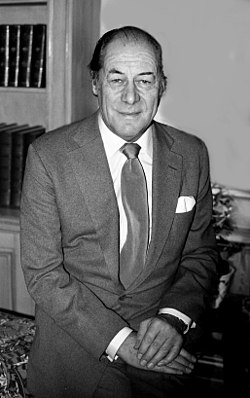
Rex Harrison
Sir Reginald Carey Harrison (5 March 1908 – 2 June 1990) was an English actor. Harrison began his career on the stage at the Liverpool Playhouse in 1924. He made his West End debut in 1936 appearing in the Terence Rattigan play French Without Tears, in what was his breakthrough role. He won his first Tony Award for Best Actor in a Play for his performance as Henry VIII in the Broadway play Anne of the Thousand Days in 1949. He returned to Broadway portraying Professor Henry Higgins in My Fair Lady (1956) where he won the Tony Award for Best Actor in a Musical.
In addition to his stage career, Harrison also appeared in numerous films. His first starring role opposite Vivien Leigh was in the romantic comedy Storm in a Teacup (1937). Receiving critical acclaim for his performance in Major Barbara (1941), which was shot in London during the Blitz, his roles since then included Blithe Spirit (1945), Anna and the King of Siam (1946), The Ghost and Mrs. Muir (1947), Cleopatra (1963), My Fair Lady (1964), reprising his stage role as Henry Higgins which won him an Academy Award for Best Actor, and the titular character in Doctor Dolittle (1967).
In 1975, Harrison released his first autobiography. In June 1989, he was knighted by Queen Elizabeth II. He was married six times and had two sons: Noel and Carey Harrison. He continued working in stage productions until shortly before his death from pancreatic cancer in June 1990 at the age of 82. His second autobiography, A Damned Serious Business: My Life in Comedy, was published posthumously in 1991.
Reginald Carey Harrison was born on 5 March 1908 at Derry House in Huyton, Lancashire, the son of Edith Mary (née Carey) and William Reginald Harrison, a cotton broker. From the age of 10 he went by the name “Rex”, which he adopted for himself. He was the youngest of three children and had two older sisters, Edith Marjorie Harrison (1900-1976) and Sylvia Sackville, Countess De La Warr, DBE (1903-1992). He was educated at Birkdale preparatory school and Liverpool College. After a bout of childhood measles, Harrison lost most of the sight in his left eye. He showed an early desire to become an actor, with regular appearances in school plays, and visits to the Liverpool Playhouse.
Harrison first appeared on stage in 1924 in Thirty Minutes in a Street at the Liverpool Playhouse, when he was 16 years old. He remained there, playing small parts, until 1927 when he joined a touring production of Charley's Aunt. Six years of touring and repertory followed. He achieved critical acclaim for Heroes Don't Care in 1936. His West End debut in the same year was in Terence Rattigan's French Without Tears which proved to be his breakthrough stage role as a leading light comedian. His acting career was interrupted by World War II, during which he served in the Royal Air Force (1942–1944), reaching the rank of Flight Lieutenant.
He alternated appearances in London and New York in such plays as Bell, Book and Candle (1950), Venus Observed, The Cocktail Party, The Kingfisher and The Love of Four Colonels, which he also directed. He won his first Tony Award for his appearance at the Shubert Theatre as Henry VIII in Maxwell Anderson's play Anne of the Thousand Days and international superstardom (and a second Tony) for his portrayal of Henry Higgins in the 1956 stage musical My Fair Lady, where he appeared opposite Julie Andrews.
Later appearances included a 1984 appearance at the Haymarket Theatre with Claudette Colbert in Frederick Lonsdale's Aren't We All?, and one on Broadway at the Brooks Atkinson Theatre presented by Douglas Urbanski, at the Haymarket in J. M. Barrie's The Admirable Crichton with Edward Fox. He returned as Henry Higgins in the revival of My Fair Lady directed by Patrick Garland in 1981.
Having retired from films after A Time to Die in 1983, Harrison continued to act on Broadway and the West End until the end of his life, despite suffering from glaucoma, painful teeth, and a failing memory. Later roles included Julius Caesar in Caesar and Cleopatra, and General Burgoyne in a Los Angeles production of The Devil's Disciple. He was nominated for a third Tony Award in 1984 for his performance as Captain Shotover in the revival of George Bernard Shaw's Heartbreak House. He followed with two successful pairings with Claudette Colbert, The Kingfisher in 1985 and Aren't We All? in 1986. In 1989, he appeared with Edward Fox in The Admirable Crichton in London. In 1989/90, he appeared on Broadway in The Circle by W. Somerset Maugham, opposite Glynis Johns, Stewart Granger, and Roma Downey. The production opened at Duke University for a three-week run followed by performances in Baltimore and Boston before opening 14 November 1989 on Broadway.
Rex Harrison
Sir Reginald Carey Harrison (5 March 1908 – 2 June 1990) was an English actor. Harrison began his career on the stage at the Liverpool Playhouse in 1924. He made his West End debut in 1936 appearing in the Terence Rattigan play French Without Tears, in what was his breakthrough role. He won his first Tony Award for Best Actor in a Play for his performance as Henry VIII in the Broadway play Anne of the Thousand Days in 1949. He returned to Broadway portraying Professor Henry Higgins in My Fair Lady (1956) where he won the Tony Award for Best Actor in a Musical.
In addition to his stage career, Harrison also appeared in numerous films. His first starring role opposite Vivien Leigh was in the romantic comedy Storm in a Teacup (1937). Receiving critical acclaim for his performance in Major Barbara (1941), which was shot in London during the Blitz, his roles since then included Blithe Spirit (1945), Anna and the King of Siam (1946), The Ghost and Mrs. Muir (1947), Cleopatra (1963), My Fair Lady (1964), reprising his stage role as Henry Higgins which won him an Academy Award for Best Actor, and the titular character in Doctor Dolittle (1967).
In 1975, Harrison released his first autobiography. In June 1989, he was knighted by Queen Elizabeth II. He was married six times and had two sons: Noel and Carey Harrison. He continued working in stage productions until shortly before his death from pancreatic cancer in June 1990 at the age of 82. His second autobiography, A Damned Serious Business: My Life in Comedy, was published posthumously in 1991.
Reginald Carey Harrison was born on 5 March 1908 at Derry House in Huyton, Lancashire, the son of Edith Mary (née Carey) and William Reginald Harrison, a cotton broker. From the age of 10 he went by the name “Rex”, which he adopted for himself. He was the youngest of three children and had two older sisters, Edith Marjorie Harrison (1900-1976) and Sylvia Sackville, Countess De La Warr, DBE (1903-1992). He was educated at Birkdale preparatory school and Liverpool College. After a bout of childhood measles, Harrison lost most of the sight in his left eye. He showed an early desire to become an actor, with regular appearances in school plays, and visits to the Liverpool Playhouse.
Harrison first appeared on stage in 1924 in Thirty Minutes in a Street at the Liverpool Playhouse, when he was 16 years old. He remained there, playing small parts, until 1927 when he joined a touring production of Charley's Aunt. Six years of touring and repertory followed. He achieved critical acclaim for Heroes Don't Care in 1936. His West End debut in the same year was in Terence Rattigan's French Without Tears which proved to be his breakthrough stage role as a leading light comedian. His acting career was interrupted by World War II, during which he served in the Royal Air Force (1942–1944), reaching the rank of Flight Lieutenant.
He alternated appearances in London and New York in such plays as Bell, Book and Candle (1950), Venus Observed, The Cocktail Party, The Kingfisher and The Love of Four Colonels, which he also directed. He won his first Tony Award for his appearance at the Shubert Theatre as Henry VIII in Maxwell Anderson's play Anne of the Thousand Days and international superstardom (and a second Tony) for his portrayal of Henry Higgins in the 1956 stage musical My Fair Lady, where he appeared opposite Julie Andrews.
Later appearances included a 1984 appearance at the Haymarket Theatre with Claudette Colbert in Frederick Lonsdale's Aren't We All?, and one on Broadway at the Brooks Atkinson Theatre presented by Douglas Urbanski, at the Haymarket in J. M. Barrie's The Admirable Crichton with Edward Fox. He returned as Henry Higgins in the revival of My Fair Lady directed by Patrick Garland in 1981.
Having retired from films after A Time to Die in 1983, Harrison continued to act on Broadway and the West End until the end of his life, despite suffering from glaucoma, painful teeth, and a failing memory. Later roles included Julius Caesar in Caesar and Cleopatra, and General Burgoyne in a Los Angeles production of The Devil's Disciple. He was nominated for a third Tony Award in 1984 for his performance as Captain Shotover in the revival of George Bernard Shaw's Heartbreak House. He followed with two successful pairings with Claudette Colbert, The Kingfisher in 1985 and Aren't We All? in 1986. In 1989, he appeared with Edward Fox in The Admirable Crichton in London. In 1989/90, he appeared on Broadway in The Circle by W. Somerset Maugham, opposite Glynis Johns, Stewart Granger, and Roma Downey. The production opened at Duke University for a three-week run followed by performances in Baltimore and Boston before opening 14 November 1989 on Broadway.
Recent media
Recent media