
Recent from talks
Solar power
Knowledge base stats:
Talk channels stats:
Members stats:
Solar power
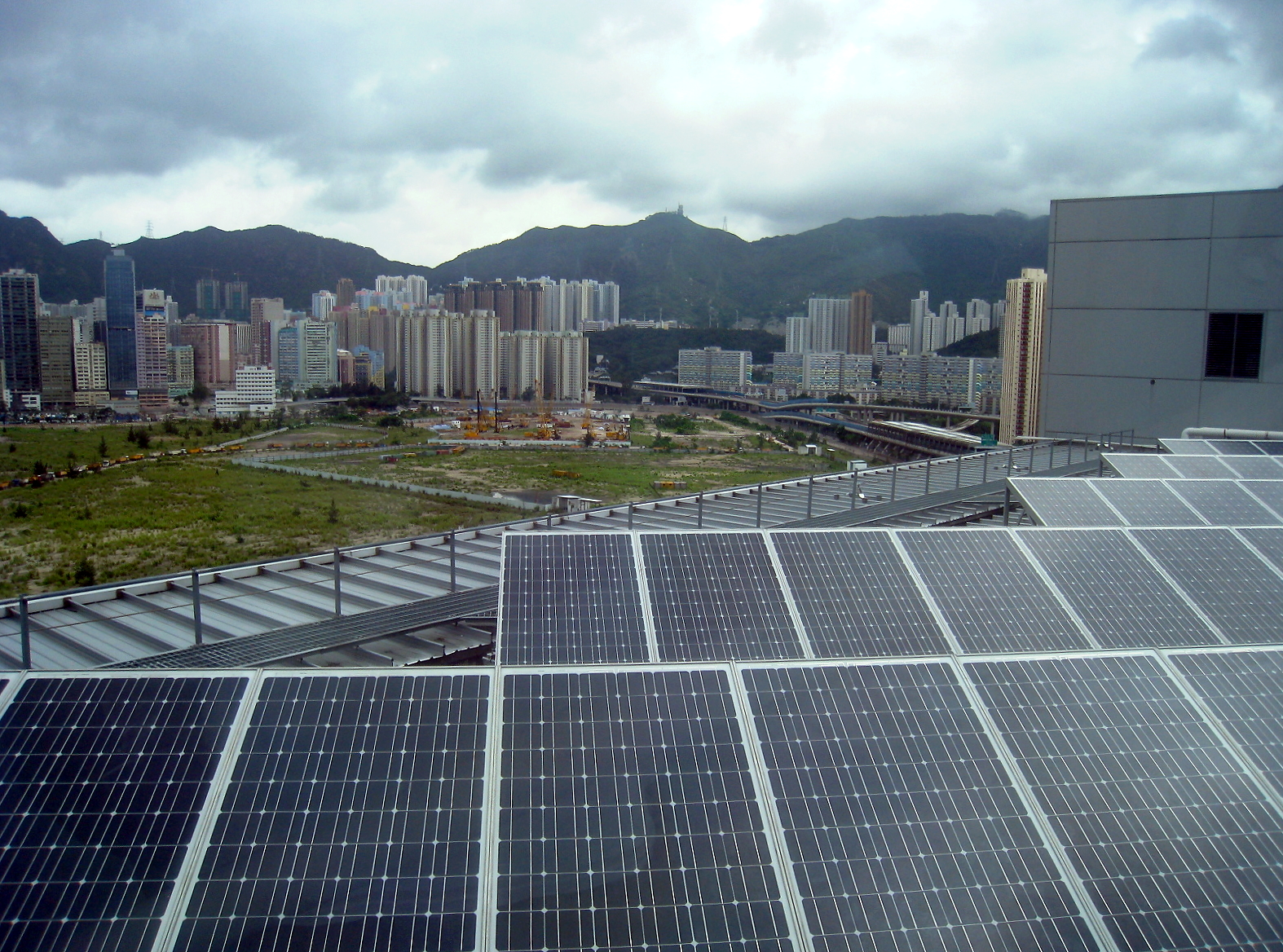
Solar power, also known as solar electricity, is the conversion of energy from sunlight into electricity, either directly using photovoltaics (PV) or indirectly using concentrated solar power. Solar panels use the photovoltaic effect to convert light into an electric current. Concentrated solar power systems use lenses or mirrors and solar tracking systems to focus a large area of sunlight to a hot spot, often to drive a steam turbine.
Photovoltaics (PV) were initially solely used as a source of electricity for small and medium-sized applications, from the calculator powered by a single solar cell to remote homes powered by an off-grid rooftop PV system. Commercial concentrated solar power plants were first developed in the 1980s. Since then, as the cost of solar panels has fallen, grid-connected solar PV systems' capacity and production has doubled about every three years. Three-quarters of new generation capacity is solar, with both millions of rooftop installations and gigawatt-scale photovoltaic power stations continuing to be built.
In 2024, solar power generated 6.9% (2,132 TWh) of global electricity and over 1% of primary energy, adding twice as much new electricity as coal. Along with onshore wind power, utility-scale solar is the source with the cheapest levelised cost of electricity for new installations in most countries. As of 2023, 33 countries generated more than a tenth of their electricity from solar, with China making up more than half of solar growth. Almost half the solar power installed in 2022 was mounted on rooftops.
Much more low-carbon power is needed for electrification and to limit climate change. The International Energy Agency said in 2022 that more effort was needed for grid integration and the mitigation of policy, regulation and financing challenges. Nevertheless solar may greatly cut the cost of energy.
Geography affects solar energy potential because different locations receive different amounts of solar radiation. In particular, with some variations, areas that are closer to the equator generally receive higher amounts of solar radiation. However, solar panels that can follow the position of the Sun can significantly increase the solar energy potential in areas that are farther from the equator. Daytime cloud cover can reduce the light available for solar cells. Land availability also has a large effect on the available solar energy.
Solar power plants use one of two technologies:
A solar cell, or photovoltaic cell, is a device that converts light into electric current using the photovoltaic effect. The first solar cell was constructed by Charles Fritts in the 1880s. The German industrialist Ernst Werner von Siemens was among those who recognized the importance of this discovery. In 1931, the German engineer Bruno Lange developed a photo cell using silver selenide in place of copper oxide, although the prototype selenium cells converted less than 1% of incident light into electricity. Following the work of Russell Ohl in the 1940s, researchers Gerald Pearson, Calvin Fuller and Daryl Chapin created the silicon solar cell in 1954. These early solar cells cost US$286/watt and reached efficiencies of 4.5–6%. In 1957, Mohamed M. Atalla developed the process of silicon surface passivation by thermal oxidation at Bell Labs. The surface passivation process has since been critical to solar cell efficiency.
As of 2022[update] over 90% of the market is crystalline silicon. The array of a photovoltaic system, or PV system, produces direct current (DC) power which fluctuates with the sunlight's intensity. For practical use this usually requires conversion to alternating current (AC), through the use of inverters. Multiple solar cells are connected inside panels. Panels are wired together to form arrays, then tied to an inverter, which produces power at the desired voltage, and for AC, the desired frequency/phase.
Hub AI
Solar power AI simulator
(@Solar power_simulator)
Solar power
Solar power, also known as solar electricity, is the conversion of energy from sunlight into electricity, either directly using photovoltaics (PV) or indirectly using concentrated solar power. Solar panels use the photovoltaic effect to convert light into an electric current. Concentrated solar power systems use lenses or mirrors and solar tracking systems to focus a large area of sunlight to a hot spot, often to drive a steam turbine.
Photovoltaics (PV) were initially solely used as a source of electricity for small and medium-sized applications, from the calculator powered by a single solar cell to remote homes powered by an off-grid rooftop PV system. Commercial concentrated solar power plants were first developed in the 1980s. Since then, as the cost of solar panels has fallen, grid-connected solar PV systems' capacity and production has doubled about every three years. Three-quarters of new generation capacity is solar, with both millions of rooftop installations and gigawatt-scale photovoltaic power stations continuing to be built.
In 2024, solar power generated 6.9% (2,132 TWh) of global electricity and over 1% of primary energy, adding twice as much new electricity as coal. Along with onshore wind power, utility-scale solar is the source with the cheapest levelised cost of electricity for new installations in most countries. As of 2023, 33 countries generated more than a tenth of their electricity from solar, with China making up more than half of solar growth. Almost half the solar power installed in 2022 was mounted on rooftops.
Much more low-carbon power is needed for electrification and to limit climate change. The International Energy Agency said in 2022 that more effort was needed for grid integration and the mitigation of policy, regulation and financing challenges. Nevertheless solar may greatly cut the cost of energy.
Geography affects solar energy potential because different locations receive different amounts of solar radiation. In particular, with some variations, areas that are closer to the equator generally receive higher amounts of solar radiation. However, solar panels that can follow the position of the Sun can significantly increase the solar energy potential in areas that are farther from the equator. Daytime cloud cover can reduce the light available for solar cells. Land availability also has a large effect on the available solar energy.
Solar power plants use one of two technologies:
A solar cell, or photovoltaic cell, is a device that converts light into electric current using the photovoltaic effect. The first solar cell was constructed by Charles Fritts in the 1880s. The German industrialist Ernst Werner von Siemens was among those who recognized the importance of this discovery. In 1931, the German engineer Bruno Lange developed a photo cell using silver selenide in place of copper oxide, although the prototype selenium cells converted less than 1% of incident light into electricity. Following the work of Russell Ohl in the 1940s, researchers Gerald Pearson, Calvin Fuller and Daryl Chapin created the silicon solar cell in 1954. These early solar cells cost US$286/watt and reached efficiencies of 4.5–6%. In 1957, Mohamed M. Atalla developed the process of silicon surface passivation by thermal oxidation at Bell Labs. The surface passivation process has since been critical to solar cell efficiency.
As of 2022[update] over 90% of the market is crystalline silicon. The array of a photovoltaic system, or PV system, produces direct current (DC) power which fluctuates with the sunlight's intensity. For practical use this usually requires conversion to alternating current (AC), through the use of inverters. Multiple solar cells are connected inside panels. Panels are wired together to form arrays, then tied to an inverter, which produces power at the desired voltage, and for AC, the desired frequency/phase.
Recent media