Hubbry Logo
Susu peopleSusu peopleMain
Open search
Susu people
Community hub
Susu people
logo
8 pages, 0 posts
0 subscribers
Be the first to start a discussion here.
Susu people
Susu people
from Wikipedia

The Susu or Soussou people are a Mande-speaking ethnic group living primarily in Guinea and northwestern Sierra Leone, particularly in Kambia District.[4][5] Influential in Guinea, smaller communities of Susu people are also found in the neighboring Guinea-Bissau and Senegal.[citation needed]

Key Information

The Susu are a patrilineal society, predominantly Muslim, who favor endogamous cross-cousin marriages with polygynous households.[4] They have a caste system like all Manding-speaking peoples of West Africa. The artisans such as smiths, carpenters, musicians, jewelers, and leatherworkers are separate castes and believed to have descended from the medieval era of slavery.[4][6]

Demographics and language

[edit]

Their language, called Sosokhoui or Sosoxui by native speakers, serves as a major trade language along the Guinean coast, particularly in its southwest, including the capital city of Conakry. It belongs to the Niger-Congo family of languages.[7]

In the Susu language, "Guinea" means woman and this is the derivation for the country's name.[8]

Ethnonymy

[edit]

The Susu people are also referred to as Soosoo, Sossoé, Sosoe, Sosso, Soso, Sousou, Susso, Sussu, or Soussou.[9] Most of those denominations are European as the Susu people tend to call themselves "Sossoka"

The meaning of the name "Soso or Susu" apparently derived from "Susuwi," meaning "horse" or "horseman" in the Susu language. The terms "Sawsaws," "Souses," and "Sussias" are all English corruptions of "Susu," rarer variants of their name are also encountered such as Souzo, Caxi, Saxi, Saxe, and even as Sexi.[10][11][12]

History

[edit]
An ethnic map of the Upper Guinea Coast in the 19th century, drawn by Élisée Reclus. The Susu people region is marked "sou-sou" in red.

The Susu are descendants of their Manding ancestors who lived in the mountainous Mali-Guinea border.[13] They are said to have originally been a section of the Soninke people that migrated out of Wagadou and were initially a clan of blacksmiths who displayed their clear intentions to object converting to Islam. In the twelfth century, when Ancient Ghana was in decline, they migrated south and established a capital city of Soso in the mountainous region of Koulikoro. The Susu were once ruled by Sumanguru Kanté, but after that, they were ruled by the thirteenth century Mali Empire. In the fifteenth century, they migrated west to the Fouta Djallon plateau of Guinea, as the Mali empire disintegrated.[14][15] The close familiarity with the Yalunka people suggest a hypothesis that they were once members of the same group in the Fouta Djallon, separated by Fula invaders, and that the Susu moved southward absorbing other people in the process.[16] The Susu people were traditionally animist.[citation needed]

The Fula people dominated the region from the Fouta Djallon. The Fulani created an Islamic theocracy, thereafter began slave raids as a part of Jihad that impacted many West African ethnic groups including the Susu people.[17][18][19] In particular, states Ismail Rashid, the Jihad effort of Fulani elites starting in the 1720s theologically justified enslavement of the non-Islamic people and also led to successful conversion of previously animist peoples to Islam.[20] The political environment led the Susu people to convert to Islam in the seventeenth and eighteenth century, along with further westward and southward migration towards the plains of Guinea.[20][21][22] On the Atlantic coast, they assimilated with the local peoples and dominated the estuarine region north of Sierra Leone.[23]

The colonial-era Europeans arrived in the Guinea region of resident Susu people in the late eighteenth century for trade, but got politically involved during the era of Temne wars that attacked the Susu people along with other ethnic groups.[24] While Temne sought British support, the Susu sought the French. The region split, with Temne speaking Sierra Leone regions going with the British colonial empire, and Susu speaking Guinea regions becoming a part of the French colonial empire in the late nineteenth century during the Scramble for Africa.[25]

Society and culture

[edit]
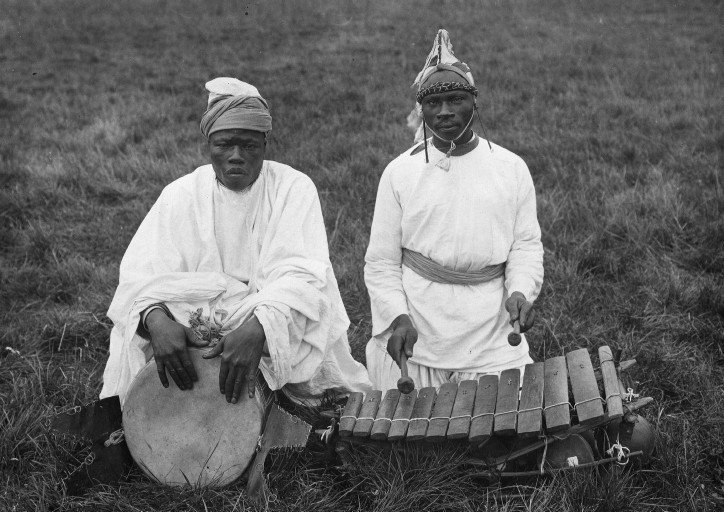
A Susu yeliba playing a three-string bolon in 1905.

The Susu live with their extended family. Polygyny is an accepted practice since Islamic law allows men to have as many as four wives. This is not always practiced because having multiple wives requires more means than most men have. The men provide for their families by working the rice fields, fishing, or engaging in trade. The women cook the food and take care of the children. They often engage in small commerce, usually of vegetables they have raised in their garden. Often women will have their room or hut next to their husband's lodging where they will stay with their children.

Over 99% of Susu are Muslim, and Islam dominates their religious culture and practices. Most Islamic holidays are observed, the most important being the celebration that follows Ramadan (a month of prayer and fasting). The Susu people, like other Manding-speaking peoples, have a caste system regionally referred to by terms such as Nyamakala, Naxamala and Galabbolalauba. According to David Conrad and Barbara Frank, the terms and social categories in this caste-based social stratification system of Susu people shows cases of borrowing from Arabic only, but the likelihood is that these terms are linked to Latin, Greek or Aramaic.[26]

The artisans among the Susu people, such as smiths, carpenters, musicians, and bards (Yeliba), jewelers, and leatherworkers, are separate castes. The Susu people believe that these castes have descended from the medieval era slaves.[4][6] The Susu castes are not limited to Guinea, but are found in other regions where Susu people live, such as in Sierra Leone where too they are linked to the historic slavery system that existed in the region, states Daniel Harmon.[27] The Susu castes in the regional Muslim communities were prevalent and recorded by sociologists in the late nineteenth and early twentieth centuries.[27]

The Susu people also utilize practices of the Bondo secret society which aims at gradually but firmly establishing attitudes related to adulthood in girls, discussions on fertility, morality and proper sexual comportment. The society also maintains an interest in the well-being of its members throughout their lives.[28] [29][30][31]

The Susu are primarily farmers, with rice and millet being their two principal crops.[32] Mangoes, pineapples, and coconuts are also grown. The Susu are also known as skilled traders and blacksmiths.[32] The women make various kinds of palm oil from palm nuts. Ancient Susu houses were typically made of either mud or cement blocks, depending on the resources available.

Susu patronyms

[edit]

Some common surnames worn by the Susu are:

  • Conté
  • Yansané
  • Fofana
  • Sylla or Sillah
  • Soumah
  • Yeressa
  • Bangoura
  • Yattara
  • Sankhon
  • Youla
  • Touré
  • Diarso
  • Daffé
  • Cissé
  • Diarré
  • Camara

Notable Susu people

[edit]

Political figures

[edit]
A Susu griot holds holds a lute, standing behind two sitting women. Mande speakers (of which Susu people are among) call their lutes nkoni or ngoni.[33]

Musicians

[edit]

Sportspeople

[edit]

Other notable people

[edit]

References

[edit]
Revisions and contributorsEdit on WikipediaRead on Wikipedia
from Grokipedia
The Susu (also known as Sosso or Soussou) are a Mande ethnic group primarily inhabiting the coastal regions of , where they form about 21 percent of the national population, and northwestern , with smaller communities in and . Numbering over 2.5 million in alone, they speak the , a member of the Mande branch of the Niger-Congo , which serves as a in parts of Lower . Predominantly Sunni Muslims, the Susu maintain a patrilineal system and derive much of their livelihood from rice farming, , and in the fertile riverine and coastal areas. Historically, the Susu trace their origins to the Sosso kingdom (circa 1076–1235 CE), a successor state to the declining that expanded through military conquest under rulers like Sumanguru Kante before its defeat by Sundiata Keita's nascent at the in 1235. This medieval polity, centered in what is now eastern and western , marked a period of Susu dominance in routes, though subsequent migrations southward followed Fulani jihads in the 18th and 19th centuries that influenced their Islamization and relocation to coastal zones. In contemporary times, the Susu have played significant roles in Guinean politics and society, often navigating ethnic dynamics amid the country's multi-ethnic composition, with notable figures emerging in military and cultural spheres. Culturally, the Susu emphasize oral traditions preserved by griots, rhythmic music featuring instruments like the , and communal practices tied to their agrarian lifestyle, though and migration have led to adaptations in traditional caste-based divisions between nobles, artisans, and griots. Their resilience as coastal dwellers is evident in historical resistance to external domination, from pre-colonial empires to colonial French administration, underscoring a legacy of adaptation rather than isolation.

Etymology and nomenclature

Origins of the ethnonym

The ethnonym "Susu," also spelled "Soso" or "Soussou," derives from the name of the Sosso kingdom (c. 1076–1235 CE), a West African state that emerged as a and eventual successor to the declining in the upper valley region spanning modern-day , , and surrounding areas. This kingdom, alternatively known as Kaniaga, was ruled by figures such as Sumanguru Kanté until its defeat by the under at the in 1235 CE, after which elements of its population dispersed southward, contributing to the formation of the contemporary Susu ethnic identity. Historical accounts link the Susu people's Mandinka-speaking ancestors to the Sosso realm's inhabitants, who were involved in networks, including salt, , and horses. In the Susu language itself, a Mande dialect of the Niger-Congo family, the endonym is "Soso," reflecting the group's self-designation tied to this historical rather than later colonial impositions. The persistence of the term across oral traditions and early European records underscores its pre-colonial roots, distinct from broader regional nomenclatures like "," which some Susu linguistic traditions associate with the word "guinè" meaning "," encountered by Portuguese explorers along the coast in the . While direct linguistic etymologies remain speculative due to limited pre-13th-century written records in , the name's association with the Sosso kingdom's equestrian dominance suggests possible derivations from Mandé terms denoting "" or "horseman," though this requires further corroboration from archaeological or comparative linguistic evidence.

Geographic distribution

Core territories in Guinea and Sierra Leone

The core territories of the Susu people in Guinea lie within the Basse-Guinée administrative region, encompassing the coastal plain along the Atlantic Ocean, particularly the prefectures of Boké, Boffa, Dubréka, Forécariah, and Kindia surrounding the capital Conakry. This area, known for its marshy lowlands and rice cultivation, hosts the majority of Guinea's Susu population, estimated at around 2 million individuals comprising approximately 20% of the national total. The Susu language serves as a lingua franca in these coastal zones, reflecting their historical role as traders and farmers in the region's economic activities. In , the Susu are concentrated in the northwestern districts of Kambia, Port Loko, and Bombali in the Northern Province, areas adjacent to the Guinean border that facilitate cross-border cultural and ties. Kambia District serves as the primary hub, where Susu form the second-largest ethnic group after the Temne, accounting for about 28% of the local in historical estimates. These territories feature similar coastal and riverine landscapes, supporting and , with Susu communities numbering roughly 200,000-212,000 nationwide. Migration from has historically shaped these settlements, reinforcing linguistic and kinship links across the border. These core areas highlight the Susu's adaptation to coastal environments, with villages organized around patrilineal clans engaged in subsistence farming, market , and maritime activities, though around has led to increasing involvement in urban economies.

Smaller communities and diaspora

Smaller Susu communities exist in , where the population is estimated at 6,400 individuals primarily engaged in farming, , and fishing similar to core groups. In , approximately 55,000 Susu reside, forming pockets amid larger ethnic majorities and maintaining Mande linguistic and cultural ties. Traces of Susu presence also appear in as minor groups outside official ethnic censuses, likely resulting from historical migrations and across borders. Distinct Susu diaspora communities remain sparsely documented, with individuals typically assimilating into broader Guinean or Sierra Leonean expatriate networks in —particularly , due to colonial links—and , driven by post-independence economic migration from the onward. Population estimates for these overseas groups are unavailable in reliable demographic surveys, reflecting the ethnic's relatively localized distribution compared to more mobile West African groups.

Demographics and language

Population estimates and density

The Susu constitute one of the principal ethnic groups in , comprising approximately 21.2% of the national population, which equates to roughly 2.6 million individuals based on 2021 estimates of 's total populace at 12.9 million and accounting for subsequent growth rates of about 2.8% annually. Independent projections place the Susu population in at 2.585 million as of recent assessments. Globally, the Susu number around 2.9 million, with over 90% concentrated in . In neighboring Sierra Leone, the Susu population stands at approximately 206,000 to 212,000, primarily in the northwestern Kambia District, representing a smaller but significant minority amid the country's overall population of about 8.8 million in 2023. Marginal communities exist elsewhere, including 55,000 in Senegal and 6,400 in Guinea-Bissau, often resulting from historical migrations and trade. These figures derive from ethnographic compilations and national demographic surveys, though precise enumeration remains challenging due to fluid ethnic identifications and limited recent censuses focused on ethnicity; Guinea's 2014 census emphasized languages, with Susu speakers at 18% nationally, aligning closely with ethnic proportions. Susu population density is elevated in their core coastal territories of lower Guinea, including the Boke and Kindia regions, where geographic concentrations in riverine and urban-adjacent areas exceed Guinea's national average of 59 persons per square kilometer as of 2023. In Sierra Leone's Kambia District, local densities reflect similar clustering, though overlaid with mixed ethnic settlements; specific Susu-only metrics are unavailable, as census data aggregates by administrative units rather than ethnicity. Overall, Susu settlements favor fertile lowlands and proximity to trade routes, contributing to densities 1.5 to 2 times the subregional West African average in inhabited zones, per broader population distribution analyses.

Susu language characteristics

The , known endonymically as Sosoxui, belongs to the Mande branch of the Niger-Congo language family and serves as the primary tongue of the Susu people in and . It functions as a language in coastal and is mutually intelligible with Yalunka, its closest relative. Susu maintains institutional stability as an but lacks widespread formal or official recognition beyond national status in . Susu exhibits two principal dialects, primarily differentiated by pronunciation and loanword incorporation, such as the Solima variant spoken inland; however, these show high , with the coastal form predominant. The employs the Latin alphabet for writing, with a translation completed in supporting efforts. Phonologically, Susu is tonal, featuring high (H) and low (L) tones that form underlying melodies such as H, HL, and LH on nouns, with mid tones often emerging from interactions. Tonal processes include neutralization-by-copy in compounds, where the final tone of the first element copies onto the second, alongside rightward L-tone spreading (affaissement) and H-tone raising within prosodic feet. These mechanisms operate over binary syllabic feet aligned to word right edges, influencing nominal constructions like possessives and plurals. Grammatically, Susu follows subject-object-verb (SOV) order, with possessors preceding nouns (Poss-N) and determiners following nouns (N-D); it is predominantly suffixing for derivation and . The lacks noun classes, , verb agreement affixes, and pro-drop, requiring explicit subjects; wh-questions retain in-situ positioning without fronting. Verbal morphology includes prefixes like mà- and rà-, which mark aspect or iteration on stems exhibiting lexical tone and constraints.

Historical origins

Migration and ancestral theories

The Susu are classified as a Western Mande ethnic group, with ancestral theories linking their origins to Soninke-speaking populations in the Kaniaga region, northwest of modern Segou in Mali, where the medieval Sosso kingdom flourished as a successor to the Ghana Empire after its decline around the 11th century. This kingdom, inhabited by proto-Susu peoples, expanded under rulers like Sumanguru Kanté in the early 13th century, controlling territories south of the Wagadu (ancient Ghana) heartland and north of Beledougou, before its defeat by Sundiata Keita's Mali Empire forces at the Battle of Kirina in 1235. Oral traditions, including variants of the Sunjata epic, and Arabic chronicles such as al-'Umari's accounts, position the Sosso as a non-Muslim polity resisting Mandinka expansion, though archaeological evidence for Kaniaga remains sparse and debated among historians. Alternative theories propose a core homeland in the Futa Jalon highlands and Upper valley, associating early Susu with the Jalonke (a related Mande subgroup) in pre-Islamic kingdoms like the Jalo or Concho, evidenced by records from the onward that reference "Susu" polities along the coast and hinterlands. These views challenge the Kaniaga-centric model, suggesting the ethnic core formed through amalgamations of Mande migrants rather than a singular Soninke lineage, with migrations borrowing prestige from Futa Jalon's later Islamic states to legitimize Susu chiefly lineages. Scholarly consensus holds that Susu involved broader Mande dispersals from the bend, driven by trade, warfare, and ecological pressures, rather than a unified "homeland" migration narrative. Post-Sosso migrations intensified after the 13th-century Mali conquests, with Susu groups dispersing southward en masse to the -Sierra Leone borderlands and coastal lowlands, integrating with local populations and adopting Susu as the dominant Mande dialect in these areas by the 15th-16th centuries. Further movements in the , particularly from Futa Jalon, were prompted by Fulani jihadist expansions under imams like Karamoko Alfa, compelling non-Fulani Mande groups like the Susu to flee repressive rule, enslavement risks, and forced Islamization toward safer coastal enclaves in lower . These patterns established Susu communities in core territories like the Fria and Boffa regions of , while smaller outflows contributed to diaspora pockets in and urban centers. Ethnographic evidence from Portuguese sources, such as João de Barros' 1552 accounts, corroborates Susu presence in coastal trade networks by this era, underscoring adaptive migrations tied to Atlantic commerce rather than singular conquest-driven exoduses.

Linguistic and archaeological evidence

The belongs to the Western branch of the Mande language family within the Niger-Congo phylum, specifically classified in the Southwestern Mande subgroup alongside Yalunka (also known as Jalonke), with which it shares close lexical and phonological similarities often leading to in some dialects. reconstructs Proto-Mande speech communities originating in the inland and upper regions, where early Mande divergences are inferred from shared innovations in nominal morphology and verb serialization patterns, suggesting an ancestral homeland in the savanna-woodland zones of present-day and eastern around 4,000–5,000 years ago based on glottochronological estimates adjusted for areal diffusion. Susu-specific innovations, such as tonal melody neutralization in certain nominal constructions and distinct class systems diverging from core like Maninka, indicate southward migrations into coastal and , likely post-1000 CE, aligning with the expansion of Mande speakers into Atlantic-language zones evidenced by substrate influences in Susu vocabulary for local and ironworking terms. Archaeological evidence for Susu ethnogenesis remains sparse and indirect, primarily tied to broader Mande material cultures in the Upper Guinea region rather than Susu-specific markers, with key sites like Korounkorokalé in the Pays Mandé yielding reexcavated artifacts from the late first millennium CE, including iron slag and pottery styles consistent with Mande metallurgical traditions but lacking unambiguous Susu attribution. The Sosso kingdom (c. 1076–1235 CE), associated with proto-Susu polities in oral traditions, emerged in the Kaniaga area northwest of modern Segou following the Ghana Empire's decline, yet excavations in related power centers reveal limited structural remains—such as earthen enclosures and trade goods—insufficient to confirm a distinct Susu identity predating the 12th century, underscoring reliance on Arabic chronicles and griot accounts over physical correlates. Regional surveys in coastal Guinea, including Rio Nuñez settlements, document Mande-style villages with imported beads and iron tools from the 11th century onward, supporting linguistic inferences of Susu intrusion into pre-existing Atlantic-speaking territories, though without genetic or ceramic signatures uniquely identifying early Susu groups amid overlapping Soninke and Manding influences. This paucity of direct archaeological data highlights interpretive challenges, as Mande expansions correlate with agro-pastoral adaptations evident in sites like Jenne-Jeno, but Susu formation appears more historically contingent on medieval political realignments than deep prehistoric roots.

Pre-colonial history

Formation of early polities

The Susu, also known as Sosso, began forming organized polities in the Kaniaga region of present-day eastern and western during the late 11th to early , amid the power vacuum created by the Ghana Empire's collapse around 1076–1100 CE due to internal rebellions, , and external pressures from Almoravid incursions. These early structures originated as territories under Ghana's Soninke rulers but transitioned to autonomous chiefdoms as central authority waned, with local Mande-speaking clans—patrilineally organized around totems and kinship—consolidating control over agricultural lands and trade routes for , salt, and iron. Initial polity formation relied on alliances among Susu clans, which provided warriors and labor for defense against nomadic raids and rival groups like the Malinke, enabling the establishment of fortified villages and small kingdoms by circa 1180 CE. Oral traditions preserved by griots indicate that these entities centered on Kaniaga-Sosso as a symbolic core, where leaders leveraged kinship networks to extract and mobilize forces, marking a shift from decentralized villages to hierarchical chiefdoms with nascent taxation and military obligations. Archaeological evidence from regional ironworking sites supports this, showing increased settlement density and metallurgical production consistent with emerging political complexity around the . By the early , these polities had coalesced into the proto-Sosso kingdom under rulers who expanded influence southward, subjugating neighboring chiefdoms through conquest and tribute systems, setting the stage for imperial growth while maintaining clan-based governance to ensure loyalty amid fragile alliances. This process reflected causal dynamics of environmental adaptation—leveraging fertile for and millet cultivation—and strategic positioning near paths, though accounts from Arabic chroniclers like remain debated for potential biases favoring Muslim narratives over animist Susu practices.

The Sosso Empire and its expansions

The Sosso Empire emerged in the early 13th century as a successor state to the declining Ghana Empire, with its core in the Kaniaga region northwest of modern Segou in Mali. Under the rule of Sumanguru Kanté, who seized power around 1200 CE, the empire expanded through military conquests that incorporated fragmented Soninke and Mandinka polities in the western Sudan. Sumanguru's forces captured Koumbi Saleh, the former capital of Ghana, thereby asserting dominance over residual trade networks previously controlled by that empire. Sumanguru's expansions focused on securing routes vital for gold, salt, and slaves, extending Sosso influence across territories in present-day eastern , western , and parts of southeastern . This territorial growth, estimated to encompass several hundred kilometers along the valley, relied on a disciplined that subdued states through raids and alliances enforced by tribute systems. However, accounts of these conquests derive primarily from Mande oral traditions, such as the Sunjata epic, which portray Sumanguru as a tyrannical sorcerer-king imposing harsh restrictions on subject peoples, though independent archaeological corroboration remains limited. The empire's peak under Sumanguru lasted until approximately 1235 CE, when his forces were decisively defeated by a coalition led by at the , marking the transition to Mandinka dominance and the founding of the . This collapse fragmented Sosso territories, with surviving polities reintegrating into the expanding Mali sphere, though Sosso cultural and linguistic elements persisted among Mandinka groups. The brevity of Sosso —spanning roughly two to three decades of active expansion—highlights its role as a transitional power reliant on conquest rather than enduring administrative structures.

Colonial and post-colonial history

Impact of European colonization

European traders first established contact with the Susu in the coastal regions of present-day Guinea during the late , primarily engaging in commerce involving goods such as , , and , which built on the Susu's established role as agriculturalists and merchants. This initial economic interaction laid the groundwork for deeper political involvement as European powers vied for territorial control during the in the late 19th century. Amid ethnic rivalries, particularly with neighboring Temne groups, Susu leaders sought alliances with French forces, contrasting with Temne overtures to the British, which influenced the partition of Susu-inhabited territories. An Anglo-French agreement in delineated a provisional boundary between and , formalizing the division where Susu regions in fell under French administration while northern pockets remained British, disrupting cross-border kinship and trade networks. This alignment facilitated French military expansion into Susu areas, incorporating them into the colony of by the 1890s, with subsequent boundary adjustments in and solidifying the split. Under French colonial rule from the late until Guinea's on October 2, 1958, Susu communities experienced administrative centralization, including taxation and labor systems typical of , alongside limited assimilation policies granting citizenship to those adopting and customs. In British , minority Susu populations, concentrated in districts like Kambia, navigated structures that preserved local chiefly authority but imposed colonial taxes and legal oversight, often amid border tensions stemming from the divided allegiances. These colonial impositions generally preserved Susu patrilineal social structures and Islamic practices, though they introduced cash economies and infrastructure like roads that altered traditional agriculture and mobility.

Independence era and ethnic dynamics

Guinea gained independence from France on October 2, 1958, after rejecting membership in the French Community in a September 28 referendum, with Ahmed Sékou Touré, a Malinke trade unionist, assuming the presidency as leader of the PDG-RDA party. The Susu, concentrated in coastal regions like Conakry and Boffa, supported the nationalist drive through PDG mobilization, though their influence was secondary to Malinke networks in the party's upper echelons. Post-independence, Touré's regime enforced a one-party state emphasizing socialist unity and suppressing ethnic organizations, including by rotating civil servants away from home regions to curb tribal loyalties. Despite official pan-ethnic rhetoric, Malinke dominance persisted under Touré (1958–1984), with preferential access to political and economic opportunities, while Susu—as fellow Mande speakers—benefited moderately in urban commerce and administration but faced competition from the larger Fulani . This dynamic sowed grievances, as Fulani (about 40% of the ) and other groups perceived systemic exclusion, contrasting with Mande cohesion between Malinke (30%) and Susu (20%). Touré's death on , 1984, triggered a military coup on April 3, led by , a Susu officer from Dubréka, who established the Military Committee for National Recovery and suspended the . Conté's rule (1984–2008) marked a pivot to Susu favoritism, with co-ethnics securing disproportionate army commands, cabinet posts, scholarships, business contracts, and infrastructure projects, fueling charges and organized Susu ethnic advocacy. Such intensified inter-ethnic strains, particularly with Fulani demands for equitable representation, contributing to protests and instability, as non-Susu groups viewed the regime as perpetuating exclusionary Mande alliances despite Conté's multiparty reforms in 1992. In , independent on April 27, 1961, Susu minorities in Kambia District aligned loosely with northern Muslim networks under the party but exerted limited sway amid dominant Temne-Limba versus Mende divides. Guinea-Bissau's 1974 under PAIGC saw Susu as peripheral in a multi-ethnic led by Balanta and Fula, with minimal documented tensions tied to their small numbers.

Religion

Predominant Islam and its integration

The Susu adopted predominantly during the through the influence of Fulani jihadists who established the around 1725, converting the Susu from their ancestral animist practices amid conquests and migrations in the highlands. This shift followed the decline of earlier Susu-led polities like the , which had resisted Islamic expansion, and involved Susu integration into Fulani-dominated Muslim networks via trade, intermarriage, and subjugation. Sunni Islam, primarily of the Maliki school prevalent in West Africa, now claims adherence from the vast majority of Susu, with over 99 percent in and nearly all in identifying as Muslim as of recent ethnographic profiles. This predominance reflects sustained transmission through patrilineal descent and community enforcement, reinforced by historical migrations that embedded Susu communities within broader Muslim Mande-speaking groups. Islam integrates seamlessly into Susu social organization, shaping daily routines around the Five Pillars: communal Friday prayers at mosques serve as hubs for social cohesion, while Ramadan fasting and almsgiving align with agricultural cycles and kinship obligations. Quranic schools, known as karanthes, provide foundational education under marabouts who double as mediators in disputes, blending religious authority with traditional roles in patrilineal clans and polygynous households compatible with Islamic jurisprudence. In governance and trade, Islamic institutions like prayer fields (sallekene) and clerical lineages—such as the Dumbuya family tracing leadership to circa 1750—facilitate economic ties and political advisory functions, embedding faith into coastal and highland livelihoods. Arabic-derived names and loanwords further permeate Susu-Yalunka dialect and rituals, underscoring Islam's role in cultural continuity without supplanting core ethnic identifiers.

Residual traditional practices

Despite the dominance of among the Susu, syncretic elements persist in the form of folk Islam, which incorporates traditional superstitious practices alongside orthodox Islamic observance. Certain Susu maintain beliefs in spirits associated with particular geographic areas, such as forests or rivers, which are invoked for or appeasement in daily life. These convictions coexist with fears of sorcery, where individuals believed to possess malevolent powers can inflict harm through invisible means, prompting protective rituals often mediated by local healers. Consultation of diviners for remains common, sought for resolving disputes, issues, or future uncertainties, though such practices are framed within an Islamic using Quranic interpretations or amulets. This integration reflects a broader pattern in Guinean Muslim communities, where pre-Islamic animistic residues—such as reverence for forces—are subordinated to but not eradicated by monotheistic doctrine. Strict cultural distinctions between the profane world and the sacralized human realm further shape these practices, emphasizing transcendence over direct manipulation of spirits. A minority of Susu, particularly in rural areas, continue limited adherence to traditional African religious elements, though comprehensive data on prevalence is scarce.

Social structure

Kinship, clans, and family organization

The Susu kinship system is patrilineal, with descent, , and clan membership traced through the male line. Individuals inherit social identity and obligations from their father's lineage, emphasizing male in family decisions and . Susu society organizes into patrilineal , which are non-corporate, exogamous groups comprising multiple lineages that share a , a (often animals such as snakes, birds, or leopards), and a believed apical . Clan totems serve as emblems of identity and taboos, prohibiting consumption or harm to the associated animal, though enforcement varies historically with clan prominence and territorial shifts. These function as descent-based networks for mutual support, , and ties, rather than formal corporate entities with centralized . Family organization centers on extended households, where multiple generations and collateral kin reside in compounds under the patriarch's leadership. is permitted under Islamic norms and practiced by men able to support additional wives, resulting in large, hierarchical households that integrate co-wives and their children into cooperative labor units for and domestic tasks. Preferred marriages are endogamous within the ethnic group and favor cross-cousins to strengthen alliances and keep property within lineages. Formal social relations within families exhibit asymmetry, with elders holding authority over juniors, reinforced by Islamic and traditional hierarchies.

Caste system and social stratification

The Susu people, as part of the broader Mandé ethnic complex, maintain a hereditary system that distinguishes between freeborn individuals (horon or kafo) and endogamous artisan castes known collectively as nyamakala. The freeborn traditionally dominate , , , and political , holding higher and access to land ownership. In contrast, the nyamakala encompass specialized occupational groups such as s (jeliw), who serve as oral historians, praise-singers, and advisors; blacksmiths (numuw), responsible for ironworking and weaponry; and leatherworkers (garankew), who handle tanning and crafting. These artisan castes are hereditary, with membership passed patrilineally, and they possess ritual significance due to their association with nyama, a spiritual force believed to imbue their crafts with power. Marriage practices reinforce this stratification, with prevailing within castes to preserve occupational and roles, though cross-cousin unions are favored among the freeborn to strengthen kin alliances. Social interactions reflect status differentials, as lower castes provide essential services to superiors while maintaining in their guilds; for instance, griots enjoy respect for their historical knowledge but depend on from freeborn elites. Unlike rigid hierarchies in South Asian systems, Mandé castes, including those among the Susu, allow for interdependence, with artisans wielding influence through their indispensable skills and esoteric knowledge, though inter-caste mobility remains rare outside of rare adoptions or wartime disruptions. Historical ethnographies trace the origins of these castes to pre-Islamic Mandé polities, potentially linked to the Sosso kingdom's expansions in century, where occupational specialization evolved into hereditary groups amid and warfare. Among the Susu, this system persisted through Islamic influences, integrating with Muslim hierarchies while retaining pre-colonial elements; for example, blacksmiths continued forging tools and weapons vital to agrarian and defensive needs. In contemporary and , and national policies have attenuated overt caste distinctions in urban settings, yet rural communities uphold them, influencing choices and as of surveys in the early .

Patronyms and naming conventions

The Susu people organize descent patrilineally, tracing lineage, inheritance, and membership exclusively through the male line, with surnames functioning as patronyms that denote affiliation to specific . Clan names, such as Samura associated with historical royal lineages, are inherited unchanged across generations, serving to maintain social identity and rules prohibiting marriage within the same . Each is linked to a animal, imposing dietary and behavioral taboos on members, such as avoidance of harming or consuming the totem species, which reinforces group cohesion and symbolic heritage. Personal given names among the Susu predominantly draw from Islamic traditions, reflecting the group's near-universal adherence to since the 18th century, with common examples including for males and for females; these are bestowed at birth or naming ceremonies often tied to Quranic recitation. Full names thus combine a , the father's given name (sometimes as a middle indicator), and the enduring patronym, as in "Mohamed Bangoura ," where Bangoura signifies a prevalent Susu in . Women retain their birth patronyms post-marriage, aligning with patrilineal norms, though spousal ties influence preferred cross-cousin unions to strengthen alliances. This system underscores the integration of pre-Islamic Mande structures with Islamic naming practices, without fixed generational shifts seen in some patronymic traditions elsewhere.

Economy and livelihoods

Traditional agriculture and trade

The Susu people have historically relied on as the foundation of their economy, with men primarily responsible for cultivating staple crops such as and millet on family-owned plots. These crops formed the dietary core, supplemented by fruits including mangoes, pineapples, and coconuts grown in coastal and riverine areas of and . Agricultural techniques emphasized labor-intensive methods suited to the region's tropical and forest zones, including mound planting to reduce —a practice documented among Susu-Jalonke speakers in West African rice systems dating back centuries. Slash-and-burn clearing prepared new fields periodically, reflecting adaptive responses to soil fertility challenges in pre-colonial farming. Women contributed significantly to agricultural processing and value addition, extracting from oil palms and fermenting , while crafting utilitarian items like baskets, hats, and mats from palm fronds. These activities extended into small-scale , with women transporting goods to periodic village markets for or sale of surplus produce, palm derivatives, and handicrafts. Local exchange networks facilitated the flow of , millet, and palm products among Susu communities and neighboring groups like the Fulani and Malinke, sustaining household needs without extensive long-distance in traditional settings. This gendered division of labor underscored patrilineal structures, where crop yields supported clan-based and seasonal labor mobilization.

Modern economic adaptations

In recent decades, the Susu have adapted to Guinea's evolving by expanding their traditional mercantile roles into urban commerce, particularly in , where their language functions as a primary trade medium along the coast. This shift reflects broader patterns of , though rural-to-urban movement remains gradual, with urban population growth averaging about 1% annually from 2019 to 2023. In cities, many Susu engage in petty trading, market vending, and small-scale business operations within the dominant informal sector, which supports for an estimated 59.5% of Guinea's population living in as of 2023. Rural Susu communities maintain mixed livelihoods centered on , cultivating staple crops like and grains alongside cash crops such as pineapples, coconuts, and mangoes, with women often processing and kernels for sale. and seasonal salt production supplement incomes in coastal areas, while artisanal skills in leatherworking and metal crafting persist, sometimes integrated into urban supply chains. These activities align with Guinea's resource-dependent , though Susu involvement in large-scale remains limited, focusing instead on localized networks. Housing adaptations illustrate material progress, with many transitioning from structures to cement blocks in both rural and peri-urban settings, reflecting access to modern construction amid economic diversification. Despite these changes, economic vulnerabilities persist, including reliance on informal credit systems and exposure to price fluctuations, underscoring the Susu's resilience through entrepreneurial networks rather than formal wage .

Cultural practices

Initiation societies and rites

The Susu, like other Mande-speaking groups in , historically participated in male initiation societies known as Simo, a term denoting their local equivalent of the regional association. These societies facilitated rites of passage for adolescent boys, involving extended seclusion in remote bush camps where initiates underwent moral instruction, vocational training in and craftsmanship, and ritual circumcision to mark entry into manhood. The Simo structure emphasized secrecy, hierarchical grades of membership, and enforcement of social norms, with masquerades and symbolic rituals reinforcing communal authority. Although the Susu adopted as their predominant faith by the , traditional Simo practices persisted in residual form, often syncretized with Islamic requirements for male circumcision around age seven. Muslim boys could join these societies without conflict, as the rites complemented rather than contradicted religious obligations, providing cultural continuity amid Islamic dominance. Participation reinforced patrilineal ties and caste distinctions, with higher-status families leveraging society networks for political and economic influence in rural . Female initiation rites among the Susu center on women's secret associations, which perform excision—removal of the and (Type II female genital mutilation)—as a core element of ceremonies. These rites, conducted in secluded settings, impart knowledge of marital duties, customs, and societal taboos, while binding participants to oaths of secrecy and mutual support. In , where Susu form a major ethnic bloc, over 96% of women aged 15–49 have undergone such procedures, with qualitative studies confirming their role in signaling readiness for and adulthood. Among Susu communities in Sierra Leone's northern districts, similar practices occur under variants like Guhngiri or affiliated groups, integrating pre-Islamic elements despite Islamic prohibitions on altering the body beyond necessity. Refusal can lead to social ostracism, underscoring the rites' coercive cultural weight, though urban modernization and anti-FGM campaigns have prompted declining rates in recent decades.

Oral traditions, music, and arts

The Susu people, as part of the broader Mandé cultural complex in , rely heavily on —hereditary oral historians, poets, and musicians—for preserving and transmitting their traditions. , known locally as jeli or , maintain genealogies spanning multiple generations, recount historical events, and perform praise songs during ceremonies, weddings, and initiations, ensuring cultural continuity without written records. In Susu society, from patronymics such as Sousou hold esteemed roles as advisors and mediators, embedding moral lessons and communal identity in their recitations. These performances often draw from shared Mandé epics, adapting narratives like the Sunjata epic to local contexts, though Susu-specific variants emphasize regional histories of migration and resistance. Susu music is integral to griot artistry, featuring rhythmic ensembles that accompany storytelling with percussion and melodic instruments. The balafon, a wooden with resonators, is prominently associated with Susu and neighboring Malinké communities in , used in both secular celebrations and sacred rituals to evoke ancestral spirits. Djembé drums, originating from Mandinka and Susu blacksmith castes (numu), provide dynamic polyrhythms, carved from single tree trunks and tuned for varying tones in ensemble play. These instruments facilitate call-and-response singing, where s improvise lyrics praising patrons or lamenting losses, fostering social cohesion during communal gatherings. Visual and performative arts among the Susu are less documented but intertwined with musical traditions, including carved wooden masks and costumes for initiatory dances that symbolize lineage spirits. Griot performances may incorporate symbolic gestures and attire, such as flowing robes and iron amulets, reflecting heritage. Contemporary adaptations blend these elements with modern influences, yet core practices remain rooted in oral-musical transmission, resisting full erosion despite urbanization.

Daily life and cuisine

The Susu maintain households where multiple generations reside together, often in large structures built from mud or blocks to accommodate patrilineal kin groups. Rural homes feature thatched roofs, while urban dwellings use corrugated iron; cooking occurs over open fires regardless of location, with access to present but clean scarce in many areas. Daily routines revolve around agricultural labor, with members including children contributing to manual tasks for subsistence; Islamic practices structure the day through five prayers at approximately 5:00, 14:00, 17:00, 19:00, and 20:00. Gender roles delineate work divisions: men primarily cultivate and millet fields, engage in along coastal areas, and participate in , while women handle household cooking, child-rearing, small-scale vegetable commerce, and production of , , and . Clothing reflects a blend of and modernity, with women favoring African-style ankle-length skirts, older men donning loose-fitting robes, and younger individuals adopting Western attire for everyday use. Susu cuisine centers on and millet as staple grains, supplemented by cash crops such as mangoes, pineapples, and coconuts, with palm and oils essential for cooking. Meals typically consist of served with incorporating , vegetables, and proteins like , , or , as in kansiye—a -based common across Guinea's ethnic groups including the Susu. Leftover and from evening meals often form , known in Susu as bande xita. Flavored preparations, termed yolfè bandé in Soussou, provide an affordable daily dish enhanced with local spices and oils.

Political influence

Role in national governance

The Susu ethnic group has exerted notable influence in Guinea's national governance, primarily through the long presidency of from December 3, 1984, to December 22, 2008. Conté, born to Susu parents in Wawa, Dubréka Prefecture, seized power via a bloodless military coup on March 3, 1984, shortly after the death of Malinké leader , establishing the Military Committee for National Recovery (CMRN) and suspending the constitution. Under his authoritarian regime, which transitioned to civilian rule in name by 1993 while retaining military dominance, Susu individuals—representing about 20% of Guinea's —secured preferential access to posts, officer ranks, scholarships, and state contracts, fostering perceptions of ethnic favoritism. This advantage stemmed from Conté's coastal Susu origins aligning with Conakry's power base, contrasting with Touré's Malinké-dominated era that marginalized coastal groups. Post-Conté, following the December 23, 2008, coup by (a Guéssé from the southeast), Susu prominence in central diminished amid ethnic balancing in transitional councils and . The of Malinké as president, serving until a September 5, 2021, coup, shifted dynamics toward broader Mandinka-Fulani coalitions, though Susu retained some military and bureaucratic footholds due to entrenched networks from the Conté period. Independent assessments note that while Susu faced no formal under Conté, their overrepresentation fueled inter-ethnic resentments, contributing to protests like the 2007 demanding democratic reforms. In , where Susu constitute a minority concentrated in the northwest (Kambia District), their role in national governance remains marginal, with influence confined to local chiefdoms under paramount chiefs overseeing 3,000–6,000 persons each, rather than cabinet or parliamentary dominance. Political mobilization occurs via voting blocs alongside Mandingo and Fula groups, emphasizing economic and religious interests, but no Susu has held the or key ministerial posts since independence in 1961. In , Susu communities in the southern coastal regions exhibit limited national political engagement, overshadowed by larger Balanta, Fula, and Mandinka groups; their involvement centers on regional trade languages and local rather than state leadership, amid recurrent since in 1974.

Ethnic relations and tensions

The Susu people, concentrated along the coastal regions of , have historically experienced subjugation by inland Fulani groups from the highlands, particularly during the 18th-century Fulani jihads that established an Islamic and involved slave raids targeting Mande-speaking communities like the Susu. This led to southward migrations by the Susu after 1725, as Fulani dominance forced conversions to and disrupted prior social structures. While intermarriage and shared Islamic practices have fostered some integration over time, underlying resentments persist, contributing to patterns of ethnic mobilization in modern conflicts. In contemporary Guinea, where Susu comprise about 17% of the population and are politically aligned with coastal Mandé groups including the Malinke, tensions primarily manifest against the larger Fulani (Peul) population, who dominate the highlands and frequently lead opposition movements. During the presidency of , a Susu leader who ruled from 1984 until his death in 2008, the group benefited from ethnic favoritism in government appointments, military positions, and economic opportunities, exacerbating perceptions of exclusion among Fulani communities. This dynamic has fueled electoral violence, such as the 2010 clashes between supporters of Fulani opposition candidate Cellou Dalein Diallo and Malinke-aligned incumbent , with spillover effects heightening Susu-Fulani distrust due to the opposition's portrayal of coastal groups as beneficiaries of state . Lack of trust between ruling coalitions (often Mandé-heavy) and Fulani-led parties has institutionalized these strains, occasionally erupting into localized violence like the 2009 Conakry stadium massacre, where security forces targeted Fulani protesters, reinforcing narratives of ethnic reprisals. Within the Mandé bloc, Susu relations with Malinke involve competition for political primacy, as Malinke assert historical precedence from the , leading to intra-group favoritism disputes under successive regimes. Post-2021 military coup, ethnic-based party mobilization continues to stoke risks, though no large-scale Susu-specific communal conflicts have been documented recently. In , where Susu form a borderland minority, historical pressures from Susu war leaders on Temne settlements during pre-colonial expansions have largely subsided, with current relations marked by integration rather than overt tension, influenced by shared Muslim networks. In , Susu communities report interpersonal disputes over resources like money, but these remain localized without broader ethnic escalation.

Notable Susu individuals

Political and military leaders

, a Susu from Wawa in Dubréka Prefecture born around 1934, served as a military officer in the during the before joining Guinea's armed forces after . On April 3, 1984, following Ahmed Sékou Touré's death, Conté led a bloodless military coup as head of the Conseil Militaire de Redressement National, suspending the and dissolving the , then assumed the presidency later that year. His 24-year rule emphasized economic stabilization through ties with Western donors but involved authoritarian control, including favoritism toward Susu and other non-Malinké groups in military promotions and government posts after a 1985 coup attempt by Malinké officers. Conté died on December 22, 2008, triggering a . Historically, the Susu kingdom under Sumanguru Kanté in the early 13th century fielded armies that controlled trade routes in present-day and until Kanté's defeat by at the in 1235, marking the rise of the . In the , Dala Modu Dumbuya, a Susu leader, founded a chieftaincy in northern around the , expanding territory through military campaigns against Temne and Limba groups while resisting British encroachment, establishing a patrilineal authority structure that persisted into colonial times. These figures highlight the Susu's recurring role in regional power dynamics, often leveraging military organization tied to Mande clan systems.

Cultural and intellectual figures

Griots serve as central cultural and intellectual figures among the Susu, functioning as hereditary custodians of , genealogy, poetry, and music within Mande-speaking societies. These professionals recount epic narratives, praise songs, and historical events, embedding moral and social teachings that shape communal identity and knowledge transmission. Griots often perform with traditional instruments like the , reinforcing Susu cultural continuity through live and musical accompaniment. In contemporary contexts, Aboubacar Sylla stands out as a master practitioner of Susu music, specializing in traditional rhythms and performances that highlight the ethnic group's sonic heritage. Susu griots and musicians continue to adapt these roles, blending ancestral practices with modern media to preserve intellectual traditions amid and migration. While globally prominent individual scholars or writers of Susu origin remain sparsely documented in accessible records, the collective role of griots underscores the group's emphasis on oral rather than written intellectual expression.

Athletes and other professionals

Ismaël Bangoura, born on January 2, 1985, in , , is a retired professional footballer who primarily played as a striker and winger. He represented the national team in 57 international matches between 2002 and 2015, scoring 12 goals, and competed in the tournaments in 2004, 2008, and 2010. His club career included stints in with (2006–2008), where he netted 11 goals in 60 appearances, as well as spells in the Greek Super League with AEK Athens and in the with Al-Ettifaq and Al Ahli. Alhassane Bangoura, another Guinean footballer from the coastal region, played as a forward for clubs including in France's , where he appeared in over 100 matches and scored 25 goals between 2012 and 2016. He earned 10 caps for , contributing to the national team's efforts in regional competitions. Facinet Bangoura competed for as a swimmer in the men's 50-meter freestyle at the in , finishing with a time of 29.51 seconds in the heats. Earlier, he participated in the 2008 Beijing Olympics in the same event, recording 28.65 seconds. Susu contributions to other professions include traders and craftsmen, reflecting the ethnic group's historical roles in and artisanal work along the West African coast, though specific globally prominent figures in or sciences remain less documented in available records.

References

Add your contribution
Related Hubs
User Avatar
No comments yet.