
Recent from talks
Special Frontier Force
Knowledge base stats:
Talk channels stats:
Members stats:
Special Frontier Force
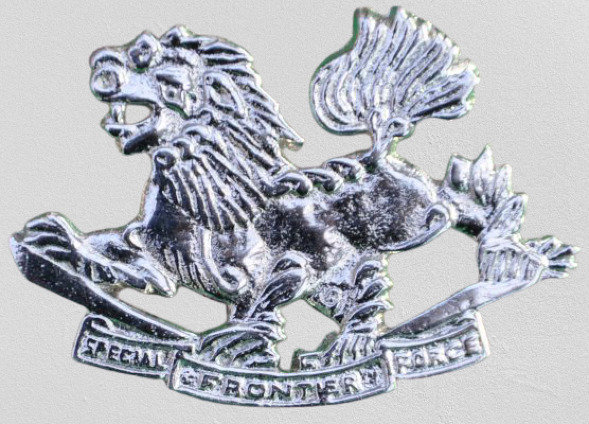
The Special Frontier Force (SFF) is a paramilitary Indian special forces unit composed primarily of Tibetan refugees and Gurkhas in India. It was established after the Sino-Indian War of 1962 to primarily conduct covert operations behind the Chinese lines in case of another war with China. Later it increased in size and scope of operations.
Throughout its history, SFF has fought in India's major external wars including the Bangladesh Liberation War and the Kargil War. It has also been involved in internal security, including Operation Blue Star and also serving as the "Personal Force" of Prime Minister Indira Gandhi to suppress opposition parties during the state of emergency from 1975 to 1977. It has been part of border operations against China, including the 2020–2021 China–India skirmishes.
Based in Chakrata, Uttarakhand, the force was put under the direct supervision of the Intelligence Bureau (IB), and later the Research and Analysis Wing (R&AW), India's external intelligence agency, and is not part of the Indian Army but functions under their operational control with its own rank structure, charter and training infrastructure. It falls under the authority of the Directorate General on Security in the Cabinet Secretariat headed by an Inspector General (SFF) who is selected from the Major General rank of the Indian Army and who reports directly to the Prime Minister's Office.
Tibetans have been a part of the modern Indian Army for as long as it has existed. During the time of the Great Game, the British Indian Army began to employ Tibetans as spies, intelligence agents, and even covert militia in North India and Tibet proper.[citation needed]
At the time of Indian independence, the northern mountain-covered region of India remained the most isolated and strategically overlooked territory of the subcontinent. During the 1950s, the American Central Intelligence Agency (CIA) and the Indian Intelligence Bureau (IB) established Mustang Base in Mustang in Nepal, which trained Tibetans in guerilla warfare. The Mustang rebels brought the 14th Dalai Lama to India during the 1959 Tibetan Rebellion. Former CIA officer John Kennet Knaus who worked in Tibet credited IB Chief Bhola Nath Mullik for SFF formation. According to A Tom Grunfeld, Professor of History at State University of New York, 12,000 Tibetans were trained by United States Army Special Forces and partly funded by Federal government of the United States. Although neither US nor Central Tibetan Administration has any influence on SFF.
Most of the Tibetans recruited were also trained secretly in Okinawa in Kadena Air Base.
The idea of raising a specialized force consisting of Tibetan refugees and Tibetan resistance fighters in India against the Chinese was first mooted by General K S Thimayya when he was leading the Indian Army between May 1957 and May 1961. During the Sino-Indian War and towards the end of 1962, after hectic lobbying by the IB Chief Bhola Nath Mullik and World War II veteran Biju Patnaik, the Jawaharlal Nehru government ordered the raising of an elite commando unit and specialised mountain division.
The primary task of SFF is defence against the People's Liberation Army (PLA) Ground Force as well as conducting clandestine intelligence gathering and commando operations along the Chinese border. Chushi Gangdruk leaders were contacted for recruitment of Khampas into this new unit. The initial strength was 5000 men, mostly Khampas who were recruited at its new Mountain Training Facility at Chakrata, 100 km from the city of Dehradun.
Hub AI
Special Frontier Force AI simulator
(@Special Frontier Force_simulator)
Special Frontier Force
The Special Frontier Force (SFF) is a paramilitary Indian special forces unit composed primarily of Tibetan refugees and Gurkhas in India. It was established after the Sino-Indian War of 1962 to primarily conduct covert operations behind the Chinese lines in case of another war with China. Later it increased in size and scope of operations.
Throughout its history, SFF has fought in India's major external wars including the Bangladesh Liberation War and the Kargil War. It has also been involved in internal security, including Operation Blue Star and also serving as the "Personal Force" of Prime Minister Indira Gandhi to suppress opposition parties during the state of emergency from 1975 to 1977. It has been part of border operations against China, including the 2020–2021 China–India skirmishes.
Based in Chakrata, Uttarakhand, the force was put under the direct supervision of the Intelligence Bureau (IB), and later the Research and Analysis Wing (R&AW), India's external intelligence agency, and is not part of the Indian Army but functions under their operational control with its own rank structure, charter and training infrastructure. It falls under the authority of the Directorate General on Security in the Cabinet Secretariat headed by an Inspector General (SFF) who is selected from the Major General rank of the Indian Army and who reports directly to the Prime Minister's Office.
Tibetans have been a part of the modern Indian Army for as long as it has existed. During the time of the Great Game, the British Indian Army began to employ Tibetans as spies, intelligence agents, and even covert militia in North India and Tibet proper.[citation needed]
At the time of Indian independence, the northern mountain-covered region of India remained the most isolated and strategically overlooked territory of the subcontinent. During the 1950s, the American Central Intelligence Agency (CIA) and the Indian Intelligence Bureau (IB) established Mustang Base in Mustang in Nepal, which trained Tibetans in guerilla warfare. The Mustang rebels brought the 14th Dalai Lama to India during the 1959 Tibetan Rebellion. Former CIA officer John Kennet Knaus who worked in Tibet credited IB Chief Bhola Nath Mullik for SFF formation. According to A Tom Grunfeld, Professor of History at State University of New York, 12,000 Tibetans were trained by United States Army Special Forces and partly funded by Federal government of the United States. Although neither US nor Central Tibetan Administration has any influence on SFF.
Most of the Tibetans recruited were also trained secretly in Okinawa in Kadena Air Base.
The idea of raising a specialized force consisting of Tibetan refugees and Tibetan resistance fighters in India against the Chinese was first mooted by General K S Thimayya when he was leading the Indian Army between May 1957 and May 1961. During the Sino-Indian War and towards the end of 1962, after hectic lobbying by the IB Chief Bhola Nath Mullik and World War II veteran Biju Patnaik, the Jawaharlal Nehru government ordered the raising of an elite commando unit and specialised mountain division.
The primary task of SFF is defence against the People's Liberation Army (PLA) Ground Force as well as conducting clandestine intelligence gathering and commando operations along the Chinese border. Chushi Gangdruk leaders were contacted for recruitment of Khampas into this new unit. The initial strength was 5000 men, mostly Khampas who were recruited at its new Mountain Training Facility at Chakrata, 100 km from the city of Dehradun.
Recent media