Hubbry Logo
search
logo
1823447

Sprite Remix

logo
Community Hub0 Subscribers
Read side by side
from Wikipedia
Sprite Remix
TypeFlavored soft drink
ManufacturerThe Coca-Cola Company
DistributorThe Coca-Cola Company
OriginUnited States
Introduced2002
2015 (reintroduced)
Discontinued2006
ColorClear
FlavorTropical
BerryClear
Aruba Jam
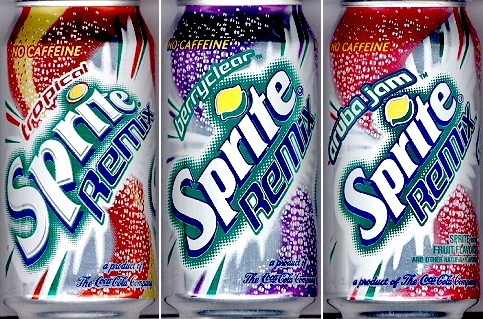
VariantsTropical REMiX, BerryClear REMiX, Aruba Jam REMiX
Related productsSprite

Sprite Remix was a line of "remixed" colorless caffeine-free sodas and drink-flavoring packets made by The Coca-Cola Company. Although based on Sprite, this lineup of 3 flavors each had a different flavor from the original. It was discontinued in early 2006 in the United States. In the spring of 2015, the Tropical Sprite Remix flavor was reintroduced under the name Sprite Tropical and renamed Sprite Tropical Mix a year later.[1]

Flavors

[edit]

There were three flavors introduced in different years.

  • Sprite Tropical Remix: Sprite with tropical fruit flavors, introduced in 2003. It was reintroduced as Sprite Tropical in Spring 2015, and was reintroduced again as Sprite Tropical Mix in Spring 2016.
  • Sprite BerryClear Remix: Sprite with berry flavors, introduced in April 2004.
  • Sprite Aruba Jam Remix: Sprite with fruit flavors, introduced in April 2005, short-lived. Reintroduced in 2024 as a Coca-Cola Freestyle exclusive flavor at participating Wendy's locations.[2]

'Remix Flavor Hits' packets

[edit]
Three packets of Sprite Remix 'Flavor Hits'.

Coca-Cola also had a do-it-yourself promotion, where it offered free 1.25 ounce (36.9 ml.) flavor packets, which consumers use to pour them into their Sprite. There were three flavors, which are grape, vanilla, and cherry.

Sprite Tropical Mix

[edit]

Sprite Tropical Remix was re-released as Sprite Tropical in the spring of 2015. Sources on Twitter, Facebook, and Instagram have shown it popping up in the eastern United States, with eBay listings also appearing.

After a limited-roll out in spring 2015 and no public mention from Coca-Cola, the official Sprite website was updated showing another re-release for Sprite Tropical Remix, which was renamed to Sprite Tropical Mix on February 29, 2016. The new bottle label shows that the tropical flavors are lemon/lime, strawberry, and pineapple.

In 2018, Sprite introduced a similar drink, 'MIX by Sprite Tropic Berry, exclusive to McDonald's restaurants. Along with the base lemon-lime flavor, Tropic Berry includes a blend of strawberry, orange, and pineapple flavor.

In 2019, The Coca-Cola Company updated the Sprite logo and thus redesigned their packaging, replacing the drink's former retro branding with the same simplistic branding used in other flavors in the Sprite lineup.

A Sprite Tropical Mix bottle

References

[edit]
Revisions and contributorsEdit on WikipediaRead on Wikipedia
from Grokipedia
Sprite Remix was a line of caffeine-free, fruit-infused lemon-lime sodas introduced by The Coca-Cola Company in 2003 as flavored variants of its flagship Sprite beverage.[1] The product targeted younger consumers with synthetic tropical and berry notes layered over Sprite's core citrus profile, marking the brand's first major flavor extensions beyond its original formula.[2] Initial variants included Sprite Tropical Remix, blending pineapple, strawberry, and other tropical elements for a sweeter, more vibrant taste that appealed to teenagers during the early 2000s fad for novelty sodas.[1] Subsequent releases expanded the lineup with Sprite BerryClear Remix in 2004, featuring berry flavors in a clear formulation, and Sprite Aruba Jam Remix, another tropical iteration emphasizing exotic fruit medleys.[1] Despite generating buzz through targeted marketing and its departure from traditional lemon-lime austerity, the line underperformed in sustained sales, leading to its discontinuation in 2005 amid criticisms of excessive sugar content and perceptions as a short-lived trend rather than a staple.[1][2] Nostalgia has driven periodic revivals, such as the rebranding of Tropical Remix elements into Sprite Tropical Mix, which Coca-Cola describes as an homage to early 2000s fans, and a limited 2024 return of Aruba Jam after nearly two decades.[3][4] These reissues highlight enduring demand for the Remix's bolder profiles, though they remain regionally limited and not fully restoring the original breadth of options.[5]

History

Launch and Initial Release

Sprite Remix was introduced by The Coca-Cola Company in May 2003 as a sub-brand of Sprite, featuring lemon-lime soda infused with additional fruit flavors to appeal to consumers seeking variety within the clear soda category. The launch focused initially on the United States market, with the debut variant, Sprite Tropical Remix, combining Sprite's core lemon-lime profile with undisclosed tropical fruit notes that later descriptions identified as primarily strawberry and pineapple essences. This product was positioned as an innovative "remix" to differentiate it from standard Sprite, targeting younger demographics through vibrant packaging and flavor experimentation amid stagnant growth in the lemon-lime segment.[6] Early market reception was strong, with Tropical Remix named one of the most successful new product launches of 2003 by Ad Age, driving retail sales volume increases for Sprite-branded beverages. Initial distribution emphasized 20-ounce single-serve bottles in convenience stores and supermarkets, with positive consumer feedback reported in quarterly earnings shortly after rollout, including improved brand health metrics.[6] The variant's success, selling over 55 million cases in its first year according to industry reports, validated the Remix concept and paved the way for subsequent flavors, though the line remained limited-time oriented from inception.[1]

Expansion and Additional Variants

Following the launch of Sprite Tropical Remix in 2003, the product line expanded with Sprite Berry Clear Remix in April 2004, which introduced berry flavors in a clear, caffeine-free soda formulation distinct from the original tropical variant.[7] This addition aimed to diversify the Remix offerings by providing a lighter, fruit-infused alternative while maintaining the core lemon-lime base.[8] In 2005, Sprite Aruba Jam Remix was released, featuring a bolder tropical fruit punch profile with jam-like notes, replacing the Berry Clear variety in some markets and marking the third distinct flavor in the lineup.[8] The Aruba Jam variant was promoted through targeted advertising, including a 15-second commercial emphasizing its remix theme.[9] The Sprite Remix series also encompassed drink-flavoring packets, allowing consumers to customize beverages with grape, vanilla, or cherry additions to Sprite or other bases, extending the brand's reach beyond ready-to-drink sodas.[10] These packets facilitated at-home flavor experimentation, though they were less prominent than the bottled variants. Post-discontinuation in 2005, elements of the original Tropical Remix were revived as Sprite Tropical Mix, with limited U.S. releases in 2015 and 2016 featuring strawberry and pineapple accents.[11] A full nationwide rollout of Sprite Tropical Mix in 20-ounce bottles occurred starting late March 2025, alongside cans, responding to sustained consumer demand for the discontinued Remix flavor profile.[12][5]

Discontinuation

Sprite Remix was discontinued in the United States in 2005 after approximately two years on the market.[1] The decision stemmed primarily from poor sales performance, as the tropical-flavored variants failed to achieve sustained consumer demand despite targeted marketing toward younger demographics.[1] Coca-Cola did not publicly detail exact sales figures, but industry analyses point to the product's inability to differentiate sufficiently from core Sprite or competing fruit-infused sodas as a contributing factor.[2] While some commentators linked the discontinuation to broader pressures on beverage companies amid rising concerns over sugary drinks and youth obesity in the mid-2000s, available evidence emphasizes underwhelming commercial viability over regulatory or health-driven motives.[2] The original lineup, including Tropical, Berry, and Aruba Jam flavors, was phased out entirely from national distribution, though limited regional availability persisted in select international markets like Barbados and Canada into the late 2000s.[13] Subsequent reintroductions of similar formulations, such as Sprite Tropical Mix in 2015, represented reformulated limited-edition releases rather than a full revival of the Remix brand, underscoring the original's lack of long-term viability.[14] These efforts achieved modest success in test markets but did not lead to permanent reinstatement of the discontinued variants.[15]

Product Characteristics

Core Flavors

The core flavors of Sprite Remix consisted of three primary variants introduced by The Coca-Cola Company between 2002 and 2005, each building on the brand's base lemon-lime soda with added fruit profiles. These included Tropical Remix, Berryclear Remix, and Aruba Jam, which were marketed as innovative remixes targeting younger consumers seeking flavored alternatives to traditional clear sodas.[16] Sprite Tropical Remix, launched in 2002, combined the crisp lemon-lime taste of Sprite with strawberry and pineapple flavors, creating a tropical profile that became the line's flagship offering.[11] This variant was caffeine-free and colorless, emphasizing natural fruit essences blended into the soda base.[17] Its refreshing, fruity notes distinguished it from standard lemon-lime beverages, contributing to initial popularity among teens.[2] Sprite Berryclear Remix followed in April 2004, introducing a clear berry-infused option with mixed berry flavors layered over the lemon-lime foundation.[18] Marketed for spring break promotions, it aimed to capture seasonal demand with its vibrant, non-staining berry taste while maintaining the Remix line's clarity and effervescence.[18] The flavor was designed to appeal to consumers preferring lighter, fruit-forward sodas without artificial coloring.[19] Sprite Aruba Jam Remix debuted in 2005 as the third core flavor, featuring a multifaceted fruit blend including hints of citrus, orange, pineapple, cherry, and strawberry atop the lemon-lime base.[20] Described broadly as fruit-flavored, it evoked a jam-like tropical medley but received mixed reception for its subtle and sometimes unbalanced profile.[21] This variant rounded out the core lineup before the brand's discontinuation, offering variety within the Remix experiment.[16]

Packaging and Formats

Sprite Remix ready-to-drink products were packaged in PET plastic bottles, including smaller single-serve sizes and 12-ounce formats, aligning with Coca-Cola's packaging developments during the 2003 launch period.[22] Aluminum cans were utilized for distribution as well, providing portable single-serve options. The product line extended to powdered formats through "Remix Flavor Hits" packets, which contained 1.25 ounces of concentrated flavoring designed to be mixed into a 20-ounce bottle of base Sprite for customization. These packets came in varieties matching the Remix flavors, such as tropical and berry.[23]

Nutritional Profile

Sprite Remix beverages, produced by The Coca-Cola Company, derived their caloric content almost exclusively from added sugars, primarily high fructose corn syrup, with no meaningful contributions from fats, proteins, or micronutrients.[24][3] A standard 12 fluid ounce (355 ml) serving of Sprite Remix Tropical, for instance, contained approximately 140 calories, all from carbohydrates in the form of 36-38 grams of total sugars.[24][25] Similar profiles applied to other variants like Berry Clear or Aruba Jam, which also provided around 140-144 calories per 12 ounce serving, with negligible sodium (typically 65 mg, or about 3% of daily value) and zero caffeine.[26][27] The ingredients list for Sprite Remix products mirrored that of standard Sprite, featuring carbonated water, high fructose corn syrup, citric acid, natural flavors, sodium citrate, and sodium benzoate as a preservative, but without any fortification or dietary fiber.[3][28] This composition resulted in a product classified as having empty calories, offering hydration but no vitamins, minerals, or other essential nutrients, and contributing significantly to daily added sugar intake—exceeding recommended limits for many consumers when consumed regularly.[24]
Nutrient (per 12 fl oz serving)Amount% Daily Value*
Calories140-
Total Fat0 g0%
Sodium65 mg3%
Total Carbohydrates36 g13%
Total Sugars (added)36 g-
Protein0 g-
*Percent Daily Values based on a 2,000 calorie diet; data aggregated from Tropical variant reports, with minor variations across flavors.[24][25] Larger servings, such as 20 fluid ounce bottles, scaled proportionally to about 240 calories and 63 grams of sugars.[17] Health authorities have noted that such sugar-sweetened beverages correlate with increased risks of obesity and metabolic issues when part of habitual intake, though Sprite Remix's clear, fruit-flavored profile did not alter its fundamentally non-nutritive nature.[29]

Marketing and Promotion

Target Audience and Campaigns

Sprite Remix was primarily marketed to teenagers and young adults, including high school and college students, who responded enthusiastically to its bold tropical flavors and positioning as a fresh, exclusive twist on the traditional Sprite lemon-lime soda.[2] This demographic, valued for their preference for innovative and culturally resonant beverages, drove initial sales success, with the product achieving 55 million cases sold in its debut year of 2003.[30] The campaign's development drew directly from Coca-Cola's ongoing discussions with teens about popular culture and beverage preferences, aiming to capture their interest in remixed, fruit-infused experiences.[30] Upon launch in May 2003, Coca-Cola backed Sprite Remix with a multi-million-dollar integrated campaign featuring broadcast television commercials, print ads, in-store sampling, and promotional events to generate immediate youth buzz.[31] These efforts emphasized the product's vibrant packaging and "remixed" tropical profile—blending Sprite's crisp base with flavors like Berryclear and Aruba Jam—as a must-have for social settings, fostering perceptions of trendiness and scarcity.[2] Billboards and TV spots highlighted customization options, such as add-in flavor packets that allowed consumers to "remix" standard Sprite at home, promoting interactivity and personalization to deepen engagement among the target group.[2] However, by 2004, reduced advertising spend diminished visibility, contributing to waning momentum despite the initial aggressive push.[2]

Advertising Strategies

Coca-Cola launched Sprite Remix with a multi-million dollar advertising campaign in 2003, focusing on television broadcasts, print media, consumer sampling, and promotional events to position the product as a tropical flavor extension of the core Sprite brand.[31] The strategy emphasized the "remix" theme, portraying the beverage as a customizable, fruit-infused refreshment appealing to youthful consumers experimenting with flavor combinations.[32] Television commercials featured hip-hop artists like Biz Markie and DJ Logikal, leveraging urban music culture to convey energy and innovation in mixing lemon-lime with tropical notes such as passionfruit or berry clear.[33] [34] These ads aired alongside print campaigns that highlighted the product's vibrant packaging and fizzing appeal, targeting teens and young adults through humor and relatability rather than overt health claims.[35] To encourage trial and engagement, Coca-Cola implemented interactive promotions like the Flavor Hits initiative in 2004, distributing free 1.25-ounce flavor packets for consumers to add to Sprite bottles, capitalizing on market research showing teenagers' DIY mixing habits.[32] This approach extended to limited cross-promotions with entertainment properties, broadening reach via gaming tie-ins that aligned with the remix customization narrative.[36] Overall, the strategies prioritized experiential marketing over traditional endorsements, fostering brand loyalty among demographics seeking novel soft drink experiences.[31]

Commercial Performance and Analysis

Sales Data and Market Reception

Sprite Remix recorded robust initial sales following its United States launch in June 2003, with over 55 million cases sold that year, a performance characterized as a "very respectable debut" by John Sicher, publisher of the industry publication Beverage Digest.[30] This volume contributed to the product's rapid market penetration amid competition from lemon-lime rivals like PepsiCo's Sierra Mist, though overall Sprite brand market share experienced a slight decline in the same period due to broader category pressures.[30] Market reception was favorable in its early phase, appealing strongly to adolescent and young adult demographics through its novel tropical flavor profile and remix branding that aligned with early 2000s youth trends.[2] The product's dedicated website earned a Webby Award in the Food & Beverage category in 2003, reflecting effective digital engagement and promotional buzz at the time.[37] However, sustained consumer interest waned, positioning it as a temporary fad rather than a enduring variant, with subsequent flavors like Berryclear in 2004 failing to replicate the debut momentum before full discontinuation by 2006.[1]

Reasons for Discontinuation

Sprite Remix was discontinued by The Coca-Cola Company in the United States in 2005, primarily due to insufficient sales volume that failed to justify continued production.[1][38] Although the product achieved a respectable debut with approximately 55 million cases sold in 2003, representing strong initial market penetration for a flavored extension of the core Sprite brand, subsequent performance did not meet expectations for long-term viability.[30] This outcome reflected broader challenges in sustaining demand for niche, tropical-flavored soda variants amid competition from established lemon-lime offerings and shifting consumer preferences toward simpler or less sweetened beverages. Analyses of the discontinuation attribute the shortfall to the product's positioning as a limited-edition "remix" line, which may have limited repeat purchases despite its innovative flavor profiles like Tropical Remix.[39] Coca-Cola did not publicly detail internal metrics beyond sales data, but industry observers noted that the lineup's rapid fade after two years of availability underscored the risks of fad-driven extensions in the carbonated soft drink category, where only high-volume performers typically endure.[2] No evidence from company statements or contemporaneous reports points to regulatory pressures, formulation issues, or supply chain factors as primary drivers; instead, the decision aligned with Coca-Cola's strategy to refocus resources on core Sprite variants that maintained stronger market share.[1]

Revival and Successors

Reintroduction of Tropical Variant

In spring 2015, The Coca-Cola Company reintroduced the tropical variant of Sprite Remix, originally launched in the early 2000s, under the simplified name Sprite Tropical as a limited-edition offering in the United States.[40] This revival targeted consumer demand for nostalgic flavors, blending the core lemon-lime base with tropical fruit notes including strawberry and pineapple.[41] The product was positioned as a distinct alternative to competitors like Tropical 7 Up, which features peach and mango profiles instead.[41] By early 2016, the flavor was rebranded as Sprite Tropical Mix, dropping the "Re" prefix while maintaining the same formulation, and received additional limited releases through 2017.[40] These periodic returns reflected ongoing fan interest but were not expanded to permanent status, with availability confined to select markets and formats such as cans and bottles.[42] Coca-Cola emphasized the remix heritage in promotions, describing it as a refreshed take on the discontinued original.[43] In 2025, Sprite Tropical Mix achieved a nationwide rollout in the US, marking its broadest reintroduction to date, with 20-ounce bottles available from late March and 12-ounce cans following in mid-May; a zero-sugar variant was not included.[44] This expansion followed years of regional testing and rumors of permanent status, driven by sustained consumer nostalgia for the early-2000s formula.[42] The move aligned with Coca-Cola's strategy to revive select Remix-inspired variants amid competitive pressures in the flavored soda category.[43]

Current Availability and Developments

Sprite Tropical Mix, the rebranded successor to the original Sprite Tropical Remix, is currently available nationwide in the United States as a core flavor in The Coca-Cola Company's Sprite lineup.[41] It is offered in multiple packaging formats, including 12-ounce cans in 12-packs and 20-ounce bottles in 24-packs, with stock confirmed at retailers like Walmart and Safeway as of mid-2025.[45][46] This marks a shift from prior limited regional distributions to broader accessibility following a nationwide rollout initiated in March 2025.[41] The 2025 expansion builds on intermittent reintroductions since 2015, positioning Tropical Mix as a permanent variant rather than a seasonal or test-market product.[47] Availability remains concentrated in the U.S., with no confirmed widespread international distribution or return of other original Remix flavors like Berry Clear or Aruba Jam.[48] Coca-Cola has not announced plans for a zero-sugar version of Tropical Mix, though new Sprite variants such as Chill Strawberry Kiwi were introduced alongside its expanded release.[44] Ongoing developments include sustained retail presence without reported supply disruptions, supported by consumer demand evidenced by high ratings (4.7–4.9 out of 5) on sales platforms.[49] The flavor's formulation—a clear lemon-lime soda infused with strawberry and pineapple notes using 100% natural flavors—has remained consistent since its revival, with no major recipe changes disclosed.[46]

Legacy and Criticisms

Consumer Nostalgia and Fan Response

Following its discontinuation in the United States in 2005, Sprite Remix garnered a dedicated cult following among consumers who fondly remembered its flavored variants, such as Tropical and Berry Clear, as distinctive early-2000s indulgences.[50] Online discussions on platforms like Reddit and Facebook have sustained this sentiment, with users posting nostalgic recollections, product photos, and pleas for revival, often framing the sodas as superior to standard Sprite due to their vibrant, remix-inspired tastes.[51][52] Fan-driven campaigns emerged to pressure Coca-Cola for a return, including a 2012 Change.org petition that emphasized Sprite Remix as "the best soda" experienced by signatories and called for reinstatement of flavors like Tropical and Aruba Jam.[53] An iPetitions effort similarly rallied supporters by aggregating demands for the original lineup, reflecting widespread consumer attachment despite the product's initial underwhelming sales performance.[54] These initiatives, while unsuccessful in prompting a full relaunch, underscored a persistent grassroots enthusiasm that contrasted with the brand's commercial trajectory.[1] Limited reintroductions of successor variants, such as Sprite Tropical Mix in select markets starting in 2016 and broader availability noted in early 2025, have elicited enthusiastic social media responses, with fans describing intense nostalgia and satisfaction upon rediscovery.[55] Users on platforms like Instagram and Yahoo Lifestyle comments hailed these returns as fulfilling long-held cravings, with one stating it ranked among their "favorite Sprite flavors," though availability remained geographically restricted and temporary.[56] This pattern of intermittent revivals has amplified fan loyalty without resolving calls for the original Remix packets and full assortment.[57]

Health and Industry Critiques

Sprite Remix variants, such as Tropical, contained high levels of added sugars, with a 12 fluid ounce serving providing approximately 140 calories, all derived from carbohydrates including high fructose corn syrup.[24] This nutritional profile mirrored standard soft drinks, contributing to elevated energy intake without substantive nutritional benefits, as evidenced by epidemiological data linking regular soft drink consumption to increased body weight, lower calcium and nutrient intakes, and heightened risks of obesity and type 2 diabetes.[58] The absence of meaningful fiber, vitamins, or other micronutrients in the formulation underscored its role as an energy-dense, low-nutrient beverage, exacerbating public health concerns over excessive sugar intake in the early 2000s diet.[3] Industry analyses critiqued Sprite Remix as a line extension that failed to counter competitive pressures and evolving consumer preferences, with Sprite's overall carbonated soft drink market share declining slightly in 2003 amid rivalry from lower-calorie alternatives like Sierra Mist.[30] Beverage experts attributed its rapid discontinuation around 2005-2006 primarily to underwhelming sales, viewing it as emblematic of challenges in sustaining flavored variants without adapting to rising health consciousness that favored reduced-sugar options.[1] Coca-Cola's strategy of introducing tropical flavors was seen by some analysts as a short-term brand refresh but insufficient for long-term viability in a market increasingly skeptical of high-sugar products, contributing to broader critiques of the soda industry's reliance on reformulation gimmicks over substantive health improvements.[59]

References

User Avatar
No comments yet.