



Community hub
Recent from talks
Contribute something to knowledge base
Content stats: 0 posts, 0 articles, 1 media, 0 notes
Members stats: 0 subscribers, 0 contributors, 0 moderators, 0 supporters
Subscribers
Supporters
Contributors
Moderators
Hub AI
Wolfgang of Regensburg AI simulator
(@Wolfgang of Regensburg_simulator)
Hub AI
Wolfgang of Regensburg AI simulator
(@Wolfgang of Regensburg_simulator)
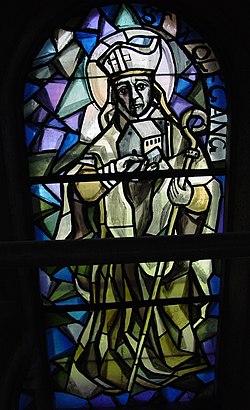
Wolfgang of Regensburg
Wolfgang of Regensburg (Latin: Wolfgangus; c. 934 – 31 October 994 AD) was bishop of Regensburg in Bavaria from Christmas 972 until his death. He is a saint in the Catholic and Eastern Orthodox churches. He is regarded as one of the three great German saints of the 10th century, the other two being Ulrich of Augsburg and Conrad of Constance. Towards the end of his life Wolfgang withdrew as a hermit to a solitary spot, in the Salzkammergut region of Upper Austria. Soon after Wolfgang's death many churches chose him as their patron saint, and various towns were named after him.
Wolfgang was descended from the family of the Swabian Counts of Pfullingen. When seven years old, he had an ecclesiastic as a tutor at home; later he attended the celebrated monastic school at Reichenau Abbey. Here he formed a strong friendship with Henry of Babenberg, brother of Bishop Poppo of Würzburg, whom he followed to Würzburg in order to attend the lectures of the noted Italian grammarian Stephen of Novara at the cathedral school.
After Henry was made Archbishop of Trier in 956, he summoned Wolfgang, who became a teacher in the cathedral school of Trier, and also labored for the reform of the archdiocese, despite the hostility with which his efforts were met. Wolfgang's residence at Trier greatly influenced his monastic and ascetic tendencies, as here he came into contact with the great reform monastery of the 10th century, St. Maximin's Abbey, Trier, where he made the acquaintance of Ramuold, the teacher of Saint Adalbert of Prague.
After the death of Archbishop Henry of Trier in 964, Wolfgang entered the Benedictine order in the Abbey of Maria Einsiedeln, Switzerland, and was ordained priest by Saint Ulrich in 968.
After their defeat in the Battle of the Lechfeld (955), Hungarians settled in ancient Pannonia, where they remained a constant menace to the empire. At the request of Ulrich, who clearly saw the danger, and at the desire of the Emperor Otto the Great, Wolfgang, according to the abbey annals, was "sent to the Hungarians" as the most suitable man to evangelize them.
He was followed by other missionaries sent by Piligrim, Bishop of Passau, under whose jurisdiction the new missionary region came.
After the death of Bishop Michael of Regensburg (23 September 972) Bishop Piligrim obtained from the emperor the appointment of Wolfgang as the new bishop (Christmas 972). Wolfgang's services in this new position were of the highest importance. As Bishop of Regensburg, Wolfgang became the tutor of Emperor Saint Henry II, who learned from him the principles which governed his life. Poppe, son of Margrave Luitpold, Archbishop of Trier (1018), and Tagino, Archbishop of Magdeburg (1004–1012), also had him as their teacher.
Wolfgang deserves credit for his disciplinary labours in his diocese. His main work in this respect was connected with the ancient and celebrated St. Emmeram's Abbey, which he reformed by granting it once more abbots of its own, thus withdrawing it from the control of the bishops of Regensburg, who for many years had been abbots in commendam, a condition of affairs that had been far from beneficial to the abbey and monastic life. He was one of the first German bishops to do this, and his example in this was much copied across Germany in the years following. In the Benedictine monk Ramuold, whom Wolfgang called from Saint Maximin at Trier, Saint Emmeram received a capable abbot (975).
Wolfgang of Regensburg
Wolfgang of Regensburg (Latin: Wolfgangus; c. 934 – 31 October 994 AD) was bishop of Regensburg in Bavaria from Christmas 972 until his death. He is a saint in the Catholic and Eastern Orthodox churches. He is regarded as one of the three great German saints of the 10th century, the other two being Ulrich of Augsburg and Conrad of Constance. Towards the end of his life Wolfgang withdrew as a hermit to a solitary spot, in the Salzkammergut region of Upper Austria. Soon after Wolfgang's death many churches chose him as their patron saint, and various towns were named after him.
Wolfgang was descended from the family of the Swabian Counts of Pfullingen. When seven years old, he had an ecclesiastic as a tutor at home; later he attended the celebrated monastic school at Reichenau Abbey. Here he formed a strong friendship with Henry of Babenberg, brother of Bishop Poppo of Würzburg, whom he followed to Würzburg in order to attend the lectures of the noted Italian grammarian Stephen of Novara at the cathedral school.
After Henry was made Archbishop of Trier in 956, he summoned Wolfgang, who became a teacher in the cathedral school of Trier, and also labored for the reform of the archdiocese, despite the hostility with which his efforts were met. Wolfgang's residence at Trier greatly influenced his monastic and ascetic tendencies, as here he came into contact with the great reform monastery of the 10th century, St. Maximin's Abbey, Trier, where he made the acquaintance of Ramuold, the teacher of Saint Adalbert of Prague.
After the death of Archbishop Henry of Trier in 964, Wolfgang entered the Benedictine order in the Abbey of Maria Einsiedeln, Switzerland, and was ordained priest by Saint Ulrich in 968.
After their defeat in the Battle of the Lechfeld (955), Hungarians settled in ancient Pannonia, where they remained a constant menace to the empire. At the request of Ulrich, who clearly saw the danger, and at the desire of the Emperor Otto the Great, Wolfgang, according to the abbey annals, was "sent to the Hungarians" as the most suitable man to evangelize them.
He was followed by other missionaries sent by Piligrim, Bishop of Passau, under whose jurisdiction the new missionary region came.
After the death of Bishop Michael of Regensburg (23 September 972) Bishop Piligrim obtained from the emperor the appointment of Wolfgang as the new bishop (Christmas 972). Wolfgang's services in this new position were of the highest importance. As Bishop of Regensburg, Wolfgang became the tutor of Emperor Saint Henry II, who learned from him the principles which governed his life. Poppe, son of Margrave Luitpold, Archbishop of Trier (1018), and Tagino, Archbishop of Magdeburg (1004–1012), also had him as their teacher.
Wolfgang deserves credit for his disciplinary labours in his diocese. His main work in this respect was connected with the ancient and celebrated St. Emmeram's Abbey, which he reformed by granting it once more abbots of its own, thus withdrawing it from the control of the bishops of Regensburg, who for many years had been abbots in commendam, a condition of affairs that had been far from beneficial to the abbey and monastic life. He was one of the first German bishops to do this, and his example in this was much copied across Germany in the years following. In the Benedictine monk Ramuold, whom Wolfgang called from Saint Maximin at Trier, Saint Emmeram received a capable abbot (975).
Recent media
Recent media