
Recent from talks
Starfish Prime
Knowledge base stats:
Talk channels stats:
Members stats:
Starfish Prime
Starfish Prime was a high-altitude nuclear test conducted by the United States, a joint effort of the Atomic Energy Commission (AEC) and the Defense Atomic Support Agency. It was launched from Johnston Atoll on July 9, 1962, and was the largest nuclear test conducted in outer space, and one of five conducted by the US in space.
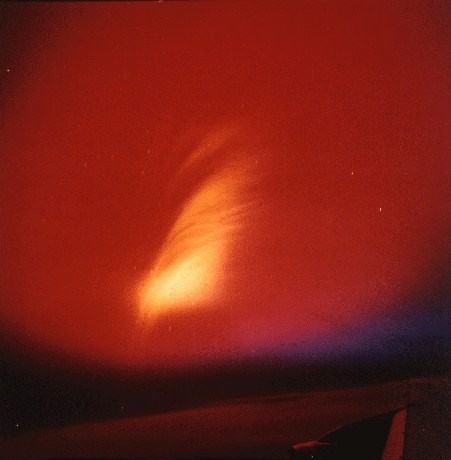
A Thor rocket carrying a W49 thermonuclear warhead (designed at Los Alamos Scientific Laboratory) and a Mk. 2 reentry vehicle was launched from Johnston Atoll in the Pacific Ocean, about 900 miles (1,450 km) west-southwest of Hawaii. The explosion took place at an altitude of 250 miles (400 km), above a point 19 miles (31 km) southwest of Johnston Atoll. It had a yield of 1.4 Mt (5.9 PJ). The explosion was about 10° above the horizon as seen from Hawaii, at 11 pm Hawaii time.
The Starfish test was one of five high-altitude tests grouped together as Operation Fishbowl within the larger Operation Dominic, a series of tests in 1962 begun in response to the Soviet announcement on August 30, 1961, that they would end a three-year moratorium on testing.
In 1958, the United States had completed six high-altitude nuclear tests that produced many unexpected results and raised many new questions. According to the U.S. Government Project Officer's Interim Report on the Starfish Prime project:
Previous high-altitude nuclear tests: YUCCA, TEAK, and ORANGE, plus the three ARGUS shots were poorly instrumented and hastily executed. Despite thorough studies of the meager data, present models of these bursts are sketchy and tentative. These models are too uncertain to permit extrapolation to other altitudes and yields with any confidence. Thus there is a strong need, not only for better instrumentation, but for further tests covering a range of altitudes and yields.
The Starfish test was originally planned as the second in the Fishbowl series, but the first launch (Bluegill) was lost by the radar tracking equipment and had to be destroyed in flight.
The initial Starfish launch attempt on June 20 was also aborted in flight, this time due to failure of the Thor launch vehicle. The Thor missile flew a normal trajectory for 59 seconds; then the rocket engine stopped, and the missile began to break apart. The range safety officer ordered the destruction of the missile and warhead. The missile was between 30,000 and 35,000 feet (9,100 and 10,700 m) in altitude when it was destroyed. Parts of the missile and some radioactive contamination fell upon Johnston Atoll, nearby Sand Island, and the surrounding ocean.
On July 9, 1962, at 09:00:09 Coordinated Universal Time (11:00:09 pm on July 8, 1962, Honolulu time), the Starfish Prime test was detonated at an altitude of 250 miles (400 km). The coordinates of the detonation were 16°28′N 169°38′W / 16.467°N 169.633°W. The actual weapon yield came very close to the design yield, which various sources have set at different values in the range of 1.4 to 1.45 Mt (5.9 to 6.1 PJ). The nuclear warhead detonated 13 minutes 41 seconds after liftoff of the Thor missile from Johnston Atoll.
Hub AI
Starfish Prime AI simulator
(@Starfish Prime_simulator)
Starfish Prime
Starfish Prime was a high-altitude nuclear test conducted by the United States, a joint effort of the Atomic Energy Commission (AEC) and the Defense Atomic Support Agency. It was launched from Johnston Atoll on July 9, 1962, and was the largest nuclear test conducted in outer space, and one of five conducted by the US in space.
A Thor rocket carrying a W49 thermonuclear warhead (designed at Los Alamos Scientific Laboratory) and a Mk. 2 reentry vehicle was launched from Johnston Atoll in the Pacific Ocean, about 900 miles (1,450 km) west-southwest of Hawaii. The explosion took place at an altitude of 250 miles (400 km), above a point 19 miles (31 km) southwest of Johnston Atoll. It had a yield of 1.4 Mt (5.9 PJ). The explosion was about 10° above the horizon as seen from Hawaii, at 11 pm Hawaii time.
The Starfish test was one of five high-altitude tests grouped together as Operation Fishbowl within the larger Operation Dominic, a series of tests in 1962 begun in response to the Soviet announcement on August 30, 1961, that they would end a three-year moratorium on testing.
In 1958, the United States had completed six high-altitude nuclear tests that produced many unexpected results and raised many new questions. According to the U.S. Government Project Officer's Interim Report on the Starfish Prime project:
Previous high-altitude nuclear tests: YUCCA, TEAK, and ORANGE, plus the three ARGUS shots were poorly instrumented and hastily executed. Despite thorough studies of the meager data, present models of these bursts are sketchy and tentative. These models are too uncertain to permit extrapolation to other altitudes and yields with any confidence. Thus there is a strong need, not only for better instrumentation, but for further tests covering a range of altitudes and yields.
The Starfish test was originally planned as the second in the Fishbowl series, but the first launch (Bluegill) was lost by the radar tracking equipment and had to be destroyed in flight.
The initial Starfish launch attempt on June 20 was also aborted in flight, this time due to failure of the Thor launch vehicle. The Thor missile flew a normal trajectory for 59 seconds; then the rocket engine stopped, and the missile began to break apart. The range safety officer ordered the destruction of the missile and warhead. The missile was between 30,000 and 35,000 feet (9,100 and 10,700 m) in altitude when it was destroyed. Parts of the missile and some radioactive contamination fell upon Johnston Atoll, nearby Sand Island, and the surrounding ocean.
On July 9, 1962, at 09:00:09 Coordinated Universal Time (11:00:09 pm on July 8, 1962, Honolulu time), the Starfish Prime test was detonated at an altitude of 250 miles (400 km). The coordinates of the detonation were 16°28′N 169°38′W / 16.467°N 169.633°W. The actual weapon yield came very close to the design yield, which various sources have set at different values in the range of 1.4 to 1.45 Mt (5.9 to 6.1 PJ). The nuclear warhead detonated 13 minutes 41 seconds after liftoff of the Thor missile from Johnston Atoll.
Recent media