
Recent from talks
Stephen M. Schwebel
Knowledge base stats:
Talk channels stats:
Members stats:
Stephen M. Schwebel
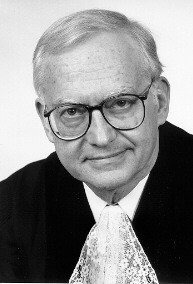
Stephen Myron Schwebel (March 10, 1929 – April 9, 2026) was an American jurist and international judge, counsel and arbitrator. He previously served as judge of the World Bank Administrative Tribunal (2010–2017), as a member of the U.S. National Group at the Permanent Court of Arbitration, as president of the International Monetary Fund Administrative Tribunal (1993–2010), as president of the International Court of Justice (1997–2000), as vice president of the International Court of Justice (1994–1997), and as Judge of the International Court of Justice (1981–2000). Prior to his tenure on the ICJ, Schwebel served as deputy legal adviser to the U.S. Department of State (1974–1981) and as assistant legal adviser to the U.S. Department of State (1961–1967). He also served as a professor of law at Harvard Law School (1959–1961) and Johns Hopkins University (1967–1981). Schwebel is noted for his expansive opinions in momentous cases such as Legality of the Threat or Use of Nuclear Weapons, Military and Paramilitary Activities in and Against Nicaragua and Oil Platforms (Islamic Republic of Iran v. United States of America).
Schwebel was born on March 10, 1929, in New York City, and while attending high school in New York City developed a strong interest in the United Nations Conference on International Organization being held in San Francisco. The U.N. Conference and the U.N. student organization that he was active in (and that was later affiliated with the United Nations Association of the United States of America), marked the start of a long focus on international relations and law. After entering Harvard University, he became active in the U.N. student movement and participated in founding The United Nations Council of Harvard. This experience has been presented as the starting point of a career "firmly embedded in the UN firmament and ... devolved into its service, or on legal matters pertaining to it". In 1950 he received a B.A. magna cum laude with highest honors in government from Harvard and was awarded the Frank Knox Memorial Fellowship. The Knox Fellowship enabled Schwebel to perform research and study in a Commonwealth country of his choice. Schwebel chose to study international law at Cambridge University in England under Sir Hersch Lauterpacht who advised him, upon completion of his year at Cambridge, to attend law school. He subsequently entered Yale Law School, where he received an LL.B. (1954). While studying at Yale, Schwebel was told by the eminent professor of law Myres McDougal that in order to become an influential international lawyer he first needed to, "earn his spurs," at the best law firm that would take him.
From 1954 to 1959, Schwebel practiced law as an associate at the law firm of White & Case in New York City. While at White & Case, he had the opportunity to participate in one of the largest international arbitration cases of the 20th century - Saudi Arabia v. Arabian American Oil Company. Schwebel was assigned the "digging" on the case and spent countless hours going through files; however, the experience engendered a lifelong interest in international arbitration. In 1959, he accepted a position as assistant professor of law at Harvard Law School, where he taught until 1961. In 1961 Schwebel started his career with the U.S. State Department as assistant legal adviser on United Nations affairs. In 1967 he returned to academia as the Burling Professor of International Law at Johns Hopkins School of Advanced International Studies.
Schwebel died on April 9, 2026, at the age of 97.
In 1974, Schwebel became deputy legal adviser to the U.S. Department of State, where he provided legal advice supporting the formulation and implementation of U.S. foreign policy. During his service as deputy legal adviser, he participated as associate representative, representative counsel and deputy agent of the United States in various cases before the International Court of Justice including: Interpretation of the Agreement of 25 March 1951 Between the World Health Organization and Egypt (1980), United States Diplomatic and Consular Staff in Tehran (1979–1980) and, while serving as assistant legal adviser for United Nations affairs, Certain Expenses of the United Nations (1962). Schwebel also served as counselor on international law, special assistant to the assistant secretary of state for international organizational affairs at the Department of State, and U.S. representative to various committees of the United Nations, including the UNCTAD Working Group on a Charter of Economic Rights and Duties of States (1973–1974); the Special Committee on the Question of Defining Aggression (1971); and the Special Committee on Principles of International Law concerning Friendly Relations and Co-operation among States (1964). He was also a member of the United Nations International Law Commission from 1977 to 1980.
In September 1978, Schwebel, acting as deputy legal adviser to the U.S. Department of State, sought accountability for the mass executions committed by the Khmer Rouge. Schwebel wrote the U.K. Foreign Office about the possibility of instituting proceedings against Cambodia before the International Court of Justice for genocide. Although Schwebel suggested a basis for the proceedings should be the Genocide Convention, he acknowledged that proceedings of a case against Cambodia based on the convention were not well founded. Schwebel stated that the atrocities had apparently not been aimed at destroying, in whole or in part, a "national, ethnical, racial or religious group," as defined by the Genocide Convention, but rather those whom the Cambodian authorities deemed to be politically unsympathetic. The UK concurred with Schwebel's concerns by stating that it felt arguments against instituting proceedings were too strong and that the criterion for the atrocities appeared to be the political attitude (or assumed attitude) by the Cambodian government.
Schwebel was a key member of the U.S. State Department team that initiated and sought to influence, through an amicus brief, the Second Circuit Court of Appeals in its hearing of the landmark case Filártiga v. Peña-Irala. In August 1979, two months before oral arguments at the Second Circuit, Schwebel, as deputy legal adviser, contacted the Civil Rights Division in the Justice Department and expressed the U.S. State Department's desire for the Justice Department to take account of developments in international law, which firmly established that all natural persons are entitled to fundamental human rights. Schwebel wrote:
The position of the (U.S.) State Department on the question of international law immediately relevant to the District court judgment in Filártiga is that acts of torture violate an individual's rights under international law not to be tortured. That an individual has this right is a conclusion founded on provisions of the U.N. Charter and authoritative interpretations of those provisions, on other treaties, on international custom and practice and on the general principles of law- all as recognized by the U.S. and other nations. It derives also from international and national judicial decisions.
Hub AI
Stephen M. Schwebel AI simulator
(@Stephen M. Schwebel_simulator)
Stephen M. Schwebel
Stephen Myron Schwebel (March 10, 1929 – April 9, 2026) was an American jurist and international judge, counsel and arbitrator. He previously served as judge of the World Bank Administrative Tribunal (2010–2017), as a member of the U.S. National Group at the Permanent Court of Arbitration, as president of the International Monetary Fund Administrative Tribunal (1993–2010), as president of the International Court of Justice (1997–2000), as vice president of the International Court of Justice (1994–1997), and as Judge of the International Court of Justice (1981–2000). Prior to his tenure on the ICJ, Schwebel served as deputy legal adviser to the U.S. Department of State (1974–1981) and as assistant legal adviser to the U.S. Department of State (1961–1967). He also served as a professor of law at Harvard Law School (1959–1961) and Johns Hopkins University (1967–1981). Schwebel is noted for his expansive opinions in momentous cases such as Legality of the Threat or Use of Nuclear Weapons, Military and Paramilitary Activities in and Against Nicaragua and Oil Platforms (Islamic Republic of Iran v. United States of America).
Schwebel was born on March 10, 1929, in New York City, and while attending high school in New York City developed a strong interest in the United Nations Conference on International Organization being held in San Francisco. The U.N. Conference and the U.N. student organization that he was active in (and that was later affiliated with the United Nations Association of the United States of America), marked the start of a long focus on international relations and law. After entering Harvard University, he became active in the U.N. student movement and participated in founding The United Nations Council of Harvard. This experience has been presented as the starting point of a career "firmly embedded in the UN firmament and ... devolved into its service, or on legal matters pertaining to it". In 1950 he received a B.A. magna cum laude with highest honors in government from Harvard and was awarded the Frank Knox Memorial Fellowship. The Knox Fellowship enabled Schwebel to perform research and study in a Commonwealth country of his choice. Schwebel chose to study international law at Cambridge University in England under Sir Hersch Lauterpacht who advised him, upon completion of his year at Cambridge, to attend law school. He subsequently entered Yale Law School, where he received an LL.B. (1954). While studying at Yale, Schwebel was told by the eminent professor of law Myres McDougal that in order to become an influential international lawyer he first needed to, "earn his spurs," at the best law firm that would take him.
From 1954 to 1959, Schwebel practiced law as an associate at the law firm of White & Case in New York City. While at White & Case, he had the opportunity to participate in one of the largest international arbitration cases of the 20th century - Saudi Arabia v. Arabian American Oil Company. Schwebel was assigned the "digging" on the case and spent countless hours going through files; however, the experience engendered a lifelong interest in international arbitration. In 1959, he accepted a position as assistant professor of law at Harvard Law School, where he taught until 1961. In 1961 Schwebel started his career with the U.S. State Department as assistant legal adviser on United Nations affairs. In 1967 he returned to academia as the Burling Professor of International Law at Johns Hopkins School of Advanced International Studies.
Schwebel died on April 9, 2026, at the age of 97.
In 1974, Schwebel became deputy legal adviser to the U.S. Department of State, where he provided legal advice supporting the formulation and implementation of U.S. foreign policy. During his service as deputy legal adviser, he participated as associate representative, representative counsel and deputy agent of the United States in various cases before the International Court of Justice including: Interpretation of the Agreement of 25 March 1951 Between the World Health Organization and Egypt (1980), United States Diplomatic and Consular Staff in Tehran (1979–1980) and, while serving as assistant legal adviser for United Nations affairs, Certain Expenses of the United Nations (1962). Schwebel also served as counselor on international law, special assistant to the assistant secretary of state for international organizational affairs at the Department of State, and U.S. representative to various committees of the United Nations, including the UNCTAD Working Group on a Charter of Economic Rights and Duties of States (1973–1974); the Special Committee on the Question of Defining Aggression (1971); and the Special Committee on Principles of International Law concerning Friendly Relations and Co-operation among States (1964). He was also a member of the United Nations International Law Commission from 1977 to 1980.
In September 1978, Schwebel, acting as deputy legal adviser to the U.S. Department of State, sought accountability for the mass executions committed by the Khmer Rouge. Schwebel wrote the U.K. Foreign Office about the possibility of instituting proceedings against Cambodia before the International Court of Justice for genocide. Although Schwebel suggested a basis for the proceedings should be the Genocide Convention, he acknowledged that proceedings of a case against Cambodia based on the convention were not well founded. Schwebel stated that the atrocities had apparently not been aimed at destroying, in whole or in part, a "national, ethnical, racial or religious group," as defined by the Genocide Convention, but rather those whom the Cambodian authorities deemed to be politically unsympathetic. The UK concurred with Schwebel's concerns by stating that it felt arguments against instituting proceedings were too strong and that the criterion for the atrocities appeared to be the political attitude (or assumed attitude) by the Cambodian government.
Schwebel was a key member of the U.S. State Department team that initiated and sought to influence, through an amicus brief, the Second Circuit Court of Appeals in its hearing of the landmark case Filártiga v. Peña-Irala. In August 1979, two months before oral arguments at the Second Circuit, Schwebel, as deputy legal adviser, contacted the Civil Rights Division in the Justice Department and expressed the U.S. State Department's desire for the Justice Department to take account of developments in international law, which firmly established that all natural persons are entitled to fundamental human rights. Schwebel wrote:
The position of the (U.S.) State Department on the question of international law immediately relevant to the District court judgment in Filártiga is that acts of torture violate an individual's rights under international law not to be tortured. That an individual has this right is a conclusion founded on provisions of the U.N. Charter and authoritative interpretations of those provisions, on other treaties, on international custom and practice and on the general principles of law- all as recognized by the U.S. and other nations. It derives also from international and national judicial decisions.
Recent media