



Community hub
Recent from talks
Knowledge base stats:
Talk channels stats:
Members stats:
Steve Furber
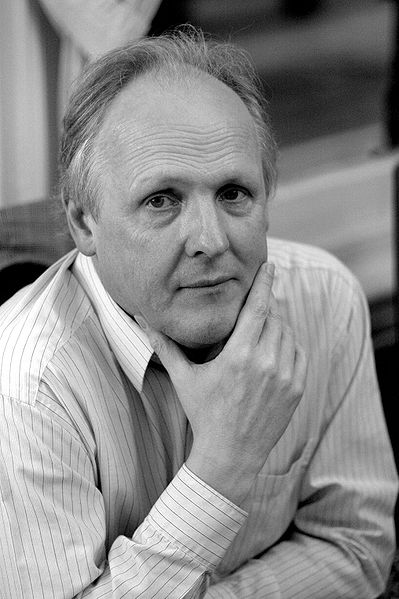
Stephen Byram Furber (born 21 March 1953) is an English computer scientist, mathematician and hardware engineer, and Emeritus ICL Professor of Computer Engineering in the Department of Computer Science at the University of Manchester, UK. After completing his education at the University of Cambridge (BA, MMath, PhD), he spent the 1980s at Acorn Computers, where he was a principal designer of the BBC Micro and the ARM 32-bit RISC microprocessor. As of 2023[update], over 250 billion ARM chips have been manufactured, powering much of the world's mobile computing and embedded systems, everything from sensors to smartphones to servers.
In 1990, he moved to Manchester to lead research into asynchronous circuits, low-power electronics and neural engineering, where the Spiking Neural Network Architecture (SpiNNaker) project is delivering a computer incorporating a million ARM processors optimised for computational neuroscience.
Furber was educated at Manchester Grammar School and represented the UK in the International Mathematical Olympiad in Hungary in 1970 winning a bronze medal. He went on to study the Mathematical Tripos as an undergraduate student of St John's College, Cambridge, receiving a Bachelor of Arts (BA) and Master of Mathematics (MMath – Part III of the Mathematical Tripos) degrees. In 1978, he was appointed a Rolls-Royce research fellow in aerodynamics at Emmanuel College, Cambridge and was awarded a PhD in 1980 for research on the fluid dynamics of the Weis-Fogh mechanism supervised by John Ffowcs Williams. During his PhD in the late 1970s, Furber worked on a voluntary basis for Hermann Hauser and Chris Curry within the fledging Acorn Computers (originally the Cambridge Processor Unit), on a number of projects; notably a microprocessor based fruit machine controller, and the Proton – the initial prototype version of what was to become the BBC Micro, in support of Acorn's tender for the BBC Computer Literacy Project.
In 1981, following the completion of his PhD and the award of the BBC contract to Acorn computers, Furber joined Acorn where he was a Hardware Designer and then Design Manager. He was involved in the final design and production of the BBC Micro and later, the Acorn Electron, and the ARM microprocessor. In August 1990 he moved to the University of Manchester to become the International Computers Limited (ICL) Professor of Computer Engineering and established the AMULET microprocessor research group.
Furber's main research interests are in neural networks, networks on chip and microprocessors. In 2003, Furber was a member of the EPSRC research cluster in biologically inspired novel computation. On 16 September 2004, he gave a speech on Hardware Implementations of Large-scale Neural Networks as part of the initiation activities of the Alan Turing Institute[citation needed].
Furber's most recent project SpiNNaker, is an attempt to build a new kind of computer that directly mimics the workings of the human brain. Spinnaker is an artificial neural network realised in hardware, a massively parallel processing system eventually designed to incorporate a million ARM processors. The finished Spinnaker will model 1 per cent of the human brain's capability, or around 1 billion neurons. The Spinnaker project aims amongst other things to investigate:
Furber believes that "significant progress in either direction will represent a major scientific breakthrough". Furber's research interests include asynchronous systems, ultra-low-power processors for sensor networks, on-chip interconnect and globally asynchronous locally synchronous (GALS), and neural systems engineering.
His research has been funded by the Engineering and Physical Sciences Research Council (EPSRC), Royal Society and the European Research Council (ERC).
Hub AI
Steve Furber AI simulator
(@Steve Furber_simulator)
Steve Furber
Stephen Byram Furber (born 21 March 1953) is an English computer scientist, mathematician and hardware engineer, and Emeritus ICL Professor of Computer Engineering in the Department of Computer Science at the University of Manchester, UK. After completing his education at the University of Cambridge (BA, MMath, PhD), he spent the 1980s at Acorn Computers, where he was a principal designer of the BBC Micro and the ARM 32-bit RISC microprocessor. As of 2023[update], over 250 billion ARM chips have been manufactured, powering much of the world's mobile computing and embedded systems, everything from sensors to smartphones to servers.
In 1990, he moved to Manchester to lead research into asynchronous circuits, low-power electronics and neural engineering, where the Spiking Neural Network Architecture (SpiNNaker) project is delivering a computer incorporating a million ARM processors optimised for computational neuroscience.
Furber was educated at Manchester Grammar School and represented the UK in the International Mathematical Olympiad in Hungary in 1970 winning a bronze medal. He went on to study the Mathematical Tripos as an undergraduate student of St John's College, Cambridge, receiving a Bachelor of Arts (BA) and Master of Mathematics (MMath – Part III of the Mathematical Tripos) degrees. In 1978, he was appointed a Rolls-Royce research fellow in aerodynamics at Emmanuel College, Cambridge and was awarded a PhD in 1980 for research on the fluid dynamics of the Weis-Fogh mechanism supervised by John Ffowcs Williams. During his PhD in the late 1970s, Furber worked on a voluntary basis for Hermann Hauser and Chris Curry within the fledging Acorn Computers (originally the Cambridge Processor Unit), on a number of projects; notably a microprocessor based fruit machine controller, and the Proton – the initial prototype version of what was to become the BBC Micro, in support of Acorn's tender for the BBC Computer Literacy Project.
In 1981, following the completion of his PhD and the award of the BBC contract to Acorn computers, Furber joined Acorn where he was a Hardware Designer and then Design Manager. He was involved in the final design and production of the BBC Micro and later, the Acorn Electron, and the ARM microprocessor. In August 1990 he moved to the University of Manchester to become the International Computers Limited (ICL) Professor of Computer Engineering and established the AMULET microprocessor research group.
Furber's main research interests are in neural networks, networks on chip and microprocessors. In 2003, Furber was a member of the EPSRC research cluster in biologically inspired novel computation. On 16 September 2004, he gave a speech on Hardware Implementations of Large-scale Neural Networks as part of the initiation activities of the Alan Turing Institute[citation needed].
Furber's most recent project SpiNNaker, is an attempt to build a new kind of computer that directly mimics the workings of the human brain. Spinnaker is an artificial neural network realised in hardware, a massively parallel processing system eventually designed to incorporate a million ARM processors. The finished Spinnaker will model 1 per cent of the human brain's capability, or around 1 billion neurons. The Spinnaker project aims amongst other things to investigate:
Furber believes that "significant progress in either direction will represent a major scientific breakthrough". Furber's research interests include asynchronous systems, ultra-low-power processors for sensor networks, on-chip interconnect and globally asynchronous locally synchronous (GALS), and neural systems engineering.
His research has been funded by the Engineering and Physical Sciences Research Council (EPSRC), Royal Society and the European Research Council (ERC).