Hubbry Logo
Stockard ChanningStockard ChanningMain
Open search
Stockard Channing
Community hub
Stockard Channing
logo
8 pages, 0 posts
0 subscribers
Be the first to start a discussion here.
Stockard Channing
Stockard Channing
from Wikipedia

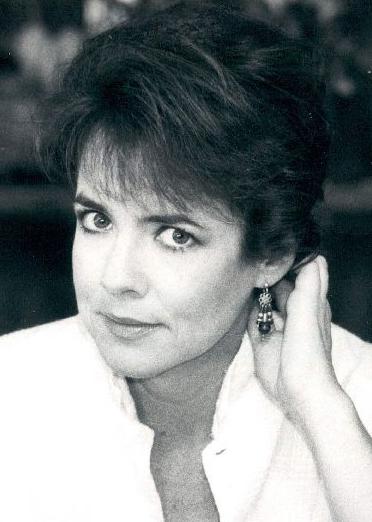
Stockard Channing (born Susan Antonia Williams Stockard; February 13, 1944)[1] is an American actress. Her accolades include three Emmy Awards, a Tony Award, and a nomination for an Academy Award.

Key Information

Channing played Betty Rizzo in the film Grease (1978) and First Lady Abbey Bartlet in the NBC television series The West Wing (1999–2006). She also originated the role of Ouisa Kittredge in the stage and film versions of Six Degrees of Separation; the 1993 film version earned her an Academy Award nomination for Best Actress.

Channing won the 1985 Tony Award for Best Actress in a Play for the Broadway revival of A Day in the Death of Joe Egg, and won Emmy Awards for The West Wing and The Matthew Shepard Story, both in 2002. She won a Daytime Emmy Award in 2005 for her role in Jack. Her film appearances include The Fortune (1975), The Big Bus (1976), The Cheap Detective (1978), Heartburn (1986), To Wong Foo, Thanks for Everything! Julie Newmar (1995), Up Close & Personal (1996), Practical Magic (1998), and Woody Allen's Anything Else (2003). She also played the recurring role of Veronica Loy on the CBS drama The Good Wife (2012–16).

Early life and education

[edit]

Channing was born in Manhattan, and she grew up on the affluent Upper East Side.[2] She is the daughter of Mary Alice (née English),[3] who came from a large Brooklyn Irish Roman Catholic family, and Lester Napier Stockard (died 1960), who was in the shipping business. Her elder sister is Lesly Stockard Smith, former mayor of Palm Beach, Florida.[4][5][6]

Channing is an alumna of the Madeira School in McLean, Virginia, a boarding school for girls, which she attended after starting at the Chapin School in New York City.[2] She studied history and literature at Radcliffe College of Harvard University in Massachusetts and graduated summa cum laude in 1965.[6] She received her acting training at HB Studio[7] in New York City.

Career

[edit]

Early career

[edit]

Channing started her acting career with the experimental Theatre Company of Boston; she performed in the group's Off-Broadway 1969 production of the Elaine May play Adaptation/Next.[8] She performed in a revival of Arsenic and Old Lace directed by Theodore Mann as part of the Circle in the Square at Ford's Theatre program in 1970.[9] In 1971, she made her Broadway debut in Two Gentlemen of Verona — The Musical, working with playwright John Guare.[2][10] She also appeared on Broadway in 1973 in a supporting role in No Hard Feelings at the Martin Beck Theatre.[11]

Channing made her television debut on Sesame Street in the role of The Number Painter's female victim. She landed her first leading role in the 1973 television movie The Girl Most Likely To..., a black comedy written by Joan Rivers[12] about an ugly duckling woman, made newly beautiful by plastic surgery after an auto accident, who vows murderous revenge on all who had scorned her.[13][14] For the role, Channing went through a considerable transformation, with the syndicated column "TV Scout" reporting months later, "It was a great make-up job — at least the part that made very pretty Stockard look so ugly. She had her cheeks puffed out with cotton and her nose was wadded, too, to make it thick and off-center. Very thick eyebrows were drawn on her face and she wore padded clothes to make her look fat. Making her look beautiful was easy."[15]

After some small parts in feature films, Channing co-starred with Warren Beatty and Jack Nicholson in Mike Nichols' The Fortune (1975). Despite Channing being tagged "the next big thing" in cinema, and the actress herself considering this some of the best work of her career, the movie did poorly at the box office and did not prove to be the breakthrough role Channing hoped it would be. On May 22, 1977, she, along with Ned Beatty, starred in the pilot for the short-lived TV series Lucan. Lucan, played by Kevin Brophy, is a 20-year-old who has spent the first 10 years of his life running wild in the forest. After being raised by wolves, Lucan strikes out on his own in search of his identity.

In 1977, at the age of 33, Channing was cast for the role of high school teenager Betty Rizzo in the hit musical Grease. The film was released in 1978 and her performance earned her the People's Choice Award for Favorite Motion Picture Supporting Actress.[16]

In addition, during the second half of the 1970s, Channing played a mischievous car thief in Jerry Schatzberg's 1976 dramedy Sweet Revenge (which competed at the Cannes Film Festival), Joseph Bologna's love interest in the disaster film spoof The Big Bus (also 1976), Peter Falk's secretary in the 1978 Neil Simon film The Cheap Detective, and real-life deaf stuntwoman and former female land speed record holder Kitty O'Neil in the TV movie Silent Victory: The Kitty O'Neil Story (1979).

1980s

[edit]
Channing in 1984

Channing starred in two short-lived sitcoms on CBS in 1979 and 1980: Just Friends and The Stockard Channing Show. In both shows, she co-starred with actress Sydney Goldsmith, who played her best friend in both. When her Hollywood career faltered after these failures, Channing returned to her theatre roots.[17] Nevertheless, she continued to appear in movies, often in supporting roles, including 1983's Without a Trace (alongside Kate Nelligan and Judd Hirsch), Mike Nichols' 1986 Heartburn (re-teaming with Nichols and Jack Nicholson, and co-starring Meryl Streep), The Men's Club (also 1986; featuring Roy Scheider, Harvey Keitel, and Jennifer Jason Leigh), A Time of Destiny (1988; with William Hurt, Timothy Hutton, and Melissa Leo), and Staying Together (1989; directed by Lee Grant, and co-starring Melinda Dillon and Levon Helm.)

Channing played the female lead in the Broadway show, They're Playing Our Song (1980–81). Channing then took the part of the mother (Sheila) in the 1981 Long Wharf Theater (New Haven) production of Peter Nichols' A Day in the Death of Joe Egg.[18] She reprised the role in the Roundabout Theater Company production, first Off-Broadway in January 1985[19] and then on Broadway in March 1985,[20] and won the 1985 Tony Award for Best Actress in a Play.[2]

Channing continued her return to the stage by teaming up again with playwright John Guare. She received Tony Award nominations for her performances in his plays, The House of Blue Leaves (1986) and Six Degrees of Separation (1990), for which she also won an Obie Award.[21] The Alan Ayckbourn play Woman in Mind received its American premiere Off-Broadway in February 1988 at the Manhattan Theatre Club. The production was directed by Lynne Meadow and the cast included Channing in the role of Susan, for which she won a Drama Desk Award for Best Actress.[22] When once asked if Susan was Channing's most fully realized character, the actress replied:

Well, you like to think that they're all fully realized because what you're doing is different from what anyone else is seeing. You do a character but how much of it is on film, or how much of it is seen by an audience, is really up to the director, the piece, or the audience. And so, I just do these people. And flesh them out. I think anything else is not my job.[23]

Channing made her London theatre debut in 1992 at the Royal Court Theatre in John Guare's Six Degrees of Separation, which then transferred for a season at the Comedy Theatre in the West End. In 2017 she returned to London to appear in Apologia at the Trafalgar Studios and again in 2021 in Night Mother at the Hampstead Theatre.

She also garnered recognition for her work in television during this time. She was nominated for an Emmy Award for the CBS miniseries Echoes in the Darkness (1987) and won a CableACE Award for the Harvey Fierstein-scripted Tidy Endings (HBO, 1988).[2] Other TV movie credits during the latter half of the 1980s include the CBS teenage drug abuse-themed Not My Kid (1985; co-starring George Segal), Hallmark's domestic drama The Room Upstairs (1987; with Sam Waterston, Joan Allen, and Sarah Jessica Parker), and the HBO thriller Perfect Witness (1989; alongside Brian Dennehy and Aidan Quinn.)

1990s

[edit]

Channing reprised her lead role as an Upper East Side matron in the film version of Six Degrees of Separation. She was nominated for an Academy Award and a Golden Globe Award for her performance.[17] She then made several films in quick succession: To Wong Foo, Thanks for Everything! Julie Newmar as Carol Ann[24] and Smoke (both 1995); a cameo appearance in The First Wives Club; Up Close and Personal (as Marcia McGrath);[25] and Moll Flanders (all 1996). For Smoke she was nominated for a Screen Actors Guild Award for Best Supporting Actress[26] and for Moll Flanders she was nominated for the Satellite Award for Best Supporting Actress, Drama.[27]

Channing kept busy with film, television, and stage roles throughout the late 1990s.[2] She starred in the USA Network film An Unexpected Family in 1996 and its sequel, An Unexpected Life, in 1998. She was nominated for an Independent Spirit Award as Best Supporting Female for her performance as one-half of an infertile couple in The Baby Dance (also 1998).[citation needed] On stage, she performed at Lincoln Center in Tom Stoppard's Hapgood (1995) and the 1997 revival of Lillian Hellman's The Little Foxes. During this period, Channing voiced Barbara Gordon in the animated series, Batman Beyond.

Channing was nominated for the Tony Award for Best Actress three times in the 1990s: in 1991, for Six Degrees of Separation; in 1992, for Four Baboons Adoring the Sun; and in 1999, for The Lion in Winter.[28]

The West Wing

[edit]

In 1999, Channing took on the role of First Lady Abbey Bartlet in the NBC television series The West Wing. She was a recurring guest star for the show's first two seasons; she became a regular cast member in 2001.[17] In the seventh and final season of The West Wing (2005–2006), Channing appeared in only four episodes (including the series finale) because she was co-starring (with Henry Winkler) in the CBS sitcom Out of Practice at the same time.[29] Out of Practice was cancelled by CBS after one season.[30]

Later work

[edit]

Channing received several awards in 2002. She won the Emmy Award for Outstanding Supporting Actress in a Drama Series for her work on The West Wing.[31] That same year, she also won the Emmy Award for Outstanding Supporting Actress in a Miniseries or a Movie and the Screen Actors Guild Award for Best Actress in a Television Movie or Miniseries for her portrayal of Judy Shepard in The Matthew Shepard Story, a docudrama about Matthew Shepard's life and murder.[31]

Channing received the 2002 London Film Critics Circle Award (ALFS) for Best Actress of the Year for her role in the film The Business of Strangers. For The Business of Strangers, she was also nominated for the American Film Institute Best Actress award.[32] In 2003, she was awarded the Women in Film Lucy Award.[33]

In 2005, Channing won a Daytime Emmy Award for Outstanding Performer in a Children/Youth/Family Special for Jack (2004), a Showtime TV movie about a young man struggling to understand why his father left the family for another man. Channing played Jack's mother.[34][35]

She was selected for the second narrator of the Animal Planet hit series Meerkat Manor in 2008, replacing Sean Astin, who did the first three seasons. In November 2008, she returned to Broadway as Vera Simpson in the musical Pal Joey and was nominated for the 2009 Tony Award for Best Leading Actress in a Musical.[36]

In 2005, Channing starred in Out of Practice with Henry Winkler, receiving an Emmy nomination for her role. She played the role of Lydia Barnes, ex-wife of Stewart Barnes (Winkler), and had two sons and a lesbian daughter (Christopher Gorham, Paula Marshall, Ty Burrell). The show aired for one season (22 episodes).

From 2012, Channing played a recurring role in The Good Wife. She played the role of the title character's mother, Veronica Loy until the final season in 2016.

She returned to the stage in June 2010, to Dublin's Gaiety Theatre to play Lady Bracknell in Rough Magic Theatre Company's production of Oscar Wilde's The Importance of Being Earnest.[37] Channing appeared in the play Other Desert Cities Off-Broadway at Lincoln Center and then on Broadway, as of October 2011.[38] Channing was nominated for the Drama Desk Award, Outstanding Actress in a Play, and the Tony Award for Best Performance by a Leading Actress in a Play for Other Desert Cities.[39] In 2018, she played the lead in Apologia, which had a limited run in London, and then moved to the Roundabout Theatre Co. in NYC.

Channing also narrated the audiobook, “Frankie & Bug”, written by Gayle Forman, released in 2021

In May 2023, Channing appeared in ITV’s three part series “MaryLand” alongside Suranne Jones and Eve Best, playing a character named Cathy.[40]

In 2025 she played Clytemnestra in Sophocles' play Elektra, starring Brie Larson in the title role and directed by Daniel Fish. The play was performed in Brighton before moving to London in January.[41]

Personal life

[edit]

Channing has been married and divorced four times; she has no children.[42] She married Walter Channing Jr. in 1963 and kept the amalgamated name "Stockard Channing" after they divorced in 1967.[43] Her second husband was Paul Schmidt, a professor of Slavic languages (1970–1976), and her third was writer-producer David Debin (1976–1980).[44] Her fourth husband was businessman David Rawle (1980–1988).[45] Channing was in a long-term relationship with cinematographer Daniel Gillham from 1990 until his death in 2014.[46] They met on the set of A Time of Destiny.[2]

In 2019, Channing was residing in London.[47]

Filmography

[edit]

Discography

[edit]
"Look at Me, I'm Sandra Dee" featuring Didi Conn, Dinah Manoff and Jamie Donnelly
"There Are Worse Things I Could Do"

Awards and nominations

[edit]

References

[edit]
[edit]
Revisions and contributorsEdit on WikipediaRead on Wikipedia
from Grokipedia
Stockard Channing (born Susan Antonia Williams Stockard; February 13, 1944) is an American actress whose career spans theater, film, and television, marked by versatile portrayals of complex, often sharp-witted women.
Channing first gained widespread recognition for her role as the rebellious Betty Rizzo in the 1978 film adaptation of Grease, a blockbuster musical that showcased her comedic timing and stage-honed presence after originating the character on Broadway. Her dramatic range earned critical acclaim and an Academy Award nomination for Best Actress in the 1993 adaptation of Six Degrees of Separation, where she played the urbane Ouisa Kittredge confronting racial and class illusions. On television, she portrayed First Lady Abbey Bartlet in The West Wing from 1999 to 2006, a role that highlighted her ability to blend intellect, poise, and subtle authority, culminating in a Primetime Emmy Award for Outstanding Supporting Actress in a Drama Series in 2002 after multiple prior nominations. Earlier, she won a Tony Award for Best Actress in a Play for her performance in the 1985 revival of Joe Egg, affirming her Broadway roots following training at Radcliffe College. Channing has been married four times—to Walter Channing Jr. (1964–1967), Paul Schmidt (1969–1976), David Debin (1976–1980), and David Rawle (1982–1988)—and has no children.

Early Life and Education

Family Background and Childhood

Stockard Channing was born Susan Williams Antonia Stockard on February 13, 1944, in New York City to Lester Napier Stockard, a shipping executive from a Protestant background, and Mary Alice English, who came from a large Irish Catholic family in Brooklyn. The family belonged to New York's upper class, with her father's profession providing substantial wealth that supported an affluent lifestyle. She grew up on Manhattan's Upper East Side alongside her older sister, Lesly Stockard Smith, who later served as mayor of Palm Beach, Florida. The household reflected a mix of religious influences, with her mother's Catholic heritage contrasting her father's Protestant roots, though specific details on family religious practices during her childhood remain limited in available accounts. Channing's early years involved frequent travel, exposing her to diverse environments beyond the family's posh urban residence. Her father's death in 1960, when Channing was 16, left a significant inheritance to her and her sister, altering family dynamics amid their mother's continued homemaking role. This event marked a pivotal shift in her adolescence, though public records emphasize the stability of her pre-loss upbringing in a privileged setting rather than any overt hardships.

Formal Education and Early Influences

Channing attended the Chapin School, a private preparatory institution in New York City, during her early education. She later completed her secondary education at the Madeira School, a boarding school in McLean, Virginia, earning her high school diploma there. In 1961, she enrolled at Radcliffe College, the women's coordinate institution affiliated with Harvard University, where she majored in history and literature. Channing graduated in 1965 with a Bachelor of Arts degree, achieving summa cum laude honors for her academic performance. Initially oriented toward a traditional path as an educated homemaker, her studies emphasized intellectual preparation over vocational training in the arts. During her undergraduate years at Radcliffe, Channing's interests shifted toward theater, influenced by associations with emerging theater professionals among her peers. At age 19, while married to a Harvard Business School student, she encountered opportunities in student and amateur productions that sparked her engagement with acting, diverging from her family's expectations and her history-focused curriculum. This period marked the onset of her practical exposure to performance, though she eschewed structured acting pedagogy, later describing early audited classes in New York as intimidating and dominated by aggressive instructors. Her entry into theater thus stemmed from informal collegiate networks rather than deliberate professional grooming or familial encouragement.

Career Trajectory

Initial Theater and Off-Broadway Work

Channing's professional stage debut occurred in 1966 with a production of The Investigation mounted by the experimental Theatre Company of Boston. Following her time in Boston, she transitioned to New York City, where she joined the Theatre Company of Boston's off-Broadway efforts. Her off-Broadway debut came in 1969 with Elaine May's double bill Adaptation/Next, a satirical work exploring conformity and adaptation through intertwined one-act plays. In 1970, Channing appeared in a revival of Joseph Kesselring's Arsenic and Old Lace, directed by Theodore Mann as part of the Circle in the Square at Ford's Theatre program, marking an early engagement with classic American farce. These initial productions provided Channing with formative experience in ensemble-driven experimental and repertory theater, honing her skills in comedic timing and character ensemble work prior to her Broadway transition.

Film Breakthrough with Grease

Channing reprised her Broadway role as Betty Rizzo, the tough, sarcastic leader of the Pink Ladies, in the 1978 film adaptation of Grease, directed by Randal Kleiser. Originally created for the stage in 1972, the character allowed Channing to portray a street-smart high school senior navigating peer dynamics and personal insecurities, highlighted in scenes like her solo "There Are Worse Things I Could Do." At 33 years old during filming, Channing embodied the teenage part without altering her mature appearance, contributing to the film's nostalgic yet adult-inflected take on 1950s youth culture. The film, released on June 16, 1978, by Paramount Pictures, achieved massive commercial success, grossing $396.3 million worldwide against a $6 million budget, making it the highest-grossing musical film to date and the year's top box office earner. Channing's performance as Rizzo provided a counterpoint to leads John Travolta and Olivia Newton-John, infusing the ensemble with edge and humor that critics noted amplified the movie's appeal beyond its stars. In a 2025 interview, Channing reflected that the production was initially dismissed as lightweight, yet its unexpected blockbuster status propelled her visibility, though she later described facing resentment from some co-stars amid the windfall. This role marked Channing's film breakthrough, transitioning her from theater acclaim to mainstream cinema recognition, with Grease's enduring popularity—evidenced by its soundtrack's diamond certification and cultural staying power—cementing Rizzo as an iconic portrayal in her career. Prior small film parts, such as in The Fortune (1975), had not yielded comparable exposure, underscoring Grease as the pivotal project that broadened her audience and opened subsequent Hollywood opportunities.

Broadway Successes and Critical Recognition

Channing earned her sole Tony Award for portraying Sheila in the Broadway revival of A Day in the Death of Joe Egg, which opened on April 4, 1985, at the Longacre Theatre and ran for 102 performances. Her performance as the mother grappling with a severely disabled child drew acclaim for its emotional depth and intensity, securing the 1985 Tony Award for Best Performance by a Leading Actress in a Play on June 2, 1985. The production also received the Tony for Best Revival of a Play, highlighting Channing's central role in its success. Earlier, Channing took over the lead role of Sonia Walsk, the quirky lyricist, in the musical They're Playing Our Song, succeeding Lucie Arnaz during its run from February 11, 1979, to September 6, 1981, at the Imperial Theatre, contributing to its total of 1,082 performances. Her portrayal of the neurotic character aligned with the show's comedic exploration of a songwriter-lyricist romance, though it garnered no Tony nomination for her. In 1986, Channing received a Tony nomination for Best Performance by a Featured Actress in a Play for her role as Bunny in John Guare's The House of Blue Leaves revival, which opened on March 26, 1986, and ran for 8 previews plus performances, noted for its satirical take on family dysfunction. She later earned another Tony nomination for Best Actress in a Play in 1999 for Eleanor of Aquitaine in The Lion in Winter, a revival that showcased her command of historical drama. These roles underscored Channing's versatility across comedy, musicals, and tragedy, with critics and awards bodies recognizing her ability to infuse characters with sharp wit and vulnerability, as evidenced by her Tony wins and nominations totaling four across leading and featured categories. Her Broadway work post-film breakthrough solidified her reputation as a stage actress capable of anchoring revivals with commercial and artistic viability.

Television Roles and The West Wing

Channing's early television work included two short-lived CBS sitcoms in the late 1970s and early 1980s, both centered on divorced protagonists navigating life in Los Angeles. In Stockard Channing in Just Friends (1979), she portrayed Susan Hughes, a woman relocating from Boston after her marriage ends, relying on her matchmaking sister; the series aired 13 episodes from March to June 1979 before cancellation due to low ratings. A year later, she starred in The Stockard Channing Show (1980) as Susan Goodenow, an assistant to a demanding TV consumer reporter, again emphasizing post-divorce independence; this program also lasted 13 episodes and failed to sustain viewership. These vehicles highlighted her comedic timing but did not establish a lasting series foothold, reflecting the era's challenges for female-led sitcoms amid network preferences for ensemble formats. Throughout the 1980s and 1990s, Channing made guest appearances on procedural and drama series, including episodes of Law & Order (1993), Homicide: Life on the Street (1996), Spenser: For Hire (1985), and Coach (1995), often in authoritative or eccentric roles that leveraged her stage-honed presence. She also starred in television films, such as Silent Victory: The Kitty O'Neil Story (1979), portraying a stuntwoman overcoming personal adversity. Channing achieved her most prominent television role as Dr. Abigail "Abbey" Bartlet, the First Lady of the United States and wife to President Josiah Bartlet (played by Martin Sheen), in the NBC political drama The West Wing (1999–2006). Introduced in season 1, episode 7 ("The State Dinner," aired October 20, 1999), her character debuted as a recurring guest before ascending to series regular, appearing in 81 of the series' 154 episodes. Abbey, a thoracic surgeon and feminist advocate, balanced spousal loyalty with principled clashes against her husband's policies, notably on issues like medical marijuana and gender equity, drawing from real-world dynamics of power couples while emphasizing intellectual parity in their marriage. Channing's portrayal infused the role with wit, resilience, and subtle authority, contributing to the show's ensemble strength; she described the on-set chemistry with Sheen as immediate and organic, enhancing scenes of domestic tension and affection. For this performance, Channing received four Primetime Emmy nominations for Outstanding Supporting Actress in a Drama Series (2000, 2001, 2004, 2005), winning in 2002 for the episode "Bartlet for America," which highlighted Abbey's emotional support amid presidential vulnerability. The win underscored her ability to humanize a high-stakes figure, with critics noting how the character's physician background informed plotlines on public health policy without overshadowing the series' focus on governance. Following The West Wing, Channing headlined the CBS sitcom Out of Practice (2005–2006) as Dr. Lydia Barnes, a sharp-witted family therapist in a dysfunctional medical clan; the series ran one season (22 episodes) and earned her a 2006 Emmy nomination for Outstanding Lead Actress in a Comedy Series. She later recurred as Veronica Loy, the acerbic mother of protagonist Alicia Florrick, in The Good Wife (CBS, 2012–2016), appearing in 17 episodes and providing contrarian family dynamics amid legal intrigue. More recent television credits include a guest role as Frances Field in HBO Max's Julia (2022), voicing Wendy Whipple in Paramount+'s Knuckles (2024), and supporting parts in miniseries like Maryland (2023). These roles affirmed her continued demand for portrayals of intelligent, no-nonsense women across genres.

Post-2000s Film, Voice, and Stage Projects

In the early 2000s, Channing continued her film work with supporting roles in romantic comedies and dramas. She portrayed Sally, the candid older sister offering advice to the protagonist, in the 2005 film Must Love Dogs, directed by Robert Klane and co-starring Diane Lane and John Cusack. Earlier, in 2003's Anything Else, Woody Allen's comedy, she played the mother of Jason Biggs's character, contributing to the film's exploration of young adulthood in New York. By 2007, she appeared as Sheila in Sparkle, a low-budget drama about a family's struggles, marking one of her smaller ensemble roles during the decade. Channing's film output in the 2010s included Multiple Sarcasms (2010), where she played Pamela, the mother of a man reflecting on his life choices, in this independent drama directed by Marc Blucas. In 2013, she took on the role of Virginia in Pulling Strings, a romantic comedy about cultural clashes, produced as a bilingual English-Spanish film. Her most recent feature film credit as of 2022 was Angry Neighbors, portraying Chloe in this comedy-drama. She is set to reprise Aunt Frances in the sequel Practical Magic 2, scheduled for 2026 release. Channing has undertaken limited voice acting post-2000, notably voicing Commissioner Barbara Gordon in episodes of the animated series Batman Beyond airing through 2001. She also provided additional voices for The Cleveland Show in 2009. On stage, Channing returned to Broadway with the role of Alex in Alexi Kaye Campbell's Apologia in 2009, earning praise for her portrayal of a mother confronting family estrangement. In 2011, she starred as Polly in Jon Robin Baitz's Other Desert Cities at Lincoln Center, transferring to Broadway, where her performance as a liberal mother clashing with conservative relatives garnered Tony Award consideration. She appeared in Terrence McNally's It's Only a Play on Broadway in 2014, playing Virginia Noyes, a producer at a chaotic opening night party. More recently, Channing performed in Lillian Hellman's The Little Foxes Off-Broadway in 2017 and took on Clytemnestra in Sophocles' Elektra in early 2025 at the Shed in New York.

Recent Developments (2010s–2025)

Channing maintained an active presence in theater during the 2010s, beginning with her portrayal of Lady Bracknell in a 2010 Dublin production of The Importance of Being Earnest. In 2011, she starred as Brooke Wyeth in the Broadway premiere of Jon Robin Baitz's Other Desert Cities, directed by Joe Mantello, which earned her a Tony Award nomination for Best Performance by an Actress in a Leading Role in a Play and a Drama Desk Award nomination. Her film work in the decade included supporting roles such as Pamela in Multiple Sarcasms (2010), a drama about a man's career crisis, and Virginia in the romantic comedy Pulling Strings (2013). On television, she recurred as Veronica Loy, the estranged mother of protagonist Alicia Florrick, in The Good Wife from 2010 to 2016. In 2018, Channing returned to the New York stage in the Off-Broadway premiere of Alexi Kaye Campbell's Apologia at the Laura Pels Theatre, playing the central role of Kristin, a former activist confronting her adult children. Into the 2020s, Channing appeared in smaller projects, including the role of Chloe in the comedy Angry Neighbors (2022) and voice work as Wendy Whipple in the animated series Knuckles (2024). She guest-starred as Frances Field in an episode of HBO Max's Julia (2022). In early 2025, she took on the role of Clytemnestra in a modern revival of Sophocles' Elektra, directed by Daniel Fish, at London's Duke of York's Theatre, opposite Brie Larson as Elektra; the limited run previewed from January 24 and ran through April 12.

Political Views and Activism

1960s Radical Involvement

Channing attended Radcliffe College, affiliated with Harvard University, graduating in 1965 with a degree in history. Her college years coincided with the early escalation of U.S. involvement in the Vietnam War and rising campus unrest, though no records indicate her direct participation in student-led radical groups such as Students for a Democratic Society (SDS). Following graduation, she pursued theater in Boston and New York, where productions often mirrored the era's countercultural and anti-war themes. In a January 2025 interview, Channing described engaging in politically resonant stage work shortly after college, including a musical adaptation of The Trojan Women in her early twenties, which she linked to the contemporaneous Vietnam conflict: "When I was a very young person involved in theatre, just after Harvard in my early 20s, there’d be like a musical of The Trojan Women, you know? Because that was the day, the time, you did that. It wasn’t rock music, but it was sort of like that, because the Vietnam war was going on." This reflects an indirect alignment with the period's dissent through artistic expression rather than street protests or organizational activism. Publicly available biographical accounts emphasize her early focus on theater as a break from family expectations of conventional roles, with limited evidence of personal radical engagement beyond cultural immersion in the 1960s milieu. Her documented activism emerged more prominently in later decades, such as marches against Reagan-era policies in the early 1980s.

Public Endorsements and Statements

In 2012, Channing attended fund-raising events for President Barack Obama's re-election campaign in New York, alongside former President Bill Clinton and other celebrities including Neil Patrick Harris and James Earl Jones. These appearances aligned her publicly with Democratic efforts to bolster Obama's support among elite donors. That same year, Federal Election Commission records show she contributed a total of $14,600 to various political recipients, consistent with patterns of celebrity support for Democratic causes during the election cycle. In October 2020, Channing joined her The West Wing castmates, including Martin Sheen and Allison Janney, in a virtual reunion performance of the episode "Hartsfield's Landing" to promote voter participation through the nonpartisan When We All Vote initiative ahead of the presidential election. Though framed as nonpartisan, the timing and context—amid a polarized contest between Joe Biden and Donald Trump—effectively encouraged turnout in a manner favorable to Democratic prospects, given the cast's historical association with idealized liberal governance. More recently, in October 2025, Channing provided the voiceover for a Democratic-aligned advertisement urging retention of Pennsylvania Supreme Court justices in their retention election, emphasizing the importance of judicial independence amid partisan pressures. This involvement supported Democratic incumbents facing challenges from Republican-backed efforts to influence the state's court balance. Channing has publicly contrasted the rational, evidence-based policymaking depicted in The West Wing—where she portrayed First Lady Abbey Bartlet—with contemporary American politics, describing the series in 2017 as representative of "sane politics" in interviews reflecting on its realism and appeal. Such statements underscore her preference for centrist-liberal governance over perceived extremism, without explicit endorsements of individual policies beyond broad support for democratic norms and voter engagement.

Alignment with Left-Leaning Causes and Critiques

Channing has consistently donated to Democratic causes and candidates. In the 2012 election cycle, she contributed $14,600 to political committees, including support for Priorities USA Action, a super PAC backing President Barack Obama's reelection. Earlier, during the 1979-1980 cycle, she donated $1,500 to election committees aligned with Democratic efforts. More recently, in October 2025, she provided voiceover narration for advertisements by the Democratic retention campaign for Pennsylvania Supreme Court justices, urging voters to retain incumbents in a contest framed by partisan interests despite the court's nominal nonpartisan status. Beyond electoral support, Channing has engaged with humanitarian causes often associated with left-leaning advocacy. In 2009, she joined the One Percent for Congo initiative, an effort tied to V-Day founder Eve Ensler's testimony before the U.S. Senate on rape as a weapon of war in the Democratic Republic of Congo, emphasizing global women's rights and conflict-related violence prevention. Her involvement reflects a pattern of aligning with progressive internationalist priorities, consistent with her self-description as having lived by political principles rooted in activism. Critiques of Channing's political engagements primarily stem from conservative observers questioning the influence of celebrity donors in partisan super PACs. Her contributions to groups like Priorities USA Action have been highlighted in analyses portraying such funding as enabling smear campaigns against conservative figures, such as the Tea Party-aligned candidates targeted in 2012 efforts to "take down" opponents through negative advertising funded by Hollywood liberals. These activities draw broader skepticism toward unelected entertainers shaping electoral outcomes via unlimited contributions post-Citizens United, though direct personal rebukes of Channing remain limited compared to her peers.

Personal Life

Marriages and Relationships

Channing has been married four times, with no children from any of the unions. Her first marriage was to Walter Channing Jr. in 1964, from which she adopted the professional surname Stockard Channing; the union ended in divorce in 1967. She wed playwright and actor Paul Schmidt on December 24, 1969, a marriage that lasted until their divorce in September 1976. Channing's third marriage, to writer, producer, and actor David Debin, occurred on December 20, 1976, and concluded in divorce in 1980. Her fourth and final marriage was to communications executive David Lefferts Rawle on December 18, 1982, ending in divorce around 1988. Beyond her marriages, Channing maintained a long-term relationship with cinematographer Daniel Gillham spanning approximately three decades, which concluded with his death in 2014. In a January 2025 interview at age 80, she expressed disinterest in pursuing new romantic partnerships, describing the prospect as "such a pain in the ass."

Health Challenges and Recovery

In 2001, prior to filming the third-season episode "Gone Quiet" of The West Wing, Channing broke her ankle in a hiking accident, requiring surgical intervention with four pins and a metal plate. The production adapted by scripting a matching injury for her character, First Lady Abbey Bartlet, who also fractures her ankle while hiking, enabling Channing to perform from a wheelchair without halting her involvement. During the Broadway run of Other Desert Cities in November 2011, Channing experienced a flare-up of a preexisting knee injury, with her right knee collapsing backstage following the November 18 evening performance. She underwent arthroscopic surgery on November 21 at Roosevelt Hospital, missing seven shows as a result. Channing returned to the stage on November 25, reporting negligible swelling and employing crutches for support while fulfilling her demanding role as Polly Wyeth.

Lifestyle and Residences

Channing maintained a residence in Laurel Canyon's Hollywood Hills, Los Angeles, a midcentury-style single-story bungalow built in 1950, featuring three bedrooms, four bathrooms, vaulted wood ceilings, and panoramic canyon views, which she listed for sale in March 2016 at $1.9 million and again in June 2020 at $2.495 million after purchasing it decades earlier for approximately $870,000. For many years, she lived in Georgetown, Maine, at a property on Two Dog Lane, a serene coastal area valued for its privacy and natural surroundings, alongside her longtime partner, cinematographer Daniel Gillham, until his death prompted her relocation. Following Gillham's passing, Channing moved to London in 2019, where she has resided full-time since, citing sustained friendships, extended stays during the COVID-19 period, and professional commitments such as West End productions. Channing leads a relatively private existence, emphasizing personal fulfillment over public exposure, and has described long-term relationships at age 80 as "a pain in the ass" while historically enjoying male companionship from her acting milieu. She maintains an affinity for animals, having adopted rescue dogs—including a stray from North Carolina in 2016—that she credits with bringing significant joy and companionship to her daily life.

Reception and Legacy

Achievements and Acclaim

Channing earned widespread recognition for her stage work, particularly winning the Tony Award for Best Actress in a Play in 1985 for her portrayal of Sheila in the Broadway revival of A Day in the Death of Joe Egg. She received seven additional Tony nominations across her career, including for roles in The House of Blue Leaves (1986), The Lion in Winter (1999), and Other Desert Cities (2012), highlighting her versatility in dramatic and comedic theater productions. In film, Channing garnered critical praise for her performance as Ouisa Kittredge in Six Degrees of Separation (1993), earning a nomination for the Academy Award for Best Actress in 1994. Her role as the tough-talking Betty Rizzo in Grease (1978) contributed to the film's commercial success, with the soundtrack nominated for a Grammy Award for Album of the Year. Additional nominations included three Golden Globe Awards, for The Fortune (1976), Six Degrees of Separation (1994), and The Baby Dance (1999). On television, Channing secured three Emmy Awards: the Primetime Emmy for Outstanding Supporting Actress in a Drama Series for The West Wing (2002), the Primetime Emmy for Outstanding Supporting Actress in a Miniseries or Movie for The Matthew Shepard Story (2002), and the Daytime Emmy for Outstanding Performer in a Children/Youth/Family Special for Jack (2005). Her portrayal of First Lady Abbey Bartlet in The West Wing (1999–2006) drew acclaim for its intelligence and poise, resulting in multiple Emmy and Screen Actors Guild nominations. Overall, she amassed 14 Primetime Emmy nominations, underscoring her sustained impact in dramatic roles.

Criticisms and Professional Challenges

Channing has cited resentment from Hollywood peers as a significant professional setback following her role as Betty Rizzo in the 1978 film Grease. In a January 2025 interview, she described how the project's initial lack of seriousness led to industry disdain, with her performance—despite her full commitment—viewed as trivial, resulting in reduced meetings for film opportunities and a pivot back to stage work. This backlash persisted despite Grease's box office success, which grossed over $396 million worldwide on a $6 million budget. Channing, who was 33 years old portraying the 17-year-old Rizzo, has reflected that the film "did nothing for my career whatsoever," underscoring how the age discrepancy and lightweight teen comedy genre reinforced perceptions of her as unsuitable for dramatic roles. She maintained pride in the character but noted the role's cultural dominance overshadowed subsequent efforts, complicating transitions to prestige projects amid typecasting concerns in an industry favoring youth. Early career hurdles included an absence of formal acting training, which Channing addressed by auditing classes in New York but abandoned due to intimidating environments with aggressive instructors. By 1988, she voiced broader frustrations with film's "baroque, complicated" demands, feeling un-pigeonholed yet stalled by mismatched opportunities despite stage accolades like her 1972 Tony Award for Two Gentlemen of Verona. These challenges contributed to a career trajectory emphasizing theater over sustained film leads, with intermittent television ventures such as the short-lived The Stockard Channing Show (1980) failing to establish her as a network staple.

Cultural Impact and Public Perception

Channing's portrayal of Betty Rizzo in the 1978 film Grease cemented her status as a pop culture figure, embodying the archetype of the sharp-tongued, resilient female rebel whose cynicism masked underlying vulnerability. As the leader of the Pink Ladies, Rizzo's character—highlighted in her solo number "There Are Worse Things I Could Do," which Channing advocated to retain—resonated with audiences for its relatable blend of toughness and humanity, influencing subsequent media representations of multifaceted "bad girl" personas in nostalgic 1950s settings. The film's commercial dominance, with $190 million in U.S. box office receipts and $396 million worldwide, amplified Rizzo's iconic presence, though Channing noted the production's initial lack of seriousness fostered industry resentment toward her involvement. This role's cultural footprint extended to shaping perceptions of female agency in musicals, yet it inadvertently typecast Channing in public memory, overshadowing her broader contributions to theater where she excelled in dramatic revivals. Her 1985 Tony Award for Joe Egg exemplified her command of intricate, emotionally layered characters, reinforcing theater's view of her as a premier interpreter of challenging scripts. Public perception positions Channing as an underutilized Hollywood talent with a penchant for cynical, intelligent portrayals, often prioritizing stage and television over leads post-Grease. Critics and peers regard her as perpetually admired for versatility, from Broadway's to television's , where her depiction of First Lady Abbey Bartlet evoked poised . Despite occasional lulls attributed to ageism and genre dismissal, she maintains a reputation for authenticity and depth, unmarred by scandal and bolstered by consistent acclaim in live performance.

References

Add your contribution
Related Hubs
User Avatar
No comments yet.